

By Russ and Tiña De Maris
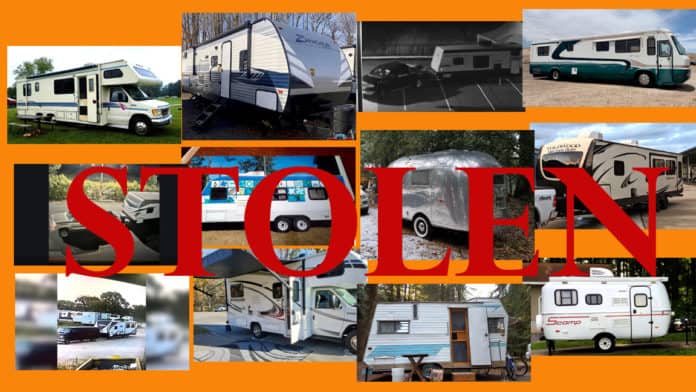
The opening image is just a handful of the stolen RVs we posted here on RVtravel.com in our Saturday newsletter. For every one we wrote about, there are probably dozens more that we didn’t hear about. Suffice it to say, crooks want to steal your RV. The question is, if they do, how can you get it back? One way that can increase the odds of finding a stolen RV is by installing and using a GPS tracker. They’re inexpensive. Service fees are relatively low. And nearly any “RV handyperson” can install one in just a few minutes.
Bad guys got your rig? GPS tracker rats them out!
What’s a GPS tracker? Put simply, it’s an electronic device that uses the Global Positioning System to “know where it is.” Using cellular networks, it then can report its location to authorized people. Why would you want one? Install a GPS tracker in your RV, and if the bad guys take off with your rig, the GPS tracker will report where the rig is. Using something as simple as a smartphone or personal computer, you can “see” in real-time just where your RV is. Report the information to the police, and your chances of recovering your RV before serious damage can occur are increased.
There are different types of GPS trackers. There are some that, once you discover your RV is stolen, you’ll be able to access the information as to where it is. This “track by request system” will help you find your RV—but of course, you need to know it’s gone missing. Another type of GPS tracker works in real-time. You can set up the system with a “digital fence” that immediately sends a message to your cell phone, warning that your RV isn’t where it should be. Park your RV at a storage lot? Set up a “digital fence” around the storage yard. If the RV moves outside the storage yard, you’ll know it right away and can immediately see where it is.
And the cost?
How much does a GPS tracker cost? Prices can start at less than $20; typically they range a bit higher, up into the $60 dollar range. Sounds good, eh? You’ll also typically pay a monthly monitoring fee. We’ve seen fees of around $6 a month, and up into the $12 range. When talking about monitoring fees, it’s often a “get whatcha pay for” situation. The less expensive monitoring fees (or those included “free” with the purchase of the tracker) usually go with monitors that report where the tracker is every few minutes. Spend more money on monitoring, the tracker may report location every few seconds. If your rig is stolen, more frequent reports will likely make it easier to find a “rolling RV.”
Unlike some equipment, most GPS trackers and monitoring services are tied together. It’s not like buying an alarm system for your “sticks-and-bricks” house, then shopping for the lowest price monitoring team. Buy a vehicle tracker, and be ready to be stuck with the seller until death do you part.
Tiny with battery?
 While the major differences between types of GPS trackers come down to “track by request” versus real-time trackers, there are other considerations when it comes to the choice of devices. All GPS trackers require electricity to operate. Some come with batteries built-in. It makes it easy to switch them back and forth between vehicles and to discreetly hide them in the RV. It wouldn’t do you much good if the bad guys found your GPS tracker and squished it like an unwelcome bug. Or worse, tossed it in some unsuspecting fellow’s car—leading police on a wild goose chase.
Plug and play?
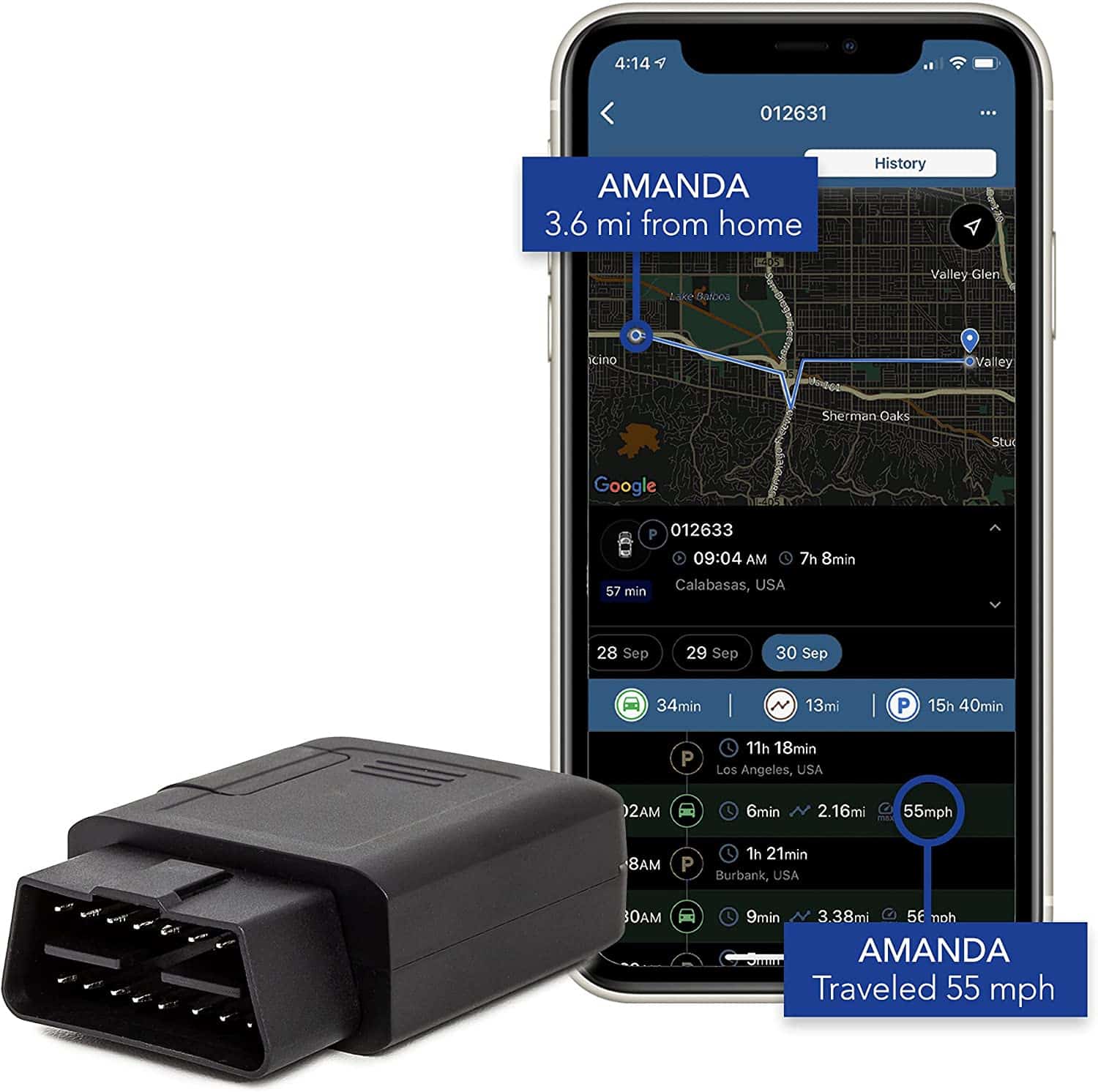 But battery convenience comes with a price. Batteries only last so long—and it varies between brands and models. You may be happy with a battery-powered tracker, particularly if you don’t leave your RV stored somewhere for months on end. Other GPS trackers connect to the RV power system using the OBD-II “computer port.” That may work for you in your motorhome, provided your computer port is indeed an OBD-II variety. Of course, crooks might just take a peek under your dashboard, spot your tracker, and unplug it before they play. Or if you use your OBD-II port for other purposes, it’s a no-go. And towables, of course, don’t have an OBD-II port to plug into.
Hardwire it!
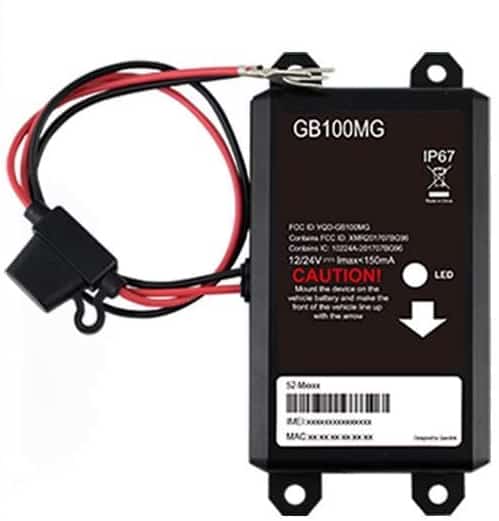 You may find a 12-volt “hardwire” GPS tracker makes more sense. It will take a bit more to get your tracker set up. You’ll need to find a suitable, hidden location (back of a cabinet, etc.) within reach of 12-volt electrical wiring you can tap into. And, yes, the wiring will need to be “hot” 24/7. An ideal spot might just be in a cabinet near your rig’s 12-volt fuse box. Make sure you’re competent with fiddling around with the electrics. If you’re unsure, spend a few bucks to have a technician install it for you.
Where can you track down a GPS tracker? Here’s a link to Amazon, which carries a wide variety of trackers. And, yes, if you make a purchase from Amazon, RVtravel.com gets a bird-dog fee (at no extra charge to you). Thanks in advance!
##RVT1115

Another option is to use an Apple AirTag if you have an iPhone. No subscription needed.
I have AirTags attached to my TV remotes. They aren’t a perfect tracking system like a GPS. They have to be in blue tooth proximity to any iPhone to register and submit the location and there is a delay. But it can give you a general location if it’s on the move or a more precise location if it’s stopped and iPhone traffic passes nearby. There are articles where people have recovered their bicycles and other items with them. And the batteries can last a long time.
Love the air tags! Have one on the cats harness, one on our Verizon Jet Pak box that we forget where we put it in the house when we’re leaving on our next camping trip. And yes we have one in our cars and motor home too. Oh and I have an electric mobility scooter that has one too. At about $19 each it’s cheap insurance.
Love AirTags! Recently on a multi-stop air trip from Vancouver CA to Richmond VA, United Airlines lost our luggage of course. Their App was showing it never left Vancouver. We found it in a storage room in Richmond Virginia thanks to the AirTag! Doubt if UA would have ever found it. We keep an AirTag in our campervan and it works great up in the storage lot. Seems there’s plenty of people with phones walking by every day. I hid it though and then forgot where I’d hidden it. Now with my new iPhone 14, it will find that thing right down to an inch away.
Another fan of the Apple AirTag. I’ve have them hidden in two vehicles, as well as my travel trailer. I did a test on the one in my TT when we were 20 miles from the campground. I marked it as “Lost” and got turn by turn directions from my iPhone right back to the trailer. Well worth the money!
The bad guys can find your air tag by activating its alarm speaker. We disabled our speaker by following a you tube video found by searching “mute air tag”
If you have a cellular hotspot installed in your RV, create a contact in your phone with the hotspot’s phone number. Yes, all hotspots have an actual phone number. Cops have the ability to look up a cell devices location. It’s not as accurate as GPS but a lot more accurate than guessing where your stolen RV might be.
I got the Trak-4 over a year ago. Love the long battery life – months long. I just keep it on a shelf tucked in with the clothes. Have also moved it into my car when we take a driving trip just for peace of mind. I just have to check in with the app once in a blue moon to keep an eye on the battery level and do a quick charge about once a quarter or so. Very satisfied.
After the theft of my second $3k ebike. I put a GPS tracker on the third, a mere two days before it too was stolen. This time, I was able to not only catch the thief who had stolen 4 generators along with my ebike from Carlsbad state beach but able to get the bike back safely and the crook arrested!
I recommend a vibration type alarm on any items “locked” outside as thieves use stealth to steal!
My granddaughter moved to California( yes, people still do that) Airline ” lost” her luggage. She had to show them it wasn’t lost. It was sitting on the tarmack in St Louis right were it was 3 days ago. Delivered to her home the next morning. She used Apple air tag.
Having one might prevent theft of rv’s too
Easy to hide
I use Tile. I have one in my purse, on every set of keys including ebike and generator, on the ebike, on my water bottle, on luggage, etc. My son was constantly leaving his mac charger somewhere so he put one on it and now he knows if it is at his business or in the car.
They also have QR stickers to put on things so if someone finds an item they scan and send you a text or email. I have those on lots of things but so far haven’t left anything behind.
We’ve had the Optimus unit hidden away and hardwired into our Montana for over a year. It will alert my iPhone with any movement (as little as a slam latch door being dropped), if it crosses the geofence of the storage yard and gives live updates on a map of where it is. In addition it also tells me the charge level of the batteries (charged by solar). I recommend it.
Thank you, Russ and Tina! DW bought apple air tags for this purpose. Have a great weekend and safe travels! 🙂