

By Gail Marsh
There are two jobs that I used to covet. I really wanted to be the one hired to name the paint colors for vehicles, and I also dreamed of designing vehicle hood ornaments. Now I suppose it’s too late. AI (artificial intelligence) has probably taken over naming the various paint colors and most vehicle manufacturers no longer feature hood ornaments on their cars and trucks. So much for dreams. Yet I wonder whatever happened to these ornaments?
I asked our three grandchildren if they knew what a hood ornament was and their replies were, “Huh?” and, “Like Red Riding Hood’s hood?” and finally a sincere suggestion, “You can ask Google, Grandma.” Oh, how times have changed!
I decided to do a little digging into the history of hood ornaments and why we don’t see them as often today. Here’s what I discovered.
Early history of hood ornaments
The origins of hood ornaments can be traced back to the late 19th century, a time when automobiles were just beginning to make their mark on the world. Back then, vehicle radiator caps were located on the outside of a car’s hood. Some radiator caps featured a temperature gauge on the back side, so the driver could see if the engine was running hot.
Back then, cars were more than mere transportation. They were a symbol of wealth and prestige. Automobile manufacturers, eager to set themselves apart, started adding decorative elements to their vehicles, and the radiator cap/hood ornament was born.

One of the earliest was the “Flying Lady,” also known as the “Spirit of Ecstasy,” which adorned Rolls-Royce’s cars in 1911. This graceful sculpture, designed by Charles Sykes, depicted a woman with outstretched wings. It captured the spirit of adventure and freedom that driving represented at the time.
1920s and 1930s
The 1920s and 1930s saw the golden era of hood ornaments. Car manufacturers competed with each other to create the most elaborate and beautiful designs. Brands like Packard, Cadillac, and Pierce-Arrow became known for their exquisite ornaments, often crafted from materials like chrome, brass, or even crystal.
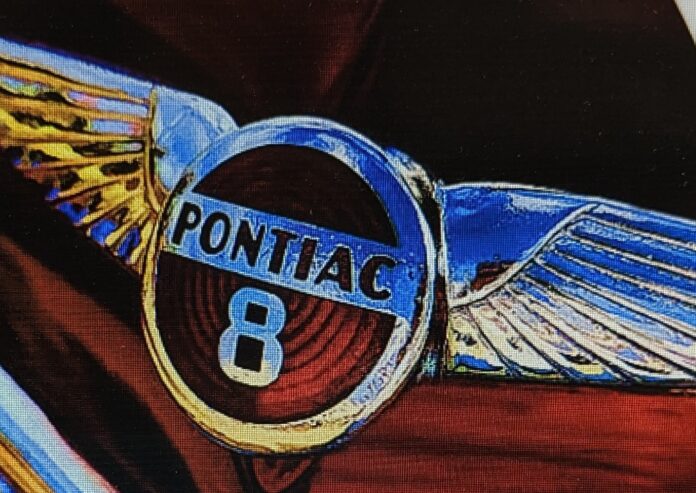
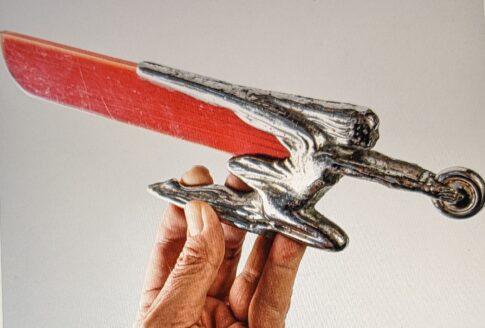
One of the most iconic hood ornaments of this era was the “Goddess of Speed” by Pontiac, which symbolized the allure of fast and powerful automobiles. This photo shows Pontiac’s iconic hood ornament adorned with red Lucite. (Doesn’t it also remind you of the decorative carvings found on a ship’s bow?)
Popularity continues
As time went on, hood ornaments became more than just decorative elements; they became cultural symbols. They represented a blend of artistry, innovation, and aspiration. Many people began to collect hood ornaments and turned them into cherished heirlooms or works of art.
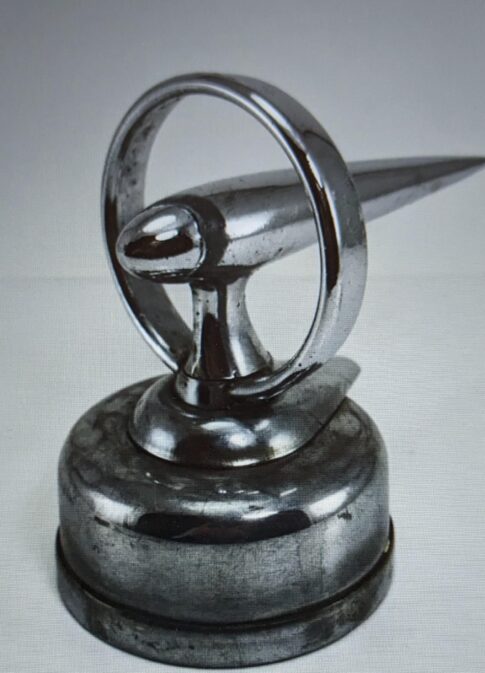
In addition to their aesthetic appeal, hood ornaments also served practical functions. They often indicated the manufacturer’s logo or symbol and sometimes had functional features as well. For example, when the 1949 Buick hood ornament was twisted, it released the hood latch.
The decline of hood ornaments
Several factors led to the decline of hood ornaments. First, safety regulations began to emerge in the mid-20th century. This led to the removal of protruding ornaments to reduce injury risks to pedestrians in the event of an accident. Aerodynamic design also played a role, as sleeker, more streamlined cars became the norm, leaving less room for decorative elements.
In addition, advancements in branding and marketing shifted the focus away from hood ornaments as manufacturers found more effective ways to establish brand identity (logos, advertisements, and technology innovations). The use of hood ornaments lessened, and many iconic designs were discontinued.
Still popular
The unique artistic pieces that previously adorned vehicle hoods remain popular still today—with collectors. Some folks pay serious money for ornaments originally fashioned to resemble a gunsight, jet fighter, locomotive, eagle, schooner, impala, and so much more!
Do you have a favorite hood ornament from the past? Tell me about it in the comments below.
##RVT1129
My dad worked at a Chevy dealer when I was a tot. He brought home a 57 Chevy hood ornament (there were actually two of them – one on each side of the hood). It was in two parts. The ‘bullet’ and the lower portion which was like a trough. I took it apart and reversed the setup so I could stick the bullet in the ground and the trough became a windbreak for the candle I attached. I was going to use it on Boy Scout camping trips. The scoutmaster nixed that plan straightaway. Ha.
What about the hood ornament that lighted up like the wing on a swan.
I love hood ornaments! As a photographer, we’ve visited a number of automotive museums as well as auto shows, and photographing the hood ornament is one of my favorite things to do! I wish they still used them on cars…they sure could use it, they are so boring now, and get more so year after year!
Early Fords had a hood ornament/ thermometer. Had a gauge built in to see if the engine was overheating. My grandpa ordered a new Pontiac and the hood ornament was an Indian( am i allowed to say that?) But it was supposed to light up. His didn’t and he refused the car until they got the right one and exchanged it.
Correct, my 1929 Ford Model A has a temperature gauge on the backside of the radiator cap.
“Back then, cars were more than mere transportation. They were a symbol of wealth and prestige.”
When did that change? Have you not seen any car ads lately?
My father-in-law worked at a junk yard and he brought home many of the hood ornament and other Crome brand car manufacturers names and models. He would sell these at flea markets for $5 or more depending on demand and scarcity. Wish I had some still today.
The Nethercutt Museum in Sylmar, CA has a hugely extensive collection of hood ornaments on display along one wall. There is also a large collection of elegant cars in showroom condition. That, and the Peterson automotive museum near Beverly Hills makes a trip to LA worth while for car buffs.
Thank you, Gail. Around 1983, when I was in grad school and without a vehicle I got to drive Daddy’s new Dodge truck. It had a ram’s head hood ornament. I got to drive it an entire week. Numerous times I would return to the truck to find that someone had turned the head to face the windshield rather than leave it facing forward. I guess it was added to coincide with Dodge’s advertising effort that their trucks were “ram-tough.” Ultimately they just rebranded their light-duty (aka, pickup) trucks “Ram,” rather than “Dodge.” Our farm truck is a 1997 model 3500 and is branded “Dodge,” not “Ram.” Unfortunately it lacks a hood-ornament. 🙁
I have a 2006 Dodge Ram 3500 with the Ram’s head hood ornament. My wife bought it for me off eBay. It had amber lights for eyes, using flashlight style bulb set in the body of the ornament. I replaced them with red LEDs, turned on when the headlights are on.
It’s been published that Ram is bringing back the hood ornament, we will have to wait and see.
My 1936 Hudson Terraplane came with a red Lucite ‘cigar’ hood/grill ornament. At the time, they used two mounting rings, one with a wing at the top (for the Deluxe model) and the other without the wing (for the standard model). I have one of each mounts but the ‘cigar’ that I have is from a 3-D printer.
My favorite hood ornament was the bulldog on Mack Trucks.
There’s a small public library in Sullivan, IL that has a sizable collection of hood ornaments displayed. There is no charge.
For me, nothing beats the Mercedes Benz three point star in a circle. But they sometimes got ripped off for souvenirs.
I cannot tell the difference between today’s Lincoln, Caddy, BMW, Kia, Toyota or any other SUV car. (Does anyone make a CAR anymore?) Hood ornaments may help me distinguish. However, I don’t want to be accused of hurting pedestrians.
Thank you for researching and editing the history, Gail! Interesting that function preceded ornamentation. Have a great week and safe travels!
It’s an easy mistake to make and you’re not the only one online, but the flying lady ornament pictured is from a Packard, not a Pontiac. These Lucite winged ornaments were featured on prewar Packards (1939-42) and the Lucite was clear not red. Someone painted this one, but it did not come from a Pontiac. Pontiac ornaments featured Indian heads, not ladies with wheels.