


Dear Dave,
When running my A/C, it smells musty. I bought the trailer used and haven’t used the A/C once due to the odor. I did clean the unit on the roof last summer. What can I do to get rid of the odor? Thank you, and God bless. —Cindy, 2022 Venture SportTrek
Dear Cindy,
From what I can find on searching the 2022 Venture SportTrek, your travel trailer has a ducted roof mounted air conditioner and possibly two, depending on the length/floorplan. The musty smell most likely is coming from mold and mildew that is either in the ductwork or the evaporator coils. It is important to understand how the air conditioning system works and what type of maintenance will reduce or eliminate this.
How an air conditioning system works
The thermostat sends 12-volt power to the module board on the air conditioner unit when the ambient temperature is reached. This starts the fan motor, which draws in warm, moist air from inside the rig through the return air opening in the ceiling. This should have a thin filter. That is the first thing I would inspect, clean, or replace.
The compressor also starts and the warm, moist air is drawn through the evaporator coils, where it is “flashed” by the coolant from the compressor. This draws out moisture that is designed to drop down into the drip pan and flow to the holes on each side to run out and down the rig.
The flashing can only reduce the temperature about 18–20 degrees from what is drawn in. So, the hotter the temperature inside the coach, the more cycles it will take to get cool air. Also, the more humidity, the more moisture that will be present in the system.
The air is then forced down to either the vent on the unit or the ductwork going through the ceiling.
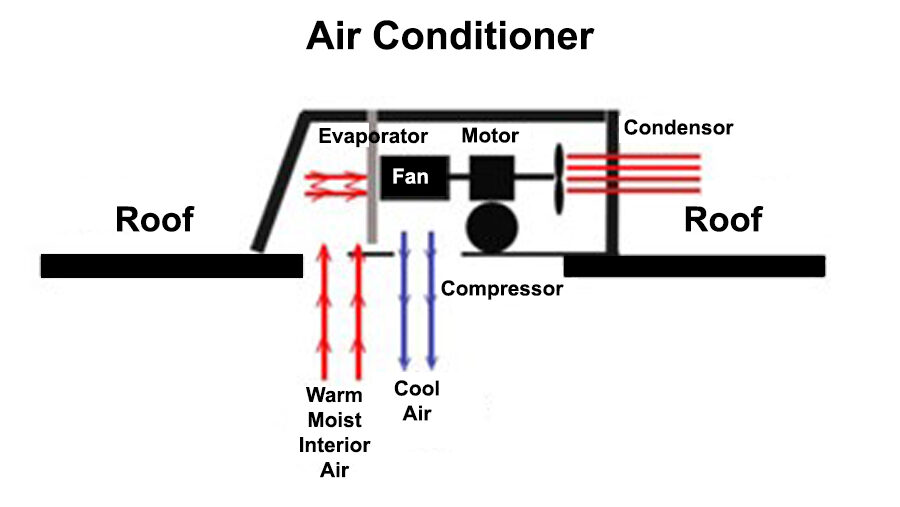
The now hot coolant flows back to the condenser and the fan draws outside air to cool it and do the cycle all over again.
Inspect and clean evaporator coils
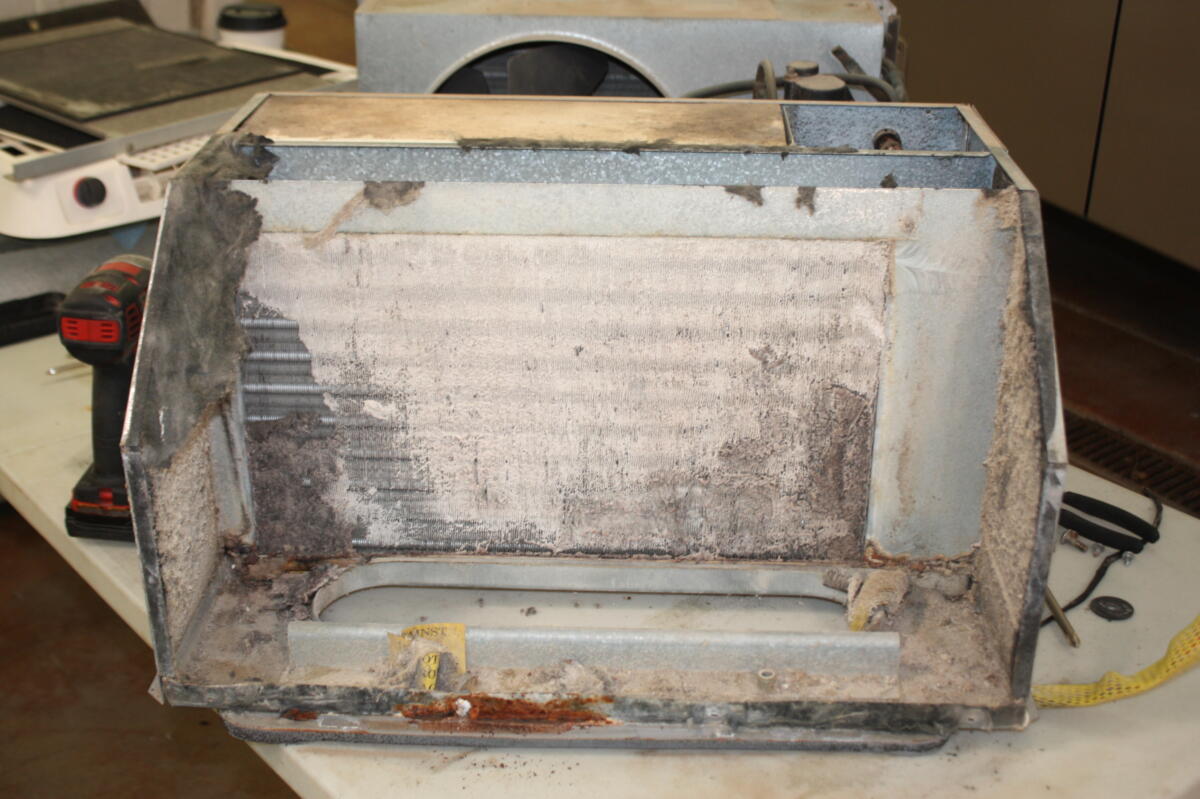
It is recommended that you periodically inspect and clean the evaporator coils as they can collect dust, dander, and moisture. Here is a photo of one that was never inspected. Not only did it smell, it ruined the unit due to the restricted airflow and high amp draw it created for the condensers and compressor.
More areas to inspect
Also inspect the drip pan and holes. If they get clogged, the condensation will pool in the pan and eventually get moldy when the unit is turned off and temperatures escalate.
Another area to inspect is the outgoing airflow chamber. Even if the evaporator is clean and the unit is working as designed, the cold air hitting warm metal of the chamber or ductwork can cause excess condensation. If left sitting, it will also create an issue.
Check the diverter
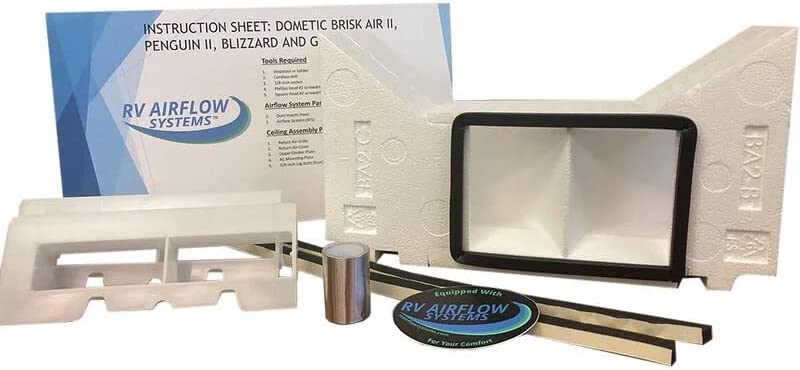
If you have ducted air vents, inspect the airflow chamber to make sure the diverter is in place and the airflow is as designed. Air conditioner manufacturers sell a generic unit that can be used for direct flow or ducted applications and a diverter supplied. The RV manufacturer is responsible for cutting the diverter to length and applying it in the chamber.
I have found several that were installed with a single piece of tape that did not hold. The air just circulated inside the chamber and did not get to the ductwork. You can reinforce this area with more HVAC tape, or install a customized airflow kit from RV Airflow Systems™, which you can get on Amazon here.
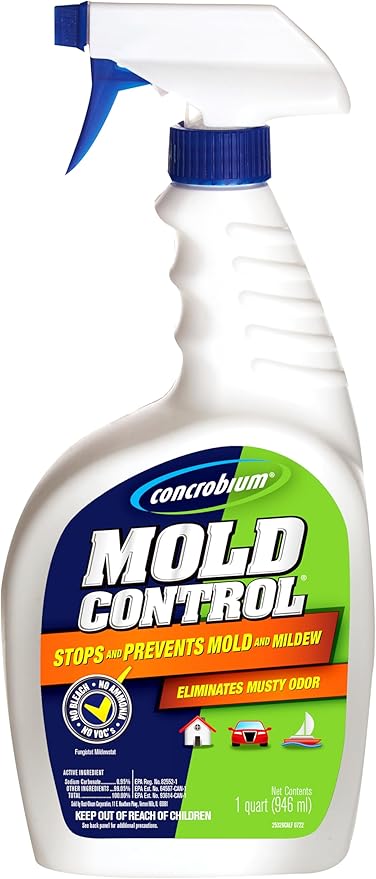
Once you identify where the musty smell is originating from, clean it thoroughly with a mold and mildew cleaner such as Concrobium Mold Control, which you can get on Amazon here.
You might also enjoy these posts from Dave
- RV has two roof air conditioners but only one ceiling duct. Is this a problem?
- Why does one RV air conditioner blow warm air while driving?
- Help! My RV air conditioner sounds like a ‘dying cow’
- What to use to power RV roof air conditioner when dry camping
- Why does air conditioner ‘cycle’ several times before staying on?
DAVE HAS ANSWERED MORE THAN 1,200 readers’ maintenance and repair questions. Read a directory here. There is so much to learn!
Dave Solberg is a leading expert in the RV industry and the author of the “RV Handbook.”
HAVE A QUESTION FOR DAVE?
Send your inquiries to him using the form below.
RVDT2933


Thank you for the discussion of the many ways the problem can occur and how to address each instance, Dave. Have a great day and safe travels!