


Hi Dave,
Can you explain how the black water flush system works in trailers? How well do the spray heads in the tank actually spray the entire tank to ensure the tank level sensors and the rest of the sludge get cleaned out? Or are they a stationary spray head that cleans one spot only? Do some manufacturers’ systems perform better than others? Thanks. —Gary, Keystone Raptor 300P
Hi Gary,
Thanks for the question and the opportunity to discuss and highlight the different black water flush systems and how well they work.
Black water holding tank basics
The black water holding tank is designed to collect waste from the toilet. Depending on the RV’s floorplan, one or more sinks may also drain into the black tank because of their location.
The gray water tank holds wastewater from the shower and, in most cases, the sinks. Since gray water does not contain sewage, it generally does not require treatment products to break down waste. However, plumbing configurations vary, so not all sinks drain into the gray tank.
Most black water holding tanks use monitor probes installed through the sidewall of the tank. These probes send signals to the monitor panel to indicate the tank level. Each probe receives 12-volt power, and when the rising liquid reaches a probe, it completes (or closes) an electrical circuit with a corresponding probe. This signals the monitor panel to display the appropriate level—typically 1/3, 2/3, and Full.
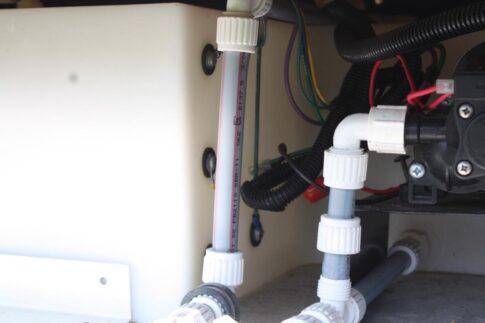
In other words, the liquid itself provides the electrical continuity needed to complete the circuit and activate the tank level indicator.
After the tank is emptied
The problem occurs after the tank is emptied. We assume the tank is clean and the monitor should read “Empty,” but that’s often not the case. Hard water deposits, toilet paper residue, and sewage sludge can remain on the tank walls and coat the probes. Because this residue can still conduct electricity, it may continue to complete the circuit and cause the monitor panel to display a false reading. This is a very common issue with traditional probe-style monitoring
As the fluid rises inside the holding tank, it provides continuity or what is called a closed circuit that goes to the monitor panel giving the levels.
When we empty the holding tank, we assume everything is gone and the levels should show empty. However, since we are using hard water, toilet paper, and creating sewage “sludge,” the sides of the tank can still be coated in something that will be conductive and create a closed circuit and still sending power to the monitor panel and thus a false reading. This is very common with the traditional probes that are inserted into the side of the tank.
Cleaning the black water holding tank
There are almost as many tank-cleaning methods as there are RV owners, and everyone seems to have a favorite.
You’ll find plenty of YouTube videos showing people filling the tank with ice and driving around to supposedly knock sludge off the tank walls. I tested this method in a video for RV Lifestyle & Repair and was unable to get it to work.
Over the years, readers have shared countless cleaning solutions, ranging from enzyme-based treatments to Calgon and Pine-Sol. Some owners report good results, while others see little improvement.
What I recommend
My preferred approach is to start with an enzyme-based treatment, such as Thetford’s AquaBio tank treatment, because it seems to begin breaking down waste more quickly. I also avoid dumping the tank until it is at least half full. This gives the treatment time to work and allows enough liquid in the tank to help suspend and flush away waste.
I’ve also tested several cleaning tools. One is a spray wand that connects to a garden hose and is inserted through the toilet. It does help, but it requires running a pressurized garden hose into the RV and through the bathroom.
The wand sprays in every direction—and I do mean every direction. Depending on the tank’s design, it may reach the tank effectively, but if the toilet connects through a 45-degree fitting, the wand often cannot reach far enough to do much good.
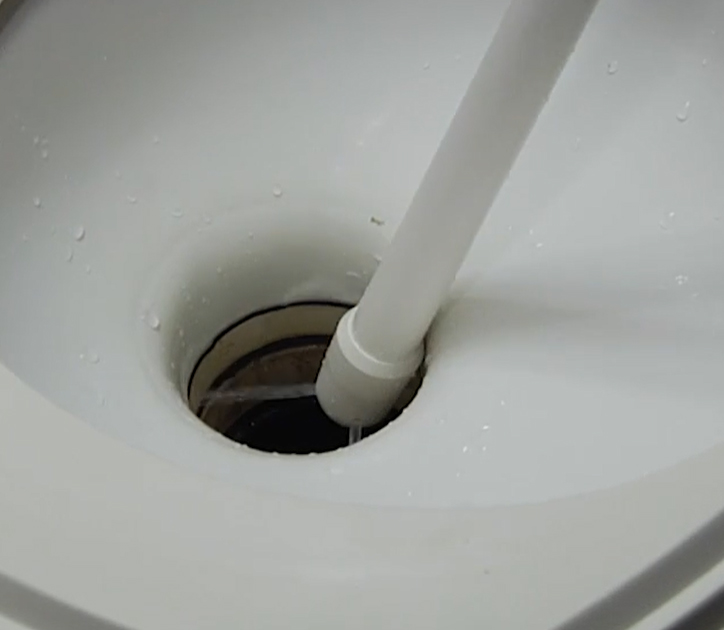
I’ve also tried the external bayonet-style flushing attachment that connects between the sewer outlet and sewer hose. While it introduces pressurized water into the tank, it didn’t reach far enough inside to make a noticeable difference in the testing I’ve done.
Flush valves
There are several types of black water flush valves, all designed to connect a pressurized hose and flush out the inside. Most have a 3/4” female thread on the service panel with a spinning valve inside with holes.
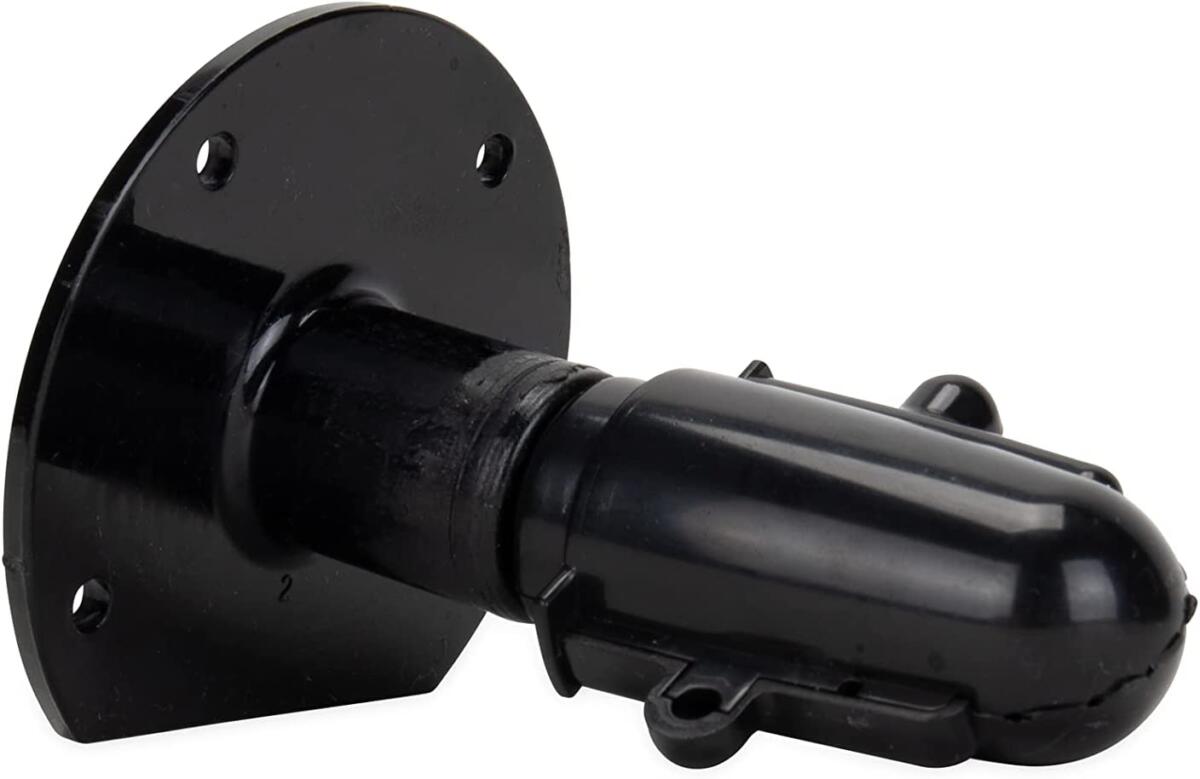
It is designed to be installed in a manner that shoots pressurized water at the probes. If the holding tank is located in the middle of the chassis, there will be a remote hose going from the service connection to the actual valve on the side of the tank. When winterizing a unit, most owners do not remember to empty this or add antifreeze and it can freeze and burst which is very difficult to get to and repair.
Depending on the size of the tank, I doubt a small valve like the one pictured will clean the sides of the entire tank. Another challenge is if an owner does not have a valve standard, it is difficult to add one, as access to the side of the tank that would face the probes may not be accessible.
A better option
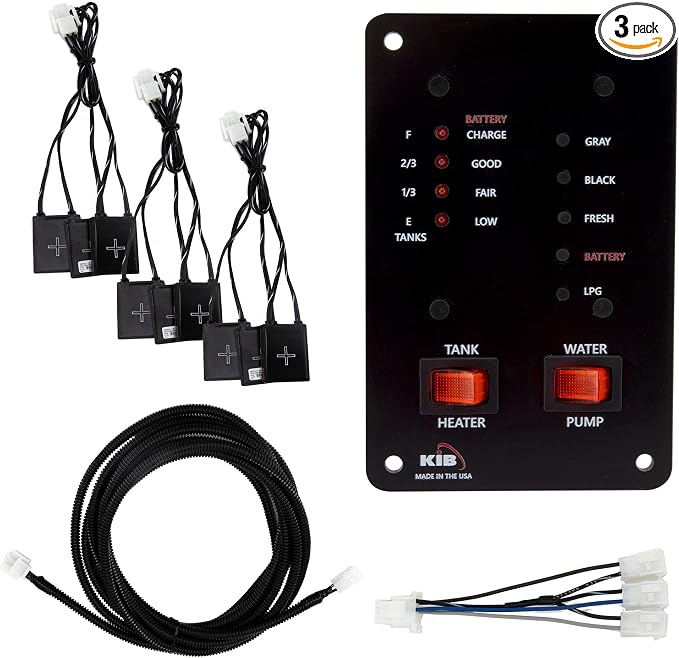
In my opinion, monitor tabs that use ultra sound are superior. Winnebago has been using a version similar to these from RecPro® and owners are reporting zero false readings. There is nothing to create a closed circuit as the tabs are mounted to the outside wall and measure depth. You can find them on Amazon here.
You might also enjoy these posts from Dave
- Does Dawn dish soap keep RV black tanks clean?
- Black tank still smells after trying EVERYTHING. Why?
- How do I get RV black tank sensors to work with correct readings?
- Does using ice cubes to unclog a black tank work?
- What is the best black tank treatment?
DAVE HAS ANSWERED MORE THAN 1,200 readers’ maintenance and repair questions. Read a directory here. There is so much to learn!
Dave Solberg is a leading expert in the RV industry and the author of the “RV Handbook.”
HAVE A QUESTION FOR DAVE?
Send your inquiries to him using the form below.
RVDT2947
