

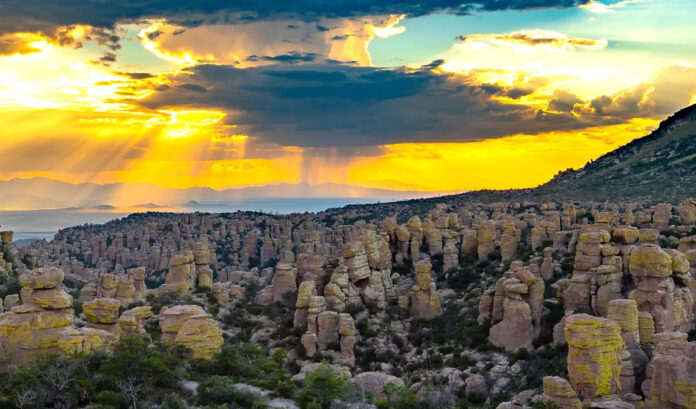
Right now, Chiricahua National Monument in Arizona feels like one of those places you almost hesitate to talk about. The roads are quiet, and campsites can still be found without months of planning. You can hike among towering rock spires and, at times, feel like you have the place to yourself.
But that may not last.
A bill to redesignate Chiricahua as a national park has already passed the U.S. House, pushing the idea further than it’s gone in years. If it clears the Senate, this remote corner of southeastern Arizona could see a rapid shift in attention—and RVers should be thinking about what that means now, not later.
The proposal itself isn’t new. Versions have circulated for years. What’s different now is progress. With House approval secured, the effort has real momentum—and that’s often the point where a quiet place starts showing up on more travelers’ radar.
A designation that changes behavior
On paper, a national monument becoming a national park doesn’t sound dramatic. The land doesn’t change. The trails don’t move. The rock formations—the reason people come in the first place—stay exactly the same.
What does change is attention.
The “national park” label carries weight. It pushes a destination onto bucket lists, into travel apps, and onto social media feeds. People who might have never heard of Chiricahua suddenly add it to a Southwest loop alongside places like the Grand Canyon or Zion.
We’ve seen this pattern before. When a site gains national park status, visitation tends to climb—sometimes quickly, sometimes steadily, but almost always noticeably.
What Chiricahua is like today
That matters because Chiricahua isn’t built for heavy traffic.
The monument sits well off the main travel corridors, tucked into a rugged corner of Arizona near the New Mexico border. Services are limited. Cell coverage can be spotty. The main scenic drive is narrow and winding in places, with elevation changes that keep drivers paying attention.
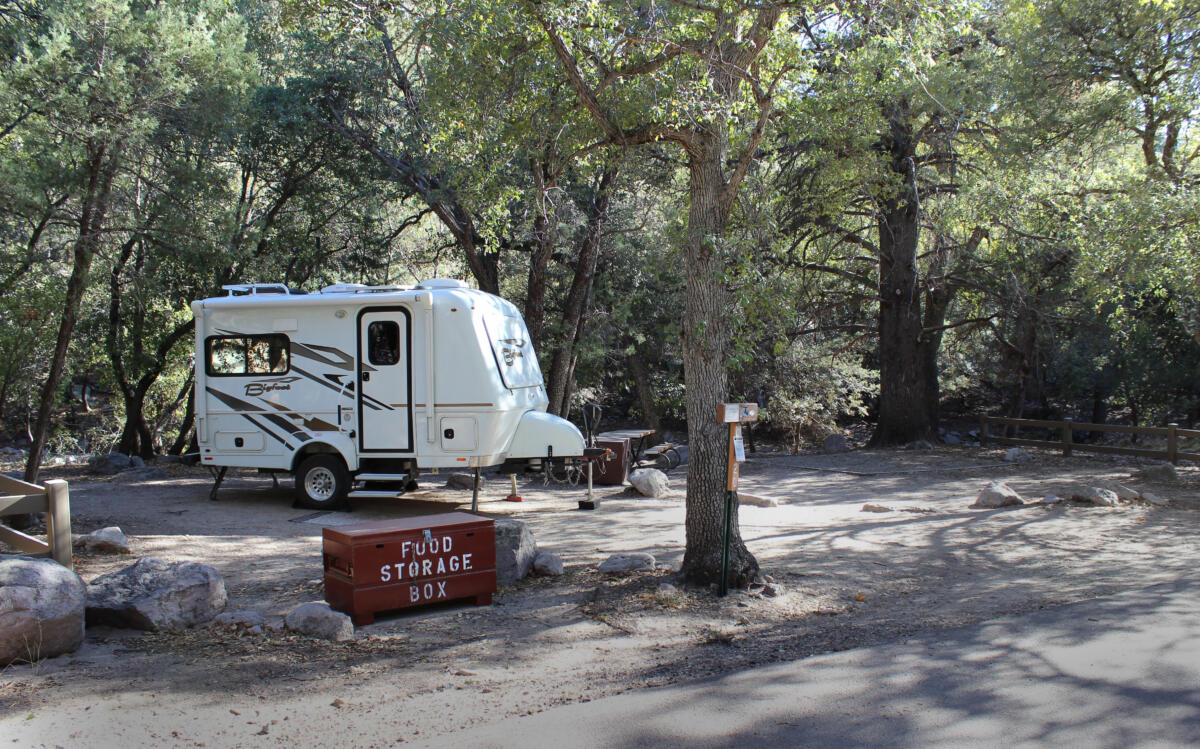
Camping is modest in scale. Bonita Canyon Campground offers a relatively small number of sites, and options for larger rigs can be limited. Outside the monument, dispersed camping exists—but it’s not an endless supply.
In short, it works today because visitation is relatively low.
What typically happens next
When designation changes, demand tends to outpace infrastructure—at least at first.
More visitors means:
- Campgrounds fill earlier and stay full longer.
- Parking areas back up during peak hours.
- Roads that once felt relaxed begin to bottleneck.
- Nearby dispersed camping areas see heavier use.
In some parks, that pressure eventually leads to changes—reservation systems, stricter enforcement, or even timed-entry controls during busy seasons.
Chiricahua isn’t there today. But if visitation jumps, it could start moving in that direction.
Why RVers feel it first
For RVers, these shifts show up quickly and in very practical ways.
Campground availability is usually the first pinch point. What used to be a flexible, last-minute stop becomes something that requires planning weeks—or months—ahead.
Road conditions matter more, too. Increased traffic on narrow or winding roads can make access more stressful, especially for larger rigs or those towing.
Then there’s everything outside the park boundary. Dispersed camping spots that once offered breathing room can fill up fast. Local services—fuel, groceries, dump stations—may not scale up as quickly as demand.
None of these changes happen overnight. But once they start, they tend to stick.
The upside most people overlook
It’s not all downside.
National park status often brings increased funding, improved maintenance, and greater visibility that can benefit surrounding communities. Roads get attention. Facilities get upgrades. Emergency services and staffing may improve.
For some visitors, those changes make a place more accessible and more enjoyable.
But they also change the experience.
The window RVers should be thinking about
That’s the real takeaway here.
Chiricahua today offers something that’s getting harder to find in the national park system—a sense of space, a slower pace, and the ability to explore without navigating crowds at every turn.
If it becomes a national park, more people will discover it. That’s almost certain.
And when they do, the experience will shift.
If you’ve been meaning to visit, this may be the moment to move it up your list—before the rest of the country does the same.
Editor’s note: Planning a visit? The term “larger rigs,” used in connection with Bonita Campground, translates this way: The Park Service says if you’re towing, your limit is 29′ from rear bumper of the tow rig to the rear bumper of the trailer. A healthy “dip” coming into the campground can damage rigs.
RELATED
- Three offbeat Arizona museums to visit, and where to camp nearby
- Arizona considers removing daytime speed limits on select highways
- Quartzsite, Arizona: 20 reasons why so many RVers love it
- Mittry Lake Wildlife Area—Free Arizona BLM boondocking
- Top 5 Arizona campgrounds for snowbirds
- Take an RV mini trip to Seligman, Arizona, for the best of Route 66
RVT1253b


❤️
Guess this means we will have to keep camping on the other side of the “hill” at the Sunny Flats cg. at the USFS Cave Creek Recreation Area. Not as much of historical interest, but just as spectacular geologically. Short FC-FS campsites and no hookups will keep most RVers away from Sunny Flats.
We loved our visit to Chiricahua. I gotta’ think most politicians haven’t been there, or they wouldn’t consider changing it’s status. The scenic road is too twisty and narrow and the turnouts and parking areas too small to accommodate even moderate traffic. They can’t be enlarged without damage to the park features which are in amazingly close proximity. And that would ruin the beauty and experience that is Chiricahua.
The main road is really narrow and routinely has fallen rock on it. The campsites are tiny. One has the urge to get in, have a nice hike, and get out before the next rock falls.
The first step if they want to make this a national park should be to put in a new road which veers off before coming to the old facilities; on that road build new large camping loops, a better visitor center, and maybe some new trails. Leave the quaint old stuff as is (well maybe do something about the rockfalls) but don’t make it a national park without expansion and upgrades.