

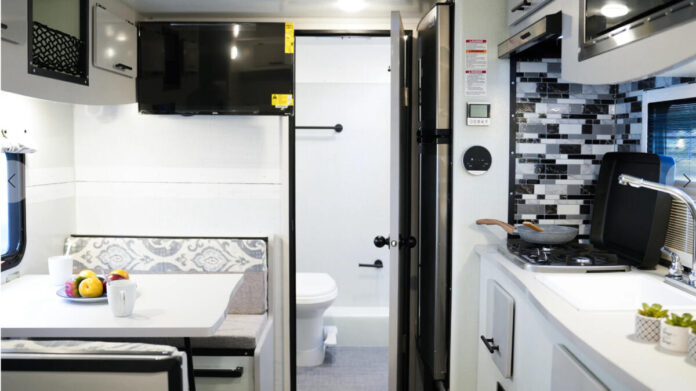
Today’s RV review is of the LIV 201QB travel trailer. I bet you haven’t heard of LIV, which stands for Lightweight Innovative Vehicle. It’s actually a product of a company that makes boats, Factory Direct Marine. As such, the way these are made is very, very different than anything else I’ve seen out there.
Unique construction of the LIV 201QB travel trailer
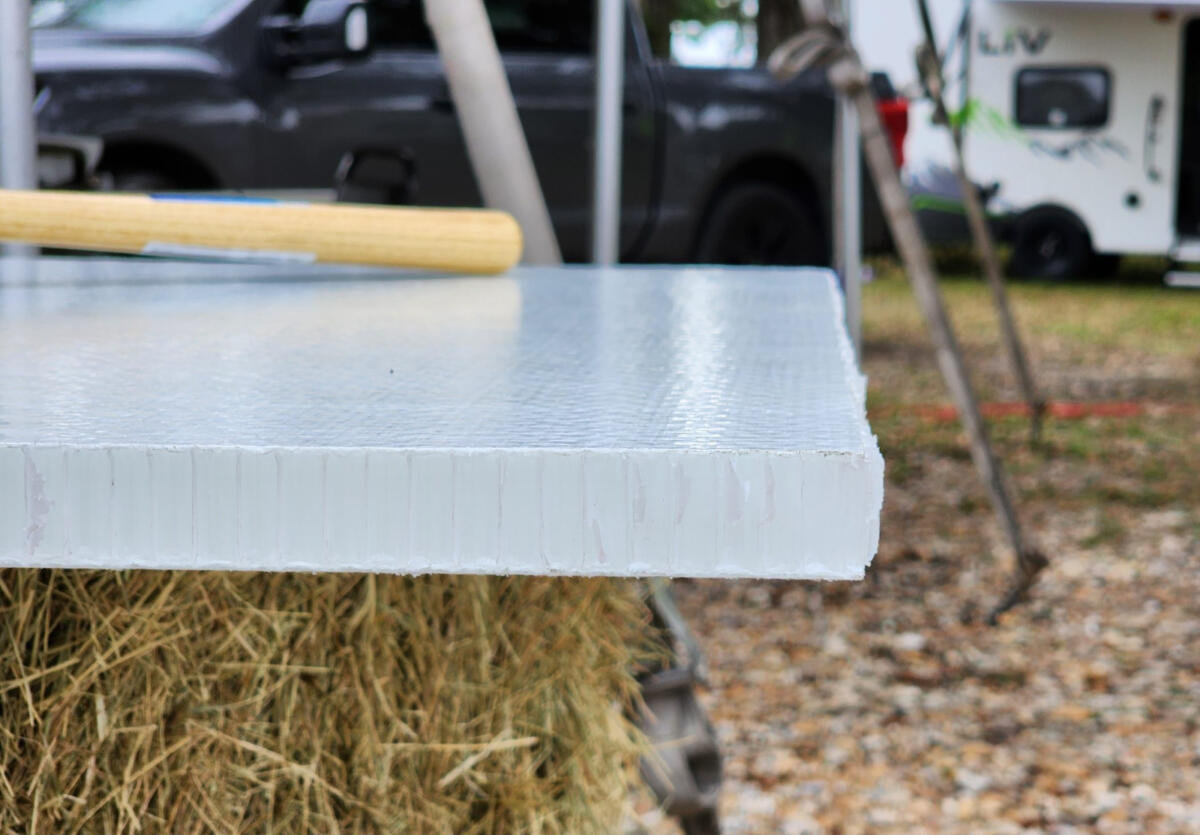
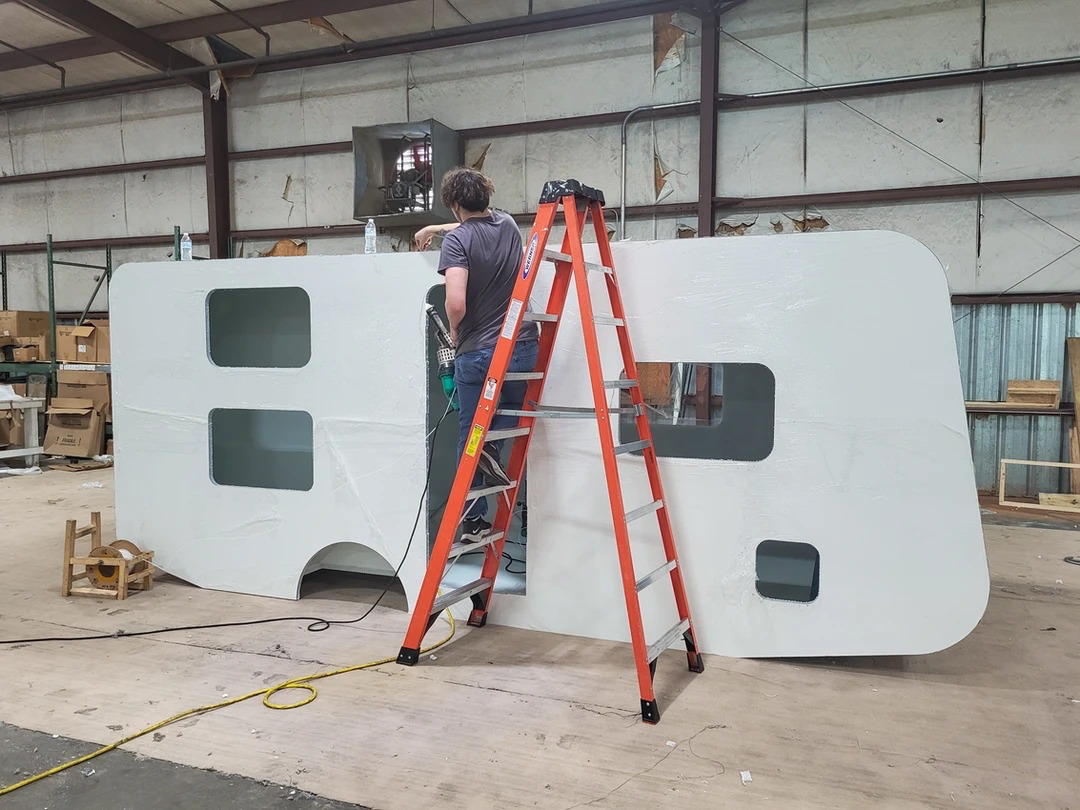
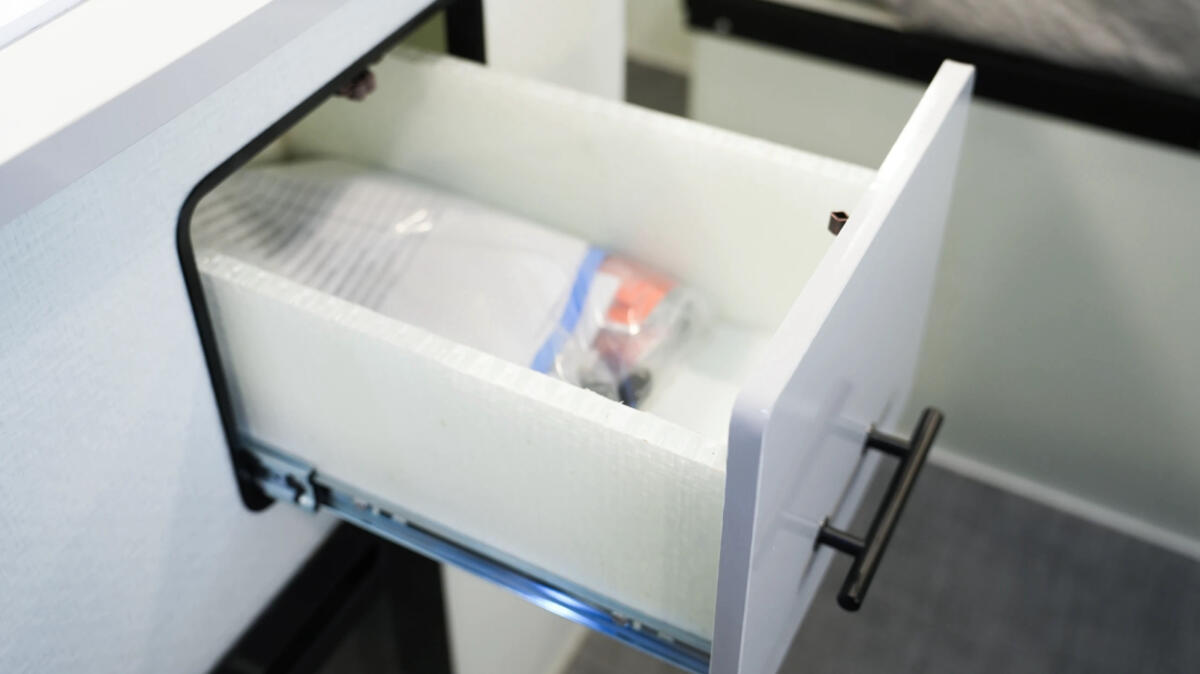
I have described how RVs are built in the past. Well, none of that applies here. Instead, LIV is building its RVs from a honeycomb plastic material. That includes the walls, the roof, the floor—the whole enchilada. Even the interior is built of this stuff.
Then they weld the pieces together ultrasonically. The “box” of the RV, or the body, basically becomes one single, solid unit. The bonus of this is that it’s all this plastic honeycomb. Not a bit of it is metal or wood. In fact, the company’s website shows one of their trailers floating on a body of water.
They’re so confident in this material and the way they put it all together that they offer a lifetime warranty on the construction.
Surprisingly, most of the rigidity of the structure comes from this honeycomb material, so the frame underneath the trailer is relatively light in duty. Interestingly, LIV’s base models offer a steel frame, but buyers can opt for an aluminum frame instead.
Other unique things about these trailers is that you don’t see a lot of stuff protruding from the roof. The air conditioning in this is a heat pump-type system inside the cabin of the trailer. The company has minimized other things coming up through the roof.






Let’s talk towing
One of the points LIV likes to make is that their trailers are light in weight so they’re towable by more types of vehicles. But let’s talk towing for a minute. Yes. I am the tow police. I’m like a tow police captain.
The actual weight of a trailer isn’t the only factor in what can tow it. You also have to take into account the tongue weight and the frontal area.
The larger the frontal area, the more wind resistance and the more energy it takes to overcome said wind resistance. This trailer is a full two feet lower than my own trailer in height. Also, there aren’t all sorts of things on the roof to add aerodynamic drag to the trailer. So not only is this lighter, it also has a lower tongue weight and fewer things on the roof to add drag.
However, this is relatively wide at 8’6”, so know that you’ll want some real mirrors on whatever’s towing this—that may then preclude your SUV.
So, while lots and lots of RV makers say that their products are “SUV towable,” I would much rather tow this with an SUV than most traditionally built trailers.
In other words, LIV is probably closer to correct than most RV companies. Though the mirrors aspect may shut down some SUVs in the towing department, unless you upgrade your mirrors.
What’s inside the LIV 201QB travel trailer
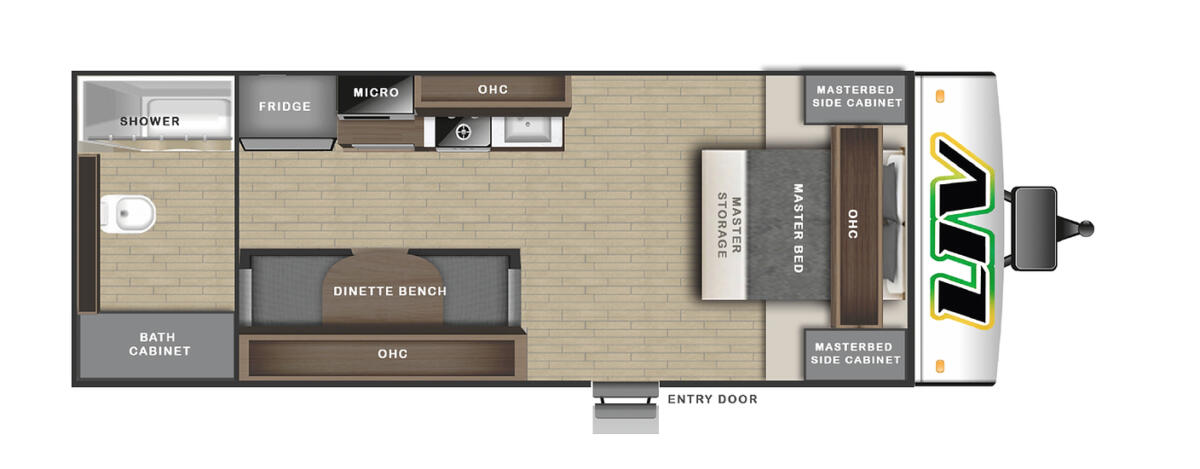
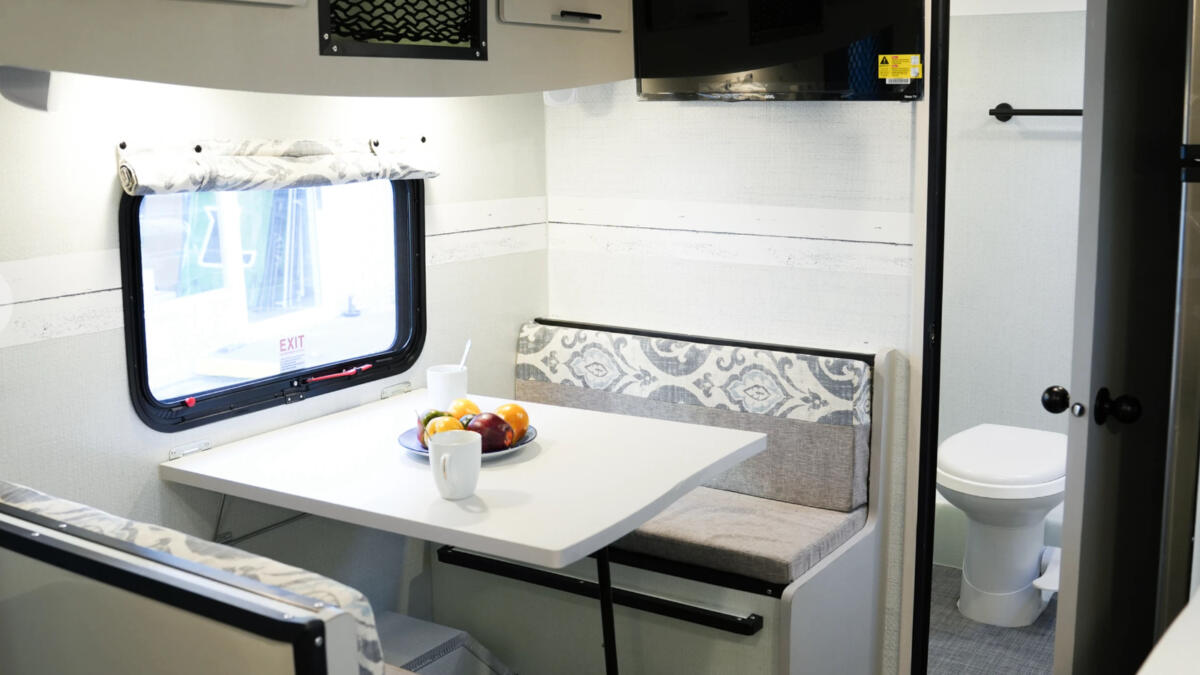
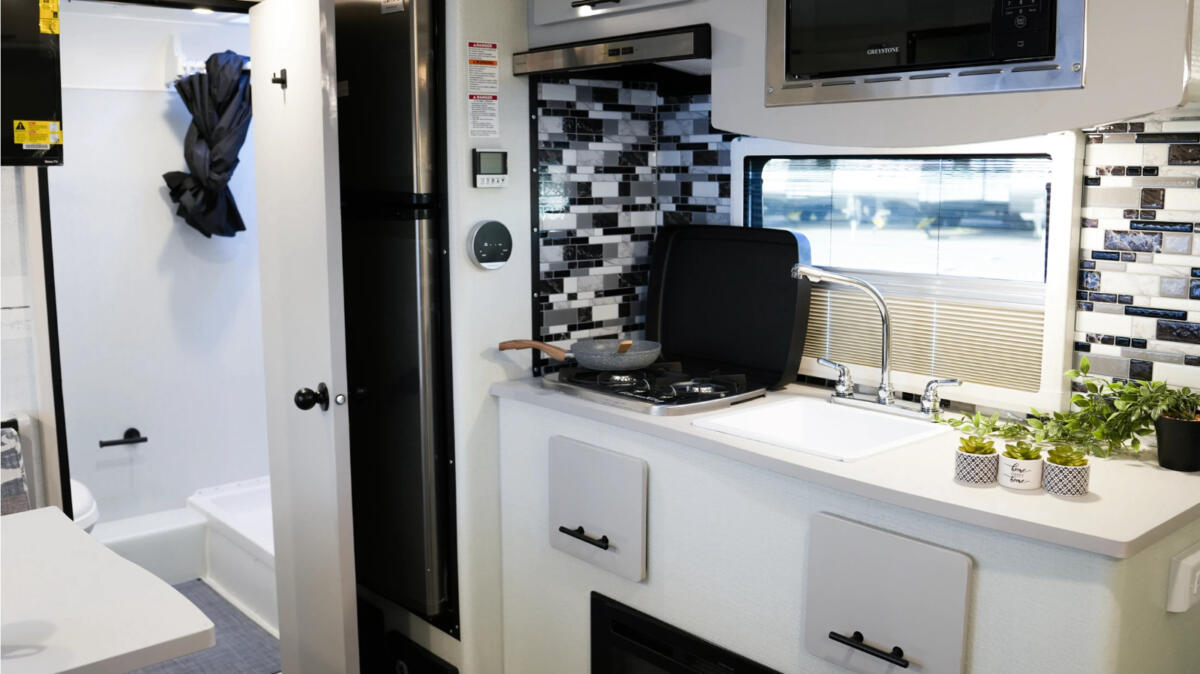
The reason I chose this floor plan to look at is that it’s something that’s very similar to what I have had in the past. There’s a bed at the front with a kitchen on the road side and dinette on the camp side.
A bathroom spans the entire width of the back of the trailer.
The feel inside this trailer is absolutely going to be different than what you may be accustomed to. As I wrote in my review of the SylvanSport VAST, most trailers are built like tiny, towable versions of houses and have that feel to them.
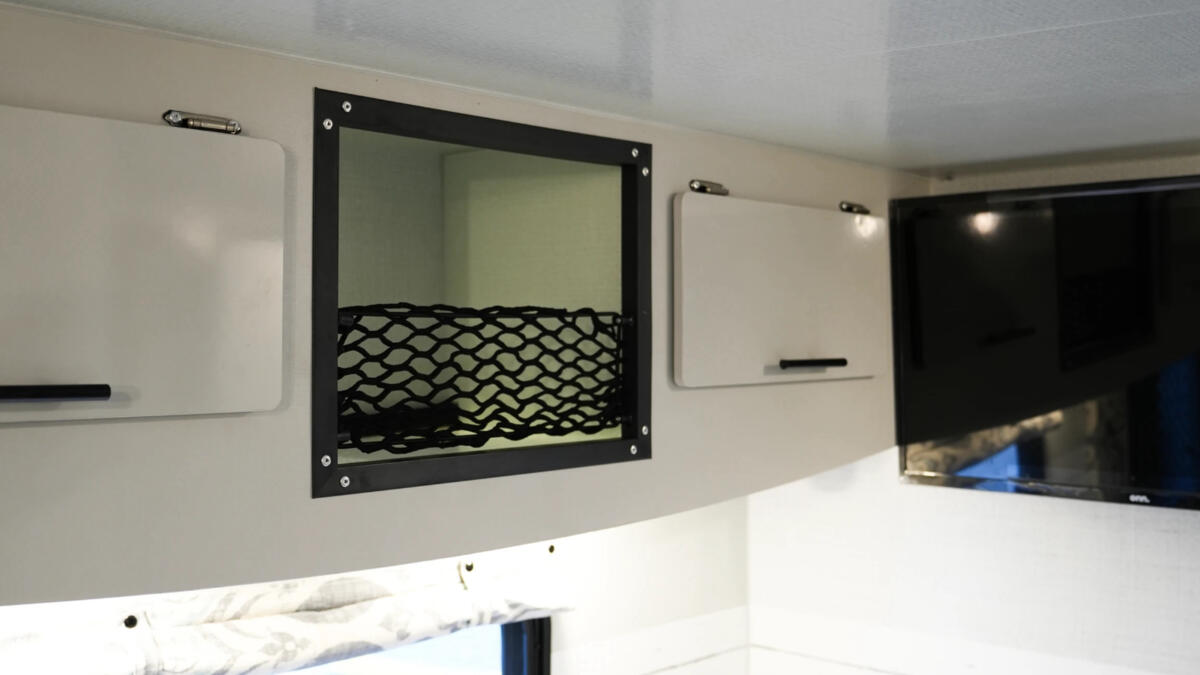
Since this is entirely made up of the honeycomb material, it doesn’t have the warmth of wood on the interior. Further, because of that construction, you’ll find exposed screws on cabinets and that sort of thing.
This is not bad, but I know there are going to be some shoppers that step in and step out very quickly. Their loss.
Let’s get pretty
While there’s nothing that’s not functionally good in this trailer, aesthetics is still something that this trailer, and many of the “fiberglass egg” trailers, lack compared with those that are made of wood.
But this build methodology gives you an opportunity to step up the style to your own taste very easily.
One of the things I’ve seen several owners of vintage trailers use is stick-on wallpaper from a company called Spoonflower. This stuff is almost like a gigantic Post-It note and can be applied and removed at will. So you could go all Joanna Gaines on the interior of this trailer and create a very different feel. Then, when the seasons and your mood change, you could do the same thing with a whole different look.
So, instead of the interior being rather stark, you could really use that as a great starting point. I found pine planks, maple and shiplap styles of wallpaper over at Spoonflower. Want this thing to look like the cabin your uncle had when you were a kid? Bam, pine plank wallpaper.
I would feel less bad wallpapering this trailer or one of the fiberglass egg trailers than I would a more traditional build.
Since we’re getting all home decor here, you should know that LIV includes floor mats that compensate for the floor being the honeycomb material—so you do have that. But you can also take out the mats and wash the floor without worrying about damaging cabinetry.
Some considerations
One of the things that I’ve seen more and more RV companies do of late is enclose the holding tanks on their trailers. Many go the extra step of heating the underbelly of their rigs, and some also provide 12-volt heat pads.
You won’t find that here. While I like the fact that I can see all the systems from underneath the trailer, I live in the Southwest partially because I absolutely hate winter. Some of you live where winter spends its winter—and this might change the usability of this trailer.
I got to speak with the company for this story and one of the things we talked about was the suspension. Right now it’s a traditional leaf spring arrangement, but they said they had considered a torsion axle design. That would be my choice—but I’m not the one making these.
As for boondocking, the floor plan we’re looking at has no slides—so you can use the whole thing all the time.
I did like that the shower is a shower with a shower curtain. And I like that LIV chose to use one of those articulated shower curtain rods that magically go into the shower to make the bathroom bigger when you’re not taking a shower and pop out to make the shower bigger when you are.

Final thoughts
The company is newer, having started in 2022, and already I’ve seen progress in design and build. For example, for 2024 the company is now offering some colors molded into the trailer as opposed to just the white exterior. They are not full of stickers, so these trailers do have a bit of a stark appearance on the outside.
Speaking of the build material, the exterior isn’t all shiny smooth, as some laminated trailers are. The honeycomb construction leaves a bit of a honeycomb in the exterior wall. To me this is a unique advantage, but I can see some shoppers wishing for a smoother exterior.
Considering the way these are built and the warranty, I think they’re well worth seeking out. That’s going to be a challenge because their distribution is currently pretty limited—but I hope that changes.
I think that a lot of what I see in these trailers could really be an example for other RV companies to follow. But the fact that that’s not how they do things makes the LIV line stand out in a very good way.
There are a lot of advantages to this design. However, I am not a fan of the company’s website. There’s an epic story here and the website doesn’t do a great job of telling it, but it seems like it wants to. Plus, it didn’t like my tablet and I had to switch to a real computer. That won’t make Google happy, either.
This is one of those RVs that is likely going to develop an ever-larger and vocal fan base over time. The build quality seems to be there, the materials are very unique in a good way, and the design is on point and just getting better. Because this is less traditional, the company is going to have some challenges overcoming this with some customers. But I bet there are a enough people who would appreciate the positive differences in this trailer that their issue might eventually be just building enough of these to satisfy demand.
*****
More about these RV reviews
These RV reviews are written based on information provided by the manufacturers along with our writer’s own research. They are based on information from a single unit and may not reflect your actual experience. Shop your RV and dealership carefully before making a buying decision. We receive no money or other financial benefits from these reviews. They are intended only as a brief overview of the vehicle, not a comprehensive critique, which would require a thorough inspection and/or test drive.
Tony comes to RVtravel.com having worked at an RV dealership and been a life long RV enthusiast. He also has written the syndicated Curbside column about cars. He also works closely with a number of RV manufacturers to get an inside look at how things are done and is a brand ambassador for Rockwood Mini Lite with his wife, Peggy.
You can also check out his RV podcast with his wife, Peggy.
##RVDT2390

Living and camping in the SW, I appreciate white RV exteriors. A couple in a WY cg. we were in had the same 5th wheel we had, but 2 years newer. Ours was white with white roof and appliances/covers, theirs was tan with black roof appliances. We never had a problem cooling ours, but they complained about how hard theirs was to cool.
The backsplash in the LIV certainly adds some eye-catching design. Now for the flowery curtains, circa 1940! But for that list price, it should appeal to a lot of weekenders! They do need to add tank heaters, at least as an option. Our old Mini Lite didn’t have an enclosed underbelly, but we got the optional tank heaters. Worth every penny!
The good thing is that with those exposed tanks it would be really easy for an owner to stick on 12 volt tank heaters.
The use of a honeycomb plastic material for the superstructure is intriguing. Perhaps in a few years, after the first models are road tested, this may prove to be a cost effective way to go.
Worth investigating due to the build and price.
Thank you, Tony! 🙂 This seems a great company making a great product. Not my “cup of tea,” but certainly bears following to see their journey. Thanks again, have a great weekend, and safe travels! 🙂
Tony, this is the 1st single-axle walk-through that has caught my attention in a positive way. We currently own a 2022 Gulf Stream 189DD. A 21′ TT with pretty much same floor plan. We love it for easy travel with our 2020 Subaru Ascent. But to get the weight down (and it is still 500# more) the construction is flimsy. The LIV 201QB should do everything our GS does and save gasoline. The downside? on the GS almost the entire water supply is inside the heated cabin and we have used it down to the high teens without freezing.
Lifetime Warranty = Lifetime of the Company (maybe). For a start up company in the RV business, it’s meaningless.
I’m not against new ideas, but my experience with most plastics is it becomes brittle with age (kind’a like people), especially when exposed to the elements. On the plus side, it doesn’t rot. I’ll let someone else buy the first one.
Sven, good point on plastics and the environmental impact on their longevity.
For about 5 years of my nearly 40 years with a very large international company, I ran their supply chain for raw plastic materials. I know that UV resistance greatly depends on the type of plastics being used. Our company, in concert with a small Korean plastics development and mfg firm, invented the first UV stable PVC, which the big plastic pellet mfg’s Bayer & GE said was impossible to do. That was in the 90’s, so I’m sure even more progress has been made.
Tony, a GREAT review of an intriguing product! While I’m not in the market for one, I think this company has some real potential with this product. As I was reading I told my wife they could mold in some color or owners could use self stick wallpaper. Then as I read to the end, you answered that! Would be interesting to know what kind of plastic they are using, per Sven’s comment.
I agree on the suspension. The only other concern is that trailers can be too light and bounce horribly on our rough expansion jointed highways. Also more subject to sway in high sidewinds. So a robust suspension and good sway bars would, I think be imperative.
Great article! My wife and I bought a 2024 201QB in February and have been out half a dozen times since. In fact we just got back today (Memorial day) from a trip. I chose this camper because of several key elements: 1) All composite construction. We owned traditional campers and water damage was always a struggle to minimize. 2) Weight. It tows very easily. 3) Cost and size. I had decided composite was what I really wanted, but couldn’t afford an Oliver and Scamps are too small.
I would happily recommend one to a friend!