

By Chuck Woodbury
I love traveling, and I love traveling with my RV the most. But regardless of how I travel, what I love the most is learning. I have a serious problem passing by a museum without stopping. I always learn something new.
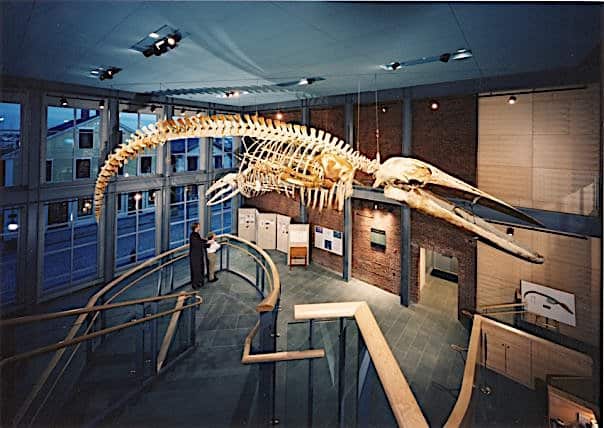
Last week, in Massachusetts, I visited the Whaling Museum in New Bedford, where I met a 66-foot-long juvenile blue whale named Kobo. He’s not “totally” there, just his skeleton. Kobo has been dead 25 years. His skeleton hangs over a good portion of the lobby. Before he was killed by a passing tanker ship, he weighed about 80,000 pounds. That’s close to the same as four 32-foot Winnebago Adventure motorhomes, one of which I own. The largest blue whale ever found was 109 feet long and weighed 300,000 pounds.
What I found most amazing about Kobo is that he is still producing oil more than two decades after his death. The team that assembled him estimates that the process may continue until 2060, maybe longer.

Long before petroleum fueled our lives, whale oil was king. Whaling ships sailed the high seas from the 16th to 19th centuries killing whales with harpoons, then boiling down their blubber aboard ship to produce oil. They would sell the oil to eager buyers for lamp fuel, to make soap and for lubricating machinery.
In the museum, if you look closely at Kobo, you can see oil seeping from his bones. A tube connected to his jawbone collects the oil, which then drains it into a glass beaker, where you can view it.
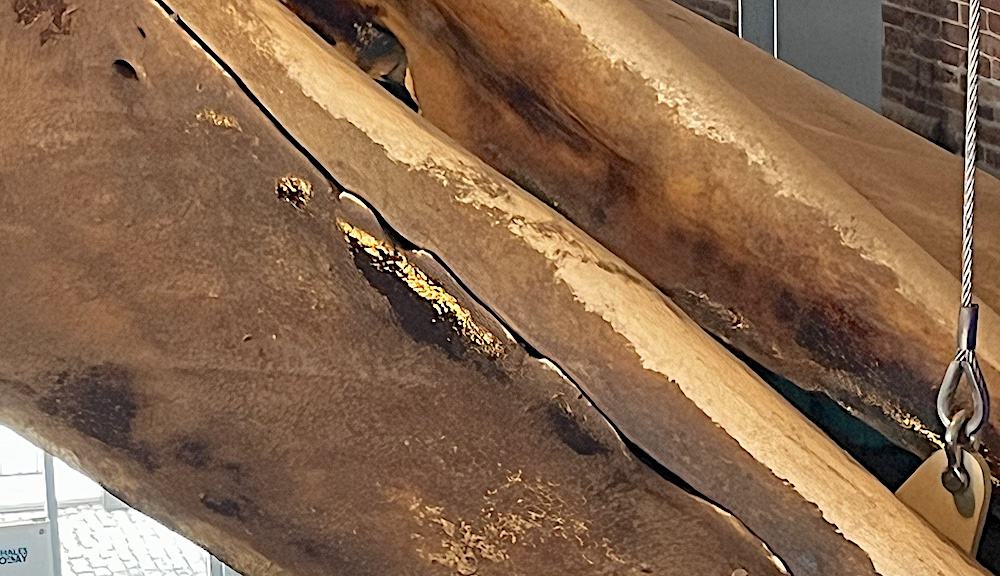
If you visit the New Bedford Whaling Museum, wear a light jacket or sweater. The temperature needs to stay cool. If not, the several whale skeletons hanging from the ceiling start dripping more oil.
##RVT1106


While serving in the Navy (1963-1965) I was stationed at NAS Keflavik Iceland for a year. During one of my off-base guided tours, we stopped at the whaling station, and I purchased a whale tooth. I still have it today and think about living in Iceland for a year. I understand that you are not supposed to own whale bones now, but I should be grandfathered in.
My family home is in Sandwich, Massachusetts. The Wing family home is located on the North Side of the peninsula East of Sandwich. The house is dubbed the Wing Fort House and is a 2/3 Saltbox. Because the “parlor” or main downstairs room has 18”- 24” thick walls. It was originally built by the town of Sandwich as a “safe haven” in case the native Americans living in what is now Provenance Town decided to attack.
The house is now on the National Historic Register as one of the oldest homes still owned by the same family since the 1630’s. The Wing family employs a caretaker who is a historian and lives in a house on the grounds.
The Wing Family of America is a nonprofit that oversees the maintenance and care of the house. The house and surrounding acreage are open for tours by appointment and includes other homes that occupy the original 78 acres of the Wing farm.
If anyone is interested in a tour of the house or the museum it’s available by appointment.
That’s soooo cool, Calvin! Thank you for that information. Your home, and family history, is fascinating and amazing! Have a great day. 😀 –Diane at RVtravel.com
Amazing information; thank you!
What he said! 🙂 Have a great week, Chuck, safe travels, and safe stays! 🙂