


Dear Dave,
The RV’s gray and black tank valves are closed, so how am I getting black sewer flies in my bathroom? How do I get rid of them? —Laurel, 2006 Holiday Rambler
Dear Laurel,
Even with the tank valves closed, sewer flies can still cling to the sides and top of the tank and drains and hatch larvae and more flies. Rotten food and organic matter are breeding grounds for these. They typically lay eggs in the slime buildup on the pipes and even the drain strainer.
Their lifecycle can be as little as one week. However, typically it is 2-3 weeks and each adult female can lay between 30-100 eggs, so it is difficult to stay ahead of them if you don’t treat your tanks periodically.
I’ve had people question how they can get flies inside the rig when they have not opened the toilet. Sometimes a sink in the rig is routed to the black water tank due to the floorplan design. As you travel down the road, the swaying can “slosh” the drain water out of a “P” trap, so there is an open path until you run water down that sink.
It is also important to use the proper treatment that is enzyme-based, as the enzyme will help break down the slime and kill the larvae, as well.
Why do you have flies?
Most likely, the flies are coming from some type of food source that is getting washed down the drain or the toilet. It doesn’t take much when one fly can lay as many as 100 eggs, and they are adults within a week!
And it might not be your tanks, as flies can breed in waste foods in the trash, leaks under the sink, especially a “P” trap leaking, the basement, and even the sewer hose if not properly cleaned and sanitized.
Getting rid of sewer flies
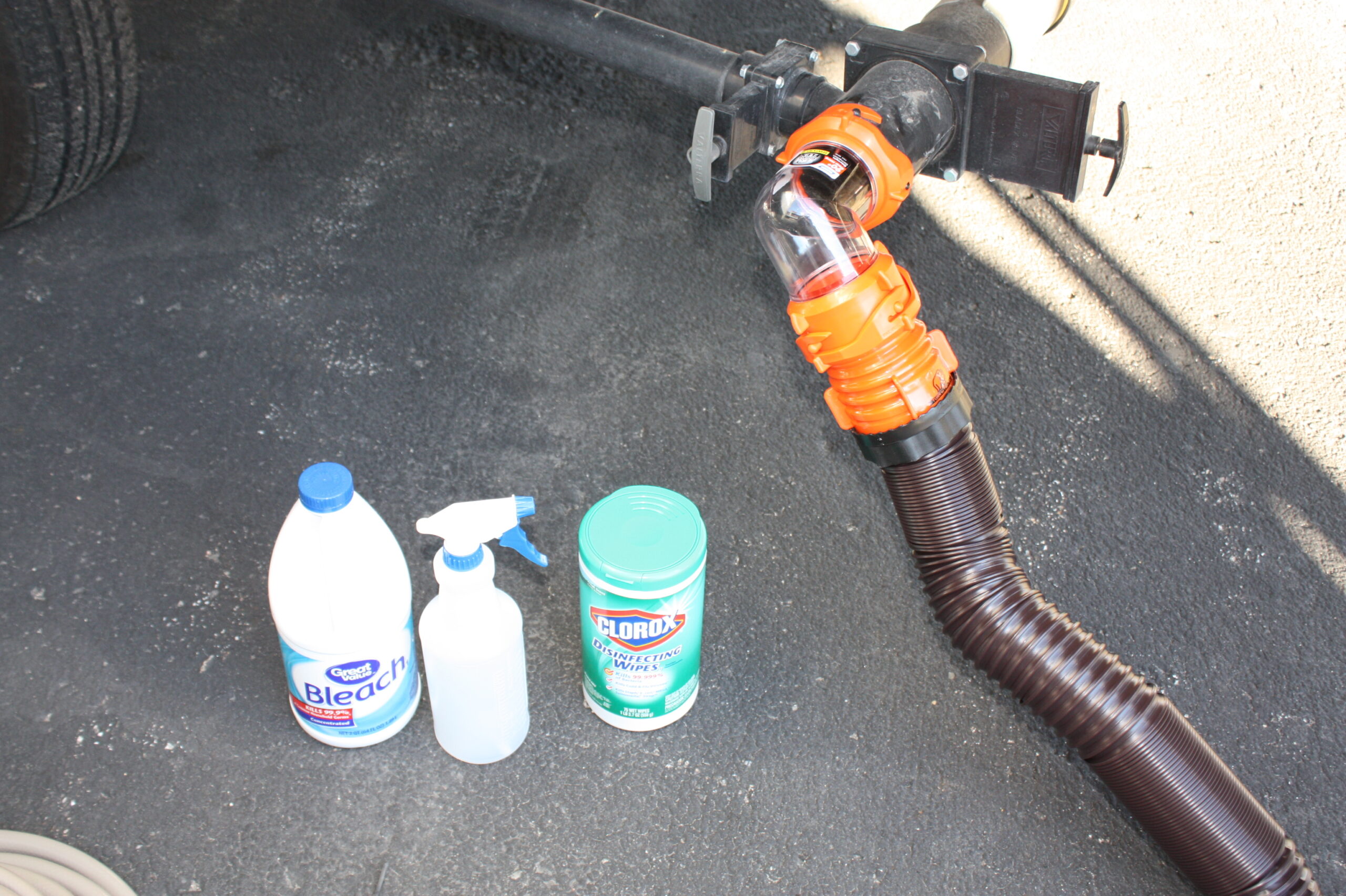
Dump your black and gray water tank as usual. Bleach is my sanitizer of choice. I use 1/4 cup in a gallon of water for many things, especially sanitizing the tanks periodically. I also put it in a spray bottle and squirt the dump valves, clean around the toilet (if I don’t have carpet!), spray my outside faucet and shower, and even the campground faucet. You never know what has been there.

In both the black and gray water tank I use one gallon of the bleach mixture for every 15 gallons of capacity, and then fill the tank to the top as larvae and eggs can be there, as well. Let it sit overnight and even drive around the block to get it all over the tank. I like to pour the bleach solution down all drains, toilet, shower, and sinks. Caution: Do not mix bleach with anything else as it might create harmful vapors. You can also use boiling water or drain cleaner to clean the pipes.
Then dump the tanks at an approved dump station and rinse them out two more times. If you have a black water flush valve, that is good to use between rinses. Or you might be able to use a flush wand.
If you don’t want to use bleach, then use an enzyme-based cleaner like Thetford Tank Blaster or a residential one that is approved for plastic pipes.
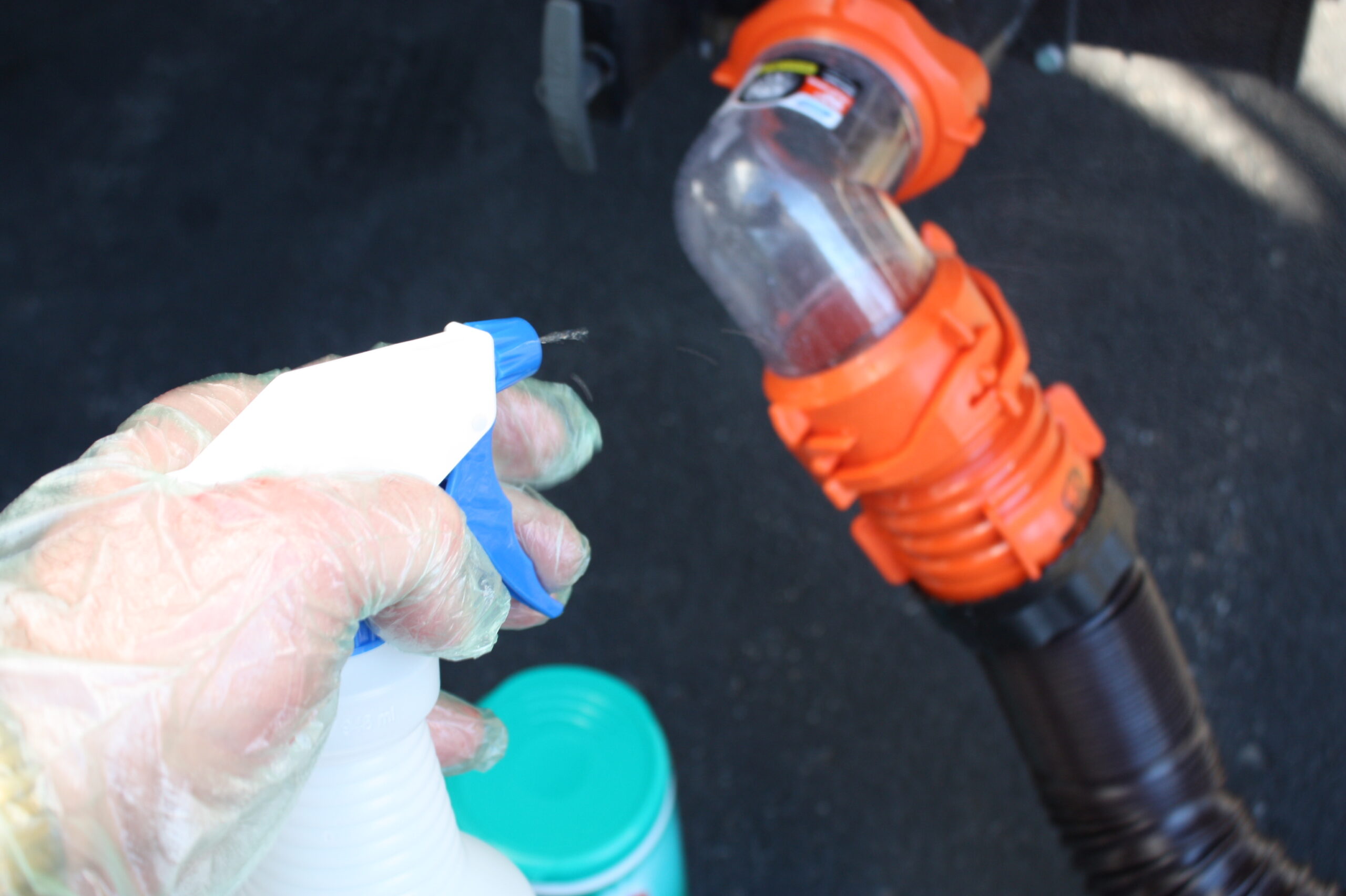
Use an antiseptic towel to clean all the drain pipe connections, under the sink, the toilet and base, and around the shower basin. You will also want to clean the dump valve and surrounding pipes and compartments. Most of the service compartments are plastic and can be sprayed with the bleach solution and rinsed off after an hour. Just make sure you don’t spray any electronics or wiring. And if you have a washing machine, don’t forget to clean and sanitize that and the surrounding area as well!
Getting rid of the adult flies
After sanitizing, you probably don’t want to wait 2-3 weeks for the existing flies to die, so you can do a few things to get rid of them. There are several DIY traps such as apple cider vinegar and dish soap covered with plastic wrap and a few holes poked in the plastic. Or use a commercial trap available at home improvement stores and hardware locations.
Quick tips for keeping them out
- Clean and sanitize both the black and gray water tanks often.
- Don’t leave dump valves open.
- Keep your drain pipes and “P” traps clean and sanitized with bleach solution or boiling water.
- Don’t let food sit in under-sink trash cans.
- Drain tanks and sanitize before storing.
You might also enjoy this from Dave
How do I keep my RV’s black and gray tanks clean?
Dear Dave,
Good morning. Other than the Thetford gauge cleaner, what is a good routine to get into to keep black and gray tanks clean and not smelly? Thanks. —Julie
Dave Solberg is a leading expert in the RV industry and the author of the “RV Handbook.”
Read more from Dave here.
HAVE A QUESTION FOR DAVE?
We have a popular forum for Ask Dave. Please be as brief as possible. Attach a photo or two if it might help Dave with his response. Click to visit Dave’s forum. Or send your inquiries to him using the form below.
##xxxx

At which point in your sanitary procedure have you mixed a concoction strong enough to kill all the friendly bacteria in the septic system. I would imagine most campgrounds use a septic system rather than a city sewer system with wastewater treatment plant.
I am president of a coop campground with 17 septic systems. We have NO BLEACH signs in all our laundries and members and guests are strongly reminded not to use bleach for anything that might get into our septic systems. It costs many thousands of dollars to repair a damaged septic system. I imagine that many campgrounds have septic systems that are similarly vulnerable.
I have worked with our local Dept Of Natural Resources (DNR) and Sanitary District and they stated that 1/4 cup mixed in one gallon of water and then diluted by 15 gallons of water would not affect a septic system. It would need to be 3/4 cup in every gallon which is a very strong solution. I do appreciate and respect the no bleach requests as you can not monitor the amount used by everyone. The alternative would be to use the enzyme based cleaners mentioned. Thanks for the comments.
Bleach solutions would damage RV waste valve seals, if they are rubber, which is damaged by bleach? Rubber listed as Unsatisfactory on the compatibility Chart. Chart shows rubber suffers damage, but Butyl rubber and EPDM are Recommended for bleach. I cannot find any info on what RV waste gate seals are made of?
Hydrogen Peroxide also mild/ moderate damage of rubber, but Recommended under Butyl and EPDM
Thank you, Dave!