


By Greg Illes
A lot of us have seen the after-market circulation fans for RV refrigerators. They are small, battery-powered units that purport to help keep the inside of a fridge at uniform temperature.
 The premise is accurate and air circulation provides several benefits such as even temps, reduced humidity, less ice and so forth. But, unfortunately, the after-market products leave a lot to be desired. They require periodic battery replacement, which most of us can manage (maybe) — but they also provide very little air, have a high failure rate, take up shelf space, and are in general very poorly reviewed.
Taking all this into consideration, I decided on a permanent fan installation. My requirements were simple: reliability, decent air flow and very low current consumption. A brief survey of digikey.com turned up a 12V ball-bearing fan that pushed out adequate air and needed only 25 milliamps (that’s 0.025A) of current. Even running full-time, it takes this fan 160 hours (almost a week) to use up 2% of my coach battery capacity — essentially a non-consumer.
Mounting the fan took only a simple piece of aluminum bent to a shallow angle, and two sheet metal screws to fasten it to the sturdy inside wall of the fridge. Getting 12V power to it required removing the fridge control panel (two screws for a Norcold fridge), finding the 12V line which powers up with the fridge ON switch, and using a simple wire-tap splice. Another one for the ground lead, and we were merrily spinning the fan whenever the fridge was switched on.
For this prototype installation, I covered the wires with white duct tape (shown), but after a trial run I will drill some holes so the wires don’t have to route past the door seal. It works fine either way, but it will be just a little “cleaner” with the wires hidden.
I have a week’s time operating it now and I can easily see the differences. The cooling fins stay frost-free, and all the items and areas in the fridge are equally cool. It also really helps a lot when new items are put in the fridge — they get down to temperature more quickly now. The days of cold cheese and warm beer are finally over.Here are the particulars on the Digikey fan:
Digikey part 381-2500-ND
Volume 19.4 CFM
Power 0.3W (25mA at 12V)
Price $23.11
photo: Greg Illes
Greg Illes is a retired systems engineer who loves thinking up RV upgrades and modifications. When he’s not working on his motorhome, he’s traveling in it. You can follow his blog at www.divver-city.com/blog.

 Like your older home furnace, the standard propane furnace in your RV sends most of the heat out the exhaust port — they are very inefficient. The other downside is they require electricity to run the blower fan which distributes the heat through your RV.

 The U.K. company Caravan Guard was shocked when finding the number of claims for damages from smacking into something high up jump six-fold between 2005 and 2008. Since the average claim represented damages pushing $4,000 (U.S.), the company was rightly concerned and marched out a campaign to make RV drivers more conscious of their rig’s height. Company insureds were provided a sticker showing the rig’s dimensions and asked to post it on their windshield visor.
 uestion: I have heard the batteries in my RV are important to almost everything in the RV. Why?
 Keeping an RV log can be useful in so many ways. If you keep track of the miles you’ve driven pulling your trailer, you’ll have a better handle on how long your tires last; and if you service your axle bearings by “miles driven,” you’ll know when the maintenance interval has rolled around.


 On the other hand, they also take up space that could be used for storage and most RVers don’t use them much. Another drawback is they use a lot of propane gas, but so does your furnace. (If they are the electric models they also draw a lot of electricity.)
 If you have a toy hauler you may have found a frustration issue in the “storage” area. It seems most haulers don’t have rails or cargo-fastening devices installed in the back. That’s probably because everyone wants these devices in different places, depending on what kind of cargo they are hauling.
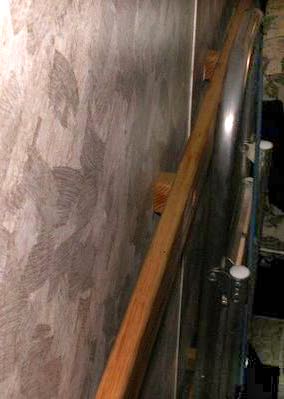
 One RVer we met wanted a place to strap stuff to the wall in his toy hauler, so he built and installed these “moving van”-type cargo rails on the walls. He also wanted to protect the finish on the walls and these rails are just the ticket.
 But what about the methodology? Is it just a case of getting rid of smells? Well, yes and no. There’s a right way and a wrong way, as with so many things in life.
 Here is how it works: Select a movie(s) online from the Netflix website via your smart phone or other Internet-enabled device, prioritize them in their queue and enter the mailing address for the current place you’re camping.