

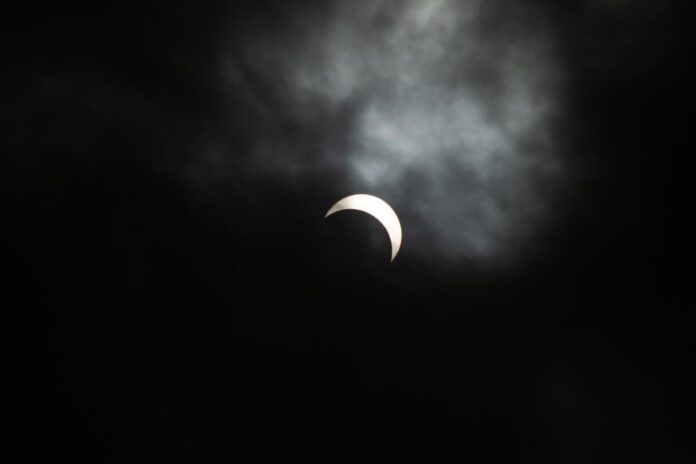
Mark your calendars, skywatchers! On March 13-14, 2025, the night sky will display its first total lunar eclipse in nearly two and a half years.
This celestial event will be visible across North and South America. It will offer a stunning spectacle for anyone lucky enough to have clear weather.
Why so special
This total lunar eclipse is particularly exciting because it’s the first one visible since 2022. It’s perfectly timed for viewers in the Americas, kicking off late on March 13 for those on the West Coast.
For 66 magical minutes during totality, the moon will be completely shrouded in Earth’s umbra. The moon will take on a deep reddish hue—the hallmark of a total lunar eclipse—also called a “blood moon.”
What causes a lunar eclipse?
Lunar eclipses happen when the earth, sun, and moon align perfectly during a full moon. The earth’s shadow has two parts:
- Umbra: The dark central shadow that causes total or partial eclipses.
- Penumbral shadow: A lighter, more diffuse shadow that creates subtle shading on the Moon’s surface.
The March eclipse occurs as the Moon passes through the northern half of the Earth’s umbra. Observers may notice that one edge of the Moon appears slightly brighter during totality due to its position near the edge of the umbral shadow.
A timeline
Here’s what to expect if you’re planning to catch the eclipse (Eastern Time Zone, U.S.):
Partial eclipse begins: 1:09 a.m. ET, March 14
Totality starts: 2:59 a.m. ET
End of totality: 4:05 a.m. ET
Partial eclipse ends: 4:48 a.m. ET
For those new to stargazing, it’s worth starting early to watch the gradual shading of the Moon as it enters the penumbral shadow about halfway before the umbra takes center stage.
Best ways to watch
- Location, location, location: Find a spot with minimal light pollution and a clear view of the sky. Rural areas or elevated locations work best.
- Weather check: Clear skies are essential, so keep an eye on the forecast.
- Capture the moment: A total lunar eclipse is a dream opportunity for photographers. Use a tripod, a long exposure, and a telescope or zoom lens for stunning shots.
A rare opportunity
Total lunar eclipses aren’t as common as you might think. While partial and penumbral eclipses occur more frequently, the last total lunar eclipse happened in 2022. So don’t miss this opportunity to enjoy the spectacle! Whether you’re watching with the naked eye or capturing it with your camera, March 14, 2025, promises to be a night to remember.
Have you ever traveled in your RV to view an eclipse? Tell us about it in the comments below.
More articles you might really like
- The 7 red flags of potential bad RV neighbors
- Campground worker explains the 10-year rule and why campgrounds enforce it
- RVers saying goodbye to RVing; ‘Who wants to spend $100 a night to stay at crowded park?’
- Reserved but empty campsites: The campground’s side of the story
- RVer says ‘the kind of folks camping has really gone downhill’
##RVT1199


The viewing time blows it for me. When you go to bed at 8pm, 1am is reserved for a head call, and being half asleep precludes me from even thinking about anything else.
Thank you for the news and fore-warning, Gail! While I do tend to be a “night owl,” I tend to go to bed soon after 1 AM, if not earlier. If I have to rise for, … “old man” reasons, I will try to remember to look and perhaps even take a picture or two. I just got a snazzy new cell phone/computer/camera, so could be a good test to see if I got taken. 😉 Have a great weekend and safe travels!
Will the eclipse be able to be seen from the entire US or just a band? Am I missing something. No map or explanation of its path.
Thanks for the lunar eclipse info. Last one I saw was with my wife some 30+ years ago. At 80 years old it might be my last one. And I thought I was through setting the alarm clock. Hope I remember how!
Rats! Forgot about it and missed it. Happily, I did get a good night’s sleep. Have a great day and safe travels!