

If you’ve spent any time around RVers, you’ve heard it or said it yourself: “These things just aren’t built like they used to be.”
There’s truth in that. But talk to the folks who actually crawl under, climb on, and fix RVs every day, and you’ll hear something a little different. Many of the most common RV repair problems don’t start with a catastrophic failure. They start small. They start quietly. And they often start with things owners didn’t know—or didn’t think mattered.
That’s the takeaway from a recent industry guest column appearing in RVBusiness that tries to explain what’s really going wrong out there. Strip away the insider language, and what you’re left with is a message RVers may not love, but probably need to hear.
The problems techs keep seeing
Mobile repair techs, who increasingly get called when dealers aren’t available, see the same patterns over and over:
- Leveling issues that lead to slide problems.
- Battery systems run down or damaged from neglect.
- Roof maintenance skipped until a leak shows up inside.
- Overloaded rigs stressing frames, axles, and components.
None of those failures happens overnight. They build. And that’s the part that surprises a lot of owners. Even though the failure can feel sudden, the cause usually isn’t.
Where things break down for owners
A big part of the disconnect comes down to expectations.
Many buyers walk onto a dealer lot expecting something closer to a house: solid, forgiving, and able to handle a bit of neglect. But an RV is closer to a rolling earthquake. It flexes, vibrates, twists, and bakes in the sun. Even sitting still, materials expand and contract, seals dry out, and systems drift out of adjustment.
That means maintenance isn’t optional; it’s survival.
The industry piece makes the case that too many owners leave the lot without a clear understanding of what their rig needs and what happens if they skip it. When something finally fails, it feels like poor build quality. Sometimes it is. But often it’s deferred maintenance catching up all at once.
Most RV problems don’t start big—they start ignored.
Why the repair system feels broken
If you’ve tried to get service lately, you already know this part.
Dealer backlogs can stretch for weeks, too often into months. Communication can be spotty. And when something breaks on the road, waiting that long often isn’t an option.
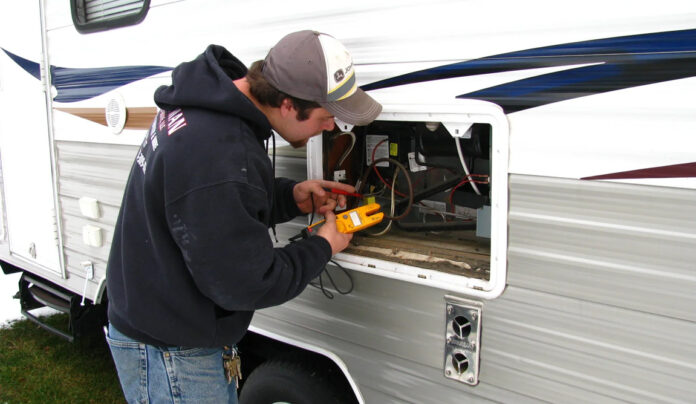
That’s one reason mobile RV repair has taken off. Independent techs are stepping in to handle everything from electrical issues to slide adjustments right at your campsite. They’re not replacing dealers, but they’re filling a gap that’s gotten hard to ignore.
The downside? Not every job can be done mobile. Major structural work, warranty repairs, and parts-dependent fixes still send you back into the dealership queue.
What RVers can do to stay ahead of it
This is where the rubber meets the road.
Most of the issues techs see fall into a handful of preventable categories. Staying ahead of RV repair problems doesn’t mean becoming a full-time mechanic, but it does mean paying attention to the basics.
- Level your rig carefully every time. Slides and doors depend on it.
- Keep batteries maintained and monitored, not just “working.”
- Inspect your roof regularly—even when nothing looks wrong.
- Watch your weight. RVs don’t tolerate overload the way trucks do.
A few minutes of prevention is a lot easier than dealing with a soaked ceiling, a dead electrical system, or a slide that won’t move when it’s time to leave.
The bigger takeaway
It’s easy to blame the RV when something breaks. And sometimes, that blame is justified.
But the folks doing the repairs see a different pattern. Many failures don’t come out of nowhere. They build slowly, quietly, and predictably—until they finally demand attention.
Understanding that may not make breakdowns any less frustrating. But it can make them a lot less frequent.
And for most RVers, that’s the goal.
RELATED
- An easy multimeter master class: Save hundreds of dollars in RV repairs
- How confident are you in your ability to troubleshoot RV repairs on the road?
- Diesel technician shortage could mean longer waits for RV repairs
- Is a mobile RV repair service right for you?
- RVers discuss the pros and cons of using truck shops for RV repairs
- RV transporter spills the truth: ‘Dealers don’t do repairs until RV is sold; If buyer doesn’t point it out, it doesn’t get fixed’
- What if RV techs built RVs? 5 changes they would make to fix common problems
RVT1258

Trim falling off, kitchen island light falling down, shower door breakage, compartment door lock failure, vent fan failure, the list is long. The op-ed of this article implies the owner is at fault because one didn’t inspect these things while hauling a 35-foot-long house down the highway, bull.
Hi Rusty: I don’t defend these authors often however, I think they are referring to more mechanical items rather than the more items of a cosmetic nature as you noted. The items you noted are just sloppy building and final inspections and need attention from the Mfgr’s and dealers as well. Mechanical issues are leveling, brakes, suspension, running gear, wheel bearings, chassis etc, etc.. Heavy metal stuff!
I repair all kinds of trailers and do my own RV repairs. Now fixing our 09 C Creek. This 12K unit outriggers are too few and too light. The aluminum crushing from the weight because the 1 inch square area to cary the wall is far far from adequate.
Axels being to light I swapped 6k springs for 7k torsion. Much improved ride.
if I was buying new I’d love to supervise the build from the ground up. Manufacturers good do much better.
Russ and Tina, thank you for getting this perspective from the mobile techs. It’s a good list of actions we RVers should pay attention to.
When taking your RV to Camping World and you have a water leak problem and damage beware sales personnel are trained to head you off before getting to the service counter if you have GoodSam insurance where they will tell you water leaks and damage are not covered for repair so they will offer to buy your RV and try and sell you a new one. But look at your policy and you will find you have comprehensive that covers weather type damage so report the sales people to BBB. I had storm damage that sales persons tried to tell me is because I did not do the maintenance required on a two year roof. Two things to know the rubber roof is guaranteed and the first 3 years full replacement at no cost.
All of this is really no different than buying a brand new house. You pay hundreds of thousands of dollars for a house that is built by a major company in a 4-6 months.
People don’t realize the corners that were cut in construction, the lower end appliances and fixtures that were installed and sub-standard materials that have been used.
Most are built to abide by the minimum building codes.
I’ve seen some of these houses with siding buckling, foundation and driveway cracks, plumbing and electrical failures and many other expensive problems.
We have two newer developments near us and some houses have needed major repairs in less than three years.