

By Dustin Simpson
I recently was asked the question, “Why is my RV outlet not working after using a space heater?” It could be that the outlet has failed, the heater has become defective, or the circuit breaker cannot be reset. In this article, I’ll show you examples of the outlets so you can see and understand the design a bit more.
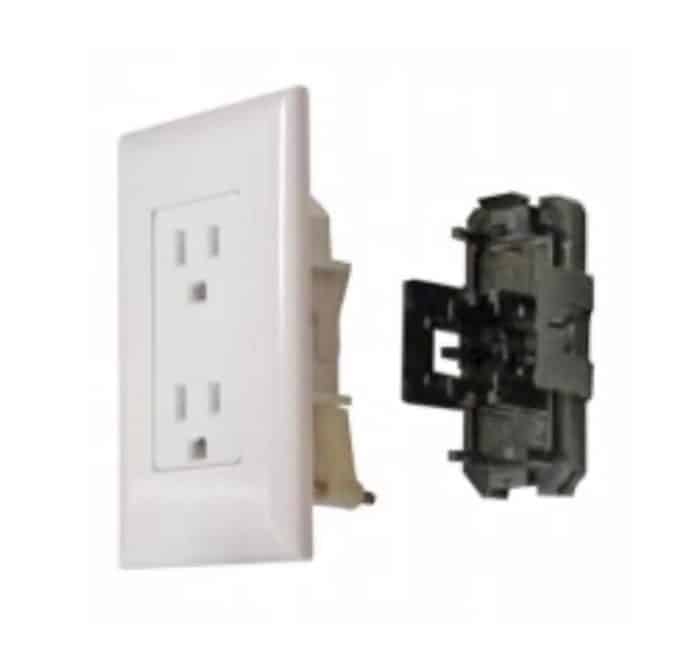
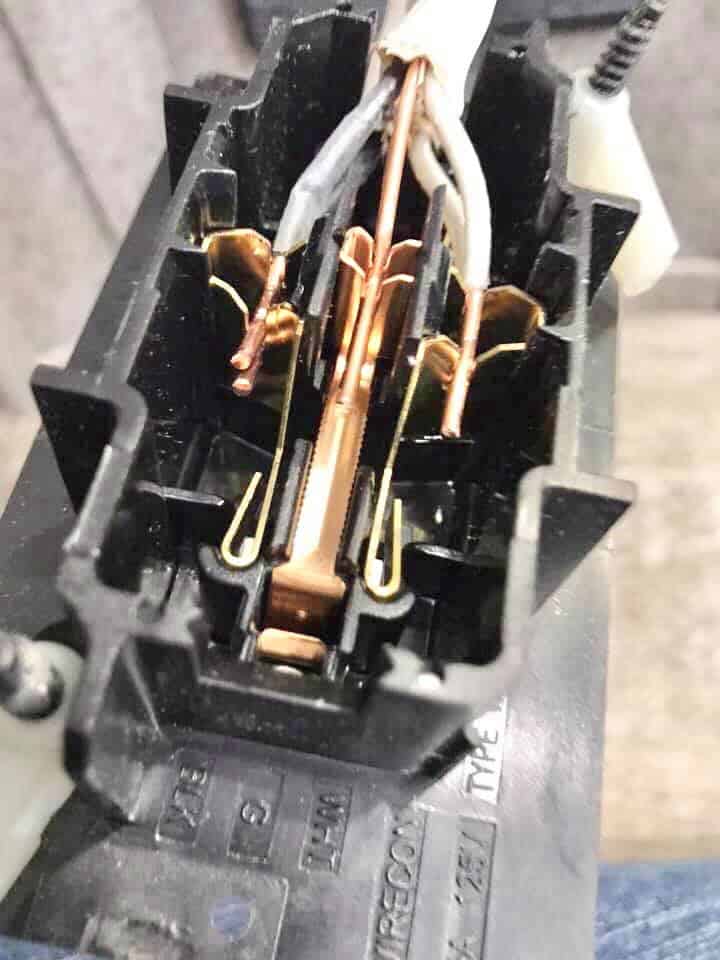
In case you’ve never seen what’s behind the wall, now you know (see below). The only thing that I don’t like is that sometimes the connection doesn’t grip well. If it doesn’t grip, the wiring contact can cause a short or damage.
When the demand is beyond what the electrical wiring was designed to carry, the wiring will become hot and possibly ignite or melt anything that comes into contact with it, including the plastic outlet.
Residential space heaters can be a quick way to heat up the interior of your RV. However, they can be as dangerous as they are convenient if used improperly or all the time.
 Residential space heaters can draw 15 to 20 amps continuously from an outlet, and it can begin to heat up after some use. The heating will soon cause the electrical contacts inside the outlet to oxidize and increase their resistance. The resistance will increase the heating effect, which causes more resistance, which can lead to an outlet failure. That can eventually lead to a potential outlet fire.
Here is an example of an RV wiring issue in the outlet.

Do NOT plug space heaters into power strips or extension cords
Outlet links:
- Self Contained Dual Outlet with Cover Plate, White, AC
- Dual GFCI Outlet with Cover Plate, White, AC
- Self-Contained Dual Outlet with Cover Plate, Black, AC
- Dual Outlet GFCI with Cover Plate, Black, AC
- Non-Contact Voltage Tester & GFCI Outlet / Receptacle Tester
More from Dustin
Make sure you check out our website, California RV Specialists, and their YouTube channel for more helpful information, and see our published articles on RVtravel.com and other social media pages.
RVDT2753
Dustin’s advice is accurate, but simplistic. You can plug a space heater into an extension cord IF you use one with amperage (wattage) greater than that required by the appliance. If you don’t know the cord’s capacity, don’t do it! After all, your shore power cable is essentially a high amperage extension cord.