


Today’s RV review is of the Wingamm Oasi 540.1 Class B motorhome—an Italian-made rig that’s been on our radar for a while. We’ve even written about it before, as the family-owned Wingamm brand has long intended to bring it to the U.S. However, various challenges delayed its arrival. Now, it seems they’ve finally made it happen.
What has arrived on our shores is a very, very small motorhome based on the Ram Promaster chassis, which, oddly enough, is based on the Fiat Ducato front-wheel-drive van chassis. From the cutaway chassis, Wingamm builds the back of the camper and does so in an unusual way.
Even the way this all comes together is a bit unusual. The chassis are built in the U.S., then shipped to Italy, and then shipped back here as motorhomes.
Build materials
That camper body is built more like a boat than a traditional RV, which means the entire rear cabin is essentially one very large piece. There are inner and outer shells made of fiberglass with an insulating layer between them, forming a strong single unit. That means the roof and walls are all fiberglass, so no rubber roof here. Good.
In final form, the overall length of this vehicle is within a few inches of a Chevrolet Tahoe and not much wider. So Wingamm indicates that it can easily park in a standard parking space, including curbside parking. And therein lies that use-case scenario.
Unique use case
Since this vehicle isn’t much bigger than a Chevrolet Tahoe or Ford Expedition in overall footprint, Wingamm makes the case that it could just be the vehicle you drive every day. For example, they show someone who has client appointments so that the individual can go from appointment to appointment in this and have a place to relax and, perhaps, prepare a meal or use the facilities between meetings.
Then you could go pick up the kids from school and use it as a camper on the weekend. All of which makes sense.





Camping in the Wingamm Oasi 540.1
Despite the fact that this motorhome is actually usable as a daily driver, depending on your use case scenario, it’s also pretty well-equipped as a camper, too.
The entrance to the Oasi 540.1 is at the rear, and the first thing you’ll find is a closet back there with space to hang your Armani suits. Hey, if you’re going Italian, you might as well go all the way!
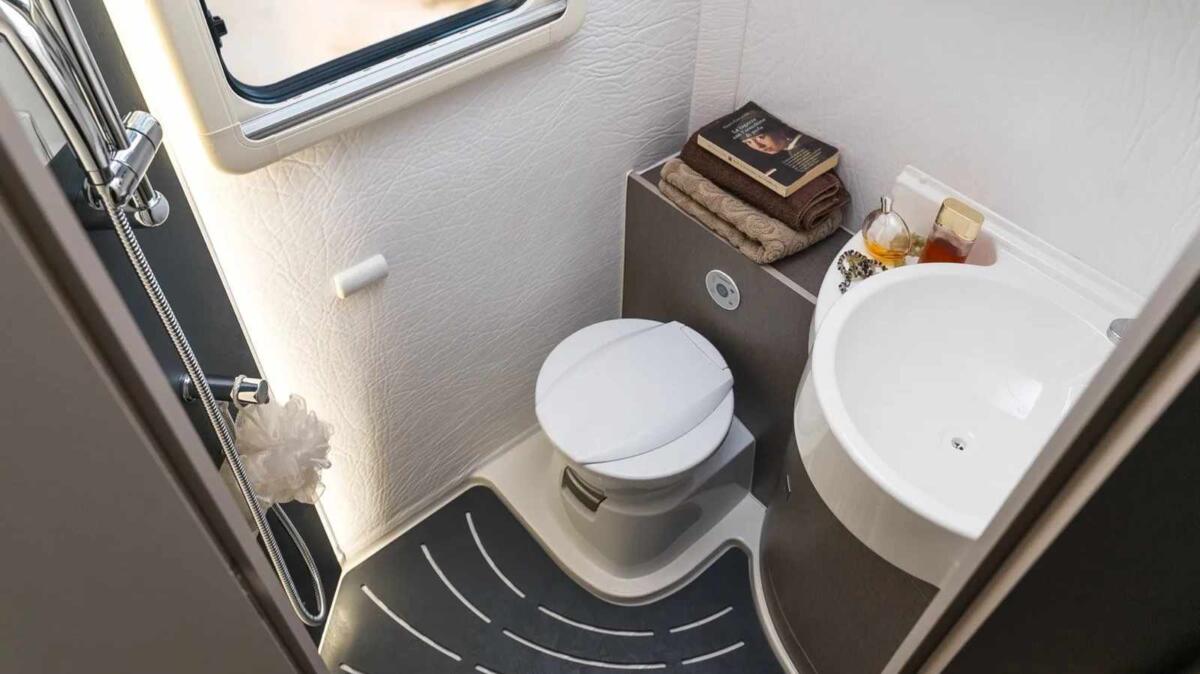
Next to that is a corner bathroom, which is a wet bath. But before you cringe, this is one of the better examples of a wet bath out there. It’s stylish and roomy and even has a big window in the back so you can entertain or offend the neighbors, depending on who you are. Naturally, there is a way to block off the view of you from them and them from you.
As is very common in European RVs, the toilet in this rig is a cartridge toilet. The infrastructure over there just really supports these well, but you can take them to an outhouse or regular toilet here and dispose of the contents pretty easily. We Yanks just make a big deal of this.
Dinette
On the road side of the camper is a larger “L” shaped dinette, which is where there is belted seating for two passengers. This is also a sleeping space for an individual, as well, although Wingamm claims two can sleep here.
The table in this rig is similar to a Lagun table in that it can rotate and be moved into various positions to accommodate different uses and sizes of occupants in that dinette.
Up front, the driver and passenger seats can be swiveled around to face the main compartment of the coach, so you could really seat five people and have conversations. And enjoy Italian wine and Stromboli. Man, I love Stromboli.
Galley in the Wingamm Oasi 540.1
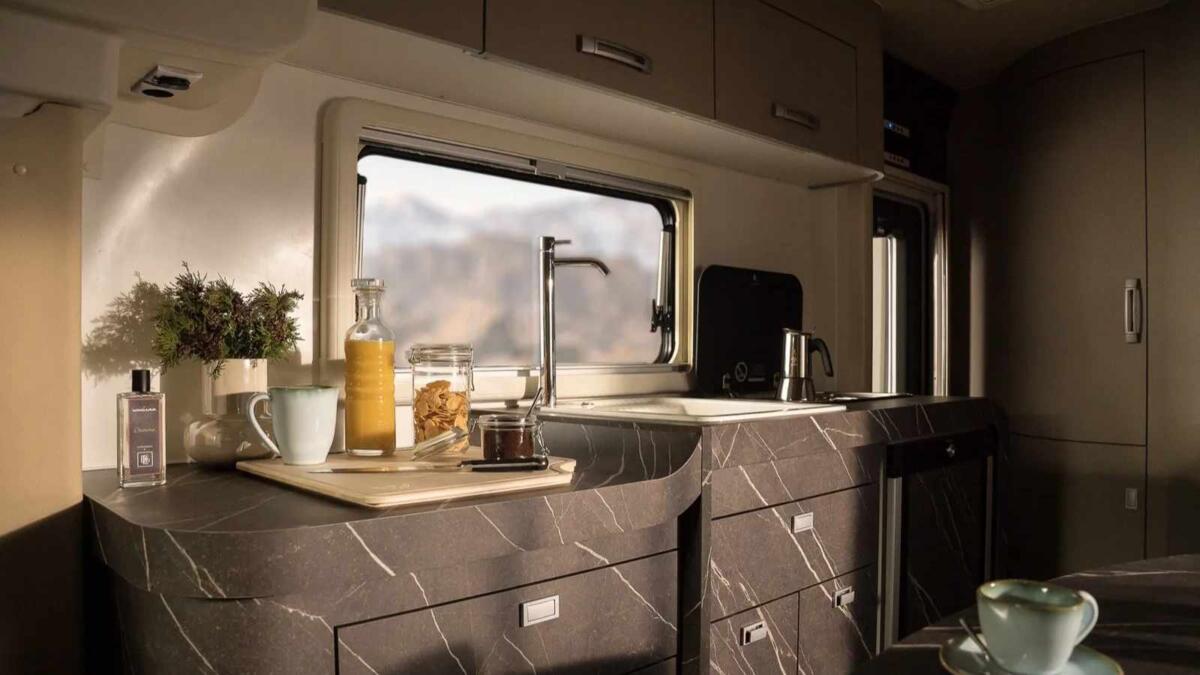
Over on the camp side is the galley. The standard fare features a two-burner propane stove top, but you can “swaption”[Tony lingo] that for an induction cooktop instead. If you’re looking for the microwave, well, that’s on the option list. It can either be mounted in a cabinet or just free-standing.
Honestly, you can get some pretty slick convection microwaves now at your local appliance store, so that would be how I’d do it. However, that would eat into the otherwise-great long kitchen counter space.
That counterspace, without your add-on nuker, is pretty good, extending from the back door to the cab. There’s more counterspace than in many larger motorhomes. Overhead, there are cabinets. The amount of storage space, considering the overall size of this vehicle, is pretty darned good.
Where do I sleep?
The one thing we haven’t addressed yet is the bed, which is on a drop-down mechanism above the cab and front of the living space. The memory foam mattress sits on wooden slats, which approximates the feel of a traditional mattress according to some who have used this sort of thing. Given the amount of space, having the bed up here is a logical solution.
This is a north-south bed, meaning you snore in line with the length of the vehicle, but you have to get up there and then scoot yourself into position. Apparently, you can sit upright in the space, and you can still access the cabinets on the side of the rig.
Comfort technologies
For heat, this uses a Truma Combi system to actually heat the floor of the rig. This is something people in larger motorhomes are already enjoying, but it’s nice to see this idea in something smaller. Furthermore, the Truma system can use either the onboard propane or electrical power to generate the heat.
The air conditioner they’re using is a 12-volt model, and I’m curious how this performs in places where the thermometer quits its job and retires to the mountains. This rig is well insulated, and I am finally seeing better A/C technologies coming on board, so it will be interesting to see how this one will perform.
Outside features
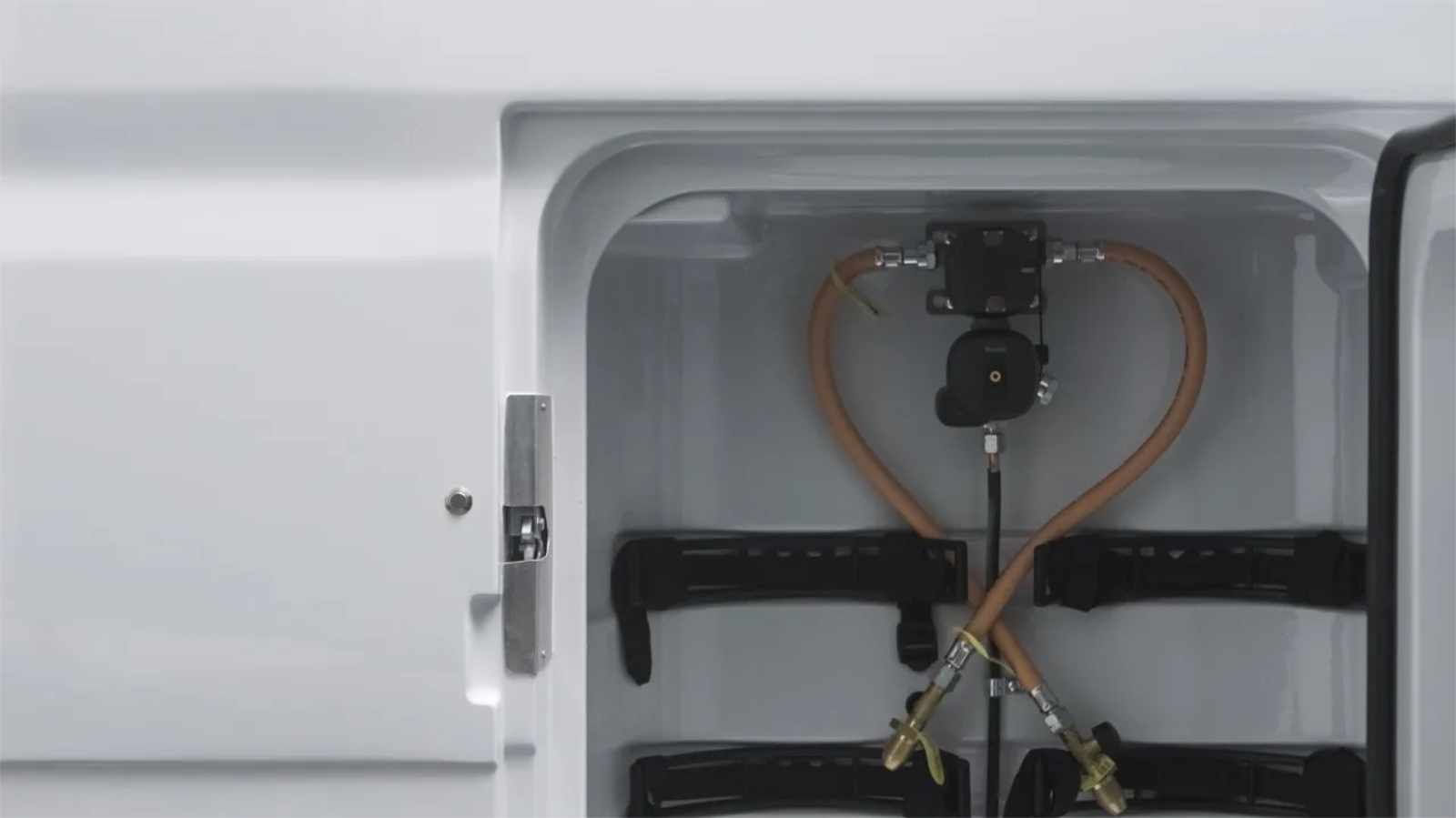
One of the things I like about this is that there is a provision for two standard 20-pound propane bottles in this rig. That means you can go to any propane exchange or propane filling station and resolve your propane issues.
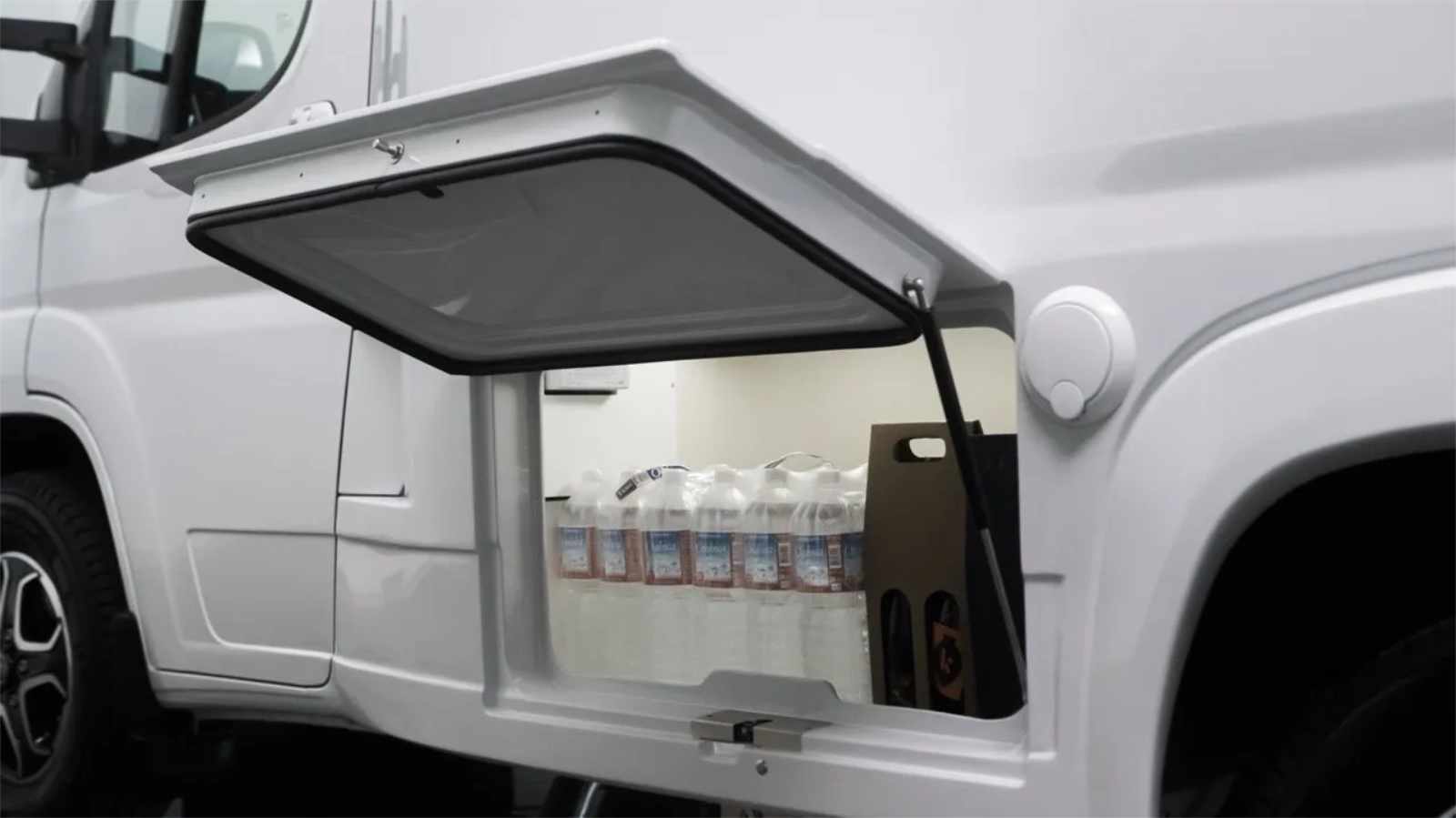
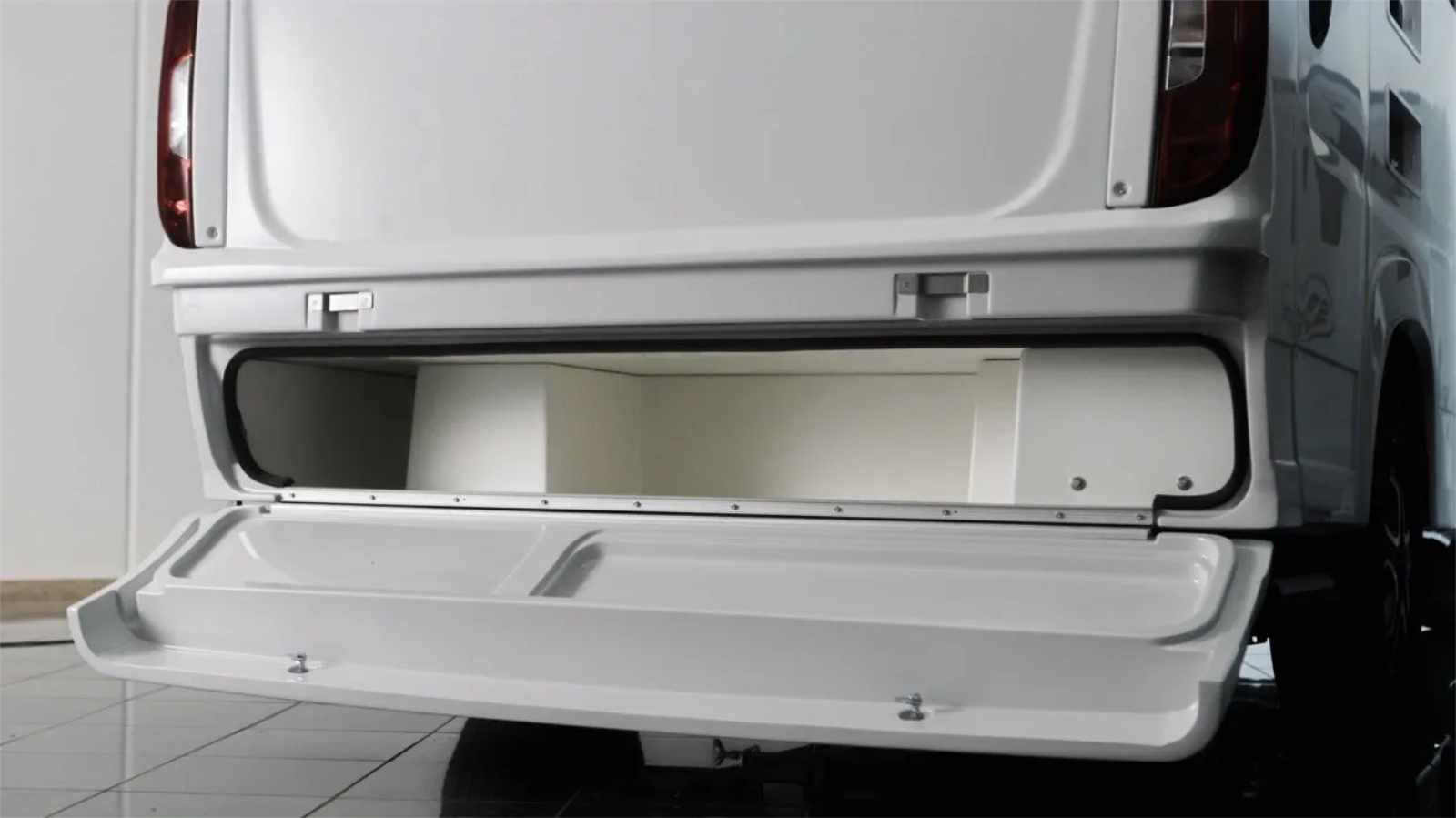
There is also a trunk at the back, which is facilitated by the fact that the ProMaster’s driveline is all under the hood up front, being a front-wheel-drive van.
Something that just makes sense is that all the exterior compartments are unlocked with the same key fob that you’d use to unlock the cab of the truck. So, rather than fiddling with a whole ring of keys like a high school janitor, you just lock and unlock the cabinets with the push of a button.
Another thing I like is the entry door, which has a trash can built onto it. This just makes so much sense—you don’t have to use it for trash, but it sure makes emptying said trash easier if you do.
In fact, using the ProMaster is a logical choice as it started life in Europe as the Ducato and then got its passport and changed its name to Ram when it came over. We also put the Stellantis (used to be Chrysler, then Daimler-Chrysler, then Fiat-Chrysler) “Pentastar” 3.6-liter gasoline engine under the hood, attached to a nine-speed automatic.
Boondocking in the Wingamm Oasi 540.1
Standard in the Wingamm Oasi 540.1 is 300Ah of lithium battery storage, a 2,000-watt Victron MultiPlus inverter powering three AC outlets, and a 130-watt solar panel. To increase off-grid capacity, an optional upgraded power package includes an additional 300Ah of lithium power storage, a 3,000-watt inverter, and a secondary alternator (Balmar 170-amp). This is a 30-amp RV.

In summary
Right now, if you want one of these, there are just two dealers in the U.S.: one in Salt Lake City, Utah, and the other in Nashville, Tennessee. Unlike most RV companies, these are franchise dealers, which is how car companies do things. That means there is a tighter relationship between manufacturer and dealer.
There are also 10 service centers around the U.S.
Now that some of you have been buying Fiats again, I would imagine the general reticence to buying Italian vehicles has been reduced, so I can imagine some folks plopping down $188k for this. After all, if you’re willing to buy a pickup for $100K, it’s not a big stretch to get the whole RV for less than twice that.
Based on how these seem to be built, the content and design, and demand for smaller motorhomes in general (this is not dissimilar to the Winnebago EKKO in size), I think the company may be able to sell every one that makes its way across the pond.
MORE RECENT RV REVIEWS BY TONY:
- A no-slide, premium travel trailer: Flagstaff Super Lite 30FKT
- Updates on the AEONrv—all-season, electric, off-road and modern
- Grand Design Lineage Series M 25TK—A very impressive Class C
- Ember RV E-Series Spark 18RBE—a big surprise
- Winnebago Thrive 18FBS—new new or just warmed over?
RVT1218

“This is also a sleeping space for an individual, as well, although Wingamm claims two can sleep here.”
If you’ve traveled in Europe and have done people watching, it’s easy to see why a European company says two and Americans say room for one. 😉🙂
Nice review. A lot packed into a small space! 👍
You don’t need to buy a foreign rig to get quality one-piece fiberglass construction. Just buy a Coach House RV – made in the USA (Florida). The difference is the Coach House RV is built to withstand American roads and highways.
Neat little thing. But asking price is about $50K too much IMHO.
I agree with Mikal that there is a lot packed into a small space! Seems a well thought out design that would appeal to some. As I was reading this I thought of some similarities to the EKKO, whose owners seem very loyal.
Thank you for the review, Tony! Seems a great RV for one, maybe two. The fresh and gray tanks seem pretty small for two. Have a great week and safe travels!
The drop-down bed is only 51 inches wide. Not too many American couples will fit comfortably. There are bigger Wingamm rigs coming that will have American-sized beds.
Stellantis is now owned by Peugeot, not much of an upgrade from Fiat. FWD only and underpowered, comparing this to EKKO is apples and oranges. This is urban beast, EKKO, and the copycats, are for the wilderness. I’m frankly surprised that this coach has propane, rather than a gasoline heater. A propane cooktop feels archaic as well. The coach is beautiful on the inside, but the drop-down bed is only 51 inches wide. It will be too narrow for the vast majority of North American couples. Wingamm will be bringing larger coaches (up to 22 feet) with better sleeping arrangement, but they will be on the same Promaster chassis. It remains to be seen how bigger rigs will perform on that chassis.
Interesting that no one wants to speak to the added $9500 cost due to tariffs. To me, that is more the point of the article we are going to have to understand that no matter what you buy, in the future, if it is imported, we (the consumer) are going to be footing the bill.
I love my Jayco Comet but sleeping is not great, I don’t care for the cassette toilet and having the passengers sit sideways is not ideal. As soon as they are available on the west coast I’m buying. Same length as the Comet, slightly wider but looks much more comfortable. Being able to fit in a normal parking space is important for us.