


Dear Dave,
I just renovated a shop for six individual storage bays each large enough to fit a 40-foot Class A motorhome. I had our electrician install a 50-amp plug in all the bays. During the original wiring, the electrician installed a traditional NEMA 14-50 outlet and a 50-amp circuit breaker. During the electrical inspection, the inspector failed the installation as the new Iowa Code required a GFCI breaker in any facility that has a door and is used for storage.
So, my electrician replaced the circuit breaker with a 50-amp GFCI breaker. Now the 24’ Class C motorhome trips the GFCI breaker every time it is plugged in. I called my electrician and he stated that somewhere in the coach the neutral and the ground of the house battery must be touching, causing this. He stated that this has happened before where a screw pierced a wire, and we need to isolate the 12-volt house battery neutral and ground. —Mike, 2015 Winnebago View 24J
Dear Readers,
This question actually came from the guy who owns the building I have been renting office and studio space from. He bought the property two years ago and converted the huge storage building in the back with six large bays with 16’ doors to accommodate just about anything.

This is the building with my truck and the Trailer From Hell (TFH) we have been working on.
I got the call from Mike Thursday morning. He stated that the owner of the View came to the facility and the breaker was tripped and there was a very loud beeping noise. He also told me about the statement from the electrician regarding the neutral and ground touching somewhere with the house battery. I do not believe this is accurate. The house battery has a positive and negative post, no neutral, and is isolated from the 120-volt system.
What the electrician said
I talked with the electrician and he stated that a standard 50-amp/240-volt outlet and GFCI breaker was installed. We often find that residential and commercial electricians install a dry type outlet or welder, which puts 240 volts to the rig and is not correct.
I met one of the electricians at the facility and we did verify the outlet was a NEMA 14-50 plug.

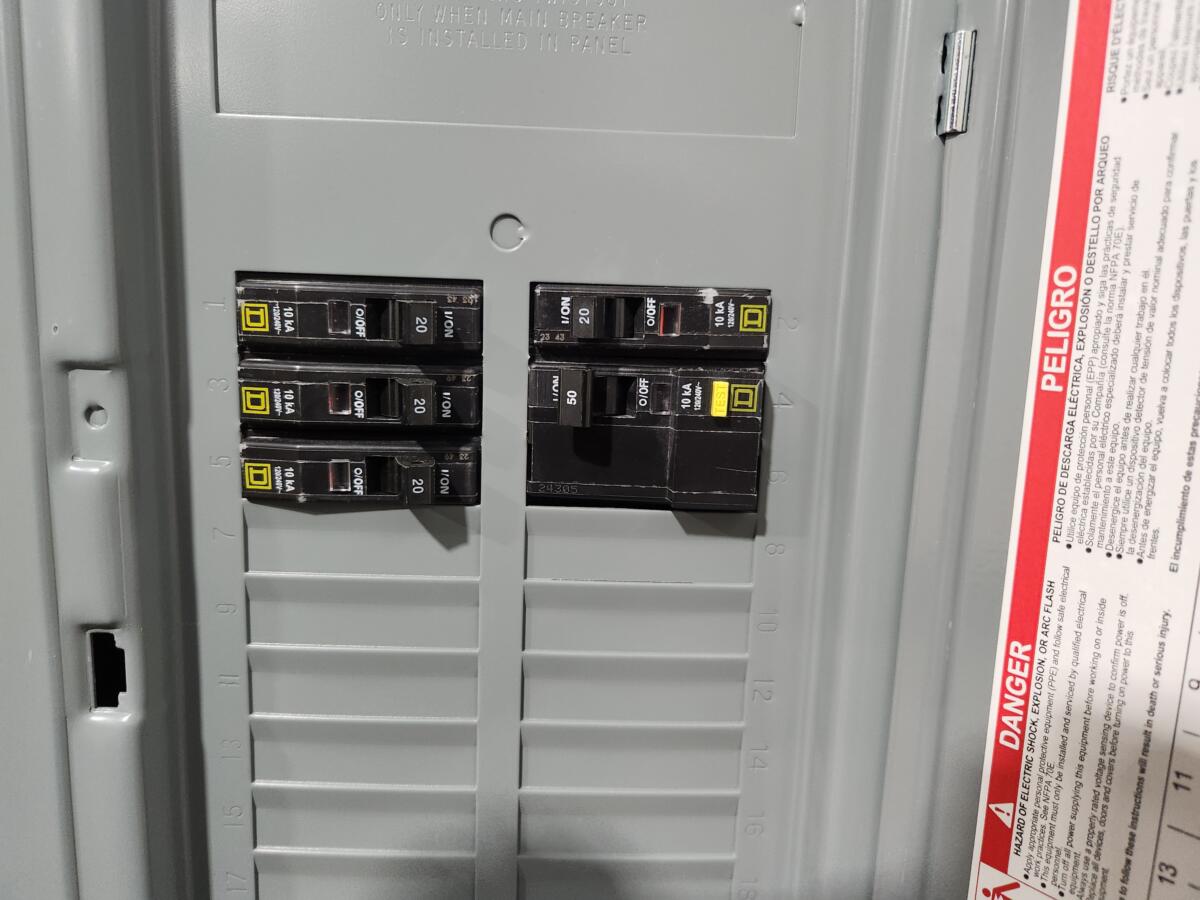
It was originally connected to the surge protector, and the LP leak detector was beeping like crazy. We disconnected the surge protector to verify the wiring in the outlet, the amp draw of the rig, and voltage were all correct. Hot 1: 124 volts; Hot 2: 124 volts; Neutral Ground: 0 volts.
What Winnebago’s technician said
I called Winnebago and talked with the technician in Owner Relations. He indicated they were having issues with older surge protectors in campgrounds that have installed the GFCI circuit breakers. So we disconnected it and the circuit breakers have not tripped for 4 days now.
What the electricity expert said
However, I did make a call to “The GOAT” when it comes to electricity, Mike Sokol. He was busy doing seminars at the Hershey RV Show, but he texted a link to a previous post on the issue with the GFCI circuit breaker. You can read it here. (Thanks, Mike!)
What I also noticed was every circuit breaker in the RV was on, even though the refrigerator was off at the eyebrow board and the air conditioner was not on. But there was still the potential of something else being on such as the 120-volt mode of the water heater.
It could be the converter
Another issue could be the converter, which is a Progressive Dynamics all-in-one model. It could also have some voltage “leakage,” as Mike indicated in the article. So we turned off all circuit breakers in the RV distribution center except the converter.
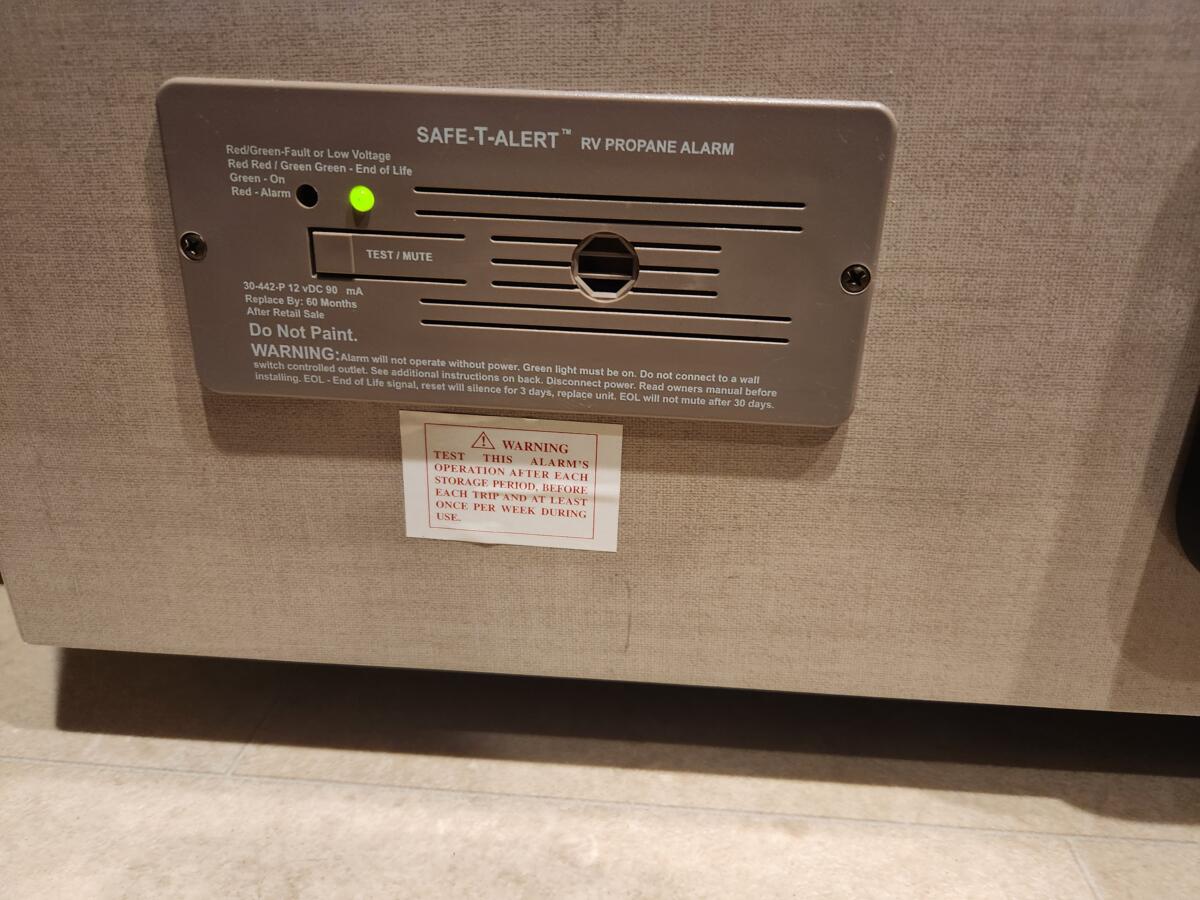
Another issue was the LP leak detector “chirping” even when it was plugged in. When the GFCI circuit breaker tripped, it shut off power to the rig and ultimately the converter, so the batteries were not being charged. The unit had two NAPA Group 24 batteries that had a date of 9/21, so they were only three years old. However, when the power went off, the LP leak detector drained the batteries down in less than 3 days. I believe that shows they are sulfated.
Another “gremlin” that could cause the tripping is the converter adjusting voltage due to the sulfated condition of the batteries. These will be upgraded to AGM batteries soon.
Chirping LP leak detector
Even with the unit plugged in and the converter throwing 13.3 volts to the batteries, the LP leak detector still chirped. My Winnebago tech stated that these are only good for about 5 to 6 years and become weak. Even though there were 13.3 volts present, it still did not have the amps available to keep the unit from chirping. Sure enough, after the unit was plugged in for about 2 hours, we plugged the detector back in and it was quiet. That will be changed out as well.
What are the options
First, we will purchase a new surge protector and test to see if that will satisfy the GFCI. Next, we’ll turn off all the circuit breakers except the converter on the distribution panel.

Since this owner is just charging the batteries, he could use a standalone maintainer plugged into the 20-amp outlet to charge the batteries.

You might also enjoy this from Dave
My GFCI outlet will not reset but all circuit breakers are good. What gives?
Dear Dave,
My GFCI outlet behind the TV that powers five outlets, including the residential fridge, won’t reset. I do not have AC voltage coming to the GFCI. I checked all the circuit breakers and all are good with 120 VAC at the circuit breaker panel. Those outlets lost power all of a sudden. I’m trying to find a wiring schematic for this trailer. I’m not sure what to do next. Please help. Any advice would be great. Thank you. —Ron, 2022 Montana 3231CK, 400i SolarFlex
Dave Solberg is a leading expert in the RV industry and the author of the “RV Handbook.”
Read more from Dave here.
HAVE A QUESTION FOR DAVE?
Send your inquiries to him using the form below.
##RVDT2471


Electrical gremlins are always a fun chase. Seems you found several issues. Great job!
Thank you, Dave! 🙂 Cascading problems are never fun as one works upstream addressing each in turn. Interesting problems and solutions; very educational. Thanks again, have a great week, safe travels, and safe stays! 🙂
In my experience, plugging an RV into a GFCI outlet will almost always cause the outlet to trip. Sometimes I have been able to reset it and get it to work for a while. I was told somewhere in my rv’ing past that the reason is that the RV has its own GFCI’s, and when those get plugged in to a GFCI protected source it will cause that source to trip … so it would appear the problem may be that you cannot stack GFCI’s. This is why campground outlets do not have GFCI breakers on them.
My motorhome is older and was built before they invented gfci breakers. I had to go in and add a separate buss for ground wires and get them away from the neutral wire. Quite a bit of fooling around to do to satisfy a newer code