


By Dave Solberg
Dear Dave,
With all of the electrical connections on my Class A, I’m not sure when, where, or if I should use dielectric grease. Thanks. —Mike, 2007 Winnebago Sightseer
Dear Mike,
Whether to protect wire components with dielectric grease or any other type of spray depends on the type of unit you have and the wiring connections. In my opinion, Winnebago pays the most attention to detail in several aspects, with wiring being one of the priorities. They have an in-house wire prep department that makes wire looms for units that have coded wires to identify size and what component it goes to. Every wire is cut to length and connected with automotive-style connectors.
Wiring procedure at Winnebago
The department has hundreds of wiring boards that the looms are routed on, connected, and even powered and tested with a hi-pot tester. [From Precision Manufacturing Company, Inc., regarding high-potential (hi-pot or hipot) testing: “A hipot test — also known as a dielectric withstand test — measures the level of electric insulation in a device by ensuring that current will not flow between two specified points under high voltages.”] This means very few connectors are exposed to the elements and there are no “nests” of extra wires looped and shoved in a compartment. Just go on the website and see the professional wiring diagrams and 3D drawings.
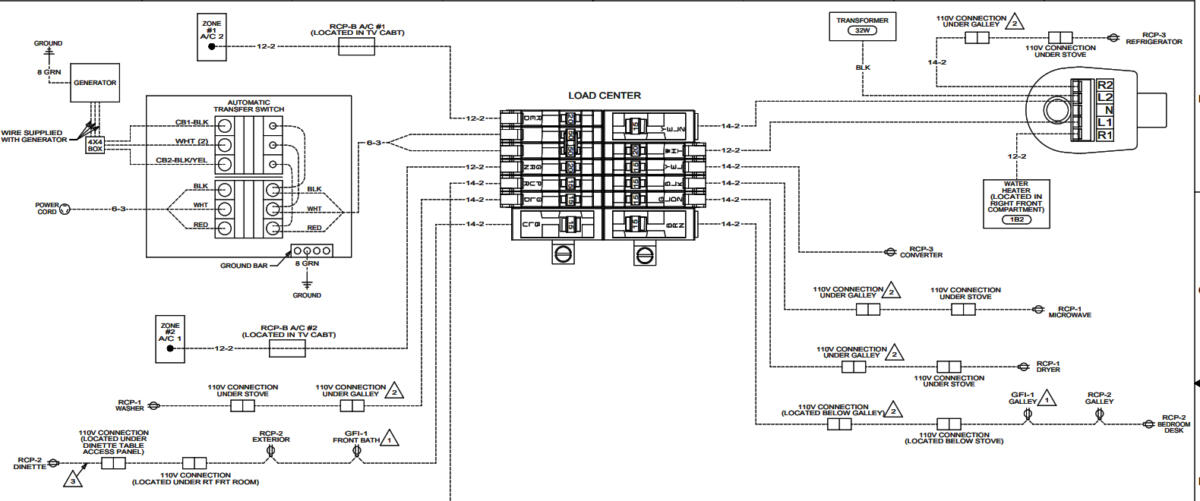
This is actually rare in the RV industry, and especially trailers. When we first started shooting videos for the RV Repair Club, we worked on a toy hauler for a friend of mine that was a licensed and bonded electrician. When we started opening access panels and getting to some of the internal issues, we would see the rat’s nest of wires and connectors and he would emphatically state, “That’s not to code!” Well, guess what. There really is no code when it comes to 12-volt wiring, and nothing like the construction industry when it comes to 120-volt wiring.
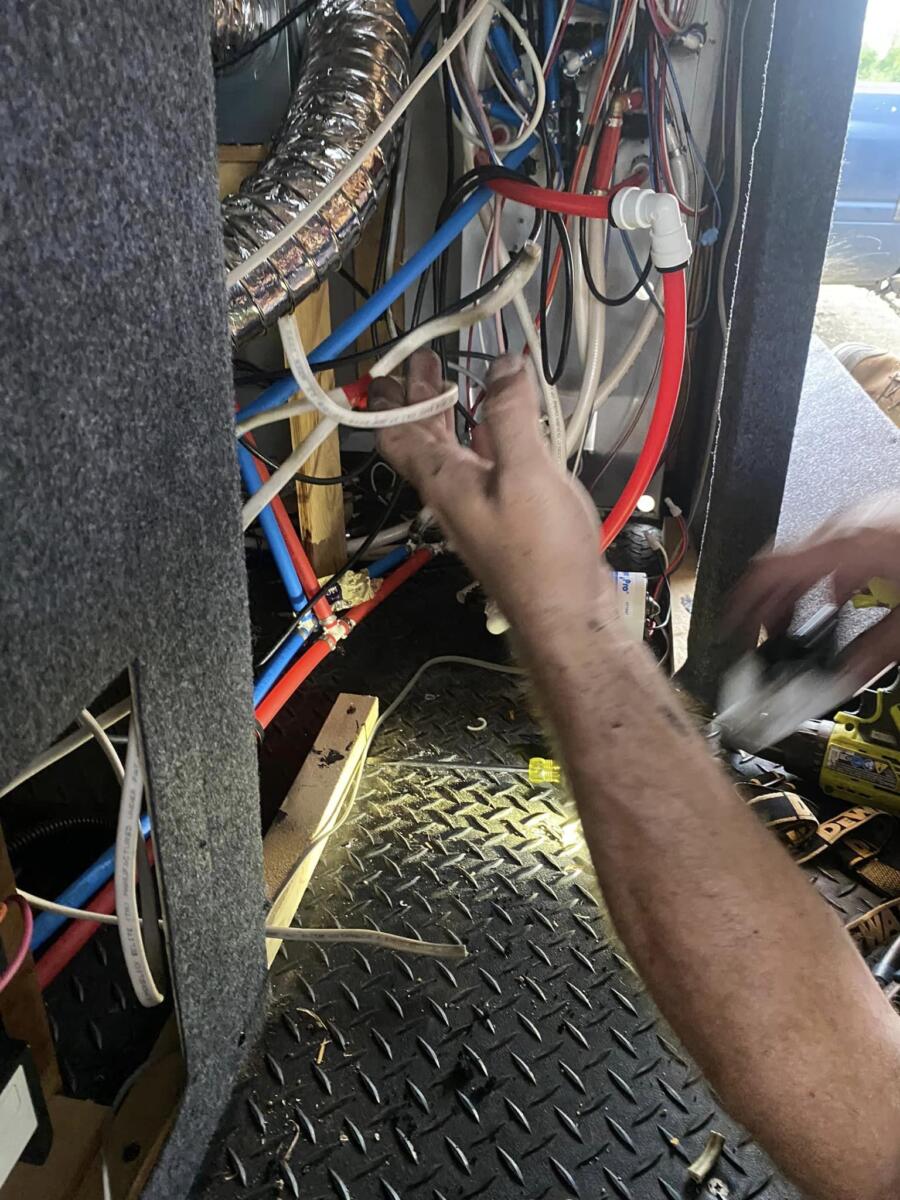
My electrician friend ended up spending countless hours rewiring his rig with wire cut to length, and installing protective junction boxes and sturdy gel connectors versus twist ties and wire nuts. Some of those work in a residential setting that is stationary, but not something that bounces down the road!
What is dielectric grease and where should you use it?
Dielectric grease is a silicone-based grease that is designed to protect electrical components by repelling moisture. Back in my full-service gas station days, we would use WD-40 sprayed inside the distributor cap to keep out moisture. We often referred to it as “tune-up” spray.
There are many products out on the market that claim to be an electrical protection product. Technically, dielectric grease is a white gel or paste-like component. I have always been a big fan of CRC Dielectric Grease with “Select-A-Bead” found on Amazon here.

Here is a description of application on their website:
Electrical components used in damp or extreme conditions. Electrical connectors, contacts, circuit breakers, electrical panels, bulkhead connectors, electrical panels, outdoor lighting, scoreboards, traffic lights, high voltage poles, transformers, disconnects switching mechanisms, electrical contacts, spark plugs, battery terminals, fasteners, trailer connectors, HEI distributor and any other electrical components or connections. Marine applications. Battery terminals, spark plugs, electrical contacts, shore power inlets, boat electronics connectors, trailer plugs, light bulbs, light sockets, makes connecting and disconnecting fish finders a breeze. Rubber and plastic parts. Excellent for lubricating and sealing rubber and plastic parts, including o-rings. Weatherproofs seal on outdoor junction boxes.
Wow, seems it can be slathered over just about the entire RV!
Dielectric grease is not a cleaner
I think dielectric grease is a great lubricant and coating; however, it is not a cleaner. So if your connection has oxidation or is corroded, you will need to clean it first.
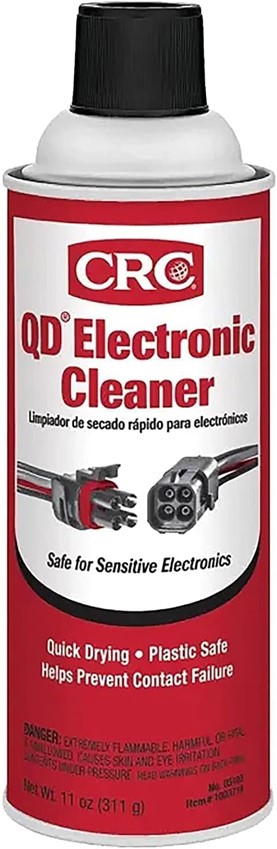 CRC Electronic Cleaner
If your shoreline plug or any other electrical component that is exposed, such as wire connectors or ground wires, have become oxidized, you will want to clean them off first before applying any type of protectant. Use a wire brush or emery board and clean off what is exposed, then use CRC Electronic Cleaner from Amazon on the metal components and wipe it off. Make sure the component is not energized by having the shoreline cord unplugged and the negative battery cable disconnected. CRC will clean the connection but will not protect it.
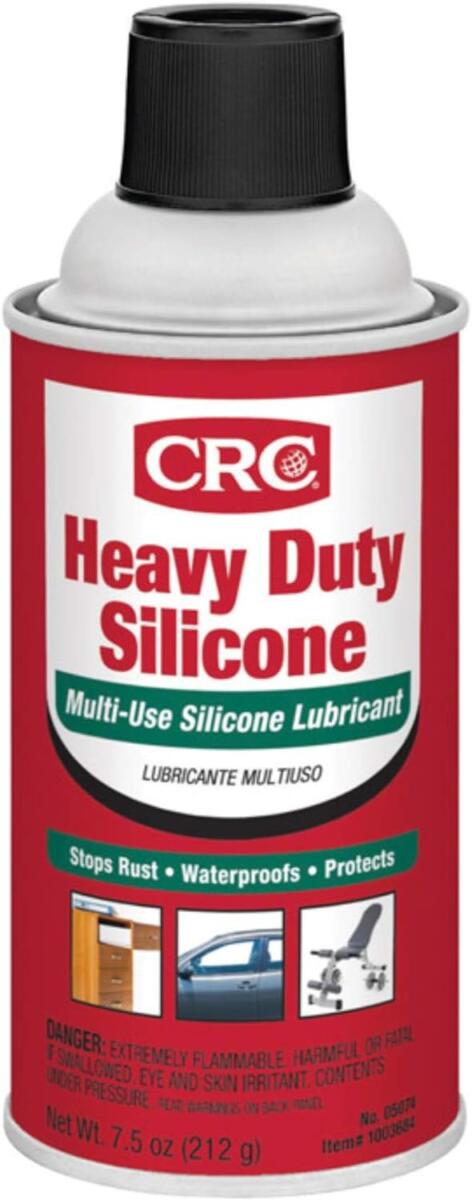 The next step is to protect it with either dielectric grease or a silicone spray, which I find easier to apply and less of a mess. My favorite is CRC Heavy Duty Silicone found on Amazon here.
Don’t use petroleum-based products
Products you do not want to use are petroleum-based WD-40 and petroleum jelly. They will make any plastic and rubber components swell and deteriorate.
Some critical areas to look at are any wires and connections that are exposed to the elements. On travel trailers it is critical to clean and protect the wiring that comes from the tow vehicle to the pigtail and beyond. You will find a ground wire typically bolted to the frame, wires going to the battery, and exposed wires underneath going to lights and taillights.
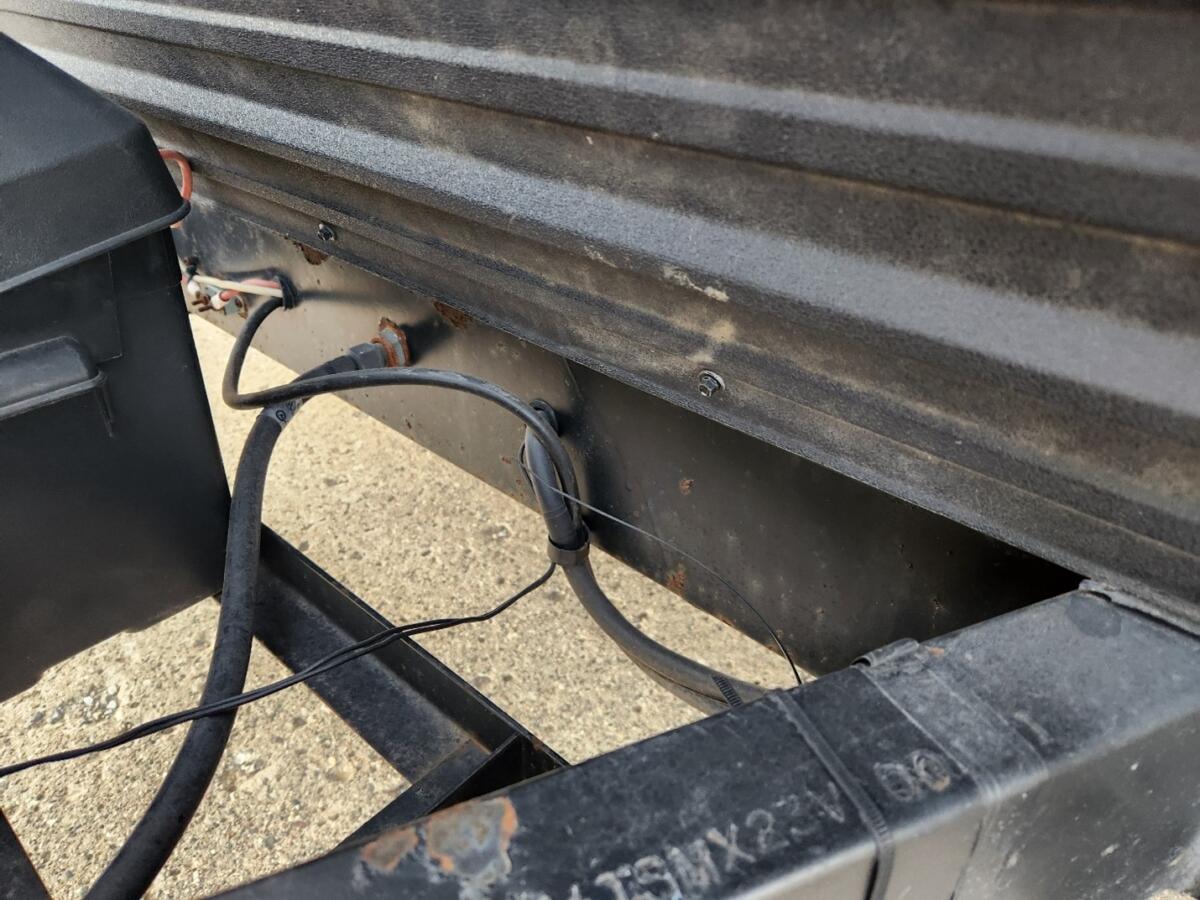
A motorized unit does not have as much exposed wiring as most is sandwiched in a roof, sidewall, or under the floor and protected. One area that is exposed is the wiring in the battery compartment, as flooded lead acid batteries need to have an open/vented compartment.
These connections can get oxidation and corrosion especially in areas where there is a lot of salt used on the roads in the winter and salt air around the coast. As you can see, some owners would rather spray the terminals with a battery protection spray like the red CRC battery spray.
Marker lights and taillights
Most of your marker lights and taillights will have a protective lens covering them, so they are not as exposed. However, some owners like to protect them anyway. Just make sure if you take the lens off, you get it sealed properly when you put it back on as a driving rain can be a major water leak.
It is also important to periodically inspect connections at the distribution center, appliances, and other components to make sure they are secure. Bouncing down the road can lead to some pretty flimsy connections and failures later on. These don’t necessarily need protection, but rather a good, tight connection.
MORE FROM DAVE
- Is there an RV battery monitor that works?
- What to use to power RV roof air conditioner when dry camping
- How does a 50-amp to 30-amp adapter work?
- Is there a meter to test campground outlets for amps?
DAVE HAS ANSWERED MORE THAN 1,000 readers’ maintenance and repair questions. Read a directory here. There is so much to learn!
Dave Solberg is a leading expert in the RV industry and the author of the “RV Handbook.”
RVDT2715

The spray contact cleaner is great at removing oil or grease from electrical contacts but for removing actual corrosion, DeOxit D5 is superior.
Here’s some additional information on dielectric grease if interested:
https://www.thedrive.com/maintenance-repair/39173/dielectric-grease
Unfortunately, the video in that article shows exactly what you shouldn’t do with dielectric grease. You don’t want it on the electrical contact surfaces, as it is an insulator. The contacts should be cleaned with DeOxit or a similar contact cleaner. Putting a little grease on the non-contact surfaces or around the top of the socket after the bulb is inserted will make it easier to change the bulb and protect it somewhat from the elements.
That’s an old wive’s tale my friend.
If the fit between the pin and socket in a connector is so loose that grease keeps them separated or inhibits continuity, you have much bigger problems.
Likewise, if the pressure strip or contact point is so light that the grease doesn’t displace but rather adds resistance, it’d be terribly misguided to blame the grease for the poor contact. You actually want the grease where contact doesn’t exist to reduce oxidation and corrosion. It’ll scrape and displace where there’s good contact.
That said though, globbing it on can actually push sockets out of their housings or swell them thus damaging them. Moderation is the key.
Cheers!
“Distributor cap”! I guess we’re both long enough in the tooth to know what that is. From yearsssss gone by, anytime you can keep air away from vehicle battery terminals, you can avoid corrosion, so I’ve just used any general/axle grease to cover all exposed surfaces. I’m not familiar with DeOxit D5 and I will pick up some today. Thanks for the tip.
DeOxit D5 is one of the best products available for removing corrosion and protecting the contacts.
I was an electronics tech for 40 years and it was all we ever used.
Dieletcric grease does nothing to remove corrosion and must be used sparingly. It also attracts dust and dirt.
D5 is not CHEAP, but a little goes a long way.
most RV wiring seems to be use whatever is in my hand. Neatness and security is not in their minds, just hope it works long enough to get out the door. I’ve had several larger boats and the wiring was secured, neatly done (exception past owners messes). They did have standards they were adhering to. RV’s take a beating but can promise you boats take more.
Thank you for the discussion, Dave! I have a tube of this, but have never used it. The towed vehicle’s receptacle for the umbilical cord from the RV did get repaired by a tech this summer. He used some grease from my tube. So, it HAS been used, just not by me. 😉 Also, as has been mentioned already by other commenters, I spray DeoxIt D5 (https://a.co/d/fC61Fl6) onto the contacts and my power cord prongs before I connect the power cord to a campground or RV park power pedestal. If I use my 50-amp-to-30-amp dogbone, then the contacts in it as well as the prongs get sprayed too. Have a great weekend and safe travels!