

Amazon may be the underdog in today’s satellite internet market, but that could soon change. Amazon’s Project Kuiper satellite internet could be real competition, according to a new report from analysts at Barclays Bank. Amazon’s Project Kuiper is gaining momentum fast—and it’s starting to look like a serious challenger to SpaceX’s Starlink, which currently leads the market.
The main reasons? Kuiper is launching satellites at a quicker pace, and it’s tightly linked to Amazon Web Services (AWS), one of the world’s largest cloud computing networks. That cloud connection could give Kuiper a major performance edge, especially when it comes to speed and responsiveness.
Amazon Project Kuiper satellite internet “moving fast”
“Amazon is moving fast, and its connection to AWS gives it a powerful edge,” the Barclays analysts said. “This could help Kuiper compete head-to-head with Starlink as it ramps up service.”
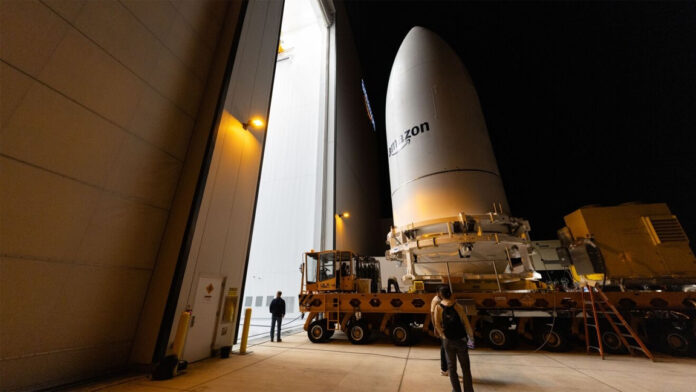
Barclays’ observation on “moving fast” is grounded in Amazon’s project fast-tracking. A major part of this expansion is its newly opened 100,000-square-foot payload processing facility at Kennedy Space Center in Florida. This site is responsible for preparing Kuiper satellites before they are launched into orbit.
Amazon aims to build 100 satellites a month
To launch its first satellite constellation, Amazon has secured more than 80 missions using rockets from a variety of providers, including Arianespace, Blue Origin, SpaceX, and United Launch Alliance (ULA). Most of these launches will take place from Cape Canaveral, Florida. With a processing facility nearby, Amazon can streamline satellite handling and move them more quickly from production to launch.

The Florida facility became operational in time to support the project’s first launch in April 2025, as well as follow-up missions with SpaceX and ULA. Satellite integration for the next mission has already been completed. At full capacity, the site will be able to process more than 100 satellites per month and manage up to three launch campaigns simultaneously. Construction has also begun on a $19.5 million secondary support site, which will increase launch readiness even more.
Closer to its home turf, Project Kuiper’s manufacturing operations begin in Kirkland, Washington. There, its satellite factory is capable of building up to five satellites per day at peak production. Once completed and tested, satellites are shipped to Florida for launch preparation.
Starlink decidedly ahead, but Kuiper catching up
Right now, Starlink has more than six million users worldwide, with about two million in the United States alone. It’s the top dog in satellite broadband—offering internet from low-earth orbit satellites that can reach places traditional cable and fiber can’t, like rural areas, remote job sites, and, yes—your RV parked in the middle of nowhere.
But Kuiper is catching up quickly. Amazon plans to have 285 satellites in orbit by the end of 2025 and is aiming to launch full commercial service sometime in the first half of 2026. That five-satellite-per-day construction speed will certainly help with that goal.
But Kuiper isn’t just pumping out satellites in this race. Amazon may intend to beat Starlink at the customer-end of the game. Kuiper is banking on its new “half-duplex” antenna system. The system sends and receives data in a more efficient way. Bottom line: The equipment is smaller, lighter, and cheaper to make than Starlink’s current hardware. That could be great news for RVers and travelers looking for a lower-cost, more compact option.
Amazon wants your subscription—but has some other big fish in mind, too
Amazon’s not just chasing John or Jane Doe consumers, either. It’s also setting its sights on maritime users and government contracts, both of which are fast-growing markets. Starlink already connects about 75,000 vessels, from cargo ships to private yachts, and it’s working with military and emergency services. But Barclays believes Kuiper has a real shot at cutting into that market, especially with its deep resources and tech support from AWS.
“Outside of the consumer market, especially early on, maritime could be Kuiper’s biggest opportunity,” the analysts said.
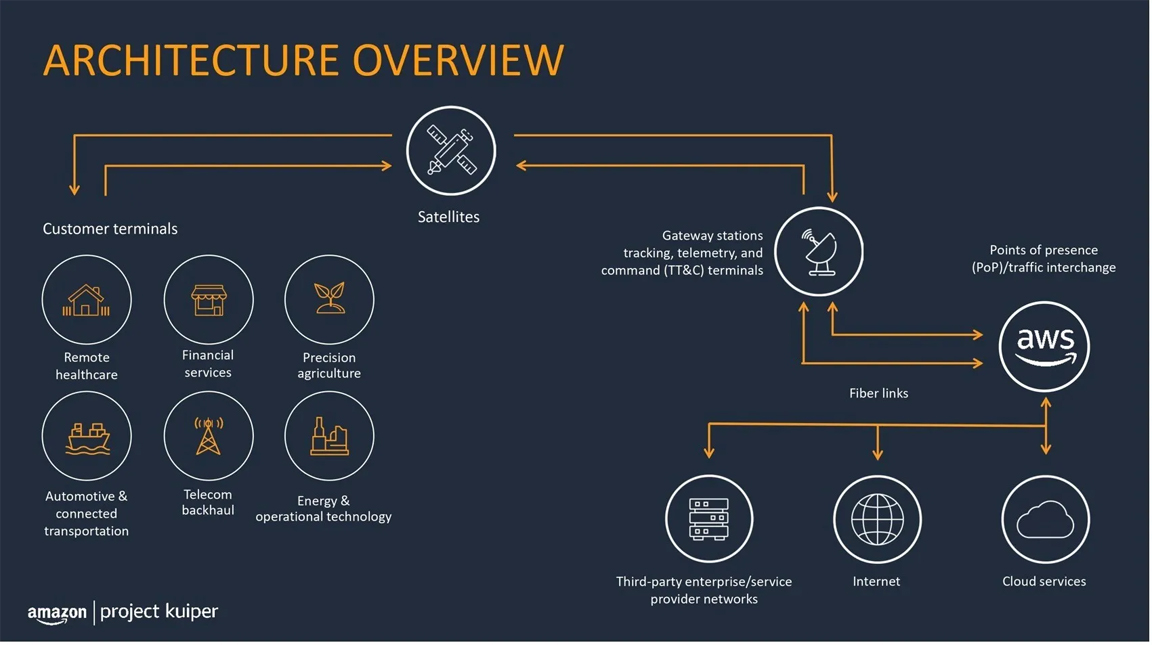
Another advantage for Kuiper is its deep integration with Amazon’s cloud system, called AWS. Because AWS already powers massive amounts of online traffic—everything from Netflix streaming to banking apps—Kuiper’s connection to it could allow for faster data transfers and less lag time, especially compared to Starlink’s more stand-alone setup.
Starlink isn’t sitting still
Still, Starlink isn’t sitting still. It recently upgraded its infrastructure and now delivers latency (lag) that’s 8% better than the U.S. wireless average. And SpaceX is preparing its next big move: the V3 Starlink satellites, which promise 10 times more bandwidth. The only catch? These new satellites depend on successful flights of the Starship rocket, which is still in development.
As the race heats up, both companies are competing to serve RVers, boaters, remote workers, and rural families who have long been underserved by traditional internet providers. For RVers especially, more competition could mean better gear, faster speeds, and lower monthly bills in the not-so-distant future.
Sources: Amazon Project Kuiper and Yahoo Finance
RELATED
- Amazon’s internet satellites just got a lift…from Starlink?
- Building a global internet service from space isn’t cheap—just ask Starlink
- Starlink now ‘demands’ $1000 surcharge in some locations
- Starlink satellite messaging and data available to all carriers’ subscribers this fall
- T-Mobile and Starlink team up for cell service anywhere
- Ways to connect to the internet while traveling, and the pros and cons of each option
- Got Starlink? Scam alert for unsuspecting customers
RVT1220b

Wow! There is no question that I was born in the last century. I may be the last person on Earth that remembers phones even BEFORE the rotary dial, no less computers and whatever else these satellites do.
I remember our first phone number (north of Seattle) was EMerson 4584. And when some new houses were built next to us, they were on a different line and we had to call our next-door neighbors (100 feet away) long distance! Have a good evening/night, Kelly. 😀 –Diane
There are at least two of us who recall cranking the phone to get the operator to connect us to the folks down the street! But, you know, somewhere along the line I have lost my enthusiasm for this headlong rush to get computers to solve and do everything. Maybe if we get enough satellites up there it will create enough shade to slow global warming?
We had “party lines” where I live. About ten households would be on one line. If one of the ten was already using the line, you couldn’t call, but you could listen in on their conversation! Everyone in town knew everyone else’s business. If you were talking to someone on the phone it was common to hear breathing in the background from “nosey Nellies” listening in! 😆
Starlink works great for me but will consider Kuiper if it’s cheaper.
Thank you for the update, Russ and Tina! Interesting that among those carrying Kuiper satellites into orbit is Space-X. Have a great day and safe travels!
Great article! Thanks!
Competition is good for consumers.
This is great. Competition will make things faster and better. The best part, no government telling them how to do it.
Kuiper right now is relying on Space x to launch their satellites because they cant get them up themselves, also starlink has almost 8000 in orbit and launching approximately 400 a year. Kuiper if launching 1200 a year has a way to go. At 1200 a year they have to go minimum 6 years to catch up and that is if Starlink quits launching and they wont, the projected number is over 40,000. I am all for another competitor but lets be realistic Kuiper has been trying for the last couple of years just to get a working satellite up. Never under estimate Musk, you should know he is always moving forward
Lots of problems with the Barclays statement. The claim of Kuiper being a “serious challenger” seems more aspirational than grounded in reality, especially given Starlink’s projected $12.3 billion revenue in 2025 and 7.6 million subscriptions. Additionally, Amazon’s need to use SpaceX rockets ironically funds its competitor, highlighting strategic dependencies. As of August 2025, Kuiper’s limited deployment (54 satellites vs. Starlink’s 7,000+) and reliance on external launch providers make it far from an immediate threat. In my view, the Barclays analyst’s optimism reflects Kuiper’s potential rather than its current standing.