


A longtime RVtravel.com reader recently commented on my review of a truck camper RV. Jim Johnson said (in part), “The problem with truck campers today is the RV parks that won’t accept them.”
Jim’s comment prompted me to mentally review the countless RV parks we’ve visited. Turns out, he’s right! Looking back in my mind’s eye, I haven’t seen too many truck campers. Fifth wheel RVs? Check! Travel trailers? Check! Motorhomes? Check! Tents? Check! But truck campers? Not many. Could it be that some RV parks really do disallow them? I had to learn more!
Definition(s)
Just what is a truck camper? I’ve always believed it’s a self-contained, manufactured RV unit sized to slide into the bed of a pickup truck. RVIA agrees with me. It classifies an RV unit that sits in the bed of a pickup truck as one of the core RV types (along with fifth wheels, travel trailers, and motorhomes). Truck campers are also called pickup campers.
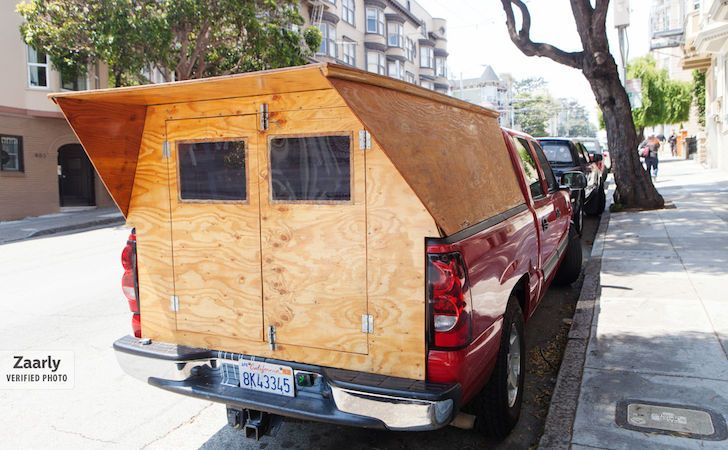
You’d think this definition would suffice. However, there are also homemade truck campers, like the one pictured above. If you ask Google, you’ll find many, many do-it-yourself truck camper building plans.
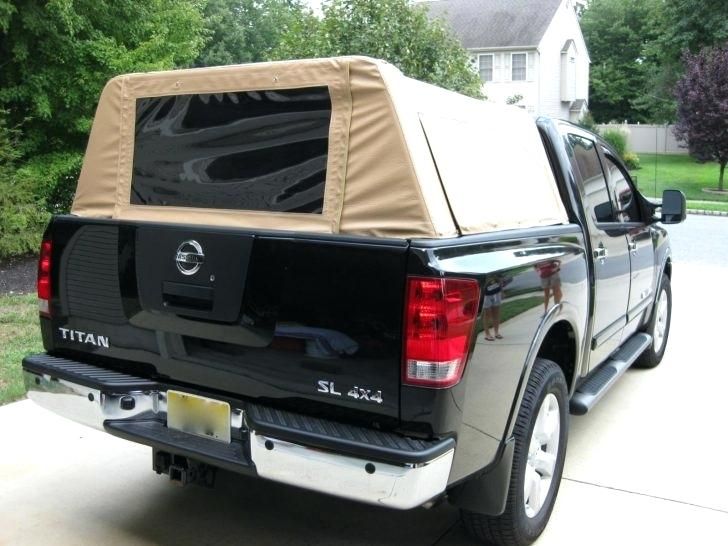
But wait! There’s more. You can also purchase a soft-sided truck camper. These popular setups feature canvas or screen “walls” similar to a tent. They provide more usable space for comfort.
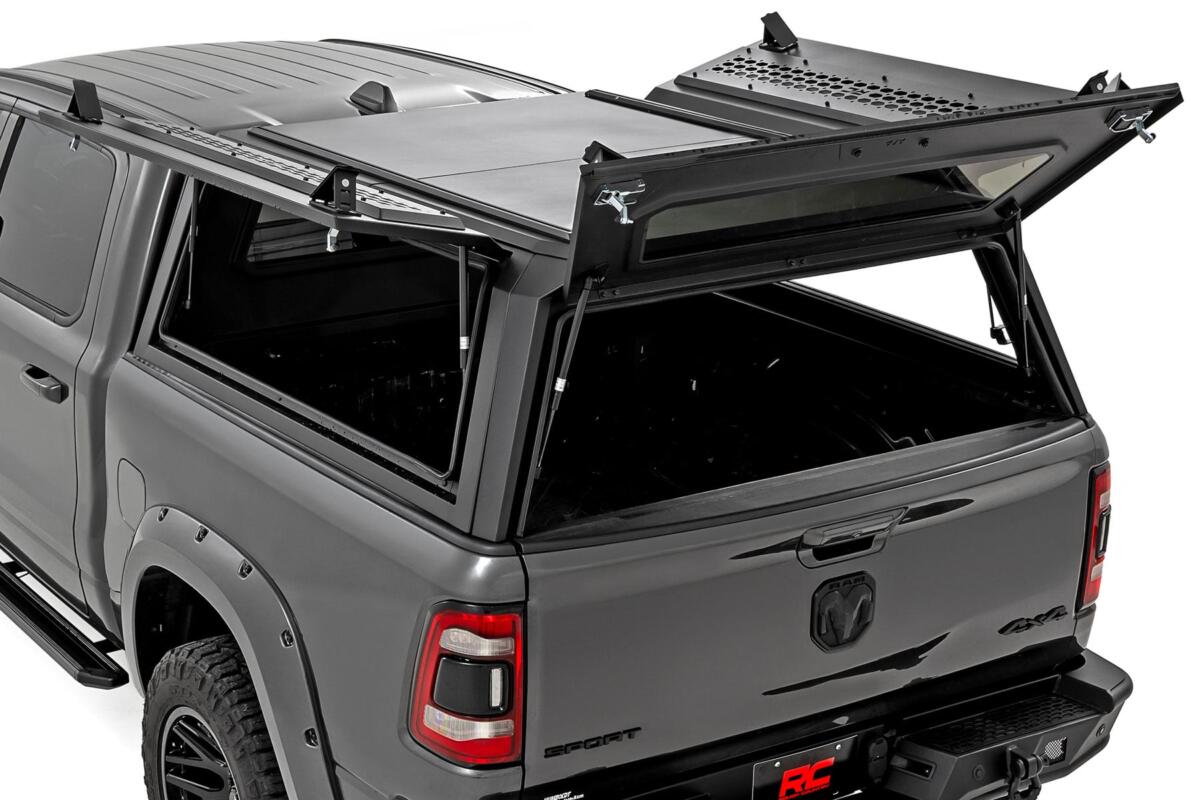
Then, there are folks who define a truck camper as any configuration that allows for sleeping. A truck topper (see above) qualifies with this definition. For that matter, an open truck bed with an inflatable mattress tossed inside could qualify as a “camper,” I guess.
Not welcome
Many RV parks and campgrounds—especially private and resort-style facilities—have rules that prohibit truck campers. This is not a federal law, but rather a policy set by individual operators.
Here are some reasons why truck campers are not always welcome:
• Insurance and liability concerns. Some owners cite insurance as a reason. In earthquake- or fire-prone areas, they may require campers to remain on the truck at all times so they can be evacuated quickly if needed. Others may have had trouble removing abandoned or damaged truck campers, making removal more costly than with a standard trailer.
• Appearance rules. Certain parks want to maintain a “clean” or “resort” look. Truck campers can be seen as less RV-like. Some park operators use these restrictions to wean out people they consider undesirable—such as those living in vehicles long-term or who may be homeless. This is about appearances and perceived suitability for the campground’s clientele.
• Safety. Bear country can create another layer of restrictions. When a campground is closed to soft-sided camping, pickup campers with exposed canvas or truck-bed tent campers may be barred for safety reasons. (Hard-sided truck campers may still be allowed.) The White River National Forest did exactly that at Difficult Campground in 2025 because of bear activity. The notice specifically excluded truck-bed tent campers.
• Classification and certification. Some parks require RVs to be certified by the RVIA (Recreation Vehicle Industry Association) for safety features like wiring, plumbing, and fire alarms. Many truck campers are self-built and may not meet these standards, so they are turned away.
Why choose a truck camper
A lot of RVers like truck campers because they are compact, flexible, and easy to take into places where bigger rigs struggle. Another reason for the truck camper’s popularity is cost. Truck campers often cost much less than many other RV choices. Especially if you choose to purchase a previously loved manufactured model.
What can truck camper owners do?
The good news is that truck camper owners still have plenty of places to stay. Look for state and national park campgrounds that explicitly list truck campers, pickup campers, or small RVs as allowed equipment. (Always read the site notes before booking.) Big Bend National Park, TX, for example, allows a smaller RV or pickup camper at certain group sites. Many front country campgrounds are built for tents, RVs, and towables in general.
If you are not tied to hookups, BLM dispersed camping is another solid option. It is usually managed with clear stay limits and area-specific rules.
Bottom line
If you own a truck camper, check each campground’s posted rules before booking. If you can’t find a place that accepts your truck camper, consider public land campgrounds, van-friendly RV parks, or boondocking.
What about you?
Do you own, or have you ever owned, a truck camper? Have you ever been turned away from an RV park or campground with yours? Tell us about it using the comments below.
RELATED
- Truck camper review: 2026 Northern Lite 10-2EX LE—a ‘right-sized’ option
- Check out the amazing, rare 1963 Del Rey Sky Lounge truck camper… and it’s for sale!
- Kingstar KRUZR truck campers: Where luxury meets utility
- Amazing DIY truck camper tiny home with panoramic windows
- The new 2026 nüCamp Cirrus 920—not your grandpa’s truck camper
- Tour two of the best truck campers: The 2025 and 2026 Bigfoot 10.4
RVT1261

We have never been turned away from a private RV park with our truck camper. We have owned two over about 15 years and have traveled extensively in them.
I have a Travel Lite truck camper and have used it for almost 10 years and can count on one hand the number of times I stayed in a campground with hookups. I use my truck camper to go from point A to point B and mostly stay overnight in parking lots for a night so I never thought there would be any problems about using a campground. Thanks for the heads up.
We had a truck camper for many years. Never got turned away from a campground but I rarely went to resorts. You couldn’t travel to Alaska in a better vehicle. But they are not an inexpensive option. They cost almost as much as a class C but need the additional cost of a 3-ton truck for support.
We’ve been traveling with our truck camper for 18 years and have never been turned away. We are in Canada though. If anything we gets lots of people asking questions about our rig, as it is a go anywhere rig. We are fully self contained and do not need power, etc., so we can boondock any where, any time.
7 years full timing. Have never been turned away. But of course a lot of us truck campers don’t like staying in “resort” campgrounds. Some places probably have that as a hard and fast rule. Others use it to screen out less desirable vehicles. Look at your article on the Winnebago Arka. At $300,000 price is that allowed? True, you have the detachable argument but then just make a rule about not detaching the truck camper. Also if someone just left behind a travel trailer and put wheel locks and hitch lock on it, that’s not going to be easy to remove either. This rule doesn’t bother me, I will gladly move on to a different location and save my hundred bucks!
Life is strange. RV Parks welcome the huge, all electric, triple A/C with hydronic water and heating, central vacuum and residential fridge that will spin the bearings out of the power meter while declining the truck campers that at most *might* have a 30 amp plug. And if they don’t turn him away, they charge the same rate….LOL
Had a truck camper many years ago, but the reason was to tow a boat trailer and still sleep comfortably on-shore. If you visit any Colorado lakeside campground (not RV “resort”) in summer, you will see dozens of truck campers with boat trailers parked near the boat ramp. And, if you shop at any Walmart in the mountains on a hunting season weekend, you will see truck campers towing trailers with one or more side-by-sides on them. Some may even have spent the night there. Not as “stealthy” as a Class B van, but may have a dry bath (important to my wife). Plus, unlike a Class B or C, you can unload the camper at home, then haul a load of landscape rock or a new washer and dryer!
This is ridiculous and very angering. We are considering moving from our Class C to a Truck Camper. I really like the Lance 1172. There absolutely should not be a flat out denial of Truck Campers. Maybe people could just book as a popup, and if challenged say, well I didn’t see Truck Camper as an option. I mean once you check in and go to the site, in many cases, it wouldn’t matter after that. I’m like the possible move because it’s one vehicle length. Not a truck towing a camper. Not a camper towing a car or trailer. Our current setup with our Class C, we tow a 10′ Motorcycle Trailer which carries our Harley Trike. But the extra length makes many parking lots and gas stations a challenge.
Let’s face it. It is “all” about looks. I say “big deal”
Well, at least the author comes right out and says it: “Certain parks want to maintain a “clean” or “resort” look. Truck campers can be seen as less RV-like. Some park operators use these restrictions to wean out people they consider undesirable—such as those living in vehicles long-term or who may be homeless. This is about appearances and perceived suitability for the campground’s clientele.”
I had a beautiful Lance Camper on my pickup and went everywhere with it. Sad to see that now it’s all about $$$$ and looks instead of travel and fun within one’s budget.
Boats, sleds, horses, atvs, etc. All reasons why truck campers are better. And going places where huge motorhomes and 5th wheels can’t go. Most truck camper types don’t want to camp in a parking lot RV park anyways.
I do know of a few RV parks that don’t permit leaving the truck camper at the site while you take the truck itself out for the day because of the cost of scrapping the camper if the owners don’t come back. Sadly this is learned from experience.
Kinda defeats the whole reason to choose the truck/truck camper rig for camping. One vehicle, basic length (even if a bit long). No towing vehicle, no towed vehicle. Arrive, setup the Truck Camper and take the truck away. You now have transpo for the local area.
We have a Bigfoot truck camper that looks much newer than it’s real age. I contacted one RV park on a mountain lake in our state and they flatly refused us, and wouldn’t even consider looking at a photo of our camper rig. We’ve never had that issue anywhere else, even in Key West, or other resort locale RV parks. Sun Outdoors always welcomed us. I consider it a loss on the part of the park that denied our visit, I’ve seen some of the rigs they’ve allowed and we keep a nicer campsite than many others. Oh well, their loss not ours.
I am amazed how few small campers are at campgrounds, popup trailers, A -Frame campers, Casita sized RV’s and teardrop trailers. Here in Texas bigger is never enough.