

By Cheri Sicard
In the video below, Patrick from Travels with Delaney answers viewer questions he gets all the time from new, and sometimes not-so-new, RVers, namely: Do you need RV solar, lithium batteries and/or a generator?
Like all RV questions, the answers will depend on you and your style of RVing. Nonetheless, Patrick shares a lot of great information to help you decide which, if any, of these RV upgrade options will work for your RV lifestyle.
So, the question begins with what kind of camping you plan on doing.
Spoiler alert: If you plan to ONLY stay at RV parks or campgrounds with electrical hookups, you don’t need any of these things. Ditto if you only occasionally spend a single night or so at a time unplugged. Your RV’s regular batteries should be able to handle this.
If you are a newbie who does not yet understand what parts of your RV are powered by its batteries, be sure to watch the video, as Patrick gives you a quick overview.
However, if you plan to go boondocking or dry camping, you might want to consider RV solar, lithium batteries, and/or a generator.
Do you need RV solar?
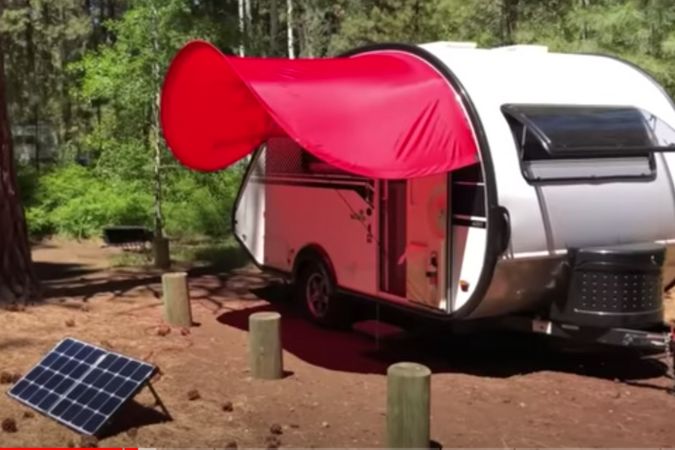
Patrick’s discussion of solar starts at point 4:40 in the video. He talks about various solar options including low-cost portable panels as well as installing solar on your RV, how much wattage you will need, the pros and cons of each, and more.
Do you need RV lithium batteries?
The lithium battery discussion starts at point 7:00 in the video. Patrick talks about his own lithium battery upgrade along with who might most benefit from upgrading to lithium batteries.
Patrick says you only need this upgrade if you plan on doing a lot of boondocking and dry camping. Maybe for an optional upgrade, but otherwise I don’t know that I agree. Lithium batteries weigh less, provide more power and greater flexibility, last longer, and over time ultimately cost less than lead acid batteries (or even AGM batteries). And prices of lithium batteries are coming down substantially. In my opinion, if you need to replace your batteries, lithium is the way to go. Patrick says that a lithium battery will run close to $1,000. Yes, if you install Battle Born Batteries. However, there are quality lower-cost alternatives. Learn more here.
I recently made this upgrade to my RV and I have to say I am extremely happy with the results. Read about it here.
Patrick’s battery discussion concludes with the ways you will use your batteries and inverters—another great RV electrical upgrade.
Do you need a generator?
The generator discussion begins at point 11:50 in the video. Patrick says this is a controversial topic in YouTube videos and online. That’s because a lot of people do not like generators and think they are noisy.
To be sure, you will probably only need a generator to run your A/C off-grid and, as Patrick points out, you probably won’t be running it all day and night. You can also charge your batteries with a generator.
Patrick discusses options and generator sizes to help narrow down your decision, should you decide you need one.
If you have a setup for solar power, you will rarely have to use your generator, or so says Patrick. I have to concur. I, too, carry a generator as I believe in electrical redundancy. However, in over a year, it has yet to come out of the original box. But I have managed to avoid extreme heat. We’ll see how this season goes, but I may end up leaving it at home for emergency power there if I never end up using it on the road.
As a bonus, Patrick ends the video with a tip about his favorite USB rechargeable fan that can really keep air moving in your RV and can often stand in for A/C if the weather is not excessively hot.
##RVT1147
I need batteries and a generator. Solar is too much work, takes the fun out of RV camping. At RV parks, do not need anything but a good electrical connection to plug into as many are burnt or melted.
Curious here, Split. How is solar too much work? Unless you are talking about the movable ones you have to break out and set up. The solar on our roof just sits there and takes care of all our power needs.
Nope. Just give me a 20-amp outlet and I’m a happy camper!
The new word for 2024 is DC to DC charging. It’s just starting to catch on with rvers. A dc to dc charger installed in your tow vehicle or rv will deliver lots of power from your vehicles alternator to the rv’s house batteries while you’re travelling down the road all day. I have 760 watts of solar, but solar it depends on position, angles, weather, clean panel surface, & other factors to deliver any substantial energy to batteries. My DC to DC charger delivers 50 amps of power to my batteries every hour I’m driving. So, I can use 150-200 amp hours of electricity the prior evening & morning, & then 3-4 hours of driving the next day completely refills the batteries.
Thank you, Fred. I have seen more and more about these DC-to-DC gadgets. It definitely will go into the thought process before replacing my AGM batteries with lithium iron phosphate batteries. Thanks again! Safe travels! 🙂
Yep, mostly have AC power (even if just 15A) where we park. But have had a few instances where expected AC wasn’t there (usually weather, but not always). If I have to run the furnace to keep systems (and us) from freezing, I always have the fear the battery may not make it. I now carry an 1800 watt dual fuel generator and run it off propane. It doesn’t weigh much more than another big battery, can recharge our AGM battery, and is just powerful enough to run the air conditioner (not and, but or the microwave or the coffee pot). Propane is transportable and fairly easily found.
We have a generator on board our motorhome; primary purpose is emergency backup power for the stick&bricks home in winter when the grid power goes off – to provide power to the heater fan so the gas heater keeps the house warm! Secondary use is to provide air conditioning to the rig when not plugged in.
As a side note, we also have a solar and battery system for the house, but gray skies may not always be enough for the batteries charging and run the house.
Thank you, Cheri! We already have a generator and AGM batteries. Once the AGMs die, then we likely will replace with lithium iron phosphate batteries. (I think that our power management system is advanced enough to support a “plug-and-play” replacement.) Our big question is how much solar is necessary for our trips to Canada and Alaska where quiet hours preclude heavy use of the generator to recharge the lithium batteries? Thank you again for finding and sharing the video, and for the resulting thinking that I did! Safe travels! 🙂
I have read numerous articles about Rv’s and solar – but not one yet has addressed the added weight and also the ability to walk around and inspect your roof seams and the panel attach points! So, what is the pound sacrifice per watt penalty?
Evertone electrical needs are different as are the equipment already installed in your RV. For my cost to benefit ratio, I decided to start by replacing our 7 year old FLA batteries with all the lithium I could fit in the battery compartment. I have 810 amp hours of BattleBorn and it works great for us allowing us to go a few days powering everything except A/C before having to recharge. And they recharge fast too. We are full timing in a 40 foot DP. It all depends on how much time you want to spend off-grid or with limited (15 amp outlet) available grid power and how reliable you perceive the future of our grid power will remain. Which is the only reason I am considering adding solar power.