

By Cheri Sicard
A tiny trailer feels cozy until a storm parks over camp at 2 p.m. Then every square foot matters. When Rving in the rain, the right awning, shelter, or side room can turn a tiny camper into a much easier place to live in bad weather.
In the video at the end of this post, the team from Playing with Sticks shares rainy day RVing tips.
This collection of camp setups shows how various RV owners create dry entry points, covered galleys, bug-free hangout space, and a little privacy without giving up the small-trailer lifestyle.
Why modular shelters matter so much
Tiny campers work best when part of camp life moves outside. Rain changes that fast, so extra shelter becomes more than a nice add-on. It creates room to cook, change clothes, sit out a storm, and keep wet gear out of the cabin.
That is why modular setups stood out in this campground. Owners could angle an awning around trees, point a shelter sideways when the site was tight, or cover one side for entry and the rear for cooking. A trailer with coverage on both sides almost always had a dry place to step out, no matter how it was parked.
Three-part setups and fast shelters
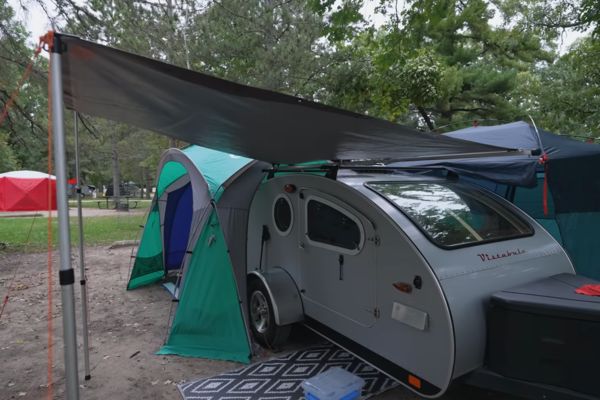
One of the smartest examples came from David’s three-part system. Over the galley, he used a Coleman Mountain View shelter, which packs smaller than many instant pop-ups but takes more effort to pitch. For quick rain cover at the door, he clipped a simple 6×8 tarp to a telescoping aluminum roof-rack extension and supported it with tarp poles. For privacy, he added the Kelty Backroads shelter, a favorite because it packs small and works well as a changing room.
Other campers leaned toward instant shelters. A five-sided Clam Outdoors shelter with side panels cut the wind and held more warmth, which made breezy weather easier to handle. A Timber Ridge instant shelter added a front awning, so campers could move from trailer cover into an enclosed space without stepping into the rain.
The small tricks that make RVing in the rain work
The best tip had nothing to do with buying more gear. One owner twisted the side-entry awning so the support poles were not level. That slight angle created runoff, stopped water from pooling, and kept rain from draining back toward the trailer.
A flat awning can sag fast in heavy rain. A small twist gives water somewhere to go.
Hard ground needed another fix. On gravel sites, lag bolts and fender washers held better than standard stakes. A 6-inch lag bolt worked in gravel, while a 10-inch version gave more hold in grass.
Roof-mounted rooms, solo-friendly shelters, and airy screen houses
Some setups pushed the idea even further. An ARB vehicle awning rolled out from the roof rack and could pair with a 48-square-foot awning room. Another camp joined a Kammok Crosswing awning to a dual-room shower tent, creating a dry path into a changing room.
For solo campers, ease mattered most. The Dometic GO Compact Camp Shelter stood out because one person could set it up without much upper-body strength, and removable walls let it fit over a galley. A lightweight screen house also earned praise for strong airflow, fast drying, and no floor, which made it easy to place over a picnic table and easier to keep clean.
Final thoughts
These camps proved that a tiny trailer does not have to feel tiny in bad weather. A smart shelter setup adds dry space, privacy, airflow, and a better place to wait out a storm.
The most useful part was not one brand or one perfect product. It was the way each owner matched the shelter to real camp problems, rain at the door, wind at the chair, bugs at dinner, and the daily challenge of living small.
RELATED
- How to waterproof fabric: Turn old sheets into waterproof tarps
- The science of rainwear: Navigating waterproof fabrics and ratings for RV adventures
RVDT2914
We have tent, popup trailer and RV’ed with both manual and electric awnings.
Rain can be uncomfortable, but the bigger issue in most storms is wind. High enough wind and no open side fabric shelter is safe. But at lower winds the trick is to minimize the wind getting under the shelter and lifting it.
In my opinion current electric awnings are the worst at adjusting for wind direction without turning the whole RV. Which is why they tear and bend support arms. Most RV manual awnings, while taking more effort than pushing a button, are more adjustable and offer better side support. Some free-standing canopies are sturdier yet with tie-downs, leg weights and especially height adjustment.
I agree with Mr. Johnson, wind can be a problem, even if you stake your shelter down. I have used stakes, screw in, and an electric drill to get through the first four inches, for concrete re-enforcing rod. however, sometime the wind just destroys the awning or the ropes.
Thank you, Cheri. Have a great day and safe travels!