

By Cheri Sicard
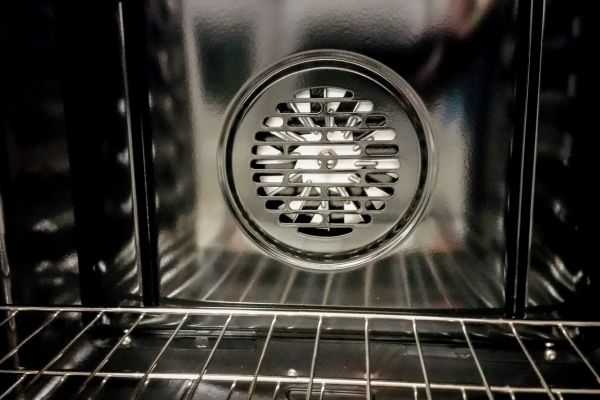
A lot of new RVs come equipped with RV convection ovens. But what does that convection fan do? When should you use it? Are there times it would be better to leave off the convection option? The video below from Helen Rennie will answer all.
Helen begins the video with what she calls the “Wonder Bread Test,” to illustrate some key differences in the way RV convection ovens (or any convection ovens, for that matter) cook as opposed to conventional ovens. Here’s what she found:
• In a 400 degree F oven without convection, it took 20 minutes to show any color on the bread.
• With convection, it only took 13 minutes.
Helen says there is a misconception that convection cooking cooks more evenly. However, this is not necessarily so, and if you watch her Wonder Bread experiment in the video, she proves it. In reality, the convection fan creates a current of air that will favor some parts of your oven more than others. Therefore, when using convection, you will still want to rotate pans in the oven for even baking.
Food cooks differently with convection. For instance, in the Wonder Bread experiment, the toast browned quicker on the convection setting, but this was the top of the toast. Without convection, Helen says most foods brown from the bottom. With convection, it’s faster because both sides brown at the same time.
So you might think, great, I will cook everything on the convection setting. Not so fast!
Helen says there are instances when convection cooking can be detrimental to the finished dish. For instance, pizza is a food that will end up with burnt cheese on top by the time the bottom is properly browned. The same with baking pies in a convection oven. The top will be burnt by the time the bottom is properly baked.
The common wisdom says that if you are using convection in these instances, you should lower your oven temperature by 25 degrees. While Helen says that makes sense, it nonetheless won’t necessarily produce the same results as a traditional oven. In instances like pizza and pies, you want to have a lot of heat on the bottom but slow down the overall cook time by not using the convection fan.
RV convection ovens for finishing techniques
Helen says there are instances where it is beneficial to use the convection setting during the last part of cooking to brown the top of a dish once you already know the bottom is nicely browned.
At the end of the day, Helen says it boils down to this:
If you don’t have enough browning on the top of a dish, turn on the convection fan. If you have too much browning on the top of a dish, turn it off.
RELATED
- Is a traditional or convection oven best in an RV?
- RV ovens: Love ’em or hate ’em? How about you?
- RV oven lighting made easy
- RV oven features and tips even experienced RVers don’t know
RVDT2914
That wasn’t much helpful information. I have one and have just hit and miss when it comes to cooking different items.
Thank you for the video and summary, Cheri. Interesting. We routinely cook frozen pizzas in our microwave/convection ovens (both at home and in the RV) and have never had the cited problem. Have a great day and safe travels!