

When you live in a small space, the little stuff matters.
RV outlet add-ons can make RV life easier. The smartest picks are the ones that plug into an existing outlet, stay low-profile, and solve a real problem without taking up extra floor space.
But first, a caution
A quick safety note before we get to the products. Always look for UL certification and match the electrical rating to what you plan to plug in. Remember that heating appliances such as space heaters can overload a power strip.
For RV owners, these outlet add-ons are best for light loads, charging, and organization. Real shore-power protection still belongs to an RV surge protector built to guard against bad pedestal power, voltage problems, and miswired hookups.
Hide cords

A great place to start is a flat cord-hiding solution like Sleek Socket. Its ultra-thin outlet concealer is designed to sit flush against the wall, hide bulky plugs, and install without tools. The company offers a 3-foot, 3-outlet version and a 6-foot, 6-outlet version with surge protection, which makes it a smart fit for RV spots where you want to push furniture closer to the wall and cut down on cable mess.
Design element

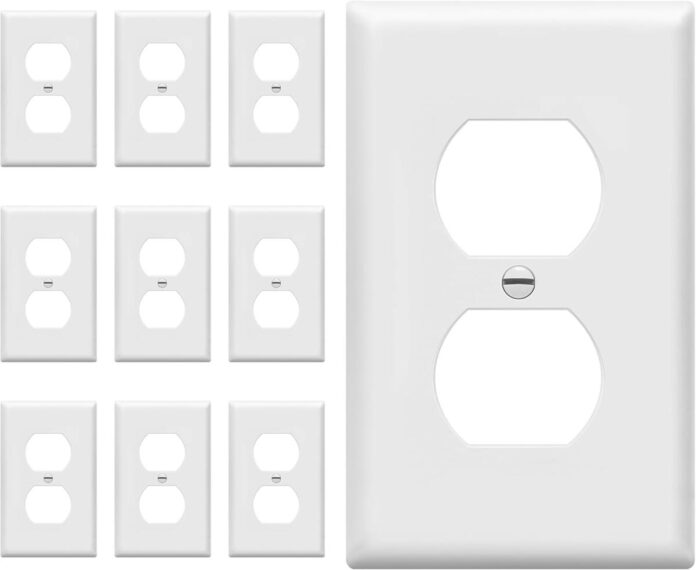
Electrical outlets are not usually known as high-impact design elements. However, specially designed outlet covers can add a bit of color or style to your rig’s interior. Placed on the kitchen or bathroom counter-height outlets, a decorative outlet cover can even serve as inspiration!
Surge solution
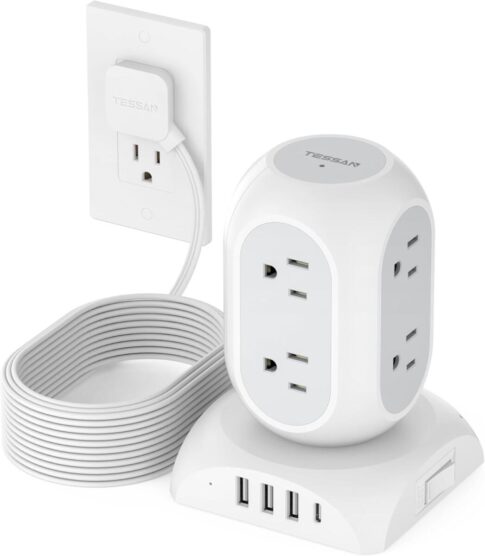
If you need one outlet to do more work, a compact surge strip like this one can turn an electrical outlet into multiple AC outlets and USB charging ports. It uses a flat plug that fits tight spaces and includes 900-joule surge and overload protection. Best of all, this outlet add-on can be wall-mounted with keyholes on the back. This type of surge protection is handy near a dinette, desk, or countertop area where you may be charging several low-power devices at once.
Outlet shelf
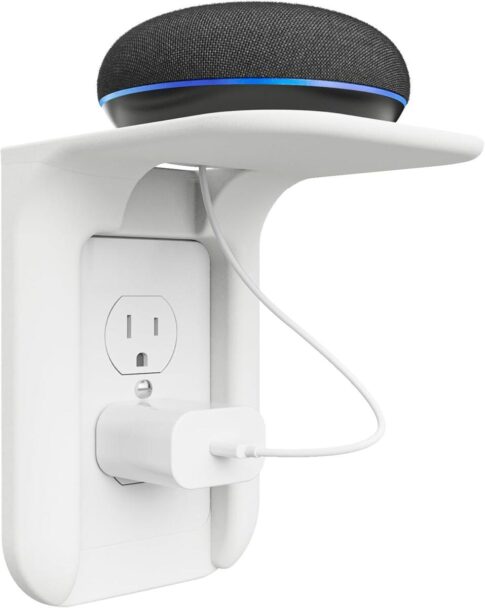
For RV bathrooms, bedrooms, and kitchen nooks, an outlet shelf can be a surprisingly practical fix. WALI’s outlet shelf uses an existing outlet to create a small platform. This small shelf measures 4.3 inches wide and 5.1 inches deep, supports up to 10 pounds, and installs by replacing the outlet cover. In an RV, that little shelf can provide a great place for a toothbrush charger, phone, or small speaker.
Built-in nightlight
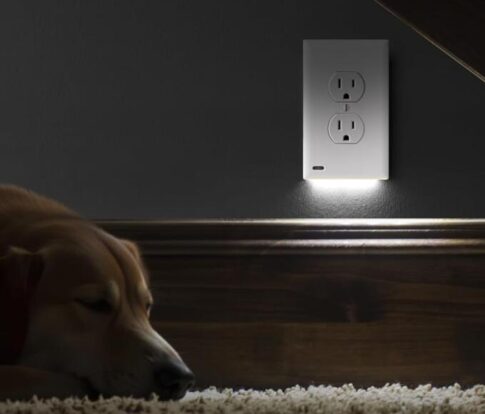
Another RV-friendly outlet add-on is a built-in outlet nightlight. These are specialized outlets designed to install over an existing outlet. Using power from the outlet itself, it keeps both sockets available and adds automatic low-profile lighting without wires or batteries. This outlet add-on is especially nice in an RV hallway, bathroom, or near stairs, where a little light can make nighttime trips easier without giving up an outlet for a plug-in nightlight.
Side access
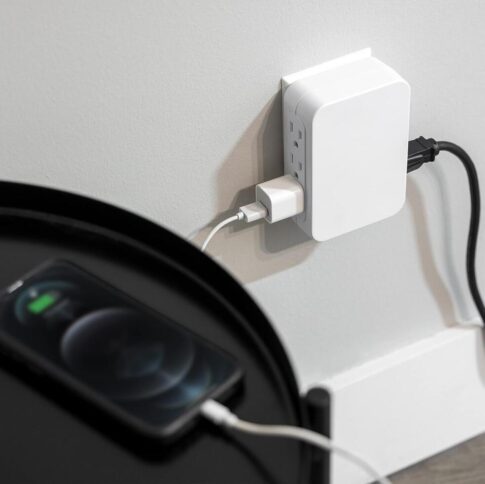
For tight spaces, consider a side access electrical outlet and surge protector add-on. Often, this configuration allows you to use an otherwise useless outlet due to furniture placement or slide-out clearance.
Bottom line
For RVers who like a cleaner, safer, more organized rig, outlet add-ons are one of the easiest upgrades you can make.
Do you have electrical outlet add-ons in your RV? Tell us in the comments below.
RELATED
- RV outlet issues, wiring and replacement
- Hidden RV outlet flaw can lead to melted wiring, tech warns
- What appliances should not be plugged into a GFCI outlet?
- Can I use a 2-prong plug in a 3-prong outlet?
RVDT2911

RV outlet covers are normally different than ones in our home. In most instances you can’t use any cover used in our home in a RV. I was able to use the nightlight cover in my bathroom but had to get one specifically for use on a ground fault outlet. The ground fault outlet is the same at used in our home, but a cheaper quality.
Great article!! I didn’t know these accessories existed. Thank you.
A word of caution when adding devices that multiply outlets: Having more things plugged in can mean more amperage draw which translates to heat. Hopefully the breaker gets hot first and trips, but usually it’s the outlet that heats first right where the wires pinch connect. A power strip is great as it reduces the frequency of plugging and unplugging at the outlet. Just remember to use one device at a time just like the single outlet would allow.
Even power strips are iffy. Most are made of one piece of molded plastic, cheap receptacle connections with little tension and cheap light gauge cords and plugs. Look for ones with individual receptacles and heavy duty cords.
Be prepared to pay over $25.
Similar to this:
https://www.walmart.com/ip/Wiremold-Plug-In-Outlet-Center-Unit-Power-distribution-strip-15A-L-15-cord-AC-120-V-input-NEMA-5-15P-output-connectors-4-15-ft-cord-gray/1883353508?classType=REGULAR
I’m looking as to charge my phone instead using charging block. USB includes with the outlet. Between charging my phone and my watch plus my wife too
It’s interesting that the surge strip you link to doesn’t state the it is UL certified.
It is not a surge strip. It is a heavy duty plug strip.
BTW, Wiremold is a major supplier of electrical equipment . Just because Walmart did not show it as having a UL listing, doesn’t mean anything.
I have similar made by Wiremold and it is listed.
It also uses a 14 gauge wire, not 16 like most cheap Chinee ones do.
Thank you for the fascinating and comprehensive set of alternatives, Gail. No, we haven’t had the need. A few were especially intriguing, but our outlets include USB-A outlets. Perhaps some of these will as well once I investigate further. Meanwhile, have a great day and safe travels!
One of the best inventions ever made are motion detector lights, especially the ones you don’t need to plug in and can easily be recharged. The outlets in our RV are placed in ridiculous places and difficult to use/access (kitchen outlets, for example), so we use rechargeable devices and save the outlets for recharging them. The outlet problem is resolved with power strip extension cords.