


Dear Dave,
I have a 19-foot Springdale travel trailer with 14 x 5.5 Dexstar modular steel wheels on two 3500 lb. axles. I have always used a torque wrench to set the lug nuts to 100 ft. lbs. On just one wheel, two of the nuts have pulled the “lug hole” in the wheel towards the brake drum, bottoming it out on the drum. The amount of stud sticking through these nuts is longer than the others, revealing the collapse. The studs are not stretching or pulling out of the drum. Despite this, the wheel does not show any lateral run-out wobble. Is the 100 ft. lbs. I was told to use excessive? Is this just an anomaly? I think I should replace the wheel, but of course don’t want this to happen again. Thank you. —Eric, 2015 Keystone Springdale

Dear Eric,
Most likely your axle and the hub are a Dexter brand, since I don’t believe Lippert had much market share in the trailer industry. According to the Dexter website, they discontinued making wheels in 2004 and, as you indicated, the rim is actually a Dexstar brand. There is a label on the rim where I can make out the Dexstar name, and in the lower right of the rim is stamped T-14×5.5 JJ. Both Dexstar and Dexter have torque recommendations.
Dexstar is a division of Kenda USA located in Elkhart, IN, and has been manufacturing steel wheels for the marine and RV industry for over 45 years. According to their specifications sheet, the 14×5.5 means the rim diameter is 14” and the width is 5.5”. According to their Wheel Matching chart, it does not list a 5.5” width, rather Hub Diameter, which most likely is the “pitch circle diameter” they list in their specifications as 4.5. So it is a little confusing, but I do believe the recommendation is 90-120 LB/FT.
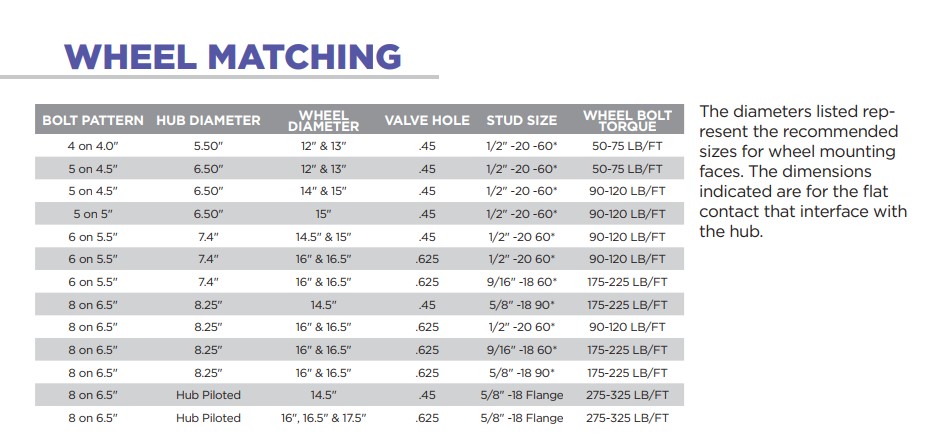
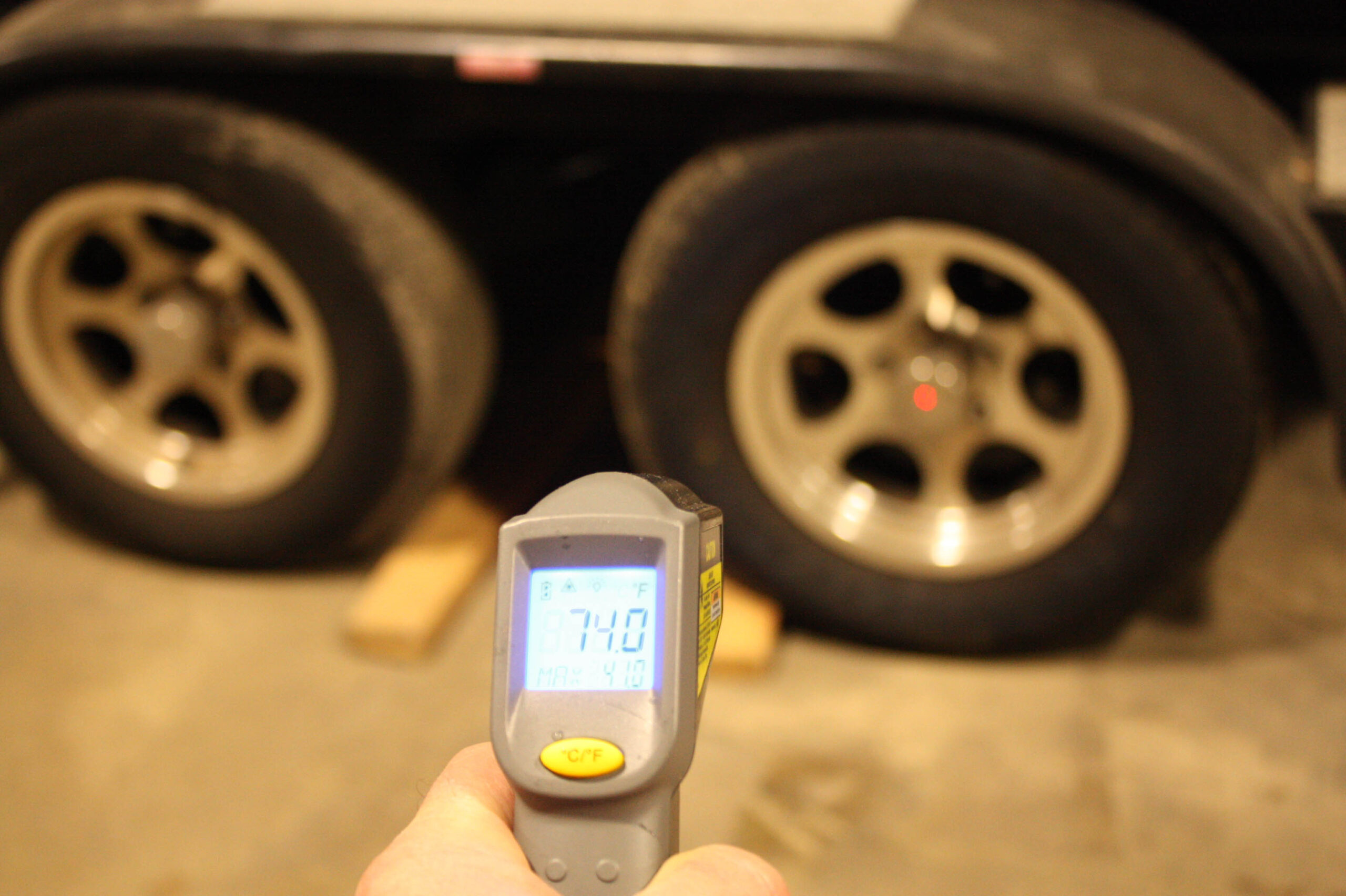
Dexter also has a recommendation of the same 90-120 Ft. Lbs., so I do not think the 100 LB/FT is excessive. I believe it has more to do with the rim getting hot and weak, but I’m not sure why just two bolts. I recommend using an infrared thermometer to check hub, brake drum, rim, and tire temperatures once a day when traveling. If the temperature got hot due to dry bearings or trailer brakes set a little high, it might weaken the metal and cause this.
Torque sequence
It could also be due to the torque sequence. Dexter recommends not only an alternating pattern but a three-step tightening process. I would also suggest having the tire checked for balance and alignment as it could create a slight wobble or vibration that you cannot detect but could cause an issue later down the road.

You might also enjoy this from Dave
What is the best jack to change a trailer tire, and where do you place it?
Dear Dave,
I have seen multiple articles on how NOT to jack up a RV trailer to change a flat, but none on how it SHOULD be done. Certainly it isn’t in the user manual for either of our RV trailers. I know it differs between multi-axle and single-axle trailers. And there’s a lack of information on what tools should be on-board to change a tire. RV trailers often come with a spare tire, but, unlike a car or truck, nothing else. In short, what are the best practices? —Jim, 2017 Keystone Cougar 33SAB and 2022 Gulf Stream 189DD
Dave Solberg is a leading expert in the RV industry and the author of the “RV Handbook.”
Read more from Dave here.
HAVE A QUESTION FOR DAVE?
Send your inquiries to him using the form below.
##RVDT2215

Please note that temp guns usually have a marking 12:1 on them which means for every 12 inches away from object it takes a reading 1 inch in diameter the laser is just the center of the diameter. Seen people stand too far away so are not getting true reading.
Dave, I think you missed something. If the studs are “pulling” out something is wrong at the axle hub and brake drum area. To me it sounds like the wheel is not sitting flat against the brake drum.
Dave,
1) The temperatures required to affect the metallurgy of the wheel are very high and the paint would have shown that exposure.
2) The rim shows the telltale signs of exposure to an impact wrench and depending on the wrench used could have taken the torque up to 300 ft-lbs which might have been adequate to collapse the “bridge” formed in the rim to strengthen the wheel.
3) Torque wrenches can mislead. Clicker type wrenches can get “stuck” and you never feel or hear anything. Not to mention that calibration doesn’t happen outside industrial users. I loaned my Craftsman 1/2″ wrench and got it back in two pieces, with the yoke broken in two. Also using an impact and then a “clicker” to ensure the torque was achieved is not accurate if you did not see the nut/bolt actually move before the click.
4) Fatigue. If the nuts were not torqued properly at some point prior and allowed to Fatigue the metal around the hole it may have cracked and now normal torque is enough to collapse.
Very well put. I agree.