


Dear Dave,
When hooking up to a non-GFCI outlet on shore power, we immediately have power. However, if plugging into a GFCI-protected outlet, the outlet immediately trips and we have no shore power. What do I need to do to ensure shore power to our Airstream Bambi 16RB when hooking up to GFCI-protected outlets, as many campgrounds only have GFCI outlets available? Thank you! —Richard, 2020 Airstream Bambi 16RB
Dear Richard,
There are several variables in this situation that could cause the problem. A little more information and clarification is needed.
Typically a GFCI- (ground fault circuit interrupter) protected outlet is a 120-volt/20-amp outlet with a test/reset button on the outlet. These can be found at the campground pedestal for smaller campers, typically popups and small trailers, and also in storage facilities. They are also common in residential applications such as a garage.
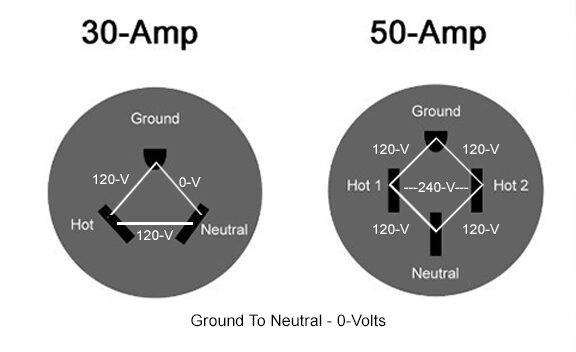
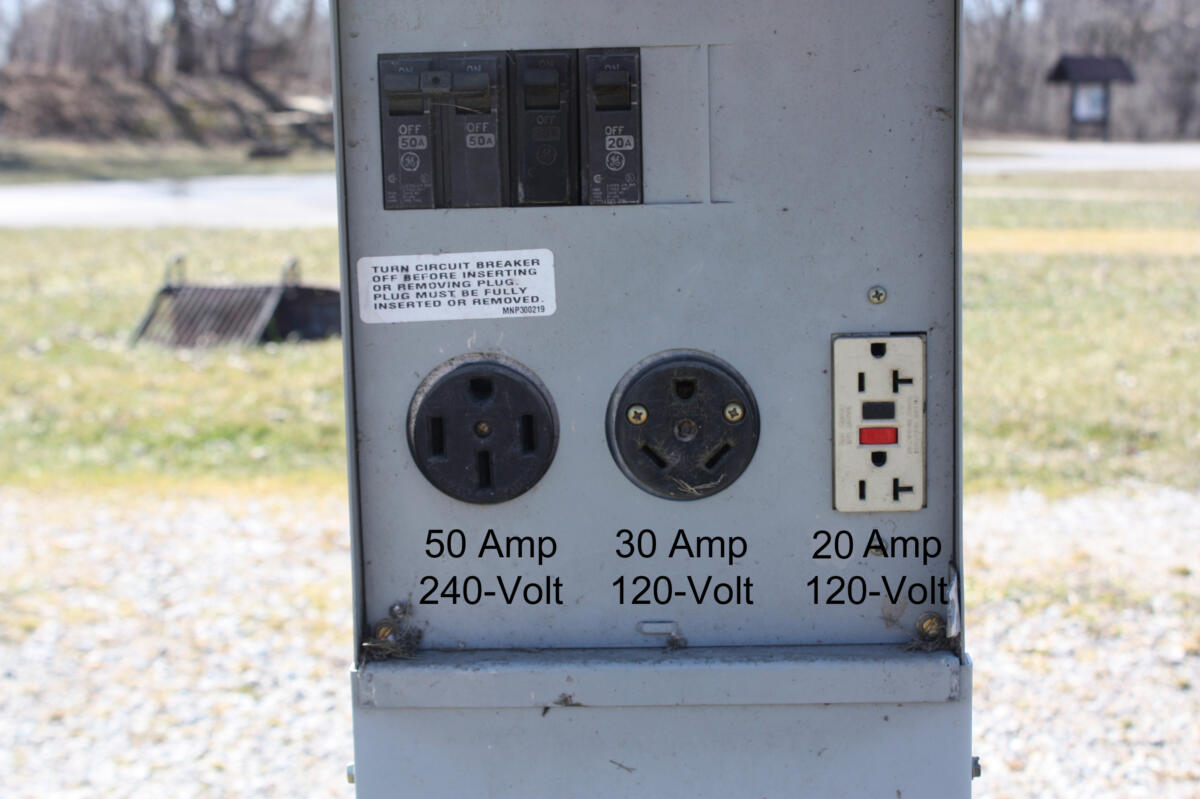
The 30-amp and 50-amp outlets found in campgrounds do not have GFCI protection on the outlet that would trip. So, I would assume you are connecting to the traditional 20-amp GFCI outlet pictured on the right of this pedestal.
“When hooking up to a non-GFCI outlet on shore power, we immediately have power”
What type of outlet and application such as residential, commercial, or campground are you connecting to? I assume you are describing a non-RV-type outlet, as the 30- and 50-amp outlets do not have a GFCI button on them. All campground pedestals that I have connected to have the GFCI 20-amp pictured above.
“However, if plugging into a GFCI-protected outlet, the outlet immediately trips and we have no shore power”
If you are plugging into the 20-volt outlet to the left in the above picture and it is tripping, there could be a couple of issues. First, there might be appliances or components drawing more than the 20 volts. Most likely, it is a combination of several running at the same time.
First thing to do
The first thing I would do is test the outlet to make sure it is wired correctly and providing the correct voltage. You can do this with a multimeter or a surge protector such as the Hughes Watchdog.
When you initially plug the unit in, the converter/charger kicks in and draws anywhere from 6-9 amps to charge the batteries. An air conditioner can draw up to 14 amps, so that alone would overload the circuit.
I would recommend shutting off the main breaker at the distribution panel to ensure that nothing is running. Make sure all other breakers are off, then turn on the main. If it trips the GFCI, chances are there is an issue with your distribution center. If it doesn’t trip the GFCI, then turn on the converter and see what happens.
Picky GFCI outlets
Another issue could be the sensitivity of the GFCI outlet. I have run into this twice recently: once at our home and the second time at a local storage facility. We bought a twin home (aka duplex) four years ago. After a short time, a GFCI-protected circuit breaker in the panel in the garage started tripping. We have several outlets “ganged” together in the kitchen. I assumed the power-hungry air fryer, coffee maker, and toaster were all playing together and caused the issue.
However, when I unplugged everything but the coffee maker, it once again tripped the breaker, although it was randomly. I contacted the electrician who wired the house and he stated that NEC code now requires the GFCI-protected circuit breakers. They have encountered this issue quite often.
Appliances are allowed to “leak” voltage, which goes back to the breaker. He informed me that the new ones are way too sensitive. He was allowed to replace the original breaker with a traditional one after the inspection, and said it would take care of the issue. I checked with our local inspector, insurance company, and electrical expert Mike Sokol and got verification. TA DA! It has not tripped since!
National Electrical Code
Last year, I was contacted by a local storage facility owner who was having the same issue with a Winnebago View plugged into an outlet with a GFCI-protected circuit breaker. Local code required the GFCI-protected circuit breaker in any new enclosed location. According to Mike Sokol, this was not a National Electrical Code (NEC) requirement, but rather a misinterpretation by the local inspector. However, it was happening quite often. Even though everything was off other than the converter, it was leaking enough to trip the breaker.
You might also enjoy these posts from Dave
- What appliances should not be plugged into a GFCI outlet?
- Why does toaster oven trip the GFCI in RV bathroom?
- Can I use a 2-prong plug in a 3-prong outlet?
- Why does converter take 5-10 minutes to start charging? How to test it
- Follow-up on delayed converter charging and tripping GFCI issue
- All GFCI outlets work; why did 4 on other side quit working?
DAVE HAS ANSWERED MORE THAN 1,200 readers’ maintenance and repair questions. Read a directory here. There is so much to learn!
Dave Solberg is a leading expert in the RV industry and the author of the “RV Handbook.”
HAVE A QUESTION FOR DAVE?
Send your inquiries to him using the form below.
RVDT2940
