

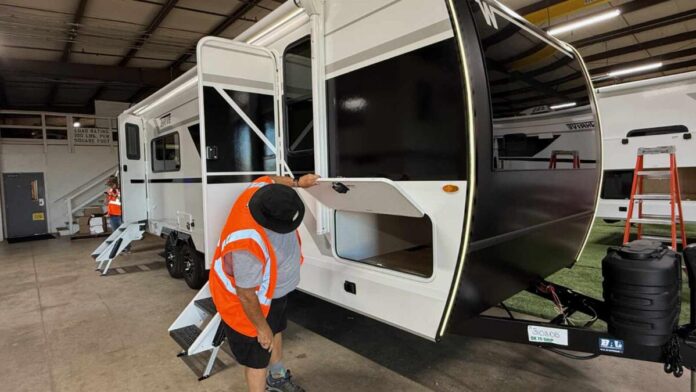
Today’s RV review is of the new-for-2026 Winnebago Thrive line. Thrive is a new line from Winnebago, and I got invited to the factory to see them build these and learn how they’re built. I was partially impressed, to say the least. What does that mean?
The Thrive is a mainstream laminated line from Winnebago that is meant to bring their towable brand more to the forefront of shoppers’ minds. From what I saw, buyers should be paying more attention to these as the build methodology is quite different… in a good way.
How they’re made
Most laminated trailers are built with a welded aluminum structure. As the assembly is happening, team members drop pre-sized insulation blocks between the welded aluminum studs, and the lamination process goes on from there.
The way Winnebago is doing it is to have a single giant piece of insulation that is laminated onto the fiberglass outer wall. Then, a CNC router actually routes out the space for the aluminum studs, and the whole thing is pressed together. Then the inner wall is laminated onto the assembly—so it’s actually laminated twice, sort of.
What I was told is that this whole process is so precise that the wall fits into the holes the router creates snugly. These computer-controlled routing systems are precise. There aren’t the gaps in the insulation that are typical with a laminated trailer. The insulation doesn’t miss a spot on odd corners and such. But wait, there’s more.
This same technology is used to route-out windows, baggage compartment openings, door openings, and, best of all, places where water and electrical fittings are added. In a typical RV factory, these are hand-done. No, I’m not kidding and, and no, it’s not precise at all. Winnebago’s process is very precise.
When I looked over even their prototypes, the precision of this whole fit was absolutely apparent, with everything sitting in place and zero examples of make-fit and adapting mistakes.
Interior of the Thrive
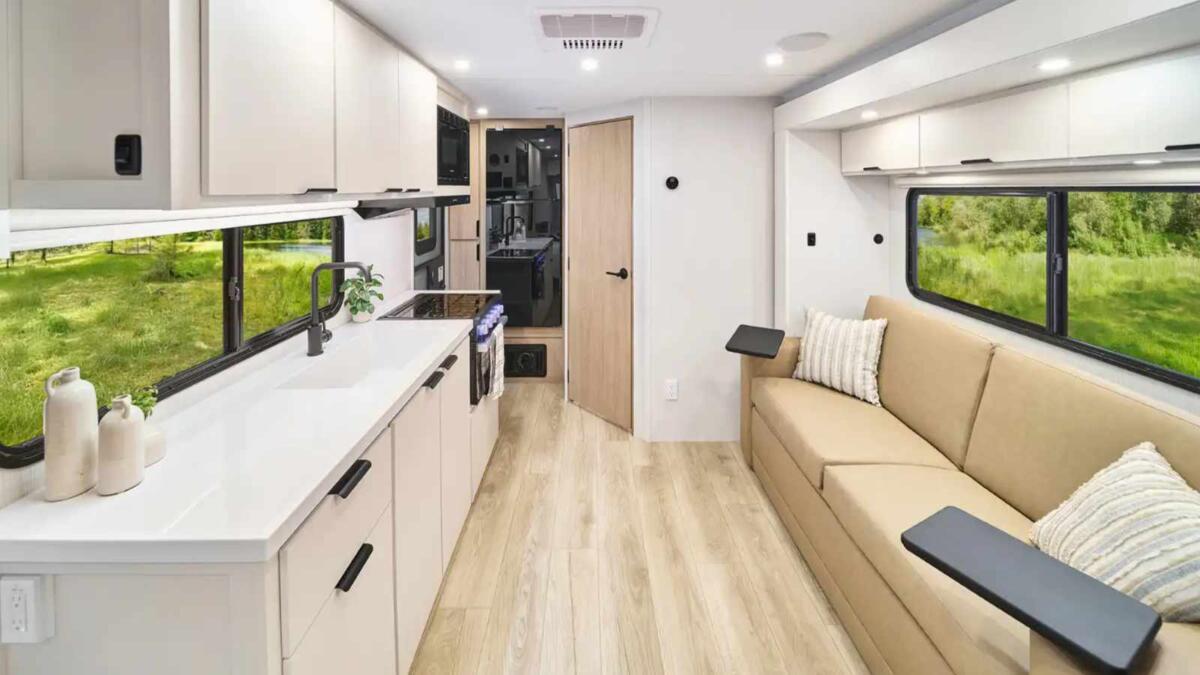
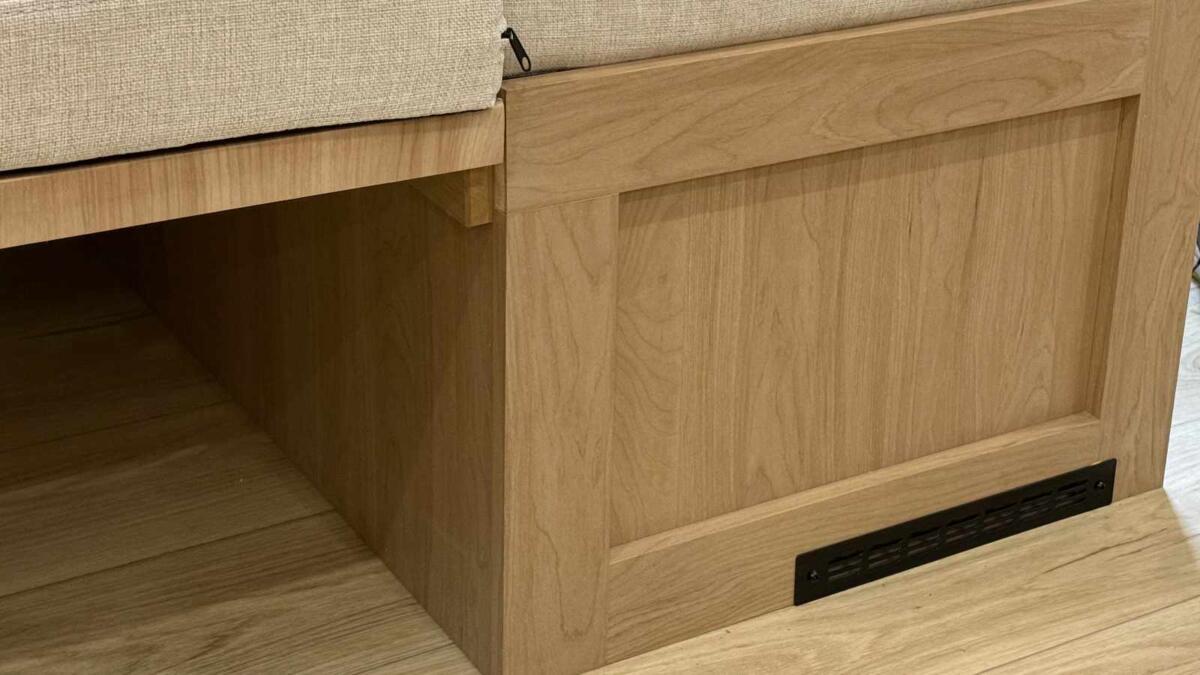
This was also true in the interior, where Winnebago is using the same process for cabinets and cutouts and the like. The level of precision was immediately apparent to me, even before I got to meet the brand manager, who explained all this to me.
Instead of a bunch of sealant and patches that are common in the RV industry, the interior of these Thrive models just felt. Well. Precise. It was nice. Hey, I’m a poet.
Another thing they’re doing with these is making fiberglass countertops in-house. These are a single piece and incorporate the sink as well as the countertops. I really liked the way these looked and felt. Again, the build was very precise. The single-piece fiberglass countertops also meant that there were absolutely no seams.
Something I’ve dealt with a lot in a Facebook Group I run was a rash of sinks where the glue that held the sink to the underside of the countertop didn’t meet up with the glue manufacturer’s claim. The glue failed, causing the sink to drop. Now we can all compare notes on why any RV company would put an under-mount sink in a rig. But they did, and it’s pretty common.
Having a single-piece countertop that incorporates the sink just makes sense to me. I like the way it looks, but it’s also very functional. Winnebago says the countertop is lighter than most and its heat-resistance is comparable to your typical RV countertop.
Where’s the rub?
Something I didn’t like about these was all the usual things I talk about. For example, they all had a 17” oven. I spoke with the brand manager and designer about this. They should be forced to go RVing with this thing, and have a group and plan to bake something.
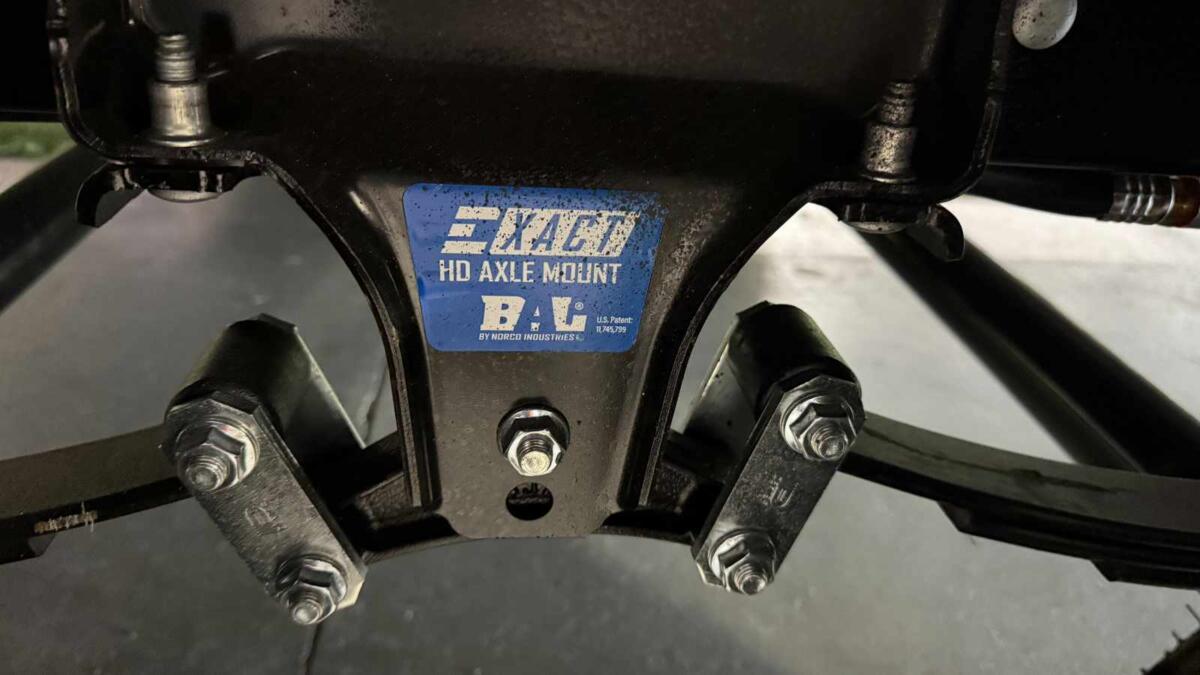
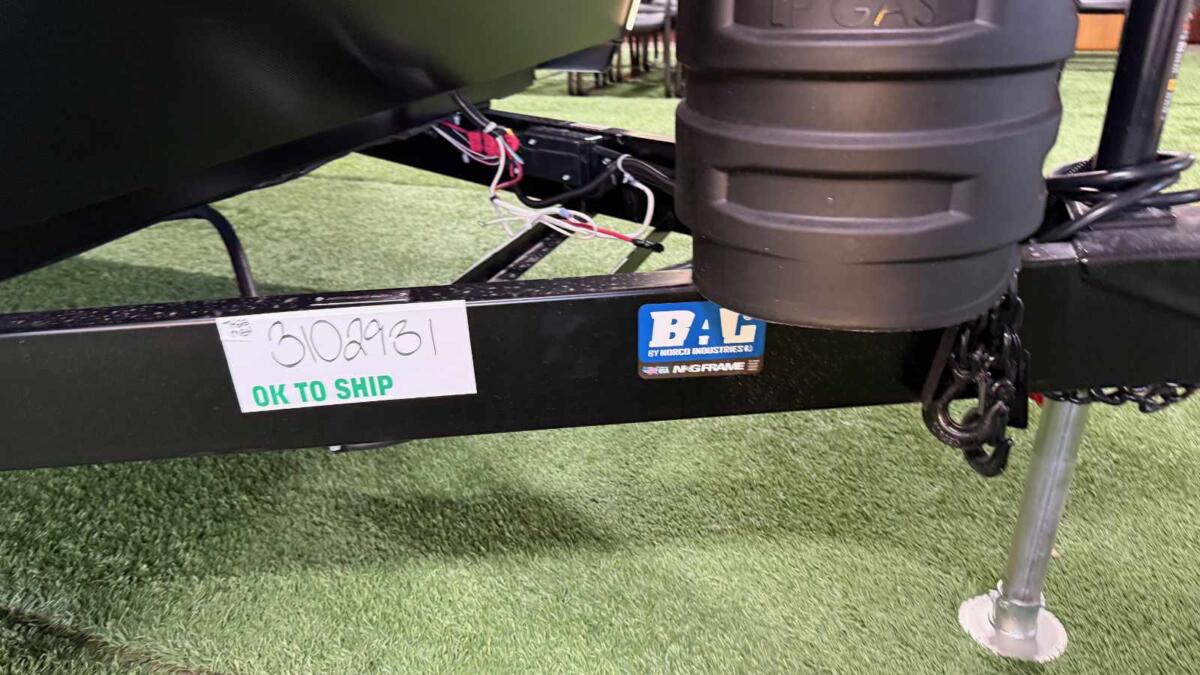
Also, these use an NXG Huck-bolted frame as opposed to the typical Lippert frame, which is welded. Norco claims that these are better frames. I have no proof to the contrary, nor proof to support this.
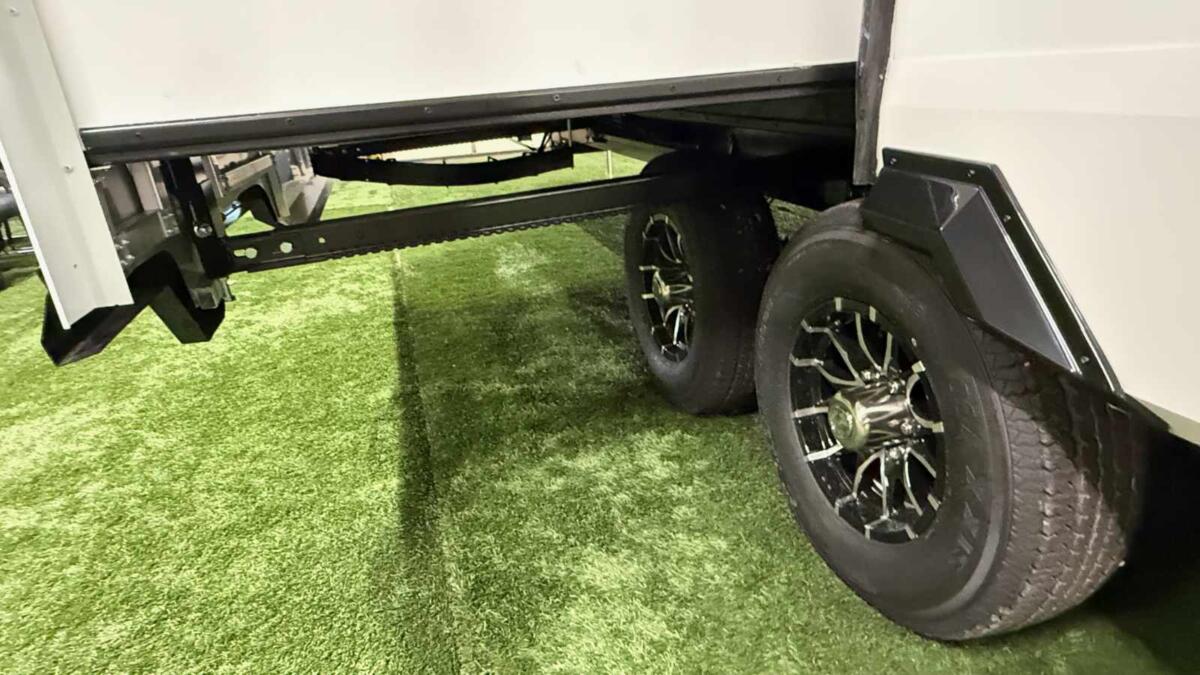
But they also ride on simple leaf springs and import-brand tires. Also, they don’t come with a tire pressure monitoring system. Doggone it. Why do so much to make something so special and then shod it with tires that I want to describe with a word that starts with “s” but won’t do here?
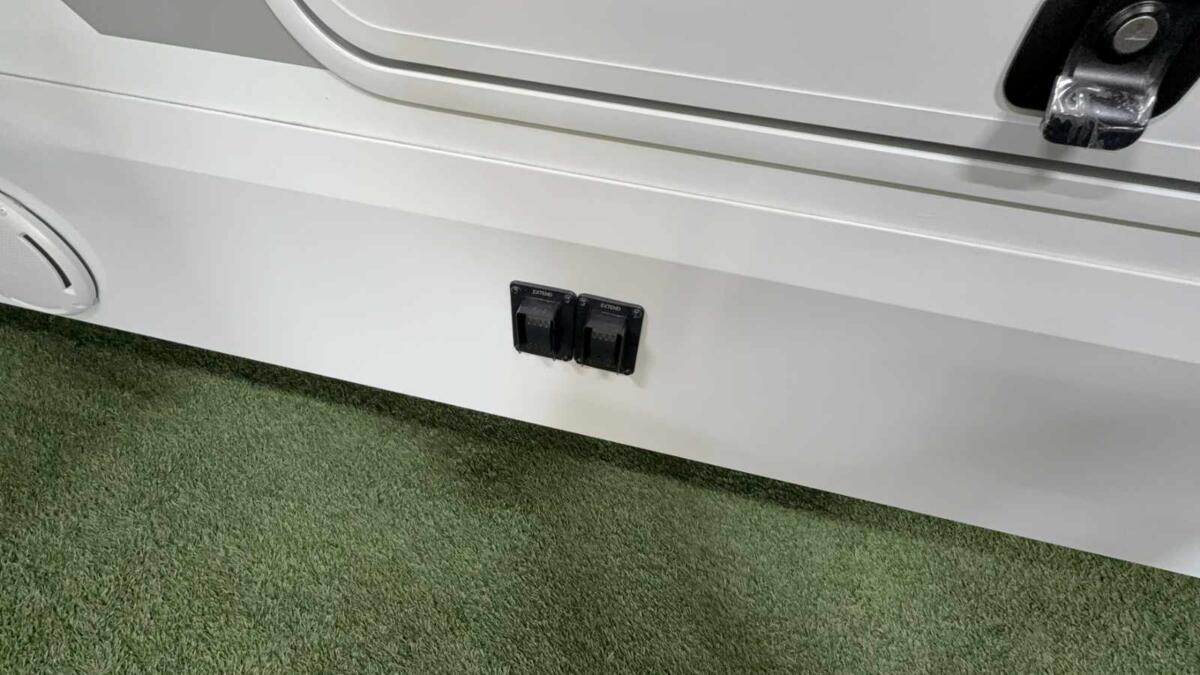
Switch for each power stabilizer jack
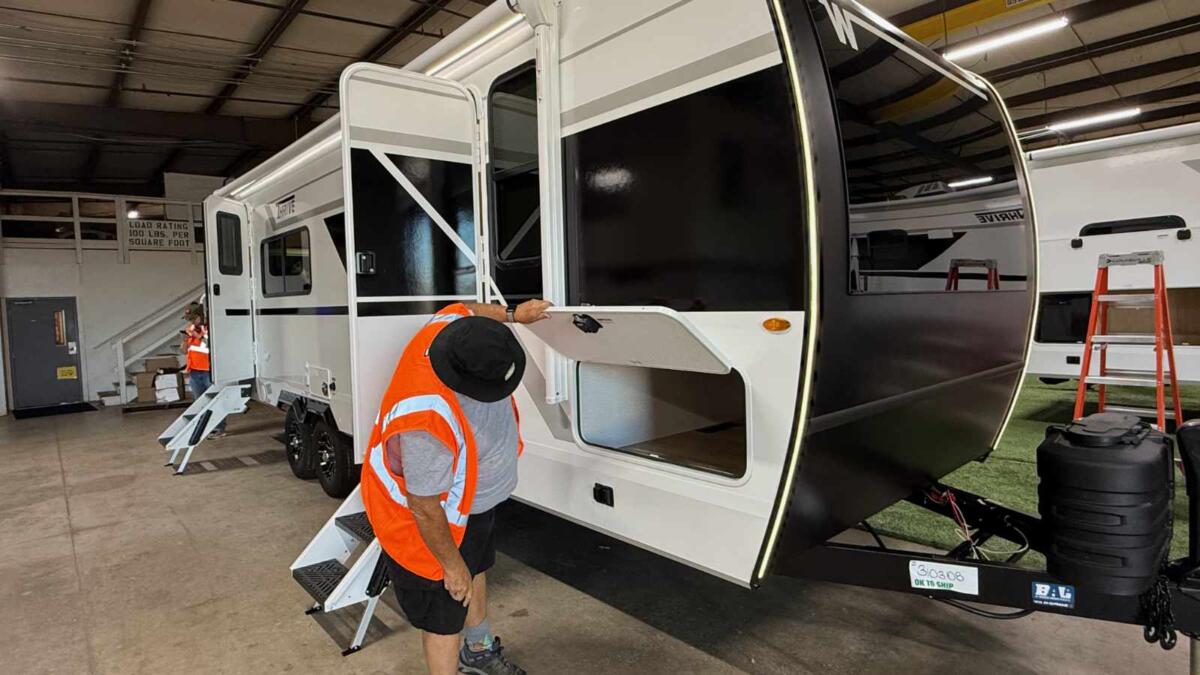
Yet something I did like about what I saw on the frames was that Winnebago provides a switch for each power stabilizer jack. It’s common that the jacks on either side are controlled by one switch. Here, each jack gets its own button, and I really, really like that. How many times has the ground been uneven in my own trailer, and I hear the pair of power jacks groaning before I have to make some accommodation? A button for each one just makes so much sense.
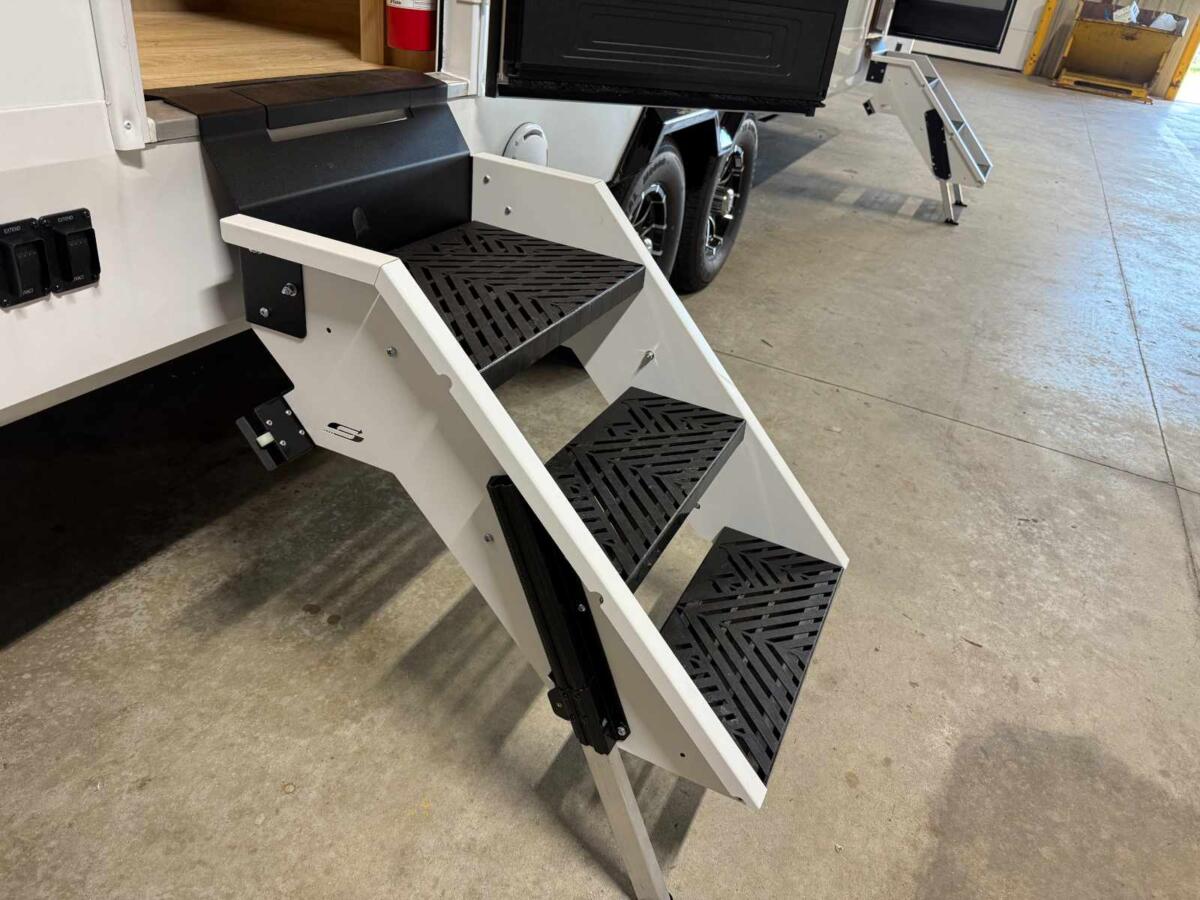
The steps in these are a new composite version of those drop-down stable steps. These seem to have more surface area and, being composite, are lighter and rust-proof—since plastic tends not to rust in most parts of the country.
I also liked that there are no furnace ducts cut into the floors. There is a furnace duct in the front pass-through, which is a nice touch.
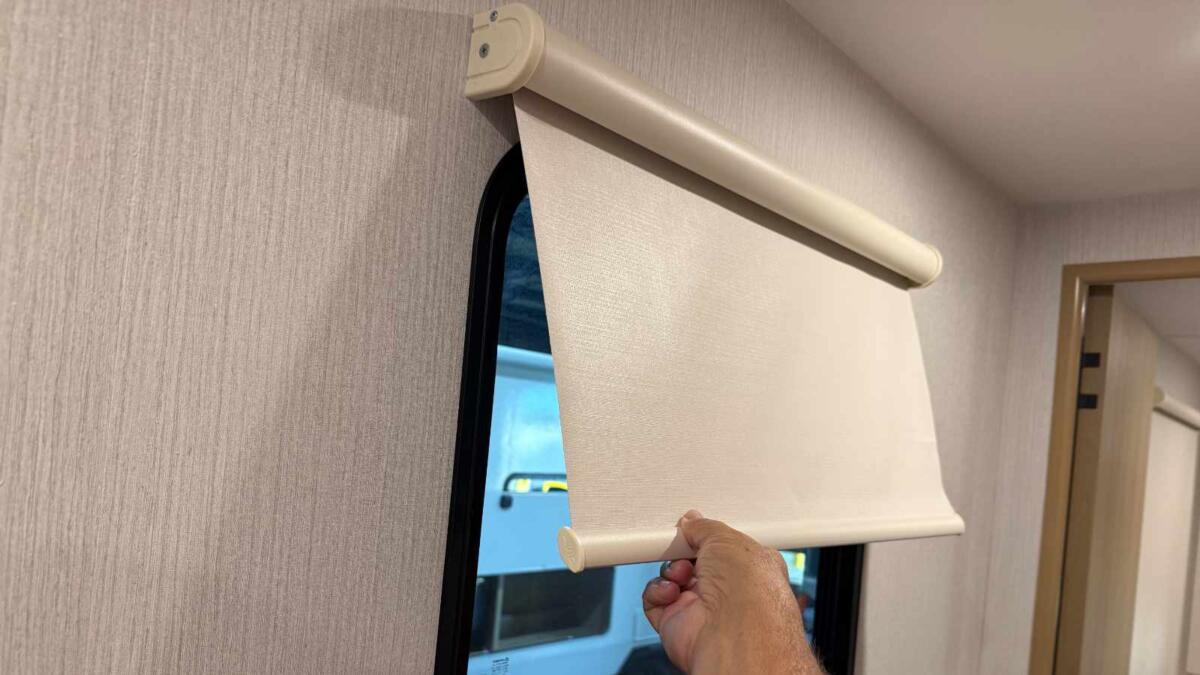
There are also no boxes built around the blackout roller shades. So, those who like to dislike these trim pieces—well, they just aren’t there.
Thrive should be on more shopping lists
I think Winnebago should end up on more shopping lists with the Thrive series. There was a lot to like about them in terms of how they’re built and the precision in the manufacturing process—which I’ve already blathered on about quite a bit.
I do wish they had some option package for a better suspension and good tires, but they don’t. Yet. But this would be an area that, if I were a dealership, I would offer as an upgrade.
I think Winnebago is to be commended for the new Thrive line. They have higher-than-average ceilings at 6’8”. While the floor plans aren’t remarkable, they are quite well executed. Overall, a good product that could easily be turned into a great product.
About these RV reviews
An honest look at RVs from RV industry insider Tony Barthel, where you learn the good, the bad and the intriguing about RVs, including travel trailers, fifth wheels, Class A, Class B, and Class C RVs, as well as some interesting class-breaking RVs.
You can find more about Tony at tonybarthel.com.
These RV reviews are written based on information provided by the manufacturers along with our writer’s own research. They are based on information from a single unit and may not reflect your actual experience. Shop your RV and dealership carefully before making a buying decision. They are intended only as a brief overview of the vehicle, not a comprehensive critique, which would require a thorough inspection and/or test drive.
RELATED
- 2026 Winnebago Thrive 25RLS—a national park-friendly couple’s trailer
- The 2026 Winnebago Thrive 22MLS—all freshened up
- First Look: The 2026 Winnebago Thrive 24RKS travel trailer sets a new standard
- RV review: Winnebago Thrive 18FBS—new new or just warmed over?
RVT1244

It’s a good idea to have separate switches for each stabilizer jack. I have one switch for the back and one for the front, but the ground isn’t always the same. I wonder if composite steps will degrade over time and break.
The problem with the individual switches will be for those folks who think “stabilizing” means the same as “leveling.” Individual switches will allow those folks to stress and possibly twist their frames as they lift only one corner.
Yeah, they cheaped out on the suspension and tires. How’d they do on the plumbing and fittings?
Since when are Maxxis tires a cheap “no-name” tire? Maxxis is well-regarded for making some incredible tires across several different markets! Maybe the model you looked at didn’t have Maxxis tires on it but all the Thrives I’ve looked at (including the one I purchased) does and I’m thrilled about it.
Considering that I won’t even look at any RV brand that has only a leaf-spring suspension, this Thrive would never be on my shopping list. At least torsion axles, if not an independent suspension, must be standard, as well as TPMS, and name-brand, T-type, bead-balanced tires, before I would put any trailer–TT, toy hauler, or fifth wheel–on my list. All CNC manufacturing is a great practice, but not if the end product rides on a Model T-vintage suspension.
And, RV manufacturers take note, I may be an engineer, but I am not alone in requiring those standard features!
I can only hope these claims are all true. My 2021 Micro Minnie is the complete opposite: every piece of the interior alerts to have been assembled adhoc from a scrap heap of parts, no consistency from one bench or cabinet to the other, gaps around windows and the door, screws without backing, stressed, cracked, damaged surfaces at all corners, and worst of all–which appears unaddressed in this model–MDF trim wrapped in a paper “wood grain” that swells (explodes), splits, wrinkles and looks awful from the slightest bit of moisture.
OutdoorsRV has been building this way for years.
I was thinking specifically about the CNC laminated construction. In every other way they would easily surpass anything Winnebago would produce.