


By Gail Marsh
“You’re doing it wrong!” I bristled at the words. After six decades of doing laundry, I know how to wash our clothes correctly!
Turns out, I was wrong. You’ve probably heard the saying “Too much of a good thing”? Well, that apparently applies to laundry detergent!
Less is best
I mistakenly thought that if I used more detergent in the washer, my clothes would be cleaner (no spots or stains) and smell better (no leftover smoke smell from the campfire). My fellow RVer, who also happened to be a chemist before retiring, patiently set me straight.
What he taught me resulted in brighter and softer clothes. In addition, I ended up using much less detergent and saving money!
What’s in laundry detergent?
Laundry detergent formulas combine surface‑active agents, biological catalysts, and assorted performance boosters. (Who knew?)
Surface-active agents lower the water’s surface tension, so it wets the clothing fibers more thoroughly. This helps loosen and suspend any dirt to be removed.
At the same time, certain enzymes target specific stain types (e.g., blood or grass), while other performance boosters break down starches into smaller fragments to be rinsed away.
Exceeding the recommended detergent dosage can lead to excess suds, poor rinsing, and buildup—undermining both fabric care and machine performance.
What happens when using too much?
RV laundry setups—whether compact, high-efficiency (HE) onboard RV units or smaller campground machines—are more sensitive to suds and residue than full-size washers. If you use too much laundry detergent, you can expect the following results:
• Residue buildup on fabrics. Excess soap doesn’t rinse out completely. This leaves sticky films that trap dirt and grime. Over time, stains can set, fabrics feel stiff, and colors look dingy.
• Skin irritation. Leftover detergent can irritate sensitive skin—especially on workout clothes or towels—leading to itching or rashes.
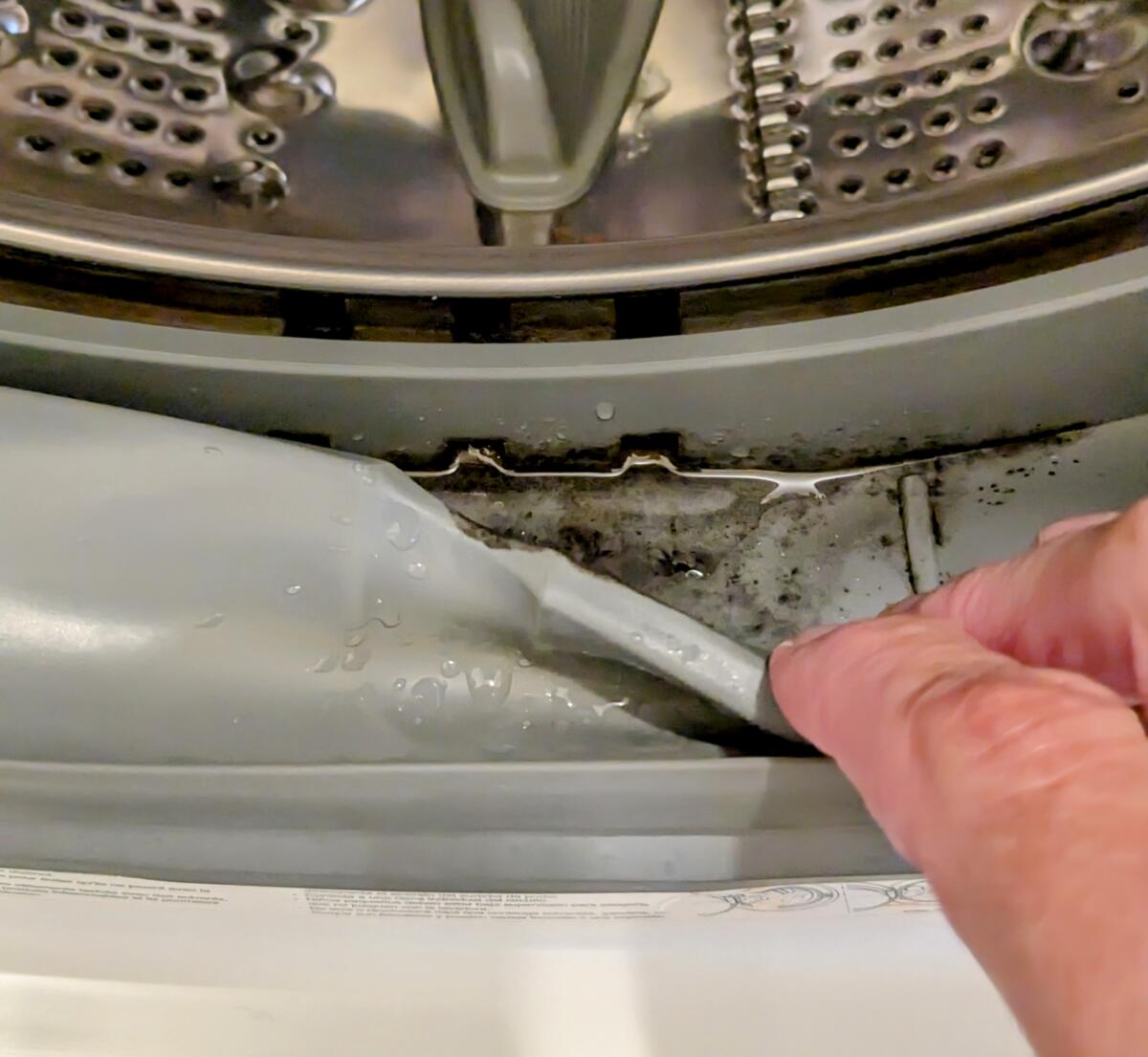
• Machine performance issues. High-sudsing loads can overwhelm small RV pumps and hoses, causing clogs or leaks. Campground machines suffer similar woes: Trapped soap leads to poor drainage, strange noises, and even breakdowns. The soap residue in the campground washer shown here demonstrates the effects of using too much detergent. The suds clogged the drain and, eventually, mold developed!
• Increased water and energy use. More suds means more rinse cycles, which translates to extra water and electricity—critical resources at campgrounds.
Measuring the right amount of laundry detergent
Every brand and machine is different. Here’s how to get it right:
Capacity
• Know your machine’s capacity. Onboard RV washers often hold just 1–2 lb. of laundry. That’s only a few T-shirts and underwear.
• Campground machines. These may be full-size, or HE front-loaders. Check the placard or control panel for capacity. Do not overload!
• Check the detergent label. HE detergents have lower-sudsing formulas and require about half the amount of regular detergent.
• For very small loads, underfill the measuring cap.
Soil level
• Lightly soiled (daywear, delicates): Use the “low” line on the scoop.
• Moderately soiled (everyday clothes): Fill to the “medium” mark.
• Heavily soiled (greasy, muddy, sweaty gear): Fill up to the “high” line—but avoid overfilling.
Measure
Eyeballing the correct detergent amount invites error. Always use the detergent cap or a dosing ball.
What now?
If you’ve been doing it wrong (like me), don’t panic. Your clothes aren’t ruined. Try these fixes for clothing and your RV onboard machine:
• Add a rinse cycle. Run a cold-water rinse (no soap) to flush out suds and residue.
• Use white vinegar. Add ½ cup of distilled white vinegar in place of softener during a rinse cycle. (Vinegar helps break down leftover detergent.)
• Soak stubborn loads. For plush towels or heavy fabrics, soak in cool water with a splash of vinegar for 15–30 minutes before rinsing again.
• Manual “swish”. In an onboard tub or sink, agitate with clean water to loosen excess foam, then drain and repeat until clear.
Going forward
• Keep a measuring tool. Store a small measuring cup or dosing ball in your laundry basket for no more guessing.
• Mark your detergent bottle. Draw “L,” “M,” and “H” lines on the cap with a permanent marker for quick reference. This is especially helpful in low-light laundromats.
• Choose an HE detergent. Even in non-HE washers, HE formulas cut suds and reduce residue risk.
• Opt for liquid over pods. Pods can’t be split for small RV loads, often leading to overdosing.
• Count items. Before loading, count or weigh (approximate) items so you know whether it’s a small or full load.
These laundry tips for RVers will help extend the life of your clothes, save on electricity, and keep your washing machine happy! Here’s to cleaning smarter, not sudsier!
Can you add more laundry tips for RVers? Use the comments to do so.
RELATED
- Yes, you can do laundry in the RV without a sewer hookup
- The RV laundry conundrum: Do you/would you remove unattended clothes from washer/dryer?
- Reduce size and weight of RV laundry detergent by 95 percent!
- Laundry day ladder-mounted RV clothes drying rack
RVDT2903
I have switched to HE laundry detergent sheets. Easy to tear in half for small loads and take up a lot less space than a bottle of liquid detergent does. I also use wool dryer balls in the dryer and don’t need to add dryer sheets that way.
Me, too. It’s much easier and less weight without the detergent bottle.
Two words: Tide Pods. You’re welcome.
My stix n brix washer/dryer is a vented all in one Splendide- holds 2 cubic ft of laundry. I use Earth Breeze laundry sheets along with a handful of baking soda to soften our hard water. Chose Earth Breeze because of their policy of matching subscriptions with charitable donations. Tru is another brand. I even noticed that Publix has started carrying laundry sheets.