


By Dave Solberg
Dear Dave,
My travel trailer has a sealed underbelly, but it’s a smaller trailer (23′) and the furnace is not ducted. I’m told the furnace blows some air into the underbelly, but since it’s not ducted, it’s not enough to really be 4-season. It’s currently down into the 20s at night.
Following the examples of others, I wound heat tape around the exposed 3 feet of gray and black water drain pipe. This leaves my fresh water drain points exposed. I have 4-6 inches of PEX with the valve exposed for the hot/cold drains. A few feet away is what I think is the single fresh water tank drain.
What products or solutions are available for those? I purposefully left enough heat tape after wrapping the gray/black pipes over to those. That’s a lot of tape heating the fiberglass rod I used to span the space. I’m pretty sure I’m putting too much heat on those valves. I wrapped the tape around the PEX several times, just to get it anchored. —Tom, Venture Sonic 231VRL
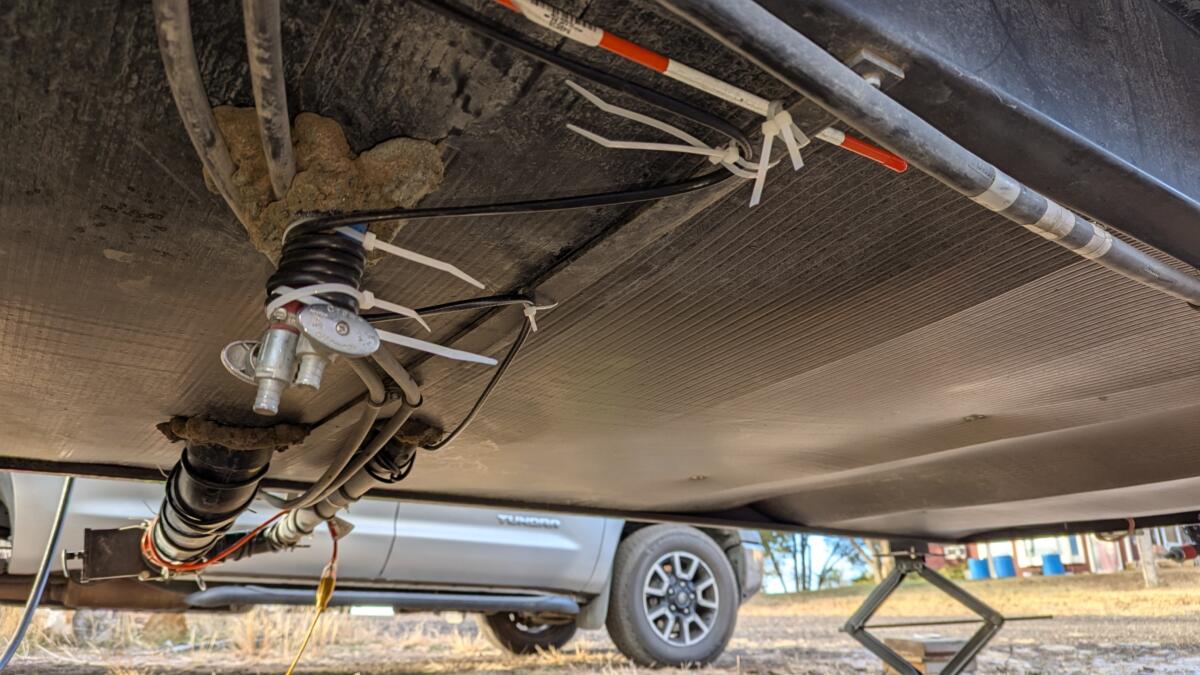
Dear Tom,
Wow, that is a real maze of pipes, tubing, and what even looks like a driveway marker pole! You did not provide the model year and this looks like a somewhat customized job with the low point drains being so far down, and metal valves. I would be concerned they are low enough to get torn off going in and out of fueling stations or other bumps in the road.
My suggestion
I would try cleaning this up, starting with cutting the drains back and even cut the underbelly around the pipes and try to get a new PEX drain valve up inside the underbelly. You most likely will need to cut away some of the expandable foam and then add soft insulation and cover it with an access panel.
Since you have the holding tanks heated with the heat tape, you shouldn’t have to worry about the dump tube. Maybe just make sure you have some RV antifreeze in the tanks first.
More options to insulate exposed pipes
Another option would be to enclose this entire section with a roll of R-19 faced insulation using metal straps fastened across at cross members. You could use less heat tape. I have used a 60-watt light bulb in a socket many times. A 60W bulb is enough heat to keep things from freezing, but not so much that it melts plastic. You can find the cord for one on Amazon here.

You do not want to use an LED bulb as it will not generate enough heat. Traditional bulbs are sometimes hard to find. However, they are available as reptile warming bulbs or heating bulbs for plants.
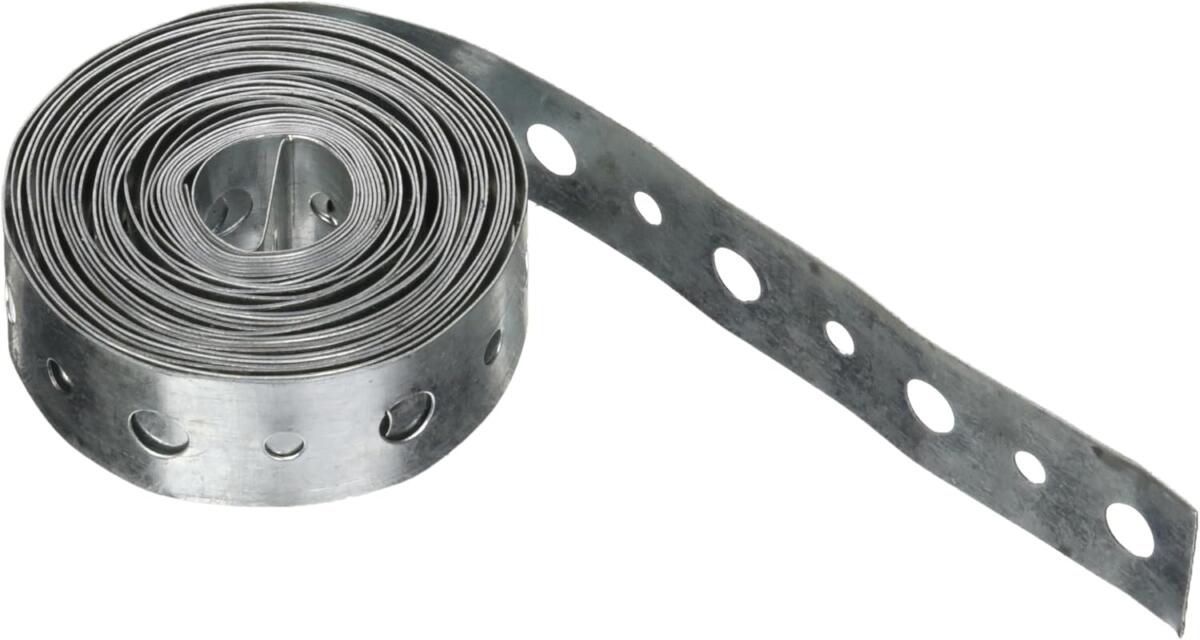
If you want to get fancy, build a boxed cover out of foil-faced polystyrene board insulation sheets cut to form a surrounding U-shape and taped together with HVAC foil tape at the corners. You can find 4×8 sheets at any home improvement store. Then use metal hanger strap to hold it to the underbelly, which you can find on Amazon here.
Here is a rough drawing of the box, which could have an access panel underneath to get to the low point drain valves, and even on the outside edge. You can use the heat tape or light bulb in this covered space, as well. Or maybe find a way to cut a hole in the underbelly and allow heat to flow into this area.

Also, rather than have the valve for the low point drains underneath, look for a way to add valves inside the rig above the floor level and then run PEX below. This way the water stays above the floor and will not freeze, and you can just open the valve under a cabinet or dinette seat.
One last option… inflatable RV AirSkirts underneath with either the heat tape or a couple of 60W bulbs.
You might also enjoy this from Dave
Your RV’s fresh water system: What you should know
This is Part 5 of Dave Solberg’s “Everything you need to know about RVing” series. In this installment, Dave looks at RV fresh water systems and tells you just about everything you need to know about them, whether this is your first or 101st trip.
DAVE HAS ANSWERED MORE THAN 1,000 readers’ maintenance and repair questions. Read a directory here. There is so much to learn!
Dave Solberg is a leading expert in the RV industry and the author of the “RV Handbook.”
RVDT2769
Insulation without a heat source will not stop the freezing. A light bulb inside the enclosed area is one solution, but it should be controlled by some sort of thermostat to prevent overheating. A 60 watt bulb makes a lot of heat in a small area.
On both of our TTs, I shortened the low point drain PEX and put ball valves close to the belly. If too short, add PEX below the valves. I found pink (hot) and aqua (cold) small pool noodles for $1 each at a Dollar General. I cut short pieces for the distance between the belly and the bottom of the valve. Slit each tube and made a hole for the valve knob. Zip ties and the valve knob secure the foam. At $1 I wasn’t worried about tossing most of the noodle. Been down to the low 20sF without freezing.