


Dear Dave,
What is the best fire extinguisher to carry in our RV? We have recently seen ads for one called the Element that doesn’t expire and doesn’t cause a huge mess should you need to use it in your house, RV, or car. One that tackles multiple types of fires is preferred. Thanks for your guidance! —Angela, 2024 ShowHauler
Dear Angela,
This has been a very important subject for many years. When I was helping the RV Safety & Education Foundation (RVSEF) develop their comprehensive safety training program, one of the components was fire safety. At the time “Mac The Fire Guy” (Mac McCoy) conducted presentations at many rallies and events.
The information Mac presented was outstanding. At the time, RV manufacturers were required to install a BC-rated fire extinguisher, according to the National Fire Prevention Agency (NFPA). Trailers had to have a 5 BC and motorhomes a 10 BC. Typically, one extinguisher was located right inside the entrance door.

Classifications of fire extinguishers
It is important to understand the different classifications and coverage. A Class B fire is flammable liquids such as motor fuel or propane. Class C is an electrical fire, while Class A is anything that creates an ash such as wood, fabrics, carpets and trash. A 5 or 10 BC fire extinguisher is not adequate for a Class A fire, which is the most common in an RV.
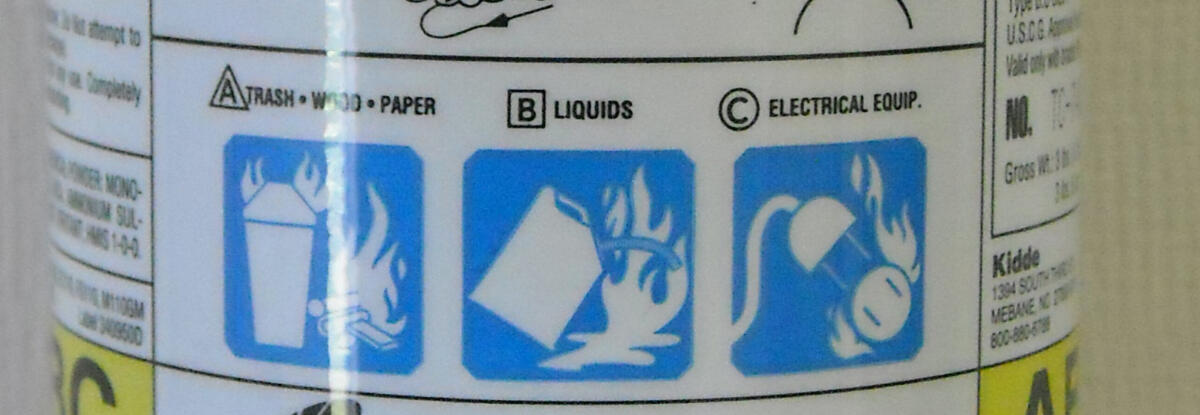
Coverage is rated in square footage. Therefore, 5 BC is a 5-square-foot range, which is less than a 2’x3’ area. 10 BC is just a little more than 3’x3’. I do not feel either of those are adequate in an RV.
Fire needs three components to burn: oxygen, heat, and fuel. It also needs a chemical reaction.
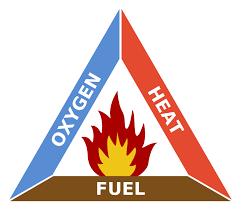
Removing any one of these will either keep the fire from starting or will suppress it. Most standard RV fire extinguishers are powder-based and create quite a mess and are ineffective.
According to RVSEF, RVs today are required to have a 1:A 10:BC extinguisher, according to NFPA 1192. That’s still not effective, in my opinion.
A few years ago, Mac McCoy posted a video talking about how he felt owners needed 5 fire extinguishers, one in the doorway, another in the bedroom, one in a compartment on each side of the rig, and one in the tow or towed vehicle. He also stated that some of the non-powder versions were actually toxic and could be harmful to pets.
The Element Fire Extinguisher
Tony Barthel did a great job reviewing the Element in a post a few years ago. I have not used the Element but did some research and, like most products, found good and not-so-good opinions on the product.
As stated earlier, a fire needs all three components of the Fire Triangle, and the Element is designed to suppress the oxygen in the equation. I found several videos on YouTube that actually demonstrated how the product worked, and it looks to be easy to use with no mess. However, all these demonstrations were on small fires in a controlled environment, not in a real-life RV situation which, of course, would not be documented with video. Tony seems to like the product, and I believe it is a better option than the standard model in all RVs.
Fire safety education and evacuation
It’s important to spend time understanding what can cause a fire and prevention steps, what type of fire extinguisher your rig has, where they are, and how to use them. A thorough fire safety and prevention evaluation is important, as most RV fires escalate quickly. That is why it is also important to have an evacuation plan with everyone familiar with it.
RELATED
- RV gadget: The Element Fire Extinguisher
- How to prevent an RV battery fire: Essential maintenance tips
- This fire danger is hiding inside your RV’s dryer
You might also enjoy this from Dave
RV’s roof air conditioner wires shorted, almost caught on fire! Why didn’t circuit breaker trip?
Dear Dave,
The Coleman-Mach 45054-8792 A/C–heat pump on my 2020 Winnebago Navion 24V stopped working. I used my multimeter to check the compressor and the three capacitors and all appeared to be working correctly. I suspected the thermostat, but it still operated the furnace. So, reading your article on checking the thermostat voltage in today’s RV Travel newsletter, I checked it with the multimeter. It also works perfectly. …
Read the rest of Steve’s question and Dave’s answer.
DAVE HAS ANSWERED MORE THAN 1,000 readers’ maintenance and repair questions. Read a directory here. There is so much to learn!
RVDT2741
Can you do an article on smoke/heat detectors and where to place them so they do their job, but not act as alerts that the stove or oven is being used?
thank you
In addition to a fire extinguisher, I strongly recommend a fire blanket. As the most common fire in a home or RV is the stove, many fire departments are recommending this inexpensive device. There are no messy chemicals. It has no expiration date. This blanket is pulled from its wall mounted pouch and put over the fire. (Remember to also turn off the stove burners) The blanket blocks air (oxygen) from getting to the fire and quickly extinguishes it. It should also work for most grills or campfires.