

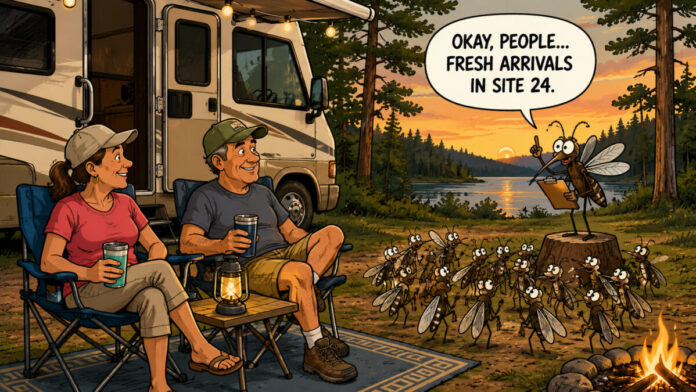
You finally found the perfect campsite. The chairs are out, dinner is on the grill, and before long you’re swatting mosquitoes or pulling a tick off your pant leg.
If that seems to happen more often than it used to, you’re probably not imagining it.
Bug bites while camping have become more than just an itchy nuisance for many RVers. Health officials say ticks and mosquitoes are active for longer periods in many parts of the country, and some species are turning up in places where they were once uncommon. In June, the CDC reported that emergency room visits for tick bites are running at their highest levels for this point in the year since at least 2017 across most of the United States.
For people who spend weeks or months on the road, that’s worth paying attention to—but it doesn’t mean you should stop camping.
Instead, it means taking a few simple precautions that can help keep an annoying bite from becoming something more serious.
It isn’t just your imagination
Many longtime RVers say they notice more mosquitoes than they remember and seem to find ticks more often after hiking or walking the dog.
Several factors may be contributing to that.
Warmer winters allow more ticks to survive until spring. Longer warm seasons give mosquitoes more time to breed. Wildlife that carries ticks, including deer and rodents, has expanded into some areas, bringing the parasites with them. At the same time, Americans are spending more time outdoors than they did a generation ago.
The result is that insects—and the diseases they sometimes carry—are showing up across a wider geographic area than many campers remember.
“If bug season seems to start earlier and last longer than it used to, you’re probably not imagining it.”
Which bug bites deserve the most attention?
The good news is that most bug bites never lead to serious illness.
Still, a few diseases are worth knowing about if you spend a lot of time outdoors.
Most RVers have heard of Lyme disease, which is spread by certain ticks. Other illnesses include Rocky Mountain spotted fever and West Nile virus, carried by mosquitoes.
Doctors are also seeing more cases of alpha-gal syndrome, a tick-related condition that can trigger an allergy to red meat after a bite from a lone star tick. For a true believing carnivore like the male half of this writing team, that would be a disaster!
You don’t need to memorize every disease. The important thing is recognizing when you don’t feel right after spending time outdoors.
If you develop a fever, severe headache, unusual rash, muscle aches or extreme fatigue within days or weeks of a camping trip, tell your healthcare provider that you’ve recently been in tick or mosquito country.
Campground habits that can reduce your risk
Fortunately, avoiding bites is usually much easier than treating the illnesses they may carry.
Here are a few habits that experienced campers often recommend:
- Apply an EPA-registered insect repellent before hiking or spending the evening outdoors.
- Wear long pants and sleeves if you’re walking through brush or tall grass.
- Stay in the middle of trails whenever possible.
- Check yourself for ticks before turning in for the night.
- Give your dog a quick tick check before letting it hop onto the bed or furniture inside the RV.
- Keep a pair of fine-point tweezers in your RV first-aid kit for removing attached ticks.
- If you’re staying at one campsite for several days, avoid letting camp chairs, rugs and other gear sit in tall grass where ticks may be waiting.
None of these steps takes much time, but together they can dramatically reduce your chances of bringing home more than memories from a camping trip.
“One of the easiest pieces of camping gear to overlook may also be one of the most useful: a good pair of tweezers in your first-aid kit.”
Don’t let bugs ruin your camping season
Millions of RVers enjoy campgrounds, forests and public lands every year without getting sick from a bug bite.
The key isn’t avoiding the outdoors. It’s recognizing that today’s camping season may include more encounters with biting insects than it once did.
A little insect repellent before the hike, a quick tick check before bed and a glance over the dog after an evening walk are simple habits that can help keep a memorable trip memorable for all the right reasons.
Know before you go
Bug bites while camping: Quick facts
CDC says emergency room visits for tick bites are unusually high this year.
Most bug bites cause nothing more than temporary itching or irritation.
Mosquitoes and ticks are active for longer periods in many parts of the country than they were in the past.
Daily tick checks are one of the simplest ways to reduce the risk of tick-borne illness.
Don’t forget to check pets—they can carry ticks into your RV.
Sources
AARP – “9 Illnesses You Can Get From a Bug Bite (Besides Lyme Disease)”
Centers for Disease Control and Prevention – CDC reports higher-than-usual emergency room visits for tick bites in 2026
RELATED
- A trick for getting rid of mosquitoes at a long-term campsite
- Study shows drinking beer attracts mosquitoes
- DIY natural spray keeps flies, mosquitoes, even roaches away
- New study proves wearing these colors attracts mosquitoes
- Natural pest control: How to make flea, tick, and mosquito repellent
RVT1269b
