

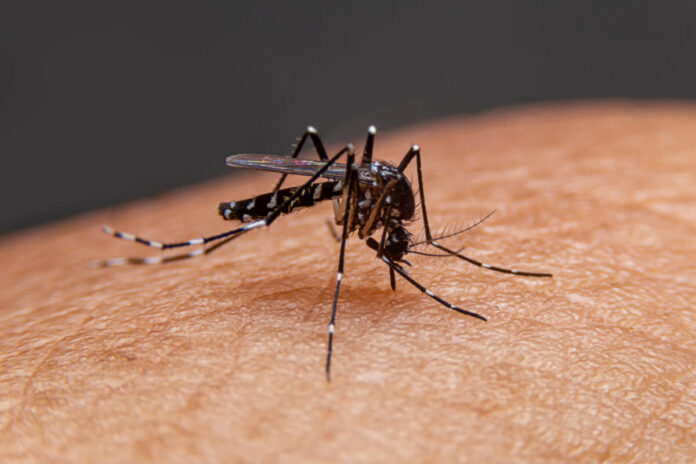
When it comes to avoiding mosquito bites, there are several proven strategies you can use to keep these pesky bugs at bay. These strategies were developed through the work performed by dedicated scientists, like Jeffrey Riffell, biology professor and researcher at the University of Washington.
See and smell
Riffell and his team study the sensory systems of mosquitoes. In particular, the researchers study how mosquitoes use their senses of smell and sight to locate and attack a food source (like a human!).
More deadly than sharks!
Did you know that mosquitoes are more deadly than sharks? It’s true, because they cause more deaths than any other creature in the world.
These tiny insects carry deadly diseases like Zika, malaria, yellow fever, West Nile virus, dengue, and others. Many of these diseases cause the death of hundreds of thousands of people each year.
Blasted females!
What Riffell has discovered is that male mosquitoes feed mostly on nectar. Females, however, search out food hosts like you and me! The females require blood nutrients to support their egg production.
Mosquito magnet?
According to research, it’s true that some people are more prone to mosquito attacks than others.
“The smell of our skin, the sweat, the breath, our carbon dioxide that we’re emitting is actually a really strong cue for the mosquitoes,” Riffell said. “And, of course, the clothes that we’re wearing.”
Colors?
Turns out that mosquitoes dislike certain colors. While white and green do not attract the little buzzers, they seem drawn to orange, reds and darker colors—black being a proven favorite.
Preventive measures
Here are some of the most effective methods to avoid being bitten by mosquitoes.
- Wear repellent clothing. You can buy clothing from stores like REI or from Amazon that have mosquito repellent woven into the fabric. This approach will keep mosquitoes away without having to remember to apply sprays or lotions.
- Cover up. Long sleeves and pants will help protect your skin from mosquito bites. Turn up the shirt collar and/or wear a hat for added protection. Choose to wear colors that do not attract mosquitoes.
- Use insect repellents. The most straightforward way to prevent mosquito bites is by using insect repellents. Products containing DEET, picaridin, or oil of lemon eucalyptus are highly effective. According to the CDC, DEET is safe and offers long-lasting protection—just make sure to follow the instructions on the label for the best results.
- Install screens. Keeping mosquitoes out of your RV is crucial. Make sure your windows and doors have tight-fitting screens. Repair any holes or tears to prevent mosquitoes from sneaking in.
- Eliminate standing water. Mosquitoes breed in stagnant water, so eliminating their breeding grounds can drastically reduce their numbers around your campsite. This means regularly emptying and cleaning items like flowerpots, buckets, etc. Even small amounts of standing water can be a problem, so be thorough in your inspection.
- Use fans. Mosquitoes are weak fliers, so sitting near a fan can help keep them away. This is a simple and chemical-free way to create a mosquito-free zone near your campsite picnic table.
- Apply natural repellents. If you prefer natural options, essential oils like citronella, lavender, and eucalyptus can be effective. However, these might need to be applied more frequently than chemical repellents. Some people find these oils to be a pleasant-smelling alternative.
- Stay indoors during peak hours. Mosquitoes are most active during dawn and dusk. If possible, stay indoors during these times to reduce your chances of getting bitten. If you need to be outside, make sure to use repellent and wear protective clothing.
If bitten
Even after taking all of the prescribed precautions, you still get bitten. Then what? Chemicals in the mosquito’s saliva cause the bite to itch. For most folks, the irritating itch will disappear within a day, but for some who are especially sensitive, the bite and its effects can linger.
Here are some tactics to try when bitten
- Try not to scratch. Scratching the bite can break the skin, allowing bacteria to enter and the bite may become infected.
- Wash the affected area with soap and cool water.
- Put anti-itch cream, calamine lotion, or a paste made from baking soda and water onto the affected area(s).
- Rub the bite with an ice cube for a few minutes to relieve the itch.
- For itch relief, put pressure on the bite for ten seconds.
- Take a non-prescription antihistamine like Zyrtec, Claritin, Alavert, etc.
Important: If you experience an extreme reaction like vomiting, fever, or shortness of breath, call 911, contact your doctor, or go to the nearest emergency room.
Do you have additional tips or tricks to avoid being bitten by mosquitoes or do you have effective treatments for their bites? Share your thoughts in the comments below.
RELATED
- Natural pest control: How to make flea, tick, and mosquito repellent
- 8 tips to ward off mosquitoes inside and outside of the RV
##RVT1163b

Wear a broad-brimmed hat and headnet, especially in Yukon and Alaska. I worked and vacationed in Alaska many times between 1972 and 2017 and strong DEET works there. But you can’t spray DEET around your eyes and lips or inside your ears or nose! You can attract clouds of mosquitoes there, so a headnet is the only real protection you have.
Thank you, Steve H! 🙂
I recently read that products containing DEET can be extremely harmful to cats, including convulsions. Dogs are not similarly affected.
Thank you for this information!
Thank you, Gail! 🙂 We heard some of this when we were in Alaska in 2019, but it is nice to get some confirmation from this study. Thanks for all the suggested ways to avoid being bitten and lessening the consequences of bites. Have a wonderful weekend and safe travels! 🙂
I’ve found that applying just a little Carmex cold sore medicine to a bite will stop the itching.
Benadryl cream works for me.
I have a Benadryl gel that works great. Best thing I have found that helps the itch. I am one of the mosquito magnets the article speaks of, they ignore my husband & dine on me.
Roll on antiperspirant works wonders to stop the itch@
I agree with Ed roll on antiperspirant is the only thing that works on that itchy spot!! Ban roll on is the best.
Get a Bug Bite Thing (on Amazon or direct) for your camper – I sit down eaxh night & pull out every bite of the day and within an hour the itch is significantly diminished. The fresher you get to the bite the better this thing works. Fire ant bites somewhat effective & those dang no see ums…. seriously won’t travel without this item!
There’s a lot of sulfur water in various parts of Florida & them as should know swear that by drinking & bathing in sulfur water is protective. Didn’t help ME atall.
Emu oil can’t be beat for all kinds of skin issues — burns, minor cuts and scrapes, insect bites and stings, etc. It not only stops the itch but also the pain. It’s amazing for sunburns.
Very good article. Now I know why my wife is always trying to dress me in dark colors. 😉 Regarding those solutions using heat, seems like I read somewhere you can touch the bite with the backside of a warmed spoon for relief as well.
“Blasted females!” Pandoras Box…!
Aloe vera directly from a plant at home or if traveling, a bottle of Fruit of the Earth Aloe Vera stops itching and swelling in about 10 minutes. You should put in on immediately (within 20 min of being bit.) It saves me all the time. With type O blood the mosquitos always come after me. I dislike using harsh chemicals so I spray Avon Skin So Soft mixed with water on myself to prevent mosquito bites. If you get bit and are not able to stop the swelling and itch right away, heat from a blow dryer on the bite for as long as you can stand it will give itch relief. You will have to do it again 6-8 hours later.