


A conscientious RVer had a scary situation. His 30-amp RV was plugged into a 30-amp-rated outlet. The family had been running the refrigerator and water heater on electric, and tossing in an occasional microwave oven use. The pedestal circuit breaker never tripped but, suddenly, his son reported the shore power plug was smoking! Not only was it smoking, the plug was in a meltdown crisis. Nobody likes a hot shore power plug. What happened to this RVing family has happened to other RVers. What gives?
Interestingly, the RVer had been using an electrical current meter just prior to the “smokin’ hot RV plug” experience, and it recorded the rig had drawn no more than 27 amps at peak.
Hot shore power plug—a contact crisis
What happened? Most likely this issue can be traced back to a contact crisis of the electrical kind. While the RV system itself was designed for 30-amp use, as was the power pedestal, it’s a case of the weakest link. The old “weakest link” illustration easily applies to RV electrical hookups. In this case, our friend may well have been the victim of resistive heating.
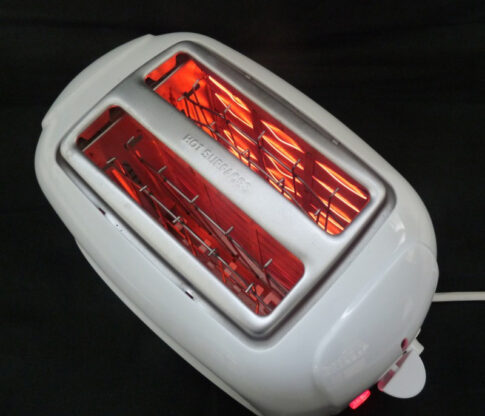
You may not be familiar with the term, but you may experience the beneficial side of resistive heating at breakfast. Pop a piece of bread in the toaster, plunk the handle down, and, hey, presto! In a few minutes you have a chunk of toasted bread, ready to be smeared with gobs of butter.
Resistive heating works this way. When an electric current flows through a material, it encounters resistance. That’s a measure of how difficult it is for the current to flow through that material. The resistance causes electrons to collide with atoms, transferring kinetic energy into heat. Imagine all those little electrons bumping heads with the atoms of your toaster wiring. The result is perfect toast. Well, rarely, depending your toaster. But that’s a subject for another time.
Of shore power plugs and RV park pedestals

Resistive heating is great where you want things to heat up. But you don’t want things to heat up in your shore power connector, or the receptacle that it’s plugged into. Hot shore power plugs can often be avoided through proper maintenance. We’ve written before about how important it is to keep your shore power plug prongs bright and shiny. But what about the receiving end of that plug?
The typical RV campground power pedestal is a “whipping boy.” RVs come and go, and their owners cram their plugs into them, willy-nilly. The poor pedestal suffers the wear and tear speechlessly and, sometimes, if not properly protected, weather can get in and do nasty things to the connectors. Add to it, folks with RV power plugs that aren’t kept clean, that grubby connector can create resistive heating, damaging the receptacle. It’s a rough world.
So, along comes Mr. Unsuspecting RVer, who plugs his shore power plug into a damaged RV receptacle. If the power draw is low, he might never know it. But if pushing the upper limits—say running an air conditioner or multiple big-draw units (water heater, microwave oven, et al.)—then what is designed to easily carry 30 amps, by virtue of damage just won’t do it.
Thermal resistance—those little electrons knocking heads—leads to heat where we don’t want it. It can actually destroy your shore power plug or, even worse, possibly catch fire. Hot shore power plugs are smoking shore power plugs. Smoking can be hazardous to your health.
Take a moment to look things over before you plug in

What’s an RVer to do? When you arrive at your RV site, before you plug in your shore power cord, look. Look at your plug—are the contacts bright and shiny? If not, get out the fine sand paper and buff them up. And look at the pedestal socket. Does it “look right”? No signs of meltdown, no black marks, no unexplained “crudosis”? If you see things that make you wonder, check back in with park management. If they can’t change out the receptacle, best they should change your site assignment.
Alternatively, if there’s a 50-amp socket in the pedestal, you could use a 50-to-30 amp “dogbone” adapter to plug in your RV. It’s likely that the 50-amp socket is in better shape than the 30.
Watch out for hot shore power plugs. Check out yours, and take a close look at who it will be intimately associating with.
RELATED
- Plugged RV’s 30-amp shoreline cord into 50-amp outlet; now RV won’t run
- My travel trailer has ‘hot skin.’ Can I just replace the shoreline cord?
- Can I plug RV’s 30-amp shoreline cord into 50-amp receptacle at my home for storage?
- My batteries don’t charge when connected to shoreline power. How can I test my converter?
RVT1208

Have used the 50 to 30 ‘dogbone’ adapter numerous times and usually in campgrounds I would not normally go back to!
Bob and Herman have good advice. I’ve also found 30a plugs made by Contek that have blades coated with Nickel as opposed to brass. They resist heat much better and last much longer. I have replaced all my brass plugs with them (both male and female). Here’s the male one : https://encrypted-tbn3.gstatic.com/shopping?q=tbn:ANd9GcRxKL4o1jNMiOU5AaY5uIyWsqYbfeXQuKuAi2mAmyvqbjnfgzL95uHoWNnuH19UV80gYgBlNauLNlUEkzfseLJE-jBdzWjfR5bnPCuyjYa3DDWwTbw033-iLQ
As far as the pedestal receptacle, When plugging your cord in, you can usually feel if the contacts are tight. Plug and give it a slight tug. If it comes out easily, look closely at the contacts.
On my shoreline, I spray DeOxit D5 on both ends and in my receptacle on a regular basis. Keeps the contacts clean and protected from corrosion.
Same with my 7 pin connector.
Remember to turn off circuit breaker at pedestal before plugging in & before disconnecting your shore power plug. This will save burnt contacts on plug & receptacles. Also use surge protector between your rig & pedestal. My rig has built in surge protector, but I use an external one also. Saved me from bad pedestal plug – completely damaged surge protector that Southwire replaced for free compared to $2000 + RV surge protector.
Good reminder. It seems like about half of the pedestals I encounter have the switch in the on position.
Thank you for relating the cautionary tale, Russ and Tina! Echoing Bob’s comment, I spray Deoxit (https://a.co/d/4OxJ7M3) into the power pedestal contacts before inserting the power cord. Have a great week and safe travels!
Thanks Neal, I use an electrical contact cleaner myself (different brand) and it really helps!
Good info! We’ve had a plug meltdown at a COE. It ruined both the coach plug and our surge protector. Now we know why. Thanks!
Good advice. Thanks.
I keep a tube of Electrical Anti Oxidant grease handy.
Look for it in the electric supply aisle at the hardware store.
I look at the outlet and if it looks weird a little dab of the grease on each of my 50 amp plug contacts.
Plug in and out a few times.
Never had an issue with toasting my plug
27 Amps is a huge draw (very close to the design limit of the outlet and plug), and that might have caused some initial damage to the plug that contributed to the conditions needed to cause the fire. For this reason, whenever we have our A/C on, we try not to use other major appliances, especially the water heater. Glad you caught it in time!
stupid question – would a surge protector have prevented this? Thanx
Terri, No- surge protectors are for surges, over/under power, and a few other things. Not a stupid question at all.
FYI, no RV plug-in should be considered safe. None.
FYI 2, watch the post voltage closely. The hotter it is the lower voltage will go. RV park owners don’t care!
Use an autoformer