


Dear Dave,
I am a newbie with a recently purchased new-to-me 31K. I have a 50-amp hookup available on the house that I bought. Can I hook up to the 50-amp with a converter and it will keep my house AND coach batteries charged? What is the proper way to keep them both charged when not in use? —Steve, 2021 Winnebago Minnie Winnie 31K
Dear Steve,
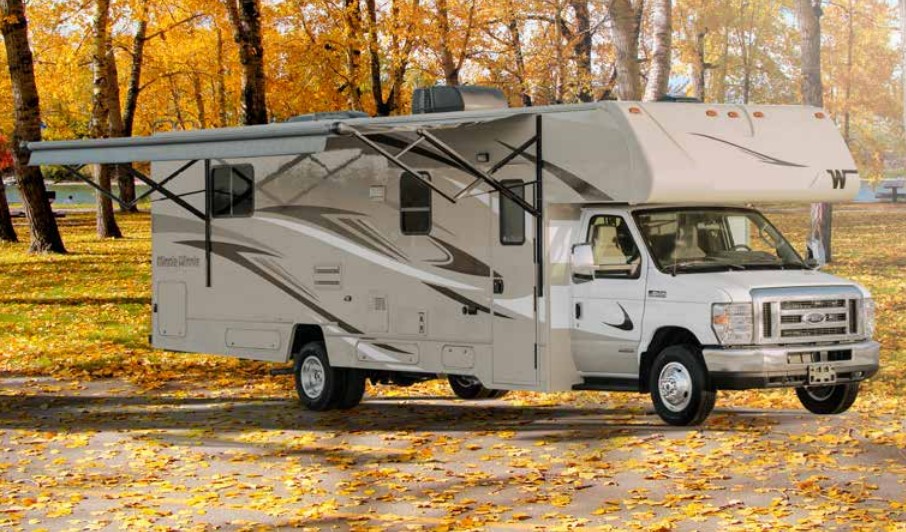
According to the Winnebago Owner’s Resource pages, your 2021 Minnie Winnie came with two Group 24 Flooded Lead Acid (FLA) 12-volt deep-cycle batteries. It also has a 30-amp shoreline cord and the distribution center has a 55-amp converter charger.
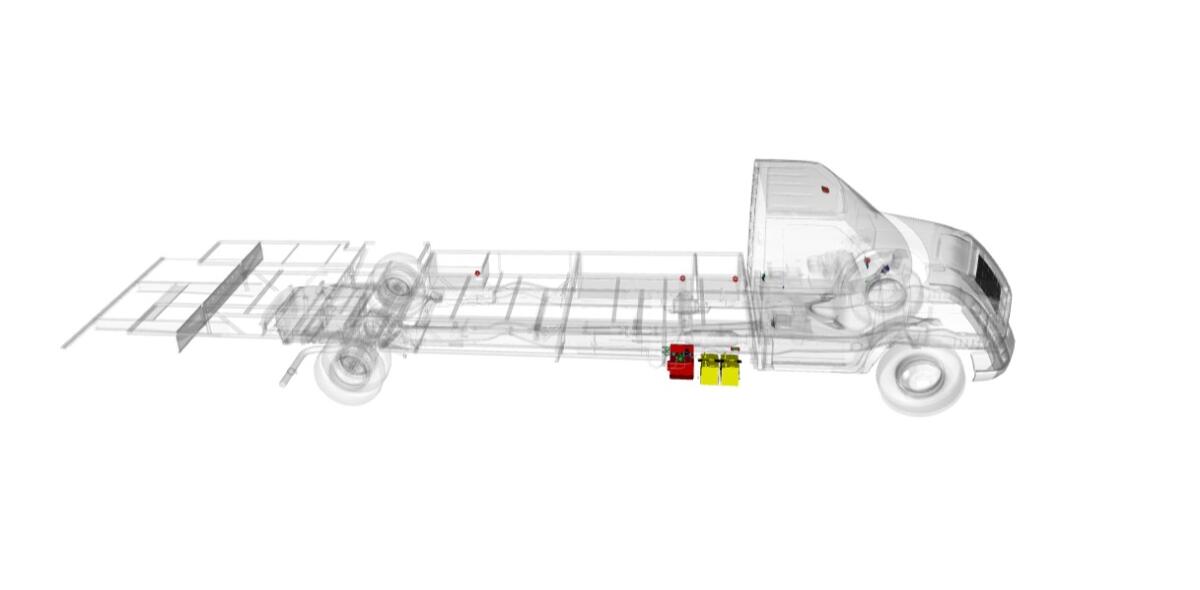
According to the 3D drawing, the two batteries are located on the passenger side in the compartment in the entrance steps.
Have electrician check 50-amp receptacle
You stated your house has a 50-amp receptacle that you would like to use to plug in an adapter for your 30-amp shoreline cord. I would have a qualified electrician verify the 50-amp is wired correctly for an RV rather than a clothes dryer. That type of receptacle provides 240-volt power. You want an outlet that is wired with two 120-volt Hot lines like this diagram.

Your 30-amp shoreline cord has one line that provides 120-volt power like this diagram. So your 50 – 30 amp adapter will only use one Hot line to provide power to the distribution center.

Your rig has an all-in-one distribution center that is located underneath the cabinet with the panel in the stepwell. When you are plugged into shoreline power, 120-volt power is provided to the distribution center and to the converter. That provides a 13.2-volt charge to the house batteries, which is a maintenance charge and will keep them topped off during storage. You also have a battery isolation management solenoid that should keep the chassis battery charged.
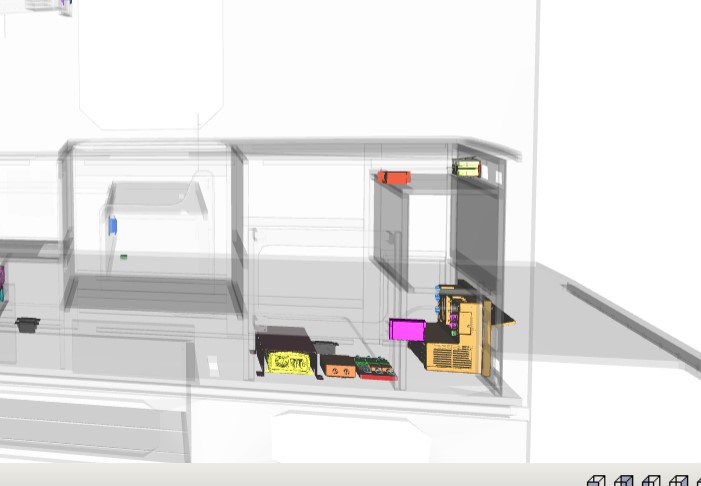
Plug the unit in and use a multimeter to verify 13.2 volts to the house battery as well as the chassis battery. Make sure the battery disconnect switch is not activated.
You might also enjoy this from Dave
When storing 5th wheel, what is the best battery maintainer and how do I connect it?
Hi Dave,
This will be my first time to keep the 5th wheel in storage. I have two questions, below. Mainly I am looking for a recommendation on a battery tender [maintainer]. I have two 12V batteries hooked up, as shown in the attached photo.
Q1: What battery tender do you recommend I purchase for my setup? It looks like the first battery is the one connected to the 5th wheel power. Second battery is tied to the first battery.
Q2: Is there a certain way I need to connect the tender to these batteries? I have seen conflicting info on Google. Some say connect only to one battery, some say connect to the negative on one and the positive on the other. —Cody, 2022 Rockwood Ultra Lite 5th Wheel 2893BS (Forest River)
Dave Solberg is a leading expert in the RV industry and the author of the “RV Handbook.”
Read more from Dave here.
HAVE A QUESTION FOR DAVE?
Send your inquiries to him using the form below.
##RVDT2306

When having an electrician check the 50 amp receptacle to make sure it has a neutral and ground. A lot of older dryer and range receptacles only have two hotlines and a ground, no neutral. If the original receptacle is wired correctly, the electrician can install a standard TT-30R receptacle using one side of the the 220 line neutral and ground, with it’s own 30 amp breaker.
That way there is no need for a 50 to 30 amp pigtail.
Unless the previous homeowner had an RV, the outside outlet was likely to power an arc welder – or is actually a non-powered generator input* with a transfer switch at the home’s powercenter. If the outside outlet is 240vac for a welder, I second your thought for a sub-panel 30A 120vac outlet.
*I have such a setup at our home and the uninformed might think I have a fancy outdoor outlet.
Need more articles like this and less of the other crap, which just turns in a complaint session.
He’s back…I thought you were done with this publication as per your last posting this past weekend
Yea, what gives
Thank you, Dave! 🙂 Safe travels!
My Internet advice is to never plug into or adapt with a cheater pigtail or plug to any mismatched electrical receptacle without understanding the consequences of doing so. Electrical receptacles are designed for a matching plug so the supply current orientation and voltage match the load current and orientation. Hot skin conditions, over/under voltage conditions, improper or no ground conditions and overload conditions are more likely to result when using cheater dog bones or adapter plugs. Switching to a different electrical receptacle in the home may also require changes at the electrical panel to meet building codes.
Assuming that the 50A receptacle is for RVs ( if not change it to an RV type) then use a 50 to30 adapter cord. Always keep an adapter cord for traveling because some parks only have 50A service. An RVer for over 30 years and an electrician.