

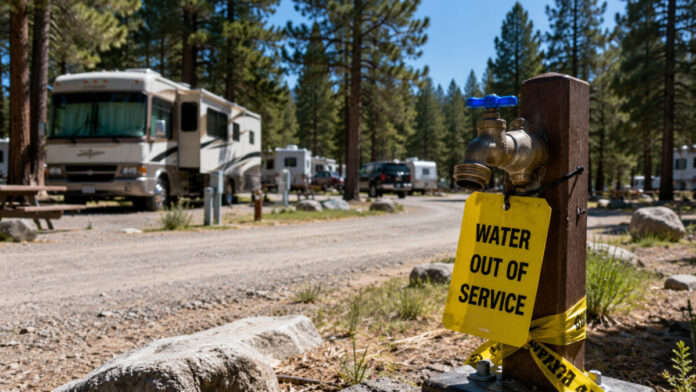
Campground water availability is something most RVers rarely think about until it’s gone. Most travelers assume that if a campground is accepting reservations, basic services such as water will be available when they arrive. Increasingly, that’s not always a safe assumption.
Recent reports from Colorado describe campgrounds that remain open even though water systems have been shut down because of drought conditions. In some cases, visitors are being warned to bring their own water or prepare for limited services.
While the situation is unfolding in Colorado, the lesson applies almost anywhere. Water shortages, well failures, infrastructure problems, wildfire impacts, and maintenance issues can all affect campground services, sometimes with little notice.
For RVers, that means an open campground doesn’t necessarily mean a fully functioning campground.
Why a campground may stay open without water
Many public campgrounds can continue operating even when water systems are unavailable. Campgrounds may still offer campsites, picnic tables, fire rings, and access to surrounding recreation areas. The water, however, may be turned off.
That can create challenges for travelers who planned to fill their fresh water tanks after arrival or who expected restrooms, showers, or dump stations to operate normally.
Some RVers won’t be affected much. A fully self-contained rig with a full fresh water tank can often continue without major inconvenience. Others may find themselves scrambling for water sources or changing plans after reaching camp.
“Just because a campground is open doesn’t mean all of its services are operating normally.”
Five ways to verify campground water availability
Checking campground water availability before departure can prevent an unpleasant surprise after you arrive.
Check campground alerts before you leave
Many public agencies post service advisories on their websites. A quick check the day before departure may reveal water restrictions, closures, construction projects, or other issues that weren’t in place when you made your reservation.
Read the fine print
Reservation systems often include notices about temporary service interruptions. Those notices can be easy to miss when you’re focused on securing a campsite.
Arrive with water on board
If possible, fill your fresh water tank before reaching the campground. Even if water is available, having a full tank provides flexibility if something changes. This runs counter to some who feel that the extra “water weight” carried while traveling is a problem. You just have to “weigh” the consequences.
Carry extra water
A few gallons of emergency water can make a big difference if campground supplies are unavailable or limited.
Expect related restrictions
Water shortages often coincide with increased wildfire danger. Fire restrictions, burn bans, and temporary closures sometimes accompany drought conditions.
The bigger takeaway
The Colorado campgrounds making headlines this summer aren’t necessarily the start of a nationwide trend. But they do highlight a reality many RVers may encounter at some point.
Campgrounds can remain open while some services are unavailable, which is why verifying campground water availability has become an important part of trip planning.
That’s why experienced travelers often perform one last campground check before pulling out of the driveway. Five minutes spent reviewing campground alerts can prevent a much bigger headache after arrival.
Whether you’re heading to Colorado, Arizona, Oregon, Washington, California, or somewhere closer to home, it’s worth remembering one simple rule:
Just because the campground is open doesn’t mean the water is on.
Sources
Aspen Times
Sky-Hi News
RELATED
- I find most campground water is horrible. Can I travel with a full fresh water tank?
- Campground water has sulfur smell. What to do?
- RVer dies from brain-eating amoeba in campground water
- Do you drink the RV park/campground water?
RVT1267b

