


Dear Dave,
What is the difference between green and orange antifreeze, and which should I use? —Greg, 2023 Grand Design Imagine
Dear Greg,
Since you have a GD travel trailer, I assume you are referring to automotive antifreeze for your tow vehicle. I worked in gas stations all through high school and college, and even owned one for a few years with a friend before starting my career at Winnebago. Back then it was all green antifreeze with a 60/40 mixture ratio.
Automotive antifreeze helps protect an engine during extreme temperatures which helps lower the freezing point during cold weather and raise the boiling point in extreme heat. Most internal combustion engines are water-cooled to remove heat and therefore the antifreeze mixture was called “engine coolant”. Mixed properly, some engine coolants can protect from temperatures as low at -34 degrees and as high as +265 degrees. Up here in Northern Iowa, I believe we can get close to those temperatures in a single day!
Green antifreeze
Early antifreeze was made with methanol (methyl alcohol) and labeled Inorganic Additive Technology (IAT). It is typically green and is recommended for engines from 2000 and older, as they were built with more steel and copper components. IAT antifreeze has a recommended flush schedule of 36,000 miles.
Orange antifreeze
Orange antifreeze is a more modern formula labeled Organic Acid Technologies (OAT). It is designed for engines manufactured with more aluminum and nylon components. It is also designed to last longer, as the recommended flush period is 50,000 miles.
There are other colors such as pink/red recommended by Toyota, Honda, Kia and others. Blue is common in European models such as BMW, Volvo, and some Japanese models. Yellow is typically a “universal”-type antifreeze. And purple is developed for other European models such as Audi, Porsche, and Mercedes-Benz.
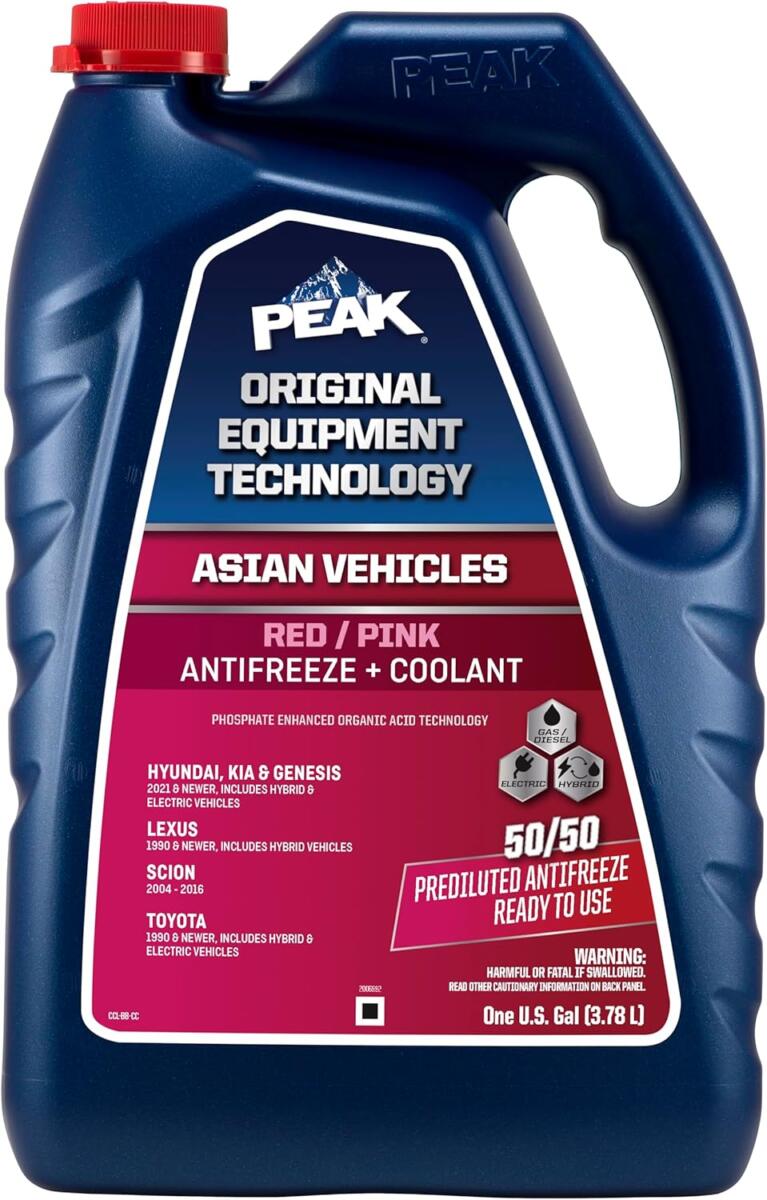
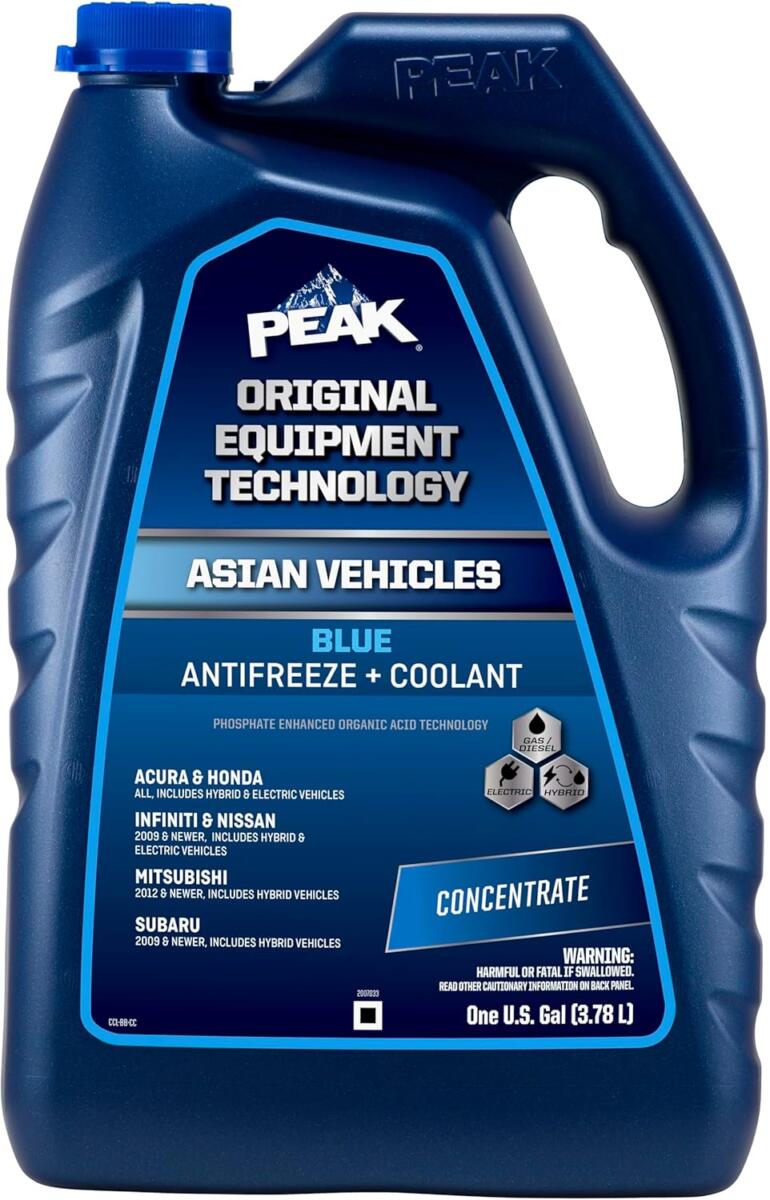
How do I know what antifreeze to use?
It is not a good idea to mix the two types of antifreeze as it could cause a sludge or slurry effect. It most likely will not cause catastrophic failure, but it could affect the flow of the mixture through the engine and radiator. Your owner’s manual most likely will have a recommendation for your specific engine and model year.
You can use a “universal” antifreeze temporarily in case of an emergency. If in doubt, it’s OK to use the newer orange antifreeze in most engines. Most auto parts stores can help determine which brand and composition is best for your engine.
How do I test my antifreeze?
Every type of antifreeze has a recommended change or “flush” routine at a certain mileage, which is listed on the label. However, it is a good idea to periodically test the antifreeze for not only cooling and overheating situations but also for the additives that help protect the wear and tear of engine components. Worn or old coolant becomes an electrical conductor, accelerating electrolysis inside an engine
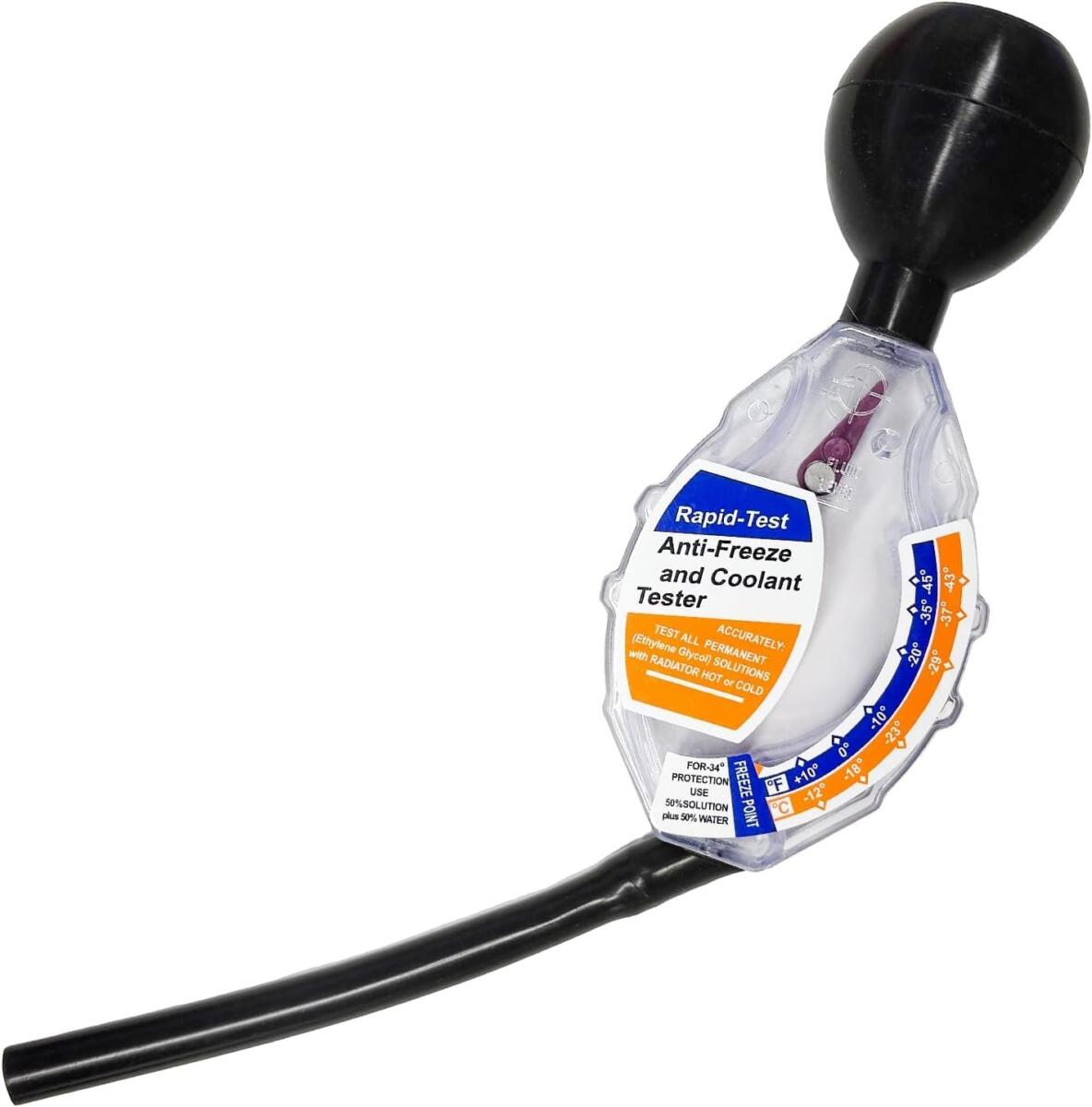
You can test the pH and glycol concentration with an antifreeze tester, which you can find on Amazon here.
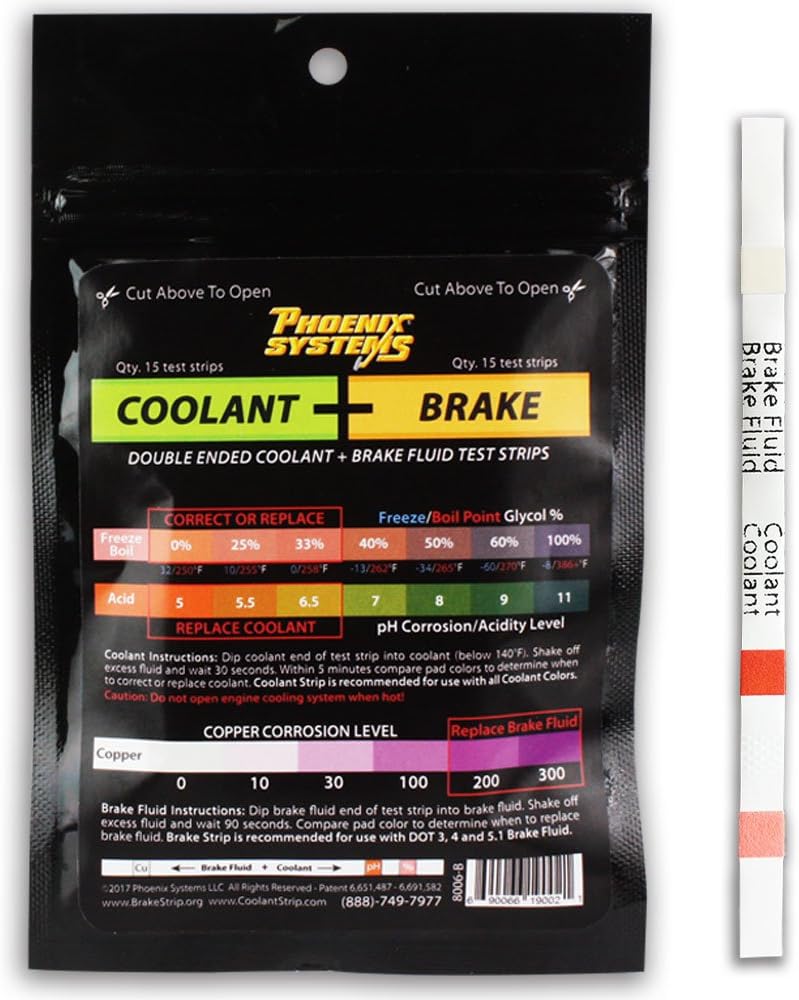
Or use a more accurate test strip such as this one available on Amazon here.
Check for anti-corrosion capability
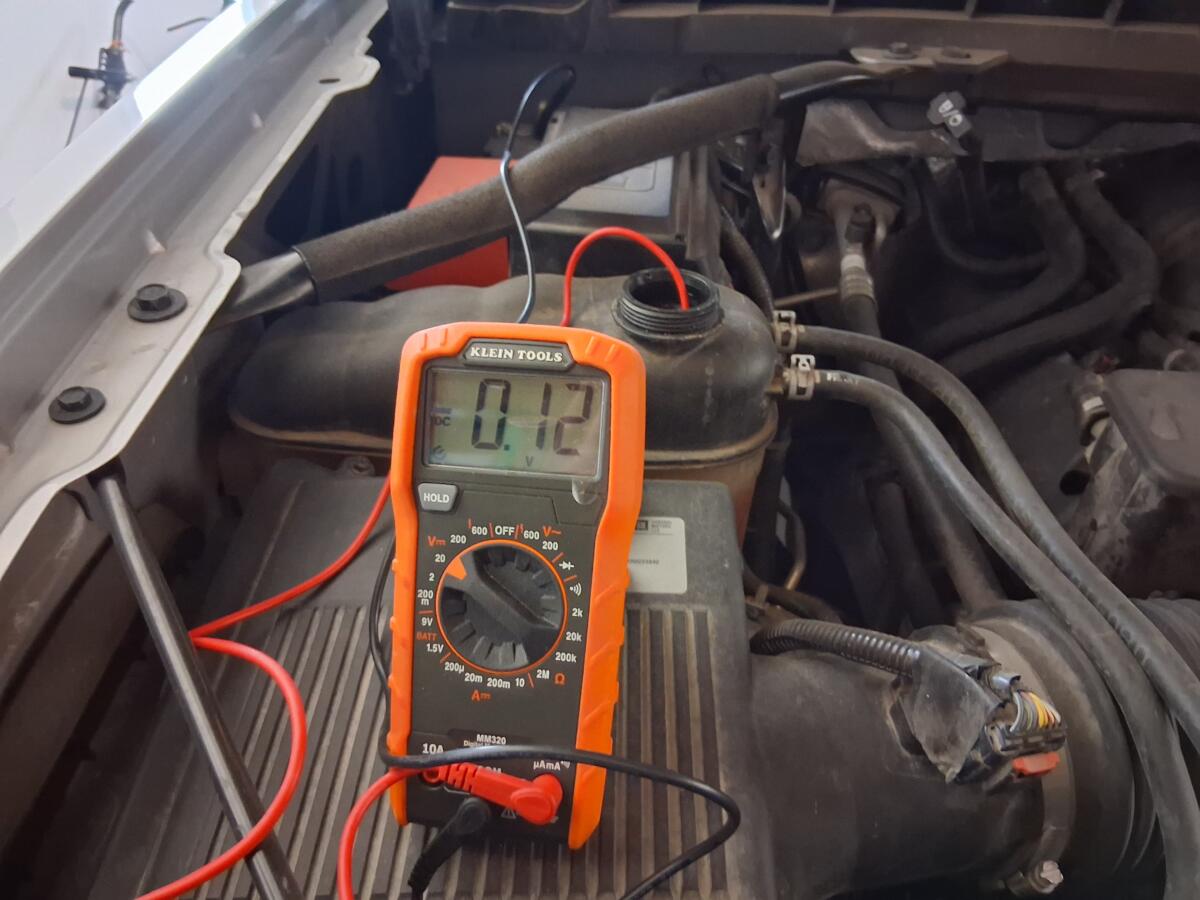
To check for the mixture’s anti-corrosion capabilities, use a multimeter set to the DC 20 range to verify continuity. Touch the black (negative) lead to the negative post of the battery and place the red (positive) lead into the antifreeze mixture in the reservoir container. If the reading is less than 0.4, the mixture is good and still protects the components.
Premixed versus concentrate
The concentrated antifreeze is my favorite as it is more economical, but it must be diluted 50/50 with distilled water. Premixed is more convenient, especially if you are traveling and distilled water might be hard to find.
Concentrate is a good choice to use when flushing the system as you will need twice as much premixed. I can purchase distilled water at my local grocery store in the “bring your own jug” filling station for 39 cents a gallon.
You might also enjoy these posts from Dave
- Switching to 600Ah lithium batteries. Is 200W solar panel sufficient?
- Is Top Tier gasoline really necessary?
- Why different microfiber cloth colors? Can you launder them like normal towels?
- RV dealership repair misdiagnosis. Who can you trust?
DAVE HAS ANSWERED MORE THAN 1,000 readers’ maintenance and repair questions. Read a directory here. There is so much to learn!
Dave Solberg is a leading expert in the RV industry and the author of the “RV Handbook.”
HAVE A QUESTION FOR DAVE?
Send your inquiries to him using the form below.
RVDT2890

“The concentrated antifreeze … is more economical, but it must be diluted 50/50 with distilled water.”
While concentrate needs to be diluted, it doesn’t have to be 50/50. That proportion is common and gives a freeze protection of about -34°F. Where I live, we sometimes experience night time temps below that. I don’t take chances and mix my antifreeze to protect to -50°F, which is around 57%. I’m sure that WAY up north some may be using 70% concentrations and way down south could be 40%.
I’ve experienced minus 63F with a mix of 60/40 antifreeze to water and haven’t had an issue. At that temperature, the car seat has as much give as sitting on a steel plate. Once the motor has run for a minute I also shift the transmission to neutral to get the transmission fluid circulating through the cooler as on many vehicles it doesn’t do that in Park.
I believe 100% undiluted anti freeze will freeze. So some water concentration is necessary. ND has known some cold periods exceeding the 50/50 dilution (-34f), however, I have never had a problem or issue either. I did have an issue on my 1987 El Camino which I had in storage for a few years – totally forgot to change the AF – started it one spring and a puddle was on driveway – the AF had eaten a hole thru the intake manifold! Lesson learned! (Top name brand stuff too).
Yes. Pure Ethylene Glycol is no good either. The water is needed to help move away heat. I see freeze temps of -10 to +10°F for pure EG.
It’s a mix balance of what one needs for freeze point, good heat transfer, etc.
Author used 60/40 and then 50/50. ? Need to refer to the owners manual as my old Vette takes 50/50 green and my C7 Vette requires 60/40 water to antifreeze Dexcool according to the manuals.
Thank you for the discussion, Dave. I had no idea that there are so many varieties of antifreeze. My personal strategy is to buy the same antifreeze as the OEM manufacturer used. Newmar has a favored brand and version, as does Stellantis/Jeep. Have a great day and safe travels!