

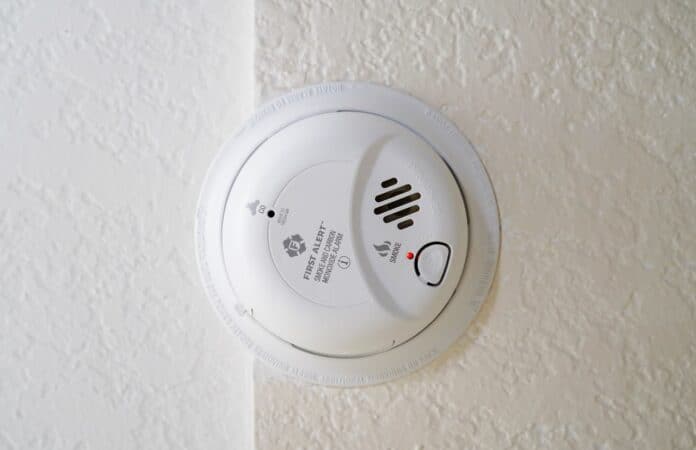
 Nearly every new home built in the U.S. has them: carbon monoxide detectors. These little units can save your life. Carbon monoxide (CO) is a colorless, odorless, tasteless, and often deadly gas, the byproduct of incomplete combustion. The combustion source in an RV could be anything from an improperly operating furnace, water heater, oven, generator, or any other device that burns fossil fuels.
Small amounts of CO can make you sick. In fact, it’s the leading cause of accidental poisoning in the U.S., with more than 100,000 cases heading into ERs every year. Larger amounts can kill you. More than 400 Americans a year join that statistical tragedy.
Know the symptoms of CO poisoning
The symptoms of CO poisoning include headaches, nausea, dizziness, fatigue, shortness of breath, and two real bad ones: unconsciousness followed by death.
Carbon monoxide is a tricky thing. A little bit of CO over a long time can do harm to you. A lot over a short period of time can do the same. Since there are plenty of devices in an RV that could produce carbon monoxide, it’s good for RVers to know the symptoms of CO poisoning. But it’s much better to have a CO detector warn you before you get any of the symptoms.
All new RVs come from the plant with a CO detector, but hang on. These devices have a limited “shelf life.” After five years from manufacture, your detector needs to be replaced. The hard part is, CO detectors for RVs have to meet special requirements. After all, they’re exposed to a wide range of temperature conditions and get knocked about with road bumps. Result: Like a lot of things “RV,” prices for CO detectors for your rig are typically more costly than the ones off the shelf at Homer D. Poe’s.
Replacing an out-of-date carbon monoxide detector
If you’re replacing an older, out-of-date detector that was originally manufacturer-installed, replacement should be fairly easy. Simply dismount the old detector, observe wiring polarity, and reinstall the new detector following the instructions included. Many OEM detectors are “hard-wired” into the RV 12-volt system. However, before you go shopping for a new detector, make sure that it is rig-powered. If you buy a new detector that “looks” for 12-volt RV power and your old one was battery-powered, you’ll be up to your neck with a wiring issue.
If your new detector wants 12-volt rig power and there are no handy 12-volt wire stubs, you’ll have to locate a source of 12-volt power near your installation area and run the wires out to it. MAKE SURE the wires are not switched—that is, you can’t accidentally shut off the power to the wires you tap into. Lighting circuits are a good bet, but they should not be switch-controlled. One reader replaced his hard-wired CO detector with one that is powered by a 9-volt battery, similar to the smoke detector. He did this to remove one of the “phantom loads” that pulls down the house battery when not plugged in. Now he just has to remember to replace the battery in the CO detector when he replaces the battery in the smoke detector. [Thanks, Gene!]
Where to locate the CO detector
Where should CO detectors be located? CO is slightly lighter than air, hence it rises. So putting the detector above the floor is right. You might even place it on the ceiling, but generally about five feet above floor level is best. If you have a big rig, make sure you install it close to your sleeping area so you’ll be able to hear the alarm when you’re asleep. Of course, follow the manufacturer’s instructions on “siting” the unit. And remember, don’t confuse CO with propane (gas) detectors. Propane is heavier than air so the gas detector needs to be mounted near the floor.
(Editor: RV CO detectors are available at Amazon.com.)
##RVDT1908 ##RVDT2169
Amazon is selling a bunch of LP/CO detectors. Since CO should be mounted high, and LP low—how the heck are those supposed to work?
Exactly!!!
My CO detector is factory installed close to the floor in the entryway near the kitchen area…is this the wrong location for it ?? 2019 Winnebago Sightseer
Bill, I think you are referring to the “propane detector” at floor level. Most Rv’s I’ve seen have the CO detector on the bedroom ceiling or high up on the sidewall wall.
I’ll double check it, thanks
I just double checked and you are correct. Propane detector near the floor, with a smoke detector in the bedroom ceiling, and what I thought was another smoke detector, is the CO detector in the forward ceiling behind the drivers cab area. Thank you for the heads up!!
That’s what happens when you don’t wear your glasses. I assumed that’s what they were. And we all know what happens when we assume…..
Thanks for the reminder on the “life” of these detectors.
Russ: Thanks for the reminder! We lost our 33 yr. old son to CO. He was working on a friends car with door closed on a cool nite. How many times I warned him about this!
D and J, I am so sorry to hear that. Take care.🤗 –Diane
Thanks for the info on CO2 detectors. Is there some way to test it? For example, my home co2 as well as fire /smoke detectors have a test button that I can push to see if the alarm works. Or… I can blow smoke up under my smoke detectors and see if they respond.
And what do I do if the co2 alarm “goes off”?? Obviously I get out of the RV – but is there any way to 1) discover the source of the problem and fix it? 2) if I “blow out” the air in the RV is it safe to go back in???
CO detectors are all the same. If you push the “test” button and if it starts chirping, the detector is working. Yes, the very first thing you do is to GET OUT. Finding the source of the leak would be better left to the professionals. Shut down everything that was listed above in the article (everything that would leak carbon Monoxide). Take it to an RV Dealership. The have leak detectors to solve the problem.
I have a 38 foot RV and have two battery operated CO Detectors and one hard wired detector. Never operate an RV without at least one.