


Hydration is essential, especially for RVers who spend time outdoors, drive long distances, or camp in warm climates.
Remaining hydrated is why many RVers use reusable water bottles. The bottles are convenient, significantly reduce waste, and can keep your beverages colder/hotter longer.
A typical day in a bottle’s life
For many RVers, the day starts with filling up a reusable water bottle. The bottle is then placed inside the truck’s (or RV or car) cup holder, where it’s easily accessible. Frequent sips are enjoyed throughout the travel day.
Once at the campground, the water bottle is all but forgotten while the campers set up and settle in.
Trouble begins
The forgotten water bottle often remains inside the truck for a day, two, or sometimes longer. During that time, the truck’s interior warms in the heat. Any microbes inside the bottle can begin to grow.
Warm, damp spaces are exactly the kind of environment where mold and microbes can take hold. Reusable bottles can also develop hidden buildup in narrow parts like straws and lids. This is especially true when the parts are opaque or stainless steel, making the mold growth nearly impossible to see.
Health risks
Drinking from a moldy bottle, straw, or nozzle is problematic because mold exposure can be harmful. The CDC says mold can cause a stuffy nose, sore throat, coughing or wheezing, burning eyes, or skin rash.
People with asthma, mold allergies, or weakened immune systems can have even stronger reactions. The Mayo Clinic likewise notes that mold allergy can lead to coughing, itchy eyes, and breathing trouble, especially when asthma is part of the picture.
There is also the simple hygiene issue. Straws and bottle mouths can hold saliva, residue from drinks, and moisture in tight spaces that are hard to scrub clean. Research on everyday, reusable bottles has found that they can harbor microbial populations, and broader biofilm research shows that these slimy communities can act as reservoirs for microbes rather than just a bit of harmless grime. In other words, a straw that looks only a little dirty may still be carrying much more than you can see.
Clean it up!
A quick rinse is not enough. For reusable water bottles, the Cleveland Clinic recommends washing with warm water and soap, using a bottle brush to reach the narrow parts, and paying close attention to the cap, mouthpiece, and any crevices where mold can hide. Letting every part dry completely before reassembly matters just as much as the washing itself.
If a straw or lid has visible mold, a bad smell, or a persistent film that keeps coming back, replacement may be your best option.
Tools that help
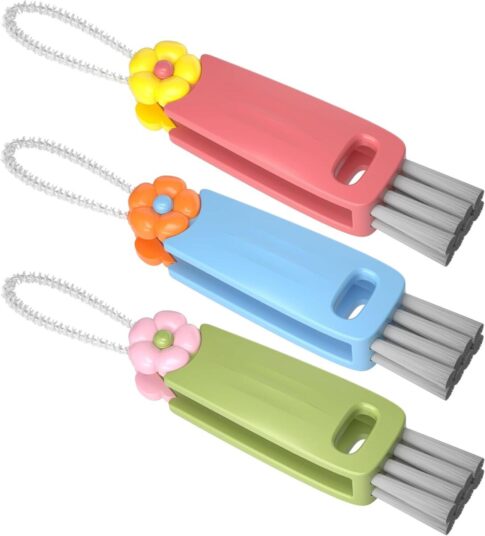
For RVers who depend on refillable bottles, a little prevention goes a long way. Pack along a straw brush like this one and a lid bottle cleaner like this (pictured above). Both tools take up very little storage space and can make a difficult job so much easier.
There are also water bottle cleaning tablets that kill all bacteria and odors in all types of water bottles.
Make it a habit
For RV life, the best habit is to treat the bottle like a daily-use dish, not a travel accessory that can sit around indefinitely. Empty the bottle, wash it, and dry it before it gets tossed back into a warm truck cab or a closed-up rig. You don’t want to give mold a foothold.
Remember that your future travels depend on you staying healthy.
RELATED
- Study says your reusable water bottle is dirtier than a toilet seat
- How to disinfect water bottles—Deep cleaning water jugs
- These collapsible water bottles are an awesome camping accessory
- Tips for storing those bulky water bottles while RVing
RVT1261

That really makes one wonder about the fresh water tank. We sanitize ours often (usually every 2-3 months moving as we move states for camp hosting positions). Even showers with possible moldy water is dangerous.
Keep in mind that you are not introducing bacteria from saliva etc. I’m not judging, as sanitizing is good practice, we do it twice a year. That said, We are nearly 70 years and have never been sick from the water from our rv fresh water tank. Maybe growing up on a farm/ranch and drinking straight from the hose boosted our immunities. Just sayin😉
There seems to be a lot of “Chicken Little-ism” in this article. Sure, you should wash your water bottles, but in 50+ years as a cyclist, and also carrying bottles in my vehicles, I’ve never gotten sick from a water bottle. Washing plastic bottles with soap can leave a disgusting soap taste in them that won’t come out, so I only use hot water and a brush. That’s always worked.
The main thing is to let it completely dry between uses.