

By Dave Helgeson
When it comes to RV travel, one of the critical concerns is maintaining a clean and safe potable freshwater tank. Finding a safe source of freshwater is especially important for those of us who boondock. A common question among RVers is whether it’s safe to use the water faucet at dump stations to fill their freshwater tanks. This topic has sparked lively discussions in RV communities, particularly on social media platforms such as this recent post on BLM RV Camping group on Facebook.
Let’s dive into the various perspectives and considerations surrounding this hotly debated issue.
The main concern: Potential contamination
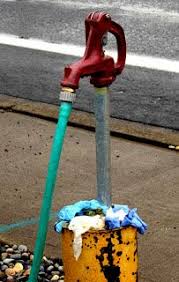
The primary argument against using the water faucet at dump stations to fill your RV’s freshwater tank is the risk of contamination. Dump stations are specifically designed for disposing of wastewater from the gray and black tanks, and most provide a water faucet labeled for cleaning purposes (often labeled non-potable). There is a possibility that the water from these faucets could come from non-potable water sources and most certainly the faucet and attached hose are contaminated with pathogens.
Many RVers shared their personal experiences and safety precautions on this topic. For instance, one commenter noted, “I’ve seen people rinse their sewer hoses directly with the water faucet at dump stations, which is a huge contamination risk.” This highlights the potential for improper usage and the subsequent health risks associated with filling your freshwater tank from these sources.
“I never fill my water tanks with a spigot that is anywhere near a dump station. There are too many bozos out there that will flush their black tanks with them. I’m not willing to take that chance.” Per Tony.
When it might be okay: Ensuring cleanliness, safe sources and proper handling
While the risks are significant, there are scenarios where it might be acceptable to use the dump station faucet, provided no other options are available and certain conditions are met. As someone who travels from boondocking location to boondocking location in the wilds of the Western United States, I have been faced with this scenario more than once. Here are the steps other RVers and I observe when filling a freshwater tank from a faucet located at a dump station:
- Investigate the source of the water. Are there other water sources nearby that are potable? If so, the faucet at the dump station is likely hooked to the same source. Example: A rest area in the middle of nowhere Nevada features flush toilets, sinks for hand washing and drinking fountains. The area around the rest area is arid desert, with no standing water, open lagoons or irrigated vegetation and features and a well head and pump house nearby. In this case, the water source for the dump station faucet is undoubtedly hooked to the same water source as the other (potable) water fixtures.
- Eliminate contamination. Once the source has been determined as potable, make sure to avoid/eliminate contaminated surfaces. If there is a short hose hooked to the faucet, it has most certainly seen the inside of a sewer hose and is contaminated. Unscrew the hose and set it aside. Next, run the faucet to flush it out, followed by sanitizing your hands with hand sanitizer. Then sanitize the handle and threads of the faucet. Most use a spray bottle containing bleach; others use rubbing alcohol.
- Fill the potable freshwater tank. Using the non-toxic water hose from your RV, the same one used for city water, hook the hose to the water faucet and fill the potable freshwater tank.
- When done, reattach the original hose to the faucet and stow your hose making sure not to contaminate yourself or the non-toxic water hose from your RV.
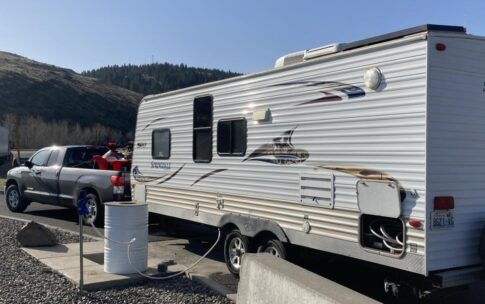
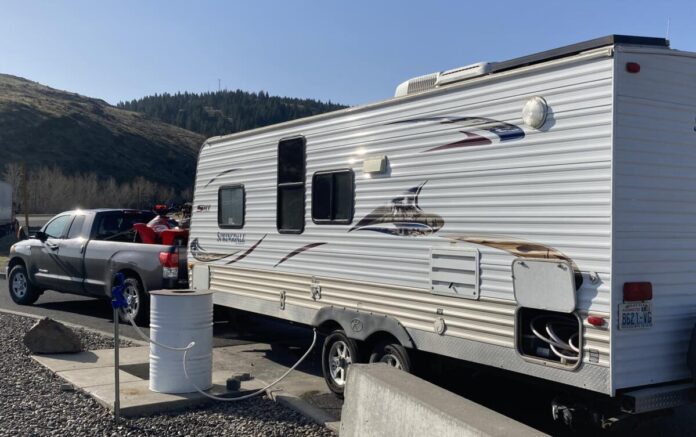
Author filling his freshwater tank at a faucet immediately adjacent to a dump station. Dave Helgeson photo

“Don’t use any freshwater hose other than your own personal hose—that makes perfect sense. But since you can’t take the spigot with you, you have to work with that where it is. Germs can’t get into the water because it is under pressure—that’s why even when a municipal system leaks (and they ALL have leaks) the water stays clean because it is under pressure. So all you need to do is keep the head of the spigot clean. Turn the water on for a few seconds, blow that off with plenty of water. If you really want to be sure, have a cup of rubbing alcohol handy and dunk the threads of the spigot in it. Then turn the water on again, before you connect your hose.” per geordi2.
“My guess would be that the water from most dump stations is perfectly fine to drink, even the ones labeled “non potable”. I mean, it’s not like they have a separate water source for it. The hoses, however, are probably contaminated. I’d find a different source unless you’re desperate.” Per this RVer.
When possible, follow these best practices for safe water usage regardless of the source
- Use designated potable fresh water stations: Whenever possible, fill your freshwater tank at locations specifically designed for potable water. Many campgrounds and RV parks offer these facilities separate from dump stations.
- Inspect the faucet: If you must use a faucet at a dump station, inspect it carefully. Ensure it is sourced from a potable water supply and is clean. Avoid using it if there are any signs of misuse or contamination.
- Dedicated equipment: Always use a dedicated, non-toxic water hose to fill your freshwater tank. Never use the same hose for filling your freshwater tank and cleaning your sewer hose.
- Regular sanitization: Regularly sanitize your freshwater tank to prevent bacterial growth and contamination.
- Seek alternatives: If in doubt, seek alternatives such as bottled water or filling your tank at another reliable source.
- Etiquette: Always follow proper dump safety etiquette for the safety of others who will utilize the dump station after you.

“Usually, the water at the dump station is the same as any other water in the park. The problem is how the water hose is treated by those that use it. I won’t connect there because of the unknowns. Now think about this: the water at your site is often very near the sewer, so what is the difference?” Per Lynnmor.
“Treat any public faucet as though it is contaminated. Disinfectant is a good idea. Run some water out of the faucet before connecting, and then flush your hose as well. If you use a filter, flush it as well and then connect to the RV.” Per this RVer’s opinion.
Filling the freshwater tank at a dump station: Conclusion
The debate over using the water faucet at dump stations to fill RV freshwater tanks centers on the potential risks of contamination versus the convenient or immediate need it offers. While some RVers feel confident using these faucets with proper precautions, others prefer to avoid them altogether due to the potential health risks. Ultimately, the decision comes down to individual judgment and a commitment to safety practices. By following best practices and ensuring proper sanitation, RVers can enjoy their travels with peace of mind knowing their water supply is safe and clean.
What are your thoughts? Please share using the comment box below.
Learn more about what both sides of the debate have to say
Click here to view the original Facebook post, which asked, “Can you use the non-potable water at the dump sites in your freshwater tank if you aren’t drinking it? Is it safe to wash dishes with or bathe with?” Along with the over 250 comments submitted before the moderator turned off commenting. A sampling of comments are shown below:
Craig commented, “I think the main consensus is they are all different, some come off the same line as the drinking water (most are), some are reclaimed water, with the obvious fact that people hook a hose to it that isn’t clean to flush out their black tank. Even cleaning it before you hook your clean hose to fill your fresh water tank you pose the risk of getting bacteria in your tank.
“We’ve been full-time on our boat and motorhome for six years and haven’t not been able to find potable water. Yes, it might be more inconvenient and require a little more effort but less effort than sterilizing your tank.”
Hans says, “I think often it’s labeled as non-potable water even though it’s the same municipal water that everyone uses. The real issue is the tap’s proximity to the actual dump station and people handling the tap or hose with the same gloves or bare hands that they used on their sewer hose. So good judgment is needed. I would never use the hose attached at the dump station to fill a tank, I’ve seen too many people stuff that hose end in their sewer hose to flush it out.”
Mark states, “It is marked non-potable for a reason. The definition is: not suitable for drinking, bathing or washing dishes. There are typically no backflow valves at the valve. The whole area is contaminated. People hook up black tank rinse hoses to it. Some without tank rinse connections put the hose down their toilet. I have a separate bin for sewer hoses (rinse and drain) for a reason.”
Carl says, “I think the only reason it is labeled ‘non-potable’ is due to its proximity to the dump station and the fact that it is used as washout water for the sewer hose, and therefore contaminated.
“Pretty sure it is the same water from the same plumbing as the potable water 20′ away. You should probably spray the hose connector with some Lysol or some other disinfectant just to be safe. But, if there’s a potable source nearby, why take the chance?”
Campground owner Scott chimed in: “That water is probably fine to use. We have a small Campground and we have ours labeled as non-potable because of all the health department restrictions and rules. The only thing wrong with the water is that I don’t want to jump through the loopholes to satisfy the health department; the water is fine. And I know for a fact that way in several other places, the water that’s coming up at that non-potable spigot is the same water that’s going to the homes in the area and the gas stations. So do with this information what you might.”
Mark responded: “NO, NEVER! It’s potentially contaminated water and can cause serious health issues/diseases. Shouldn’t bathe with it, wash dishes, or brush your teeth with it either. Potable water only and always use a water filter, cause you never know.”
##RVT1160
I wear heavy rubber gloves and long sleeves while discharging both grey and black tanks. There is NO way I would even consider getting “fresh” water from a dump station rinse hose.
Never at a dump station. Cannot tell what previous users have done. State of Alabama closed all their rest area dump stations because of user abuse.
From a Plumber. Don’t use spigots at dump stations. And bacteria can grow up a pressurized water line. It’s why we have specific practices in code books to Sanitize and then maintain water supply systems.
I wonder how many people flush their sewer hose from their full hookup camp sites? Hmm? Yet we don’t even consider that.
I’ve been using so called non-potable water for years without an issue.
I also use my sewer flush hose for filling my fresh water tank…. no difference. Just kidding on that one.
Nope. There’s more than enough other places to fill one’s tanks.
I worked with EPA’s Public Water Supply program. It should be noted that a PWS is required to report annually any infractions that occured in the past year to its governing body. That body is mostly State or Federal agency. These reports are available to the public and should be able to give you some idea of the quality of the water the PWS provides at their outlet (not your spigot). I think it prudent for an RV campground to have a copy for display. But that’s just me.
On a related matter, I wish to lament the cost-saving? move by the RV industry to cease attaching rear bumpers that act as a bumper and an exterior container of the dreaded sewer hose. Exactly how is that an upgrade?
Thank you, Dave! 🙂 Excellent information! I will be more cautious with potable water sources after this discussion. 🙂 Have a great day and safe travels! 🙂
I wouldn’t do it, but I can understand the dilemma for someone who boondocks. A guy I trust on another forum, who boondocks constantly, uses a flexible bladder that he can fill anywhere, then pump into his fresh tank. He has a fifth wheel so he uses his truck to transport the full bladder, then it folds up when empty so it doesn’t take space.
We use iOverlander app to find water. So far, it has been very accurate. You can find so many things with this app. It’s amazing.
Even considering use of a dump station water tap is dumb!