

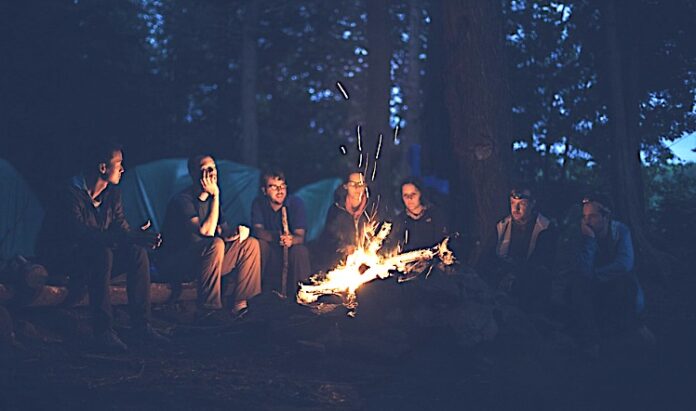
It’s hot and dry in many parts of the American West, and many national parks, national monuments, national forests and other recreation areas there have already implemented fire restrictions, which often include banning wood campfires.
Rules vary by location and can change quickly, so travelers should check the current alerts for each park, forest or campground before building any fire. There’s a good chance that the area where they are headed already has restrictions in place.
Several National Park Service sites are under Stage 2 restrictions, which generally prohibit campfires, charcoal fires, coal fires and wood stoves. Mesa Verde National Park and Yucca House National Monument will begin Stage 2 restrictions July 3.
Rocky Mountain National Park, Black Canyon of the Gunnison National Park and Curecanti National Recreation Area are also under Stage 2 restrictions. At Grand Canyon National Park, Stage 2 restrictions are in effect on the North Rim for the 2026 season.
Many national forests have also tightened rules. In Colorado, Stage 2 restrictions are in effect on the San Juan, White River, Grand Mesa, Uncompahgre and Gunnison, and parts of the Arapaho and Roosevelt national forests. These restrictions generally ban campfires and charcoal, including in developed campgrounds, while allowing gas-powered stoves with shutoff valves.
In Arizona, the Tonto, Coconino and Apache-Sitgreaves national forests are under Stage 2 restrictions. The Kaibab National Forest is under Stage 1 restrictions, which limit fires and smoking but may still allow campfires in approved developed sites.
In the Pacific Northwest, fire restrictions are also spreading. Gifford Pinchot National Forest in Washington began Stage 2 restrictions July 1, banning campfires, charcoal and pellet fires on National Forest System lands.
From the National Park Service, beginning Friday, June 26, 2026, until lifted, Mount Rainier National Park will implement a parkwide fire ban. All campfires and the ignition of wood, briquettes, or any fuel in fire pits, fire pans, and barbeque grills will be prohibited. This ban is in place to reduce the risk of human-caused wildland fire.
Mt. Hood National Forest in Oregon has prohibited campfires, charcoal, briquette and pellet fires forest-wide, including in developed campgrounds. Olympic National Forest has banned backcountry and dispersed campfires, including charcoal grills, while still allowing gas or propane stoves with shutoff valves.
Stage 1 restrictions typically allow campfires only in designated metal fire rings or grills at developed recreation sites.
Stage 2 restrictions are stricter and usually ban wood and charcoal fires entirely. Gas or propane stoves, lanterns and fire rings are often allowed because they can be turned off immediately, but visitors should confirm local rules.
Fireworks are prohibited in national parks and national forests. Smoking may also be restricted to enclosed vehicles, buildings or developed recreation sites.
The National Interagency Fire Center raised the national preparedness level to 4 on June 29, meaning firefighting resources are heavily committed across the country.
Before heading out, check the National Park Service alerts page, the specific national forest’s alerts page, InciWeb and local fire agencies. Restrictions can change with weather, fire activity and staffing needs. When in doubt, skip the campfire.
Current information about wildfires in Canada is available at the Canadian Wildland Fire Information System.
This article was researched in part using A.I. tools.
RELATED
- Abandoned campfires surge nationwide; park officials release scary statistics
- Beware grilling fires: Peak season is here
- Humans cause most wildfires that burn houses, other structures
- RVer’s blown tire sparks multiple wildfires
RVT1268b

We need to return to common sense forest management. Harvest the mature timber and restart our sawmills and lumber processing sectors. New trees will grow when old growth is harvested. Create firebreaks so we can curtail these blazes from spreading.
Tired of breathing smoke, tired of seeing resources go up in smoke (air pollutions). And forest animals won’t become crispy critters like they do now.
This is why I bought a gas firepit 6 yrs ago. Always allowed and no wood smoke.
Thank you for the news, RV Travel. Have a great day and safe travels!