

Maybe it’s the summer heat creating a loss of mental acuity. Maybe it’s a lack of parental training. Who knows, but the result is spelling a dangerous trend. Brainless campers lead to abandoned campfires. Abandoned campfires can—and have—led to devastating wildfires.
77 abandoned campfires
Across the country, fire officials are seeing a huge increase in the number of abandoned campfires on public lands. The day after the July 4th holiday ended, the Forest Service noted with alarm that 77 abandoned campfires had been reported in the Pike-San Isabel National Forests and Cimarron and Comanche National Grasslands. These public lands are in Colorado and Kansas.
77 abandoned campfires in just over six months, in just these two areas. It’s a dumbfounding statistic. How could anyone be so senseless as to leave a campfire unattended? On that same 4th of July holiday period, Arizona’s Coconino National Forest crews found and doused 11 illegal campfires. Illegal? Yes, because Stage 1 restrictions were—and still are—in place there. Just building a campfire is illegal there.
“Dumbfounded” doesn’t cover it
But “dumbfounded,” doesn’t cover it. Earlier this week, Pike-San Isabel National Forests officials reported back in. Seventy-seven abandoned campfires in their jurisdiction from the start of the year, through the 4th of July holiday. But hang on! Their report from this week cranked that number up to 139 for the year. Brainless campers nearly doubled their dirty work in less than two weeks!

We wish we could say this was just a local phenomenon. However, in the White River National Forest—the most visited national forest in the U.S.—public affairs officer David Boyd made this report. Over the past weekend, officials discovered more than a dozen unattended campfires across the northwest Colorado forest. A dozen in a weekend alone.
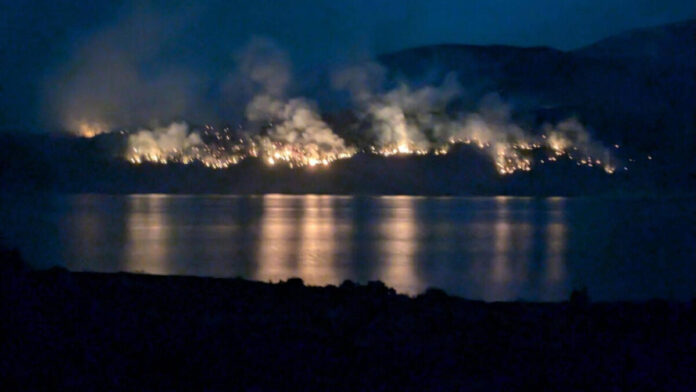
The images in this article were taken last month. The Interlaken Fire in Colorado, which wiped out 704 acres, started because some brainless camper abandoned his campfire. This was a relatively small wildfire, but it probably only took one match to start.
Would a statistics database help? Probably not
As far as we could find, there is no official database of abandoned campfire statistics. That might be a good thing. We might be frightened by what we see there, enough that we’d decide to stay home instead of RVing. On the other hand, if folks had that information and paid attention to it, maybe it would make a difference. But perhaps the brain-dead among us wouldn’t be able to make the connection.
##RVT1166b


I’m starting Not to be amazed at the dumb a** things some thoughtless campers are doing sometimes.
Thanks to the forest services and crews for doing their best to try and keep the rest of us safe from the idiots!
And thank you Russ and Tina for the report !
Why did I think that this sounds like some dumb Internet challenge? I sure hope not!!
Besides a fine and jail time they should have to do time in a park looking for and putting out unattended camp fires. No weekend fun time might get the point across.
Thank you, Russ and Tina! 🙂 It is incomprehensible that the numbers can be so much larger than zero! How can so many people abandon so many campfires?!? Thank you for passing along the information! 🙂 Hopefully it galvanizes all who read this to never leave a burning campfire and to address all that we happen to see, whether by reminding those who lit it to stay until it is extinguished, or to extinguish it ourselves. Thanks again, have a great weekend, safe travels, and safe stays! :-)⁹
Our national park firefighters are grossly underpaid and over worked. There is a remedial bill in congress to address this. Please contact your representatives and ask them to vote “yes”. The firefighters lives and our forests are endangered.
Congress won’t even fund the Veterans Administration enough to cover the costs of war…you think they will appropriate more money for the FS?
This isn’t carelessness, it’s stupidity or worse. Prevention is the solution. Prosecution would go a long way to promote prevention.
Perhaps it’s time to start patrolling areas on a more frequent basis. Then increase penalties for violations. There is no excuse for this behavior.
The youngest Boy Scout is 80 years, and few are left, most travel by RV!
we knew how to put out our camp fires, sadly no one is teaching the next
generation of campers how to do it anymore.
As a former Boy Scout and Scoutmaster I am teaching my great grand kids to never leave a hot/warm fire and how to put them out as well. Water and more water and a stir stick or shovel. Their dad on the other hand………
Are they sure these are done by “accident”?
Track em’ down and jail em’! Some people will never, or refuse to, learn by others or from experience. Signs don’t seem to help. Smoky the Bear isn’t enuf education. Arson is another consideration with some firebugs.
Also, a few Air National Guard transport flying units have the Mobile Fire Fighting systems – when the first sign of fire is noticed – get them in the air and if not them then the private contractors – which ever! They do an excellent job, albeit after the fire is a major event. It is expensive, but what is the cost of an entire forest or town/cities burning to the ground?
If they see a whisp in a restricted area dump on them…doesn’t matter if they are cooking their dinner beside their tent. A couple hundred gallons of water falling out of the sky on them might teach them a lesson. 😉
How about this? Make it part of basic education! Why not? There must be place somewhere in schools curriculum to fit 10 min lesson on what will happen if you don’t take care of campfire. One speech in each level – elementary, middle and high school. Another way is to ban open fires permanently unless in regular campground. I would hate to see that. I myself love to boondock and love campfire but if that’s what it takes to beat stupidity and protect forests, well do it. And fine heavily all non compliant brain dead folks. Hurting their wallet always works. I know most forests don’t have enough staff to keep up but even few they can will help, collected fees should go to hiring more forest staff.
I love the education comment. I have another idea on that–I’ll post it as an original/top-level comment.
I have no words to describe people whose actions cause these horrific fires. The Falls Fire in Harney&Grant county in E. Oregon now at 17 thousand acres and 10% containment is believed to have been started by a undoused campfire (campfires prohibited) or tossed cigarette. My land and cabin are currently under a level 3 “go now” warning and the FS roads in are closed. So many families, communities, ranches and our public lands are threatened now. Our firefighters are putting themselves at risk for this. It makes me ill
Not to mention all us old fogies who have to breathe the end results of these moronic mistakes by too many people who need a can full of arse whuppin.
the first 5 minutes or so talks about such an incident with a large abandoned camp fire.
https://www.youtube.com/watch?v=_JjR1OXBvnc&t=298s
I think we need to install an education plan. This is based on me working in a National Forest and witnessing/dealing with: abandoned campfires, abandoned trash (not packing it out), not being prepared to pay for day use/campsite areas (i.e. not bringing cash/exact change or checks–there’s no electronic payment options here), dumping trash, etc.
My plan is either stop every visitor at an entrance gate and make them sign an agreement to do all the right things. Or complete a course to receive a permit to enter national forests or other public lands. All entrees must be a permit holder or be with a permit holder. The permit holder accepts responsibility for the entire group.
Jake, in my college summers a long time ago, I worked as a fire fighter for the U.S. Forest Service. One thing we did was issue free campfire permits to campers and day visitors. It was an opportunity for us to provide them with a quick education in fire safety. It might be a good idea to bring this idea back.
It would be a great idea Chuck !
I recall those times…good idea.
A permit with education and even signing an agreement sounds good, but it’s not going to help if the campers have no way to put the fire out. Maybe also have a “show us your bucket or shovel!” campaign, that says no fire permit will be issued without proof that the applicant has the proper ability to put a fire out. Sounds like overkill, but it puts the focus on putting a fire out, rather than lighting a fire.
I think this problem is caused by too many Subaru commercials showing people doing fun outdoorsy stuff, but NOT showing the responsible (i.e. not so fun) side of putting out campfires and taking their trash with them.
And too many giant toy haulers with drunken parties with a passel of screaming kids wanting roasted marshmallows and hot dogs.
I have baby sat campfires till those that rented the site returned.
I think I would have put them out, wet all the remaining firewood and left a nasty notice.
Not sure why this primitive love of campfires even exists but it sounds like simple arson. And when the West burns regularly, why would anyone want to be the one that causes it. As Smokey says “Only You Can Prevent Forest Fires….Just Don’t Start Them”.
For the safety of all I’ve practically given up all campfires.
As I drove past a volunteer rural fire station in NV, a rugged area prone to wildfires, I wondered how employers feel about and treat their employees that are volunteers. Are they treated like military/national guard members who have to leave jobs to defend the country or community and jobs held for them? It is a great risk to members of the community that are not paid enough and might even lose money from their regular jobs.
A few years back when I was able to find an open campsite, I couldn’t believe the # of people who I had camped close to left their campfires going after they headed elsewhere.
My wife and I were never in a hurry and walked through the campgrounds with a bucket and drenched so many still burning campfires. Unbelievable!
Again, I will advocate for an annual permit to use our national forests. $50, must be tied to a license plate, and must be displayed. This could fund more Rangers, and those Rangers would ascertain campers had the permit. They would also record what permit was at what spot, so there may be a chance of identifying who was last at a campsite. Not enough room for more details, but the program would be self-funding.