


In a recent article, I addressed the rumor that Winnebago Industries was going out of business. Part of the “fuel” behind that rumor was the fact that the company stopped producing its Class A gas motorhomes. However, while researching the topic and discussing it with several trusted contacts within the RV industry, another issue surfaced.
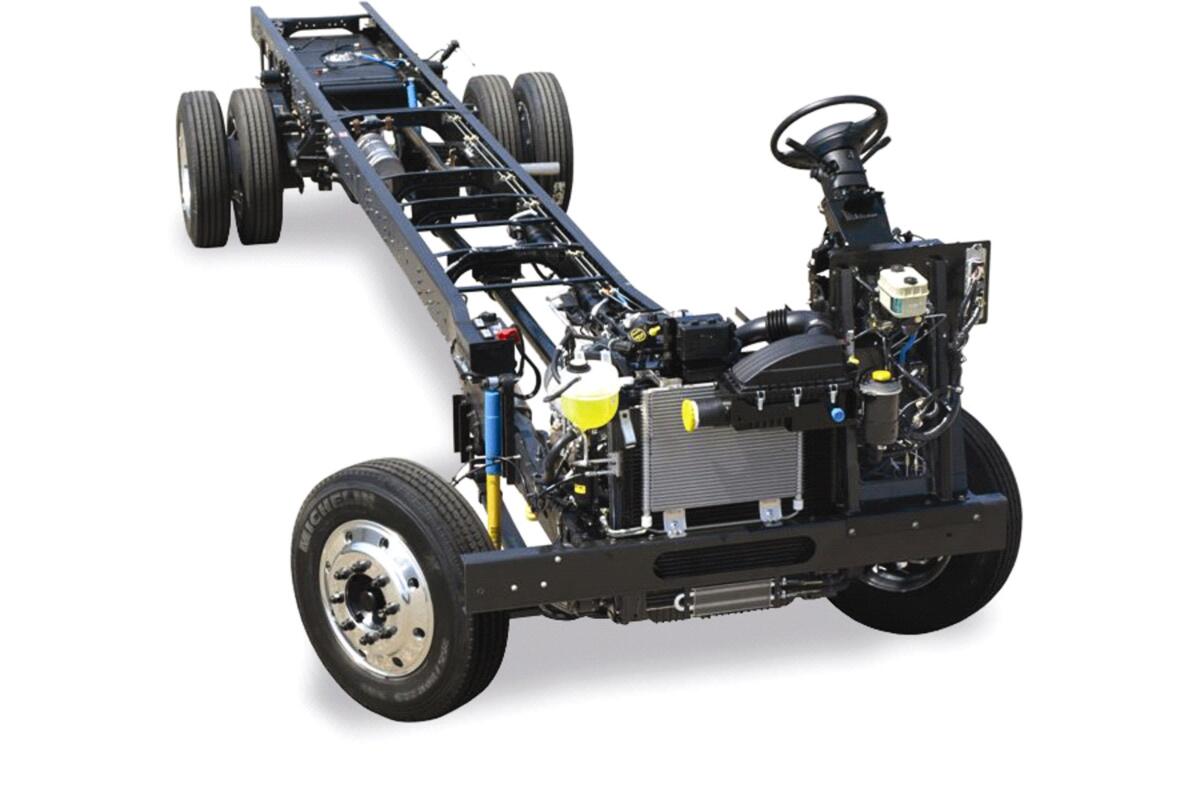
Several indications suggest that Ford Motor Company will discontinue the Class A gas motorhome chassis known as the Ford F53 at the end of this model year. Current information suggests that Ford has enough pre-orders to complete production for the remainder of the year and possibly supply some chassis into the first quarter of next year—if those units can be built within this production cycle.
Ford has remained very tight-lipped regarding any long-term plans. Currently, the only Class A gas motorhome chassis with a gross vehicle weight rating (GVWR) above 14,500 pounds is the Ford F53.
History of the Class A gas chassis
In the early 1970s, many RV manufacturers built Class A motorhomes on a Dodge chassis. While functional, it was limited in both weight-carrying capacity and engine power.
Somewhere around 1974, General Motors introduced the Chevrolet P30 chassis, which was widely viewed as a more “luxury-oriented” platform. At that time, Winnebago Industries launched the Itasca line on the P30 chassis.
The Dodge chassis disappeared in the mid-1980s, when the government bailout of Chrysler required the company to focus its efforts on the automotive and military sectors. For several years afterward, the P30 chassis was essentially the only option available, and changes or improvements were limited.
At one point, John Deere briefly entered the RV chassis market with its own platform powered by a Ford gas engine. However, the venture was short-lived. Thankfully, the tractor market picked up and Deere & Company got out of the RV chassis business.
I personally drove a 40-foot Winnebago Superchief equipped with a John Deere chassis during a training trip to California. I’m honestly surprised I’m not still trying to get back home!
More improvements
Ford entered the market in the late 1980s and introduced several improvements, including true fuel injection, tilt steering, and an overdrive transmission. Over the years, RVers benefited from the competition as manufacturers continued to improve horsepower, reliability, and overall drivability.
Eventually, Workhorse Custom Chassis acquired the P30 platform and produced the W-Series chassis until 2010. When new emission regulations took effect, production ceased, leaving the Ford F53 as the only widely available Class A gas motorhome chassis.
Some manufacturers experimented with alternatives. For example, Winnebago Industries offered the Winnebago Reyo built on the Mercedes-Benz Sprinter-based P50 chassis until 2015.
More recently, several companies have introduced smaller Class A motorhomes built on the Ford E‑350 and Ford E‑450 stripped chassis. These platforms have a maximum GVWR of 14,500 pounds and typically limit the coach length to about 30 feet or less.

What will happen to the larger Class A gas motorhome?
According to RVIA stats for January 2026, only 531 total Class A units were sold, down 3.5% from last year. This is all Class A units including diesel pushers, gas on the F53, and both E-350 and E-450 chassis.
With the Class A gas market being soft to almost-non-existent, will anyone step up and provide a chassis with the wheelbase and GVWR that can handle a unit larger than 30 feet? It doesn’t look promising. However, stay tuned…
RELATED
- ‘Is Winnebago going out of business?’ Who can you trust?
- Class A motorhomes vs. 5th wheels—Complete pros and cons guide
- Ask Dave: Why is there no rear-engine gas pusher Class A?
- Class A motorhome pros and cons: Is it the right RV for you?
- RV inspector recommends the 3 best brands of used Class A motorhomes
DAVE HAS ANSWERED MORE THAN 1,000 readers’ maintenance and repair questions. Read a directory here. There is so much to learn!
Dave Solberg is a leading expert in the RV industry and the author of the “RV Handbook.”
HAVE A QUESTION FOR DAVE?
Send your inquiries to him using the form below.
RVDT2855

The F53 is a lumber wagon anyway. Ford hasn’t done anything substantial to improve ride or handling for decades. 👎
I suspect RV manufacturers may move toward the Front Engine Diesel MC chassis by Freightliner, though cost would be impacted some. It uses the Cummins B 6.7L, common in many pickups and DPs already, and an Allison transmission. WAY better than the Ford.
Newmar already uses this in their Canyon Star having moved off the F53 years ago on that model.
https://www.fcccrv.com/chassis/mc/
Mikal, are you noticing any buildup of heat in the bedroom of your New Aire after a day of travel? If so, I have some information to share concerning a modification our RV tech made to the engine bay of our ’22 New Aire 3545.
Hi Neal. It’s definitely warmer back there after a day of driving in the summer, but I’ve always attributed it to no AC in the back while on the road. I have, however, considered better insulating the engine access part of the floor…more so because it gets cold in late or early season.
Frankly, that entire access hatch should be redesigned for several reasons. Was the same on my Mountain Aire.
I’d love to hear about whatever your tech did. Are you on IRV2? I’m on the Newmar forum there as NCC-1701A.
Reduced market share by the big boys with increasing Govt regulations, simple business decision.
Thank you for the historic information and the current state of gas chassis, Dave. This is infomative and helpful. Have a great weekend and safe travels!
After a little more digging, it appears the F59 chassis has a GVWR up to 21,953#…so basically a 22,000# chassis and wheel base up to 208″ so that would cover a LOT of gas chassis needs. So perhaps not as big a crisis as one might think.
https://www.ford.ca/commercial-trucks/f-series-stripped-chassis/2025/models/f59-commercial/
Great info, thanks Mikal !
But will it be allowed to be sold and registered in California?
And yet another option: A 23000# GVWR gas chassis available from Freightliner with the GM 6.6L
https://www.fccccommercial.com/chassis/gas/