

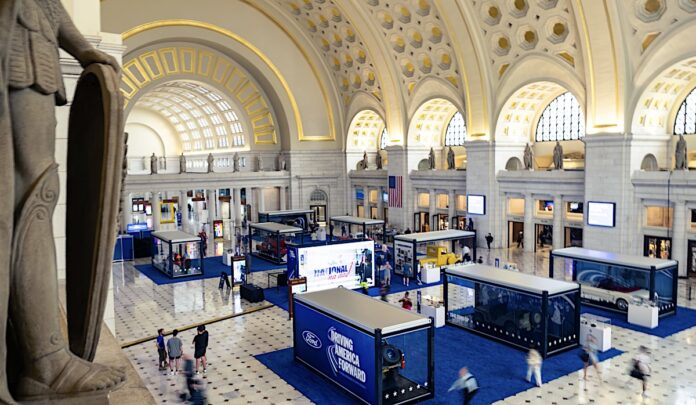
If you will be in the Washington, D.C., area soon, you may want to take in a free exhibition about automotive history. Ford Motor Company has transformed the historic Main Hall of Union Station into “Driving America Forward: A Ford Experience,” a temporary exhibit celebrating both the automaker’s history and America’s 250th anniversary.
The exhibit runs daily through July 14. Admission is free. It features some of Ford’s most historically significant vehicles, many rarely displayed outside museums or private collections.
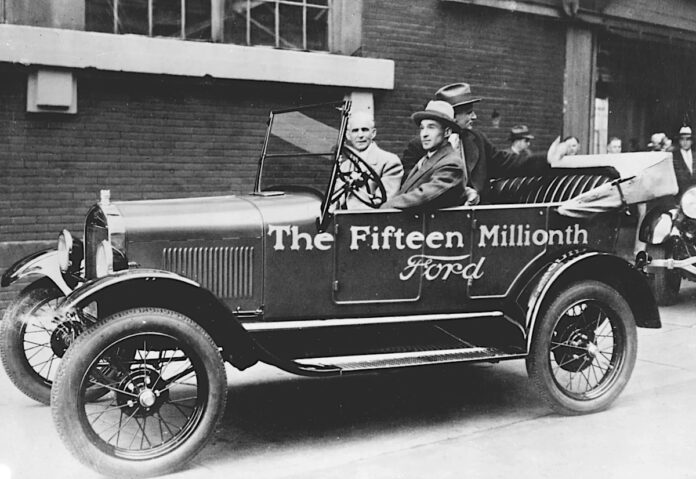
Among the highlights is the ceremonial final 1927 Ford Model T, the 15-millionth Model T built and the car personally driven off the assembly line by Henry and Edsel Ford. Also on display is one of only four surviving Mustangs used on Ford’s famous “Magic Skyway” attraction at the 1964-65 New York World’s Fair, a 1941 Ford GP military vehicle that helped pave the way for the Jeep, a 1966 Stroppe Baja-winning Bronco, a classic Ford 8N farm tractor and a 1954 Ford F-100 pickup once owned by fashion designer Tommy Hilfiger. Former Tonight Show host and longtime collector Jay Leno loaned his restored 1934 Ford V-8 pickup for the exhibit.
Ford says the display is intended to show how the company’s vehicles have influenced transportation, farming, military service, motorsports and everyday American life over the past 123 years. Interactive exhibits and historical artifacts accompany the vehicles, tracing the evolution of mobility from the Model T era to today’s technology.
The RV connection
For RVers with an interest in road travel history, the exhibit offers a reminder that recreational vehicle travel owes much to the automobile revolution that Ford helped launch. Affordable personal transportation made it possible for millions of Americans to explore the country by road long before modern motorhomes and travel trailers existed. Today’s RV lifestyle traces part of its roots to that era of expanding highway travel.
Union Station itself is an easy stop for visitors already touring the nation’s capital. The exhibit is accessible by Amtrak, Metro, commuter rail, rideshare or personal vehicle, although downtown parking can be limited during holiday periods.
Admission is free. Visitors can spend as much or little time as they wish exploring the one-of-a-kind exhibit.
