(October 15, 2016) — Jayco is recalling certain model year 2017 Seismic travel trailers manufactured November 19, 2015 to August 19, 2016. The affected vehicles may be equipped with an underrated resettable fuse for the awning with LED lights.
The incorrect fuse may not properly protect the circuit, allowing an electrical short to occur and increasing the risk of a fire.
Jayco will notify owners, and dealers will replace the fuse with the correct 1.85 amp hold/3.70 amp trip fuse, free of charge. The recall is expected to begin on November 4, 2016. Owners may contact Jayco customer service at 1-800-283-8267. Jayco’s number for this recall is 9901321.
Learn about RV camping, RV travel, RV news and much more. This newsletter, now in its 16th year of continuous publication, is funded primarily through advertising and voluntary subscription contributionsfrom our readers. Thank you!
Issue 764 • Week of Oct. 15–21, 2016
Editor’s corner With Chuck Woodbury Chuck (at) RVtravel.com
A few years ago, on a visit to my aunt’s in Lindsay, California, she told me about a friend in nearby Visalia who owned a vintage two-story trailer. Shirley Wallace’s father built the second story when she was a child — bedrooms for Shirley and her sister. Shirley lived there until she went off to college.
“Would you like to see the trailer?” my aunt Linda asked. A couple of hours later, we were on our way.
Shirley gave me a tour, which I videotaped with my iPhone. That video has now been viewed by more than a half million people on our YouTube Channel! It is, in fact, the most popular video on our channel. What’s interesting is that I shot the entire thing with my iPhone — no professional equipment!
WATCH THE VIDEO BY CLICKING ON IT
My aunt tells me that Shirley now gets stopped occasionally by strangers. “Oh, you’re the one with the two story trailer,” they say. “I feel like a celebrity,” Shirley told my aunt.
Shirley Wallace
Gail and I will spend Thanksgiving in Lindsay. I hope to see Shirley and her trailer again (to show Gail) and to ask Shirley how things have gone since the video debuted.
So, two interesting points about all this: The fact that I shot this video on an iPhone proves that a person does not need expensive, fancy equipment to shoot a popular YouTube video.
And here’s an idea to earn a few dollars on the RV road: if you can create a YouTube channel that attracts good traffic — even a few hundred views a day — YouTube will permit you to monetize the channel. You’ve likely seen monetized videos. In most cases a commercial runs at the beginning (which you can stop most often after a few seconds if you choose).
IF ENOUGH PEOPLE WATCH the commercials, over time you get paid, a penny or two for each view on average — something like that. Some of the most popular videos on YouTube (the talking dog, Charlie Bit Me, etc.) can earn the channel’s owner thousands of dollars a month, even six figures a year! That little video of Shirley and her trailer generates about $50 every month for RV Travel, and will for years to come even if I never post another video.
Most of our videos are lucky to earn a dollar a month, so our earnings are modest. I consider my YouTube channel my retirement fund. One day, when my mind has left me for another place and I must stop working, I’ll likely still earn $500 or so a month from YouTube — a nice supplement to Social Security.
If you are handy with a video camera (or even a smartphone), and are looking for a little extra income, consider setting up a YouTube channel. Pick a subject that you are passionate about. You’ll need to do some homework first — how to edit the videos (all Macs come with iMovie) and perhaps even more important, how to build traffic. But if you take it seriously, your channel can provide extra income for your travels today and even years to come.
And if you’re lucky enough to videotape a chipmunk yodeling on your picnic table, you’ll be set for life!
If you like this video about Shirley’s trailer, would you please consider sharing it with your Facebook friends? Just write your message and paste in this code: bit.ly/two-story
(see example at the right).
THIS WEEK’S CONTEST! UPDATE: WE HAVE OUR WINNER.Hold your entries.
Win a My Heat personal ceramic space heater(uses only 200 watts!). Be the 23rd person to correctly answer this question: “How many freckles did Howdy Doody have on his face and what was their significance?” The answer is below (just look for the small pic of Howdy Doody). Email your answer to RVcontests (at) gmail.com. We’ll let you know if you win. We can only ship to addresses with a U.S. Zip Code. Contest ends Monday at noon (Pacific) if we have no winner.
Is reading this newsletter
worth 10 cents to you?
Our staff works hard to bring you a valuable newsletter every Saturday. Readers help make it possible with their voluntary subscriptions. Even a pledge of $5 a year is appreciated — that’s less than 10 cents an issue! Many readers pledge more — $10 a year is less than 20 cents an issue! Your contributions make it possible for us to write about important matters, not just fluff to make advertisers and RV industry big shots happy. Enter a voluntary subscription.Use a credit card, PayPal or mail a check.
Question of the week We’ll compile your comments into a story about this next week. What do folks do about medical care when full-time RV living?Asked by a reader named Daniel.
Do you have any advice for Daniel or other readers who might be interested? If so, leave your comment here.
Clean your RV… with beastly-good results! Your RV’s not your car, it’s your “beast.”
Your RV’s large surface area makes it a beast that collects more bugs, grit, grime, soot and industrial pollution than your car does. And it may have different surfaces of paint, fiberglass, vinyl and aluminum. Click on the video to see Wade clean, shine and protect EVERYTHING with Beast Wash. Click here to buy, or learn more about, Beast Wash at the Wade Maid website.
Brutal accident decimates motorhome! It’s a miracle nobody was killed in this accident. The motorhome literally collapsed on top of the three occupants after it veered out of control off the highway and flipped over. Read more and see a photo.
Winter Differently This Year! When temperatures drop and the snow starts to fall, head south for the Winter! Florida, Arizona and South Texas benefit from beautiful sunny days and gentle warm breezes. You can too! Stay a week, a month, or the whole season! Book your long-term seasonal or annual stay at one of over 80 resorts in the Southern United States. Click here to learn more!
Reader RVs
What RV do you drive or tow?
Send us a photo of your RV (and tow vehicle) with a 150-200 word description of where and how often you travel with it, and what you like or don’t like about it. Include your name(s) and hometown. We’ll post them to RVtravel.com. Send to assistant editor Diane McGovern at Diane(at)RVtravel.com .
CLICK HERE to see the last issue of RV Travel Reader RVs.
Travel trailers were the only bright spot in the new towable RV sales picture for August. Comparing sales for this August with those in 2015, travel trailers pushed ahead 6 percent. Other towables did the “lead balloon” trick: Fifth wheels fell 6 percent; folding campers flopped 3 percent. Park models needed parachutes, dropping a dramatic 21 percent. Source: Statistical Surveys Inc.
August sales of new motorhomes saw growth in comparison to August 2015. Statistical Surveys Inc. reports overall registrations were up 6 percent. However, it was a mixed bag, based on class. Class A motorhome sales went down 1 percent, while the growth in sales were propelled by a nearly 14 percent sales increase of Class C units.
If you hate crowds, love outrageous scenery, and can handle the cold, today marks the start of a great time to visit the North Rim of Arizona’s Grand Canyon National Park. October 15 saw the shutdown of most visitor services, and the departure of seasonal crowds. But RV camping is still allowed until November 1, provided Highway 67 into the park remains clear of snow.
Sobering statistics: The largest jump in traffic fatalities in 50 years occurred in 2015. The National Highway Traffic Safety Administration (NHTSA) reports a 7 percent jump in traffic deaths, and an alarming 10 percent jump January through June of 2016. Finger pointing says half those deaths were due to an increase in driven miles, mostly attributed to cheaper fuel prices. But, says NHTSA, 94 percent of those deaths were due to “human behavior,” linking distracted driving, speeding, and drug and alcohol use to the rise in pavement carnage.
RV show promoters are purring in Pomona, Calif.: The 64th Annual California RV Show opened Friday, October 7, and when Sunday night rolled around, a record 17,471 looky-loos and customers had rolled through the show — up from 14,249 for the same time last year. The show goes on through October 16, and estimates are that as many as 45,000 will gallivant through the gates.
Photo courtesy Julianne Greer.
A lifelong camper is searching for his missing new Jayco Jay Feather RV. Larry Durr, of Lexington, Ky., says it was stolen from his driveway sometime in the past couple of months. In January, Durr was stricken with spinal stenosis and was in an assisted living facility until a couple of weeks ago. Camping with his wife, children and grandchildren has been a lifelong passion. He’s hoping to have the RV back before spring, so he can make some new memories with his family. If you have information about the missing RV, contact Lexington Police at (859) 258-3600. Source: LEX18.com.
Amazon is hiring 120,000 seasonal workers across 27 states this year — 20,000 more than last year. If you’re interested, click hereto learn about the jobs and where they’re located, and apply online.
Olympic National Park (Washington state), one of the largest U.S. national parks, is now changing gears for winter camping season. Staircase Campground has already closed. Sol Duc Campground will close October 30. Deer Park Campground could close as soon as mid-October, depending on snowfall. While Graves Creek, North Fork, Ozette, Queets, Kalaloch, Mora, Heart o’ the Hills, and Hoh campgrounds will remain open year-round, the Hoh Campground will close between October 31 and November 4 for electrical work.
Reduce air drag and boost fuel efficiency — Airtab® your RV! Just peel and stick Airtabs™ to the rear sides and the rear roof of your RV coach or trailer to create swirls of air that reduce aerodynamic drag, save fuel and improve stability. Airtabs™ dramatically reduce trailer ‘fish tailing’ and crosswinds pressure to RVs from passing trucks, while improving fuel efficiency 2% – 5%! Click on the video.
A Billings, Mont., teen has shown that bravery isn’t limited to older folk. Austin Letney, age 19, disregarded his own safety and ran inside a burning truck camper to rescue his father, Mark Beaver. Beaver had just hooked up an LP bottle and lit a pilot light inside the rig when an explosion occurred. Austin leaped through flames, yanked burning clothing off his father, and moved him to safety. Dad is expected to recover.
When Hurricane Matthew blasted up the U.S. southeast coast, it definitely ruffled more than feathers. On October 6, Fort Wilderness, the RV park at Disney World, shuttered, asking RVers and tenters to vacate by 11:00 am. Nevertheless, newspapers reported on October 8 that at least some snowbirds weren’t rattled, and were proceeding toward the Sunshine State for their winter retreat, hurricane or not. Other RVers, however, took their rigs to Tallahassee, and as of last Monday, had turned a local Walmart parking lot into an ersatz refugee center, along with some folks reportedly tenting and others sleeping in their cars, when local motels were full to the brim. Sadly, as of Friday, at least 44 people lost their lives across five southeastern states due to the hurricane.
Canadian RVing snowbirds may feel slighted by a bill introduced in the U.S. Congress. Representative Elise Stefanik (R-NY) wants to amend existing laws that limit snowbirds from Canada to only 182 days in the U.S. Stefanik’s bill would tack on an additional two months for snowbirds to, in her words, join in “activities [which] will support many small businesses, grow jobs and foster an ever-closer relationship with our northern neighbor.” But then there’s that fine print: Only Canadians who own or lease a home in the U.S. would be granted the 60 more days to spend their money in the Lower 48.
Montana State Parks officials say they’re between a rock and a hard spot, and Painted Rocks may be the rocks that go. With the largest inventory of park lands for any state in the area, Montana’s system struggles with a budget of less than 70 percent of other park systems. Keeping up with the demands of the land, officials now say they may cut loose Painted Rocks State Park near Hamilton, dropping management of the land owned by another state agency. If the park closes, it will take with it room for 25 RVs.
Last week we reported that Long Beach, Calif., city officials were contemplating a city-wide ban on RV and large vehicle parking. After a city council meeting reviewing plenty of input from residents, the city has sheltered itself behind a time-honored strategy: Do a study. It will now become the onerous job of the city attorney to figure out how to draft an ordinance that meets state and local requirements, defines just what an “oversized” vehicle is, and figure out how local RV owners could park long enough at home to load and unload their rigs. Just how long that takes in Long Beach is anybody’s guess.
Photo: Shark96z at English Wikipedia
The Atlanta Motor Speedway in Georgia isn’t an unusual venue for RVers during NASCAR races. But last week the speedway threw open the gates to its campground to house evacuees of Hurricane Matthew free of charge. Hot showers and restrooms were also made available.
RV dealers near Murray, Utah, say they think there’s an organizational method behind a rash of RV break-ins and thefts in the area. Within the last month at least 50 RVs were burglarized at three area dealer lots. The crooks appear to be targeting TV sets and appliances, but breaking up cabinetry to get at the goods is creating huge and costly headaches for the dealerships. One RV dealer says he’s pumped $10,000 into upgrading security cameras at his lot in an effort to catch the crooked creeps.
After a freak accident burned their motorhome to the ground, a North Carolina couple have vowed to keep on RVing. Billy and Peggie Tote were rolling down New Jersey’s Route 287 when somebody up ahead dropped a mattress in the roadway. Their rig flanked by cars on either side, Billy steered over the mattress — and unknowingly caught it in the motorhome’s undercarriage. When they pulled over, Peggie was greeted by flames as she pushed the door open. Uninjured, the couple rented a car to get home, and are already shopping for a replacement rig to continue their adventures.
Keep up with RV Industry news
throughout the week at RVbusiness.com.
Light up your RV with Boogey Lights! RV accent lighting is all the rage! Just look around the RV park! Enter Boogey Lights®! These robust, super-bright, state-of-the-art LED lights with hi-tech controller technology represent the next generation in LED lighting for RVs. The AWNING & UNDER-GLOW LIGHT KITS are specifically designed to withstand harsh operating environments. Don’t waste your money on junk! Get Boogey Lights! You can even control them with your Smart Phone! Learn more or click the video for a demonstration.
RV Quick Tips
Pilot light won’t ignite?
Gas appliance pilot refuses to light? Could be dust in your pilot assembly. “Canned air” is perfect for blasting those delicate parts. Don’t have a can on hand? A bendable drinking straw coupled with your own lung-power can suffice.
What do you do with an old Airstream? Here’s one idea! Photo source unknown.
An alternative to holes in RV walls for hanging pictures
Florette and Jeffrey Schilkraut suggest the following for hanging pictures in an RV: “We used two Command Strips Picture Hangers on each side of [our large] painting to hang it on the wall of our Tiffin Allegro. We’ve had no problems with it on the road, did not have to make holes in the wall and can change its location easily if we choose to.” Thanks for the suggestion, Schilkrauts!
A safety tip on “aging” tires
Sharon Brown, one of our faithful readers, said she owes much of what she’s learned about RVing to attending training sessions at RV shows and reading newsletters like ours (shameless promotion!). She shares this thought about tires: “I would NEVER keep tires more than five years. Actually, I have become a nerd and if the tires are over four-and-a-half years they get dumped. Even if the camper is new and was sitting in the lot, as mine was, the tires still may need to be replaced. I was shocked to read in a forum that was discussing what the best tires are for a travel trailer. A gentleman, obviously not too informed, said that he had the best tires and they have lasted over 20 years. Wow, what was he smoking?!?” (Learn a lot about RV tires at our blog RVtireSafety.com).
Do you have a Quick Tip? Send it to Diane (at) RVtravel.com and you might see it here!
RV Armor has tough skin! RV Armor’s tough skin was featured recently in Trailer Life. Read the full story here. RV Armor offers a unique, liquid applied roof system that is Guaranteed for the Life of the RV! No more maintenance, seams, or headaches. Nationwide mobile service. We come to you. To learn more, call 1-855-782-7667 or click here. Click the video to see our 2-day process in 6 minutes!
Modifying your RV toilet for a better fit
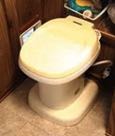
If getting older also means it’s getting a bit harder to get on and off the throne, then this article may be of interest. Too often RV toilets are on the short side. But Russ and Tiña De Maris found that a relatively inexpensive upgrade that really helps is to install a riser to give yourself a bit of a lift. Here’s how to do it.
Hooking up a refilled LP cylinder? Check this out!
If you own an RV and it’s not a motorhome, chances are close to 100 percent that you have portable LP containers that you remove to have filled. Those nifty little containers are great – but sometimes when you go to hook those cylinders back up to your rig the gas just won’t flow. What’s the problem, and could it be hazardous? Find out here.
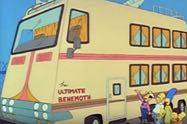
Homer Simpson buys a motorhome Get ready to laugh as Homer Simpson and the family head over to “Bob’s RV Round-Up” to buy a new RV. Salesman Bob introduces the family to the “Ultimate Grand Behemoth.” Alas, when it comes to financing the giant RV, Homer runs into problems. Many RVers who bought an RV off a dealer’s sales lot will appreciate Homer’s experience. Watch the four-minute video.
Highlights of RV Travel reader comments
In this new biweekly feature from Russ and Tiña De Maris, we’ll take a look back at what’s caused RVtravel.com’s readers’ “blood to pump,” based on comments and emails we’ve recently received. This week, we’ll start off on a question that Chuck Woodbury posed in the October 1 edition of the newsletter: “Did you buy a brand new RV in the last year or two? Would you please leave a comment if your experiences with the new RV were good, not bad?” Chuck’s already mentioned a bit about your responses, but we wanted to break it down a little further. Read more.
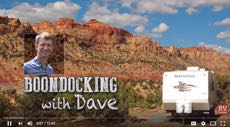
Part two in a series. . . Where to RV boondock for free on public lands DON’T MISS THIS! In this segment Dave Helgeson narrows in on how to boondock on public lands including where they are and how to find them (you won’t believe the resources available!). Even veteran boondockers will learn some valuable tricks here about where to stay away from the crowds of RV parks, and in most cases for free, not $30, $40, $50 or even more for a night in a congested RV park. Watch the video. Watch part one of Dave’s boondocking series here.
Gas pains: Debit card holds at the fuel pump
As more RVing snowbirds hit the road, turning the season into “tour time,” there can be an unexpected bit of financial reckoning. Even as gas prices are still pretty reasonable, there’s still a possible snake-in-the-grass waiting for you at the fuel pump: Debit card holds. Find out why they happen and how to avoid them happening to you. Learn more.
‘Best club for motorhome owners!’ The Family Motor Coach Association (FMCA) is THE “best club, hands down, for motorhome owners.” That’s the word from RVtravel.com editor Chuck Woodbury who has been a member for 25 years! The group has many local and special interest clubs, national rallies, valuable member-only web content, and a wonderful monthly magazine (printed and/or digital). A normal first-year membership is $60 per family, but FMCA is offering a special rate of $50 to RV Travel readers who click this link to join.
No Shock Zone, Part Four
In this episode, learn about one of the greatest dangers of RVing, perhaps second only to a fire, which is getting shocked and possibly electrocuted when touching the skin of your RV while simply opening the door. The information in this 12-part series has saved lives. It’s very important. Take the time to read. If you missed last week’s episode about how to test 30- and 50-amp campsite outlets, read it here.
Keep your RV interior clean? Is that possible?
It seems no matter where Rich “The Wanderman” camps (and probably most RVers), dust and dirt will find its way inside his RV and end up on and in the carpet. Even though vacuum cleaners can remove the dirt fairly well, what about keeping the dirt, or at least most of it, out in the first place? Read how Rich tackles this dirty issue.
Southwest camping for 85 cents a day (or even free)!
Wintering in the Southwestern deserts offers some of the most frugal camping and boondocking opportunities available to RVers in the nation. If you want to really get away from it all, the camping is free. Read more.
Why spend money on a tire pressure monitoring system?
RVtravel.com editor Chuck Woodbury talks with RV tire expert Roger Marble of RVtireSafety.com about tire pressure monitoring systems. Roger responds to a question from a viewer who asks, “Why can’t I just thump my tires?” Watch the short video.
Beware buying an RV with evidence of water leak
If you’re buying a used RV, especially if you’re buying from a private party, be especially aware of any previous water leaks — no matter what the seller may say to the contrary. A roof leak is a serious problem: In many cases a leak can cause serious structural damage resulting in potentially thousands of dollars to repair. How can you protect yourself from a leaker? Here’s where to look and what to look for. Learn more.
DON’T RISK HARMING YOUR RV
It’s time to Winterize!
Winter’s coming fast and for many RVers in the USA and Canada that means it’s time to winterize their RVs. Prestone RV Waterline Antifreeze offers burst protection to -50 degrees Fahrenheit, a non-staining dye, and a ready-to-use formula (no need to dilute). Will not harm plastics, except acetate. Learn more or order at a great price.
Too chilly for antifreeze?
Chris Dougherty, certified RV technician, received a question from a reader while he was serving as RVtravel.com’s technical editor regarding whether antifreeze freezes, based on the reader’s unnerving observations of his spare antifreeze during very cold weather. Read Chris’ response.
Forest River recalling some Salem and Wildwood trailers
Forest River is recalling certain model year 2017 Salem and Wildwood recreational trailers manufactured August 9, 2016, to September 6, 2016. The Federal Placard on the affected vehicles incorrectly lists the tire and rim combination. The incorrect tire information may result in the operator under-inflating the tires, which may cause sudden tire failure or poor handling, increasing the risk of a crash. Learn more.
Winnebago income up for fiscal 2016
Winnebago Industries reported Thursday its financial results for its fourth quarter and full year fiscal 2016, less than two weeks after announcing it has signed a purchase agreement to acquire towables manufacturer Grand Design. Learn more.
Avoid moisture damage to your RV
DampRid FG50T Hi-Capacity Moisture Absorber, 4-Pound Tub eliminates musty odors in RVs and other spaces, protecting them from moisture damage for up to 60 days in areas up to 1000 square feet, and up to 6 months in a 250-square-foot area. Don’t let your rig get damaged from moisture this winter. Learn more or order.
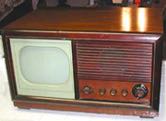
What is the model year of this television? 1941? 1949? 1956? Answer below.
This week in history Week of Oct. 15–21 Compiled by Dell Bert
1867 – U.S. takes possession of Alaska after purchase from Russia for $7.2 million.
1958 – Chevrolet introduces the El Camino.
1976 – “Disco Duck” hits the #1 spot on the U.S. pop chart.
1982 – John DeLorean arrested in $24 million cocaine deal.
1989 – Wayne Gretzky breaks NHL points record.
1989 – Earthquake rocks San Francisco, killing 63.
1994 – Burt Lancaster dies.
Liquefy solid wastes in sewer holding tanks Happy Campers Treatment liquefies solid waste and household tissue. It’s a natural formula that’s environmentally friendly and biodegradable, with no formaldehyde or harsh chemicals. Basically, the good bacteria overtakes the bad bacteria to eliminate odor and accelerate the natural decomposition of waste. Because it is totally organic and odor free, you won’t be embarrassed by bad odors inside or when you dump. Learn more or order at Amazon.com.
RV Club of the Week Here is an RV club we like. We hope you do, too!
Bounders United
A non-profit RV club for owners of Bounder RVs which “offers fun, relaxation, and information.” Membership offers chapters located around the U.S., a large bimonthly newsletter, rallies and much more.
Space heater uses only 200 watts! It’s hard to believe that an electric space heater could use a mere 200 watts — the same as a couple of light bulbs —a fraction of other space heaters. And this one really works! It’s meant to heat a nearby person, not a room (although it will keep the chill off a small bathroom). Put it on your desk or at your feet. It’s perfect for the RVer who’s “always cold.” Click the video by RVtravel.com editor Chuck Woodbury. Or order at Amazon.com.
Bumper sticker of the week My mother doesn’t just enjoy guilt trips — she runs the travel agency.
Funny/clever business slogan
If Your Hot Water Turns Cold, You Better Think “Fast” —Fast Water Heater Company, Seattle, Wash.
Have you seen a funny bumper sticker or business slogan? Send it to Diane(at)RVtravel.com
Dish rack collapses for easy storage Conserve space with this Collapsible Over-The-Sink Dish Rack. It’s perfect for your RV kitchen. When collapsed measures: 12.4″ x 14.5″ x 1.9″and when expanded measures: 12.4″ x 14.5″ x 5.1″. The RV Travel motorhome uses this in its kitchen. Learn more or order.
RV Electricity with Mike Sokol
Hello Mike, I am enjoying your series No Shock Zone for RVs. In part three, you discuss testing the voltage at an RV park’s electrical post. My question is if connecting with a 30-amp system by plugging into a 50-amp receptacle using a 50-to-30-amp adapter, what amperage would you actually receive? I assume 25 amps if the system is on two 25-amp circuit breakers. Is there an advantage to connecting to a 50-amp adapter unless it’s the only connection available? —Gary Reed, Frankfort, Illinois
Gary,
A 50-amp outlet is actually 50+50 amps, or 100 amps total. So if you plug a 50-to-30-amp adapter into a pedestal’s 50-amp receptacle you’ll still have the full 30 amps available. There is no advantage of doing that compared to a standard 30-amp outlet, so only do it if there’s no 30-amp outlet available.
Mike Sokol is an electrical and professional sound expert with 40 years in the industry. Visit NoShockZone.org for more electrical safety tips. His excellent book RV Electrical Safety is available at Amazon.com.
COSTS LESS THAN $12!
Don’t get caught in a weather emergency!
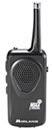
The Midland HH50 Pocket Weather Alert Radio receives NOAA weather alert broadcasts and searches for the weather frequency for the area when powered up. Its automatic alert system turns it on in event of dangerous weather or civil emergency, so you don’t miss anything crucial. Requires 3 AAA batteries. Learn more or order.
Good reading from RV123.com
• Stream your favorite tunes with the Cera Wireless Portable Speaker by Tego Audio.
• This is a tasty new twist on the classic chili dog, and a terrific idea for a campfire meal!
• These full-time campers give us their must-have items in the video, check it out!
Casino Camping: Guide to RV-Friendly Casinos
Discover hundreds of RV-friendly casinos throughout America. Learn which casinos have an RV park and which ones allow free overnight parking. RV parks at casinos are popular because they offer modern, upscale facilities at reasonable rates (and often free!). Boondockers seek casinos for a quiet, safe place to park. Learn more or order.
Ask the RV Shrink
Dear RV Shrink:
We are considering buying a Class C motorhome and doing some traveling. We have no clue on what to expect, what we might need, or how to go about making a buying decision. My wife says we just need to go ahead and take action. I am more cautious. She says I study things to death, but I just don’t want to spend a pile of money and find out two weeks into our trip we bought the wrong darn thing.
Can you give us any advice? It’s turning into an argument every time we go RV shopping. —Studious in Standish
Endorsed by Roger Marble of RVtireSafety.com! An excellent tire pressure gauge The Accutire MS-4021B digital tire pressure gauge has an easy-to-read LCD display that provides pressure readings from 5-150 PSI. It’s ergonomically designed with an angled head and a rubber-coated easy-grip handle. If you forget to turn off the gauge, don’t worry, it will automatically shut off. The included lithium battery never needs to be recharged or replaced. And all this for less than $10! Learn more or order.
RV Tech Tips from Mark Polk
Safety during a storm
When you arrive at a campground ask at the check-in desk about an emergency plan in case of a bad storm, i.e., tornado or high winds. If they don’t have a plan, make your own. Locate a structure that is safer than your RV, like a bathhouse or the campground office. Brief everybody with you on your plan. RVs are not safe in damaging storms!
Mark Polk is the owner of RV Education 101, the premiere source of educational DVDs about buying, maintaining and using an RV. Learn more.
Latest fuel prices Here are the latest U.S. average prices per gallon of gasoline and diesel fuel: Regular unleaded gasoline: $2.27 (on Oct. 10). Change from week before: Up 3 cents; Change from year before: Down 7 cents. Diesel: $2.45 (on Oct. 10). Change from week before: Up 6 cents; Change from year before: Down 11 cents.
Avoid moisture damage to your RV
DampRid FG50T Hi-Capacity Moisture Absorber, 4-Pound Tub eliminates musty odors in RVs and other spaces, protecting them from moisture damage for up to 60 days in areas up to 1000 square feet, and up to 6 months in a 250-square-foot area. Don’t let your rig get damaged from moisture this winter. Learn more or order.
RV Travel Reader Pets
Do you travel with a pet? We’d love to introduce your pet(s) to fellow readers. Send a photo or two of Fido or Boots and a 150-200 word description of your furry friend(s), along with your name(s) and hometown to Diane(at)RVtravel.com .
Click here to see the last issue of RV Travel Reader Pets.
Easily clean those stubborn bugs off your RV The Microfiber Mesh Bug and Tar Sponge has millions of tiny fibers embedded in the microfiber cloth that grabs and holds the dust and dirt. It is so effective it even cleans without chemicals, saving both time and money. The secret of this sponge lies in its unique, double-layer microfiber mesh. Older nylon bug sponges can harm your clear coat, but this one is completely paint safe. Learn more or order.
The RV Kitchen with Janet Groene
Green Pastures Lentil Stew Warm up chilly autumn campouts.
Freeze this easy recipe in batches to suit your own needs. Better still, whip up a double batch and have plenty of quick warmer-uppers on hand for winter suppers in your RV travels. Get the recipe.
Riding the rails! Tourist Trains Guidebook
Do you like to ride tourist railroads on your travels? If so, you’ll love this guidebook. It thoroughly describes at least 500 excursion trains and railroad museums in the USA and Canada. About 200 of the most popular sites are presented in full-page reviews written by a Trains magazine editor or correspondent. Reviewers offer advice on what to see, when to go, and how to get there. Learn more or order.
App of the Week
Add maps (or any image) to your blog post with a screenshot
Any map (or anything at all!) that you can see on your phone, or on your computer, can be captured as an image with a computer screen capture or “screenshot.” Then it can be used in your blog, just like any other picture. Find out from Chris Guld,GeeksOnTour.com, how simple it is! Learn how here.
The special offer for RV Travel readers is back!
Become a member of Geeks on Tour and get a 20% discount. Click here.
So what model year is the TV? This TV would have been state-of-the-art when it debuted in 1949 — a far cry from the huge high-definition models of today. Still, to youngsters at the time, watching Howdy Doody on it in glorious black and white was a magical experience! The Howdy Doody Show, by the way, ran from December 1947 to September 1960. And in case you didn’t know, Howdy had 48 freckles — one for every state in the then-USA.
Microwave cover collapses for easy storage When heating your food you don’t want to spend 10 minutes later cleaning the splatters inside the microwave. Here’s the solution — perfect for RVers: It pops down flat for easy storage. Lid perforations allow steam to escape to keep food moist. Doubles as a strainer! Learn more or order.
Ask the RV Doctor The RV Doctor, Gary Bunzer, answers your questions
Water pumps out of RV’s city water inlet
Dear Gary,
I keep my 29-foot Dutchmen Class C parked under my pole barn. It’s plugged in for power but nothing else is hooked up. I’ve just noticed that when I turn on the water pump, it pumps gallons of fresh water out through the park water hose inlet. It’s emptying my fresh water tank. When I turn the pump off, it stops. The pump is only a few years old. I would appreciate any guidance. Thanks! —Jim
DON’T LET A LOW BRIDGE RIP OFF YOUR ROOF! 2017 Rand McNally Motor Carriers’ Road Atlas If you drive a big RV — extra long or extra tall — then this truck driver’s road atlas will be a huge help in knowing where you can drive without encountering a low bridge or getting stuck hanging over a cliff. This is an essential aid even if you have a GPS! Coverage: United States, Canada, and Mexico. Learn more or order.
Boondocking tips with Bob Difley
It might be time to invest in solar
If you do a lot of boondocking, now might be a good time to invest in solar panels. Internationally, solar panel prices have plummeted resulting in much lower prices for a system. Find a company that specializes in RV solar systems, such as AM Solar, and get an estimate. And if you are even a little handy with tools, do the installation yourself. Several websites offer installation instructions and videos. And if you have a hard time swallowing the initial cost, remember that after the installation you’ll be streaming free electricity from the sun on a system with no moving parts and requiring little maintenance. Browse the large selection of RV solar panels at Amazon.
Keep burglars away with fake TV The next time you leave your home or RV, turn on this fake TV to scare intruders away. At night, when burglars like to strike, from outside your home or RV the light mimics someone inside watching a 40-inch LCD TV, while using very little power. This is enough to scare most would-be intruders off. Learn more or order.
Gadgets and Gizmos
Clean all your vehicles the fun way with Foam Blaster
The Chemical Guys Foam Blaster 6 Foam Gun is a fun and easy tool for washing any vehicle. Using the power of a garden hose, the Foam Blaster 6 Foam Gun creates super suds that help loosen dirt, road grime and filth for a perfect washing experience. The durable construction is built to perform and last for years. Learn more.
Keep your cool with EZ ZipBlocker awning sun blocker
If you’ve ever had your campsite aimed broadside into the setting sun, especially in the desert, you know that the late afternoon sun can get quite hot when it shines in under your awning. You can stay cooler longer — and keep the sun out of your eyes — with an awning drop-down sun blocker, a see-through screen that effectively cuts the heat and brightness while still offering visibility. This is very “EZ” to install and uninstall. Read more.
Stay warm with this 12-volt Warming Blanket!
Here’s a way to keep warm in your RV without wasting propane to run your heater. Just snuggle up with a warming blanket! This one has an 8-foot cord and operates on 12-volt, perfect for RV use. Stitched from 100 percent polyester fleece, the blanket is comfortable, functional, safe and gentle on your RV’s battery. Put it on your bed before turning in to warm your sheets! Learn more or order from Amazon.
Upcoming RV Shows
• California RV Show, Oct. 7-16, Pomona, CA • Oregon State Salem Fall RV Show, Oct. 13-16, Salem, OR • Fall RV Show & Bargain Expo, Oct. 13-16, Oklahoma City, OK • Toronto Fall RV Show & Sales, Oct. 14-16, Mississauga, ON, Canada • Austin RV Super Sale, Oct. 14-16, Round Rock, TX • Oregon State Eugene Fall RV Show, Oct. 21-23, Eugene, OR • Tampa Bay RV Show, Nov. 10-13, Tampa, FL • West Palm Beach RV Show, Nov. 17-20, West Palm Beach, FL
See the list of all upcoming RV shows.
Prevent hose crimping and strain . . . and extend RV hose life This 90-Degree Hose Elbow eliminates unnecessary stress and strain on all RV water intake hose fittings. The elbow, with an easy-grip connector, is made of brass and is lead-free. Learn more or order for a great price!
Stupid Statements
of Yesteryear “I think there is a world market for maybe five computers.” —Thomas Watson, Chairman of IBM, 1943
Trunk and RV Basement Organizer Keep your car, SUV or RV organized with this handy organizer. Multiple compartments allow you to separate food, drinks, sports objects, tools, gadgets and work-related stuff, all stored in the same trunk or basement yet separated. Four mesh pockets allow you to see through and easily access the frequently needed objects by making them quick to find. Folds flat to only a few inches, occupying very little space.Learn more or order.
Videos you’ll like
Where to store an RV when not being used
For many RVers, where to store an RV when it’s not being used is a big deal. It’s not always easy to find a place. RV Travel editor Chuck Woodbury has some advice. Watch the video.
Avoid these poisonous plants in some campgrounds
RVtravel.com editor Chuck Woodbury warns you about a poisonous plant found in the American West, including some campgrounds in dry climates or deserts. The plants can be deadly under certain circumstances. Watch the video.
Random RV Thought On windy days, facing a day of driving into headwinds, stay put unless you are in a hurry to get somewhere. Wait until the wind is at your back. Your mileage will improve significantly.
Don’t come up short of power at the RV park This 50 amp extension cord can save the day! Sometimes your RV’s power cord just won’t extend far enough to reach an RV park’s hookup pedestal. Here’s the solution: a 15-foot extension cord. Using a wimpy cord that isn’t rated high enough can ruin appliances and even cause a fire. Do it right with this! Learn more or order at a big discount. Need a 30-amp extension?Click here.
Trivia
The first webcam watched a coffee pot. It allowed researchers at the University of Cambridge, England, to monitor the coffee situation without leaving their desks. That was in 1991.
Worth Pondering “Do you know the difference between education and experience? Education is when you read the fine print; experience is what you get when you don’t.” —Pete Seeger
Keep rodents out of your RV!
The overwhelmingly positive reviews on this make it a best bet for keeping your RV rodent-free. This is the only plant-based rodent repellent registered for inside use by the EPA. It effectively repels rodents up to 100 days with a “woodsy” scent that’s pleasant to humans but offensive to rodents. It’s safe around kids and pets so no safety warning is required. 98% biodegradable. Tested and endorsed by the Good Sam Club. Learn more or order.
Readers’ Birthday and Anniversary Greetings
Happy Birthday! • October 15: To Holly & Gary from Mom & Daddio. Happy Birthday to two great kids who enjoy the RV lifestyle!
• October 15: To Rosanne from Dennis. I wish you a very Happy Birthday, and look forward to our “Off-season” from glamping! But don’t worry — winter will fly by and we shall be back at it soon! Love, Dennis • October 21: To Sheree from Bobby. Happy Birthday! I love you!
Happy (belated) Birthday! • October 9: To Deb from Neal. Happy Birthday to my wonderful wife! • October 11: To Jim from Sandy. Happy birthday sweets. Looking forward to another great Winter in Tx. Plus the trips to & from. Love Sandy
• October 14: To Marilyn from Jack. To my dearest and favorite travel partner!
Happy (belated) Anniversary! • October 10: To Jan from Larry McLeod. Thank you for all the good and not so good times I have had with you. Looking forward to the new years we will have together.
RV Travel staff Editor and Publisher: Chuck Woodbury. Assistant editor: Diane McGovern. Contributing editor: Russ De Maris. Contributing writers: Greg Illes, Bob Difley, Richard Miller, Richard Mallery, Janet Groene, Roger Marble, Julianne Crane and Chris Guld.
ADVERTISE on RVtravel.com and/or in this newsletter. Contact Chuck Woodbury at Chuck(at)RVtravel.com.
RV Travel is rated PG* by the Detroit Organization of Practicing European Yodelers (DOPEY).
About the RVtravel.com editor Chuck Woodbury has explored America by RV for nearly three decades. In the ’90s he published the quirky travel newspaper Out West, and was an “on the road” writer for the New York Times Syndicate. His book, “The Best from Out West” is available at Amazon.com. Woodbury’s RVing adventures have been profiled on ABC News, CNN, NBC’s Today Show, and in People Magazine, USA Today and in hundreds of newspapers. Nowadays, he lives near Seattle, where he drinks massive amounts of coffee and travels often in his motorhome and sometimes by plane when vast expanses of saltwater would turn his RV into a leaky submarine. He is the host of the Better Business Bureau DVD “Buying a Recreational Vehicle,” the definitive guide to purchasing an RV the right way.
Everything in this newsletter is true to the best of our knowledge. But we occasionally get something wrong. We’re just human! So don’t go spending $10,000 on something we said was good simply because we said so, or fixing something according to what we suggested (check with your own technician first). Maybe we made a mistake.Tips and/or comments in this newsletter are those of the authors and may not reflect the views of RVtravel.com or this newsletter.
Our offices are located at 610 5th Ave. S, Suite F, Edmonds, WA 98020.
This website utilizes some advertising services. Sometimes we are paid if you click one of those links and purchase a product or service. Regardless of this potential revenue, unless stated otherwise, we only recommend products or services we believe provide value to our readers. Amazon and the Amazon logo are trademarks of Amazon.com, Inc . RVtravel.com is a participant in the Amazon Services LLC Associates Program, an affiliate advertising program designed to provide a means for sites to earn advertising fees by advertising and linking to Amazon.com.
RVtravel.com includes links to other websites. We cannot control the content and/or privacy policies of those sites. Please be aware when you leave this newsletter or any other section of RVtravel.com to read the privacy statements of any of those websites that collect personally identifiable information. Our own privacy policy applies only to RVtravel.com and its affiliated blogs.
This newsletter is copyright 2016 by RVtravel.com.
*Pretty good
TODAY’S DEALS ON RV PARTS & ACCESSORIES AT AMAZON.COM. Click.
An RVtravel.com reader named Daniel wrote with this question: What do folks do about medical care when full time RV living?
Do have any tips for Daniel or other readers who may be interested? We’ll compile your comments next week into an article that will hopefully provide some answers. This is a question that often comes up. So, please, leave a comment. —Chuck, editor
As more RVing snowbirds hit the road, turning the season into “tour time,” there can be an unexpected bit of financial reckoning. Even as gas prices are still pretty reasonable, there’s still a possible snake-in-the-grass waiting for you at the fuel pump: Debit card holds.
It works this way: You pull up to the pump, insert your bank debit card to pay for your purchase. Let’s say you’re conservative like the “better half” in our family – you don’t like to run the tank too low, so you fill up long before you hit the quarter mark on the fuel tank gauge. So into the tank goes, say, $30. And down the highway you go … for another few hours, when you see that point where you need to refuel. Repeat as above, debit card used, small purchase made, off down the highway.
Maybe you filled three times today, at $30 on your debit card per transaction, and that’s – let’s see – $90, right? Right, yes, but could be “wrong,” too. Each time you use your debit card at a fuel pump, the fuel station owner can place a “hold” on your bank account, not just for exactly how much you bought, but for even more. A typical “hold” could be as much as $75. So $75 times three fill-ups equals a hold against your bank account to the tune of $225, even though your total fuel purchases were only $90. That’s $135 of your precious money that you can’t touch until the hold is released.
“Why,” you ask, “does this happen?” It’s simple. When you use a debit card at the pump, the station is basically pre-authorizing you to buy fuel. The fuel company reasons that it has no idea how much fuel you’ll really be pumping, nor do they know how much money you have in the bank. So they take an educated guess as to the transaction and slap a hold on your account. Later, when everything shakes out, either at the end of the day, or the next day, they pass the actual amount charged along to your bank, who, when they decide to take the hold off the account, do so.
The problem is, if you’re not aware of how many dollars are “held” can lead to a real problem. Let’s say that for two days you’re plowing down the road, racking up $225 worth of holds per day, that’s $450 worth of holds on only $180 worth of real purchases. Meantime, that check you wrote for $200 is presented to the bank for payment. You thought you bought $180 worth of fuel, the check is for $200, and you have $500 in the bank, so plenty of room for the check to clear, right? Wrong! The bank says, “Oh yeah, there’s $500 in the account, but here are holds for $450 worth of holds, so we can’t accept this check.” The check bounces, the bank that presents the check gets after you for the bounced check, and your bank does the same.
Who’s at fault here? A lot of finger pointing goes on. The gas company says, “The bank says when the hold is released, so blame them!” The bank fires back, “We only release the hold, it’s the gas company that tells us how much we should hold.” Of course, you’re the guy in the middle. To add insult to injury, it’s not just gas stations that play the debit card funds hold game. Some RV parks will tie up your account – one, by its own admission, will tie up $50 for up to a full month!
What’s to be done? Unless you have plenty of fluid cash in the bank to handle debit card holds, you’ll need to do a work-around. First, skip using a debit card to pay for fuel purchases. Pay cash or use a credit card. Or, some crafty debit card users who don’t mind a little extra footwork will go inside the station and present your debit card before the transaction. Afterwards, you go back inside and complete the transaction by entering your card’s PIN code. In most cases, the transaction will then be immediately processed through the banking system clearing house, and no “holds” will be put on your account.
Any map (or anything at all!) that you can see on your phone, or on your computer, can be captured as an image. Then it can be used in your Blog, just like any other picture.
Example: Here’s a blog post of mine using a computer screen capture of Google Maps in Satellite view. Click on the image below to go to the Blog post and see the whole thing, including two maps.
To take a screenshot on a cellphone:
View the screen you want to capture
Phones with a physical home button: press and hold power button and home button at the same time, then let go
Phones without a physical home button: press and hold power button and down volume button at same time, then let go
You should hear a click and see a blink on your screen to indicate it has been captured
Now go look in your photos/gallery app and you will see the screenshot along with your photos
If you’re using Google Photos on Android, be sure the Screenshot folder is checked in Menu, Device Folders
See this demonstrated as our tip of the week on our weekly show #81 about Location Services. Here’s the part on How to take a screenshot
Use Screenshot in a Blog Post
You can now use the captured image like any other photo. For example, if you use Blogger, you can insert the camera screenshot
Click the Insert image button
If you’re using Google Photos: choose “From my phone,” Select the desired screenshot, Add Selected
If you’re not using Google Photos, the image will need to be on your computer, then choose Upload to get it, select it and Add Selected
Chris Guld is President and Teacher-in-Chief at GeeksOnTour.com. She has been in computer training and support since 1983 and owned a Computer Training Center called Computer Savvy from 1983-1996. She has been a Fulltime RVer, popular seminar presenter at RV Rallies, and regular contributor to RVTravel, for many years.
By Russ and Tiña De Maris
Charles McCabe, the now-gone columnist for the San Francisco Chronicle once wrote, “Any clod can have the facts, but having opinions is an art.” And while facts can draw us a picture, it’s all those opinions that can bring in the color. We may not always agree with them, but those “views or judgments formed about something, not necessarily based on fact or knowledge,” surely keep our mental juices flowing.
One of the things we appreciate about RVtravel.com readers is that variety of opinions, and that so many of you are ready to let us know how you feel about something. We’ve had our share of feedback on things we’ve written – not always commendation, but thank heavens, more of that than the other – and we’re always happy to hear from you.
To that end, every couple of weeks we’ll take a look back at what’s caused your blood to pump, based on comments and emails we’ve received. This week, we’ll start off on a question that Chuck Woodbury posed in the October 1 edition of the newsletter. Chuck asked, “Did you buy a brand new RV in the last year or two? Would you please leave a comment if your experiences with the new RV were good, not bad?” Chuck’s already mentioned a bit about your responses, but we wanted to break it down a little further.
Just for the record, you commented about a huge number of RV manufacturers and their brands. From a statistical perspective, we’d like to mention some of the “top vote getters” for those who had favorable comments to make. From nearly 200 comments, Forest River got the most kudos, with 16 of you giving the outfit high marks. Close on FR’s heels comes Jayco, pulling in 14 comments. After that, Tiffin and Winnebago, tied with 12. Heartland (9), Grand Design (6), Airstream, Coachmen, and Thor (5 each), then Keystone, Arctic Fox, and Newmar (4 each). With three votes comes Highland Ridge, then with two each, Coach House and Lazy Daze. Didn’t see your rig listed among these? Fear not, there were plenty of other single thumbs up comments for a lot of other rigs as well.
While all of this may seem pretty impressive in a day when we hear a lot of complaints about poorly manufactured RVs, here’s a bit of a facer. Of all of those “great” comments, almost every one did remark that their RV experience did have its flaws. Some referred to “punch list” issues, “little problems,” and “shakedown issues,” that came with their rigs, direct from the dealer lot. Many of you commented favorably about dealer service, and how your concerns were quickly handled. Others said they didn’t want to mess around with going back to the dealer, and so they quietly fixed “minor” issues on their own. A very few of those commenting mentioned they had “no problems.”
Which leads us to wonder – Is the reason why quality control issues are so rife in the industry because we’ve just come to accept them as a fact of the RV lifestyle? Borrowing on the thoughts of others, if you went and bought a new car off the dealer showroom floor, would you be so accepting of “punch list issues,” and “minor problems”? Probably not!
On another topic: Being in the political season as we are, it’s as if everyone’s waiting for some sort of “October Surprise.” We’ll not get into politics, but it seems like at least one RV industry big shot got caught up by his own words. Last Saturday (October 8), we published a video clip of Good Sam Club and Camping World CEO and Chairman Marcus Lemonis, on the day of Camping World’s IPO and its first day of trading, telling CNBC that he “hates motorhomes.”
photo: samdpark on wikimedia commons
Why is that, Marcus? “We don’t like motorhomes because they don’t turn as fast, they’re not high margin,” he said on Friday when talking about the future of Camping World. “We sell them, but they are not big for us. It’s really about selling warranties, insurance, roadside assistance, service, parts.” He doesn’t seem to mind taking in the dough, however. He further ‘fessed up (or was it bragging?) that about 3.3 million RVers of an estimated 9 million in the United States, “have given us money in the last 24 months.”
Well, we did say that opinions can keep the heart pumping. It didn’t take long for you to respond to “The Prophet.”
Brett wrote: “In Marcus’ early years his intention and love of RVing was real, but as the greed for wealth and his idea happiness built, his heart and mind turned to the bottom dollar. I used to buy through Camping World exclusively but in the last few years, many of the CWs have failed in the service departments and increased their rates. Once again, it’s all about the bottom line, more money instead of customer service. I will not buy another RV from CW.”
Larry had his own thought on the matter. “Lemonis has ruined the Good Sam and Camping World names.” To which a reader who calls himself “Winnie Bago,” responded, “He’s turned it into an insurance company that dabbles in parts and service. Wait until a group of ‘investors’ run it into the ground.”
Not everyone who watched the clip had completely negative things to say about Lemonis’ operation. Richard wrote from his experience, “Well I must say I do not like nor agree with Marcus and I do think that Camping World has gotten worse (more expensive, less responsive) rather than better BUT I will say that on our last cross country trip the Camping World of Redding, California went out of their way to take care of us right before a big holiday weekend. After calling ALL RV dealers and repair shops with[in] a 100 mile area, every single one stated they couldn’t even get us in for a week and then it was a two to three week wait for a fridge to be ordered and delivered. [They] got us in, had a fridge that fit our motorhome, did a complete replacement and some additional repairs discovered during the change out and allowed us to stay in their lot WITH an electrical hookup for three nights. Seems that even though corporate CW has only money in mind, the local management can make a difference if they choose to.”
Thanks, all, for taking the time to write and express your thinking. We’ll report back here in two weeks with more of your views.
By Chris Dougherty Chris Dougherty is a certified RV technician. Here is a letter he received from a reader while he was serving as RVtravel.com’s technical editor.
Dear Chris, I keep two gallons of RV antifreeze on hand in case needed. The last few weeks I have watched it carefully. At 9° F it is mostly slush and almost not flowing at all. At -20° F it does not flow at all and is nearly as hard as water. I have two campers winterized, I thought, with this. I hope I still have plumbing out there. Anyone else who observed this? Think all will turn out OK? I would like opinions on best brand for future reference. —Dan
Dear Dan,
Antifreeze has two ratings: a freeze point and a burst point. This is because when a liquid freezes it solidifies and expands. “Propylene glycol antifreezes are designed to provide burst protection to temperatures of -50˚F. or below,” according to Camco. “Ice crystals will start to form in -50 RV Antifreeze at temperatures around +10˚F. and will appear to be solid ice at around -10˚F. to -15˚F. Propylene glycol based antifreezes continue to contract and will not expand until temperatures of -50˚F. are reached, thus providing burst protection for pipes.”
So, I think you are just fine! I’m sure you’re looking forward to spring as much as I am!
By Russ and Tiña De Maris
If there’s anything that we’ve learned during our time with RVtravel.com, it’s that our readers are an innovative lot. If there’s a way to make the RV lifestyle easier, less costly, or just plain more fun, you’ll figure out a way to do it. A number of your ideas have made their way into our own RV, and we look forward to “opening the mail,” as it were, to find out what new ideas you’ve cooked up.
Whether it’s some new after-market product, or perhaps a new perspective on how to change and improve an existing thing (or way of doing something), these mods and upgrades ought to be shared. So we thought we’d regularly share some of those ideas — so every other week we’ll bring them to you. We encourage you to share yours with us – please drop us an email (Russ (at) RVtravel.com), and we’ll look your idea over for possible inclusion in a future newsletter.
To get the ball rolling, we thought we’d dip into our personal experience. As age has crept up on us, so have the little troubles that come with it — sore joints, weaker muscles. Sad to say, one “room” in our RV has been hit hard — the bathroom. It seems it’s getting a bit harder to get on and off the throne. Too often RV toilets are on the short side, but we found a relatively inexpensive upgrade that really helps is to install a riser to give yourself a bit of a lift. We’ll walk you through your own “game of thrones.”
Thetford, maker of many RV toilets, also produces an RV toilet riser. The device gives RV toilets a lift of two-and-a-half inches. Happily, it works not only on Thetford models, but also on toilets produced by other manufacturers, including Sealand. The riser installs on the bathroom floor where your current toilet sits, and the toilet is then mounted atop the riser.
First, take our advice: Dump your black water tank before starting out on this upgrade. You’ll be installing a new toilet flange seal, and shoving your nose down to the vicinity of a full black water tank ain’t the best thing for your senses.
The right tools make it easier to remove the toilet. Some simply need an end wrench; others are a bit more complicated, requiring a ratchet and socket, plus an extension, and possibly a universal joint. If you are mounting a Sealand toilet, you may want to buy a single new closet seal as it is a bit larger than those used on Thetford toilets. If yours is a Thetford, you’ll find the seals you need in the riser package.
Check out your toilet’s water supply line. With the extra lift the riser gives to your toilet, you may need to extend (or replace) the water supply line to account for the extra height. In our case, we decided to ditch the old solid plastic water lines and install a new flexible toilet supply line, with the addition of a shutoff valve. In the end we really blessed ourselves for that decision.
IT’S NOT A BAD IDEA to have some cleaning rags and spray cleaner on hand. Once you pull the toilet off the floor, you may find an accumulation of dirt and grime just itching to be sent away.
Shut off the water supply to the toilet and drain the toilet bowl. You’ll then turn the toilet upside down for the installation, so getting the water out is a must. Disconnect the toilet from the existing toilet mounting bolts that hold it to the floor.
Likely the old toilet flange seal will be hanging onto the toilet for dear life. Too bad! Pull and toss away the old seal and clean up the bottom of the toilet. You’ll also remove the old toilet hold-down bolts; they are useless for the new installation. Clean up the bottom of the toilet and install the new flange seal.
Depending on where your water supply line comes in, you may need to modify the toilet riser. If the supply line comes up through the floor, the new riser may cover it. In that case you’ll need to drill a hole in the riser to accommodate the plumbing line. Thetford’s instructions will provide you with possible locations for the hole.
In our case, the water line didn’t come up through the floor, but from the wall immediately behind the toilet — and in an area impacted by the riser. Rather than trying to cut a hole through the side of the riser, we relocated the line. More complications! The water line was in a “dead space” in a cabinet behind the toilet. This added a considerable amount of time to the installation, but we were happy with the results.
As mentioned, the new riser fits on the floor — and you’ll find new flange bolts which pass completely through the riser, then into the toilet. Instructions in the kit advise which of the two sets of bolts you’ll use. You’ll also find two flange seals. Again, if you’re installing a Sealand toilet, you’ll use your own new Sealand seal; otherwise put one of the new flange seals from the kit on the bottom of your toilet flange. This gasket forms a new seal between the base of the toilet and the top of the riser. You’ll also install a new seal gasket over the flange on the bottom of the riser. Here you’ll use one of the seals from the riser kit.
Pick the right flange bolts and position them in the floor flange. Next, line up the riser so the word “front” will be where the front of the toilet will be located. Now simply lower the riser down over the bolts. This is where it gets tricky. Those hold-down bolts probably won’t stand real still, and you’ll be basically threading the bolts through little holes in the riser. Since most RV bathrooms are pretty tiny, you won’t likely have room for a helper to assist you in the alignment process. For some, liberal applications of the appropriate refreshing beverage may be called for.
Once you’ve got the riser settled down on the floor flange, line up the toilet and drop it down over the hold-down bolts. This is a bit easier since the bolts will be less inclined to wobble, now that they’ve been “collared” by the riser. However, you’ll be fighting against the collective efforts of two springy rubber flange seals. Here’s where a helper may be helpful. Have the helper sit on the toilet so his or her weight will compress the flange seals enough to get the bolts to come into reach. Quickly get hold-down nuts tied onto the threads and start running the nuts home. With your helper off the pot, tighten the nuts until all rocking motion is taken out of the installation. If your bathroom floor is carpeted, it may take considerable doing.
THE RISER RAISES THE TOILET by two-and-a-half inches. In our case, we fought like mad to get the toilet pushed down far enough to get the top of the hold-down bolts to come through the base of the toilet. At first blush it looked as though we needed the longer hold-down bolts, so we pulled the riser, replaced the bolts with the longer set, and went through the frustrating part of lining everything up. This time the bolts came into easy reach, but alas! When we tightened down the toilet, the bolts were indeed too long, and we couldn’t tighten the nuts down far enough without the tops of the bolts impacting the toilet itself. That meant tearing everything out again, putting in the correct bolts, and by carefully “mooshing” the toilet down to overcome the resilience of the flange gaskets, we actually got some bolt threads in reach of the mooring nuts. When they tell you which bolts to use, believe what you read.
With the toilet firmly moored, reattach the water supply line, turn on the water, and check for leaks.
If you want to proceed on this as a project, be sure to shop around. Prices for Thetford risers vary widely. On the Internet you’ll find prices (including shipping) range anywhere from a low of $30 to the mid-fifty dollar range. We phoned two local suppliers and found one retailer, renowned for its low prices, asking $35, while another sold us a new riser for $27. [Editor: Here are some at Amazonfor comparison.]
While this riser will fit all Thetford toilets, and most Sealand models, it will NOT work with Sealand’s 511 and 911 models; nor will it function if your Sealand uses a Sealand “universal mounting unit.”
Was it worth the effort? Absolutely! Easing down to sit is much easier, and when it’s time for “liftoff,” getting a two-inch jump on gravity can make a huge difference on those knees and other recalcitrant body parts.
Got a mod or upgrade of your own? We’d love to hear about it. Drop a line to Russ (at) rvtravel.com .
Get ready to laugh as Homer Simpson and the family head over to “Bob’s RV Round-up” to buy a new RV. Salesman Bob introduces the family to the “Ultimate Grand Behemoth,” a Class A motorhome. Alas, when it comes to financing the giant RV, Homer runs into problems. Many RVers who bought an RV off a dealer’s sales lot will appreciate Homer’s experience.
Forest River, Inc. (Forest River) is recalling certain model year 2017 Salem and Wildwood recreational trailers manufactured August 9, 2016, to September 6, 2016. The Federal Placard on the affected vehicles incorrectly lists the tire and rim combination. The placard states ST225/75R15 Load Range C tires with an inflation pressure of 50PSI and a rim size of 15X6.0JJ, however, the trailer is equipped with ST225/75R15 Load Range D tires that have an inflation pressure of 65PSI, installed on 15X6.0JJ rims. As such, these vehicles fail to comply with the requirements of Federal Motor Vehicle Safety Standard (FMVSS) number 110, “Tire Selection and Rims.”
The incorrect tire information on the Federal Label may result in the operator under-inflating the tires. An underinflated tire may cause sudden tire failure, or poor handling, increasing the risk of a crash.
Forest River will notify owners, and dealers will install a corrected Federal Placard, free of charge. The recall is expected to begin November 14, 2016. Salem owners may contact Forest River customer service at 1-574-534-1251. Wildwood owners may contact Forest River customer service at 1-574-533-2165. Forest River’s number for this recall is 27-09082016-0243.
Owners may also contact the National Highway Traffic Safety Administration Vehicle Safety Hotline at 1-888-327-4236 (TTY 1-800-424-9153), or go to www.safercar.gov.
By Bob Difley
If you’ve ever had your campsite aimed broadside into the setting sun, especially in the desert where that sun is not blocked by trees or a distant mountain, you know that the late afternoon sun can get quite hot when it shines in under your awning.
You can stay cooler longer – and keep the sun out of your eyes – with an awning drop-down sun blocker, a see-through screen that effectively cuts the heat and brightness while still offering visibility.
The EZ ZipBlocker Awning Sun Blocker slides into the empty slot at the front of your awning and drops down to become a sun screen. The top portion stays in your awning to make it easier to reach – and unzip the lower part – without having to lower the awning just to remove the screen when not needed. The open weave of the fabric cuts approximately 85% of the sun’s light to keep you cool and comfortable.
FOREST CITY, IOWA, October 13, 2016 – Winnebago Industries today reported its financial results for its fourth quarter and full year fiscal 2016, less than two weeks after announcing it has signed a purchase agreement to acquire towables manufacturer Grand Design.
Fourth quarter fiscal 2016 results
Revenues for the fiscal 2016 fourth quarter ended August 27, 2016, were $263.3 million, an increase of 4.9% compared to $251 million for the fiscal 2015 period. Operating income was $18.9 million for the current quarter, an improvement of 11.7% compared to $16.9 million in the fourth quarter of last year. Fiscal 2016 fourth quarter net income was $13.1 million, or $0.49 per diluted share, an increase of 12.2% compared to $11.7 million, or $0.43 per diluted share, in the same period last year.
Fourth-quarter fiscal 2016 consolidated revenues improved year over year due primarily to higher shipments of 3% in motorized units and 57.5% in towables. Current quarter revenues were impacted negatively by $5.4 million as the company exited the sale of aluminum extrusions to customers during the year.
Fourth-quarter gross margin improved year over year, primarily due to lower raw material costs resulting from the company’s strategic sourcing initiative, as well as favorable product mix and lower warranty expense.
President and Chief Executive Officer Michael Happe commented, “Fourth-quarter revenues increased year over year, driven by continued strong growth in our towables business as well as modest improvement in motorized shipments. Importantly income and gross margin also grew, due in part to our comprehensive strategic sourcing initiatives, a solid increase in labor efficiencies and lower warranty expense. Our towables business continues to be one of the primary performance drivers, as shipments and retail registrations both outperform the market, thanks to several new products and increased dealer outlets. The motorized team drove a higher level of manufacturing output while also working hard to deliver more consistent levels of product quality.”
Full year fiscal 2016 results
Year over year, fiscal 2016 revenues of $975.2 million decreased 0.1% from $976.5 million for fiscal 2015. Higher shipments of 2.3% in motorized units and 57.3% in towables was offset by the company’s exit of aluminum extrusion sales to outside customers and lower average selling prices. Operating income was $65.7 million for Fiscal 2016, an improvement of 10.6% compared to $59.4 million in fiscal 2015.
Net income for fiscal 2016 was $45.5 million, or $1.68 per diluted share, versus $41.2 million, or $1.52 per diluted share, last fiscal year. Gross margin improved year over year, primarily due to lower raw material costs resulting from the company’s strategic sourcing initiative, as well as favorable product mix, partially offset by higher warranty expense.
On a year over year basis the towable business experienced substantial increases in retail registrations which were up over 35%. The motorized retail growth rate was essentially flat during Fiscal 2016 compared to Fiscal 2015.
Quarterly Cash Dividend
On October 12, 2016, the company’s board of directors approved a quarterly cash dividend of $0.10 per share payable on November 23, 2016, to common stockholders of record at the close of business on November 9, 2016.
We use cookies to ensure that we give you the best experience on our website. By continuing to use our site, you consent to accepting cookies. We NEVER have or will sell reader's data. For more info, please see our privacy policy page.


 And if you’re lucky enough to videotape a chipmunk yodeling on your picnic table, you’ll be set for life!


 Is reading this newsletter
 Question of the week
 Winter Differently This Year!
 When temperatures drop and the snow starts to fall, head south for the Winter! Florida, Arizona and South Texas benefit from beautiful sunny days and gentle warm breezes. You can too! Stay a week, a month, or the whole season! Book your long-term seasonal or annual stay at one of over 80 resorts in the Southern United States.
 Travel trailers were the only bright spot in the new towable RV sales picture for August. Comparing sales for this August with those in 2015, travel trailers pushed ahead 6 percent. Other towables did the “lead balloon” trick: Fifth wheels fell 6 percent; folding campers flopped 3 percent. Park models needed parachutes, dropping a dramatic 21 percent. Source: Statistical Surveys Inc.

 Amazon is hiring 120,000 seasonal workers across 27 states this year — 20,000 more than last year. If you’re interested,

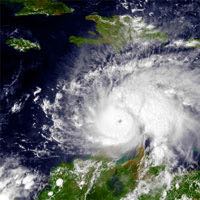 When Hurricane Matthew blasted up the U.S. southeast coast, it definitely ruffled more than feathers. On October 6, Fort Wilderness, the RV park at Disney World, shuttered, asking RVers and tenters to vacate by 11:00 am. Nevertheless, newspapers reported on October 8 that at least some snowbirds weren’t rattled, and were proceeding toward the Sunshine State for their winter retreat, hurricane or not. Other RVers, however, took their rigs to Tallahassee, and as of last Monday, had turned a local Walmart parking lot into an ersatz refugee center, along with some folks reportedly tenting and others sleeping in their cars, when local motels were full to the brim. Sadly, as of Friday, at least 44 people lost their lives across five southeastern states due to the hurricane.
  Montana State Parks officials say they’re between a rock and a hard spot, and Painted Rocks may be the rocks that go. With the largest inventory of park lands for any state in the area, Montana’s system struggles with a budget of less than 70 percent of other park systems. Keeping up with the demands of the land, officials now say they may cut loose Painted Rocks State Park near Hamilton, dropping management of the land owned by another state agency. If the park closes, it will take with it room for 25 RVs.
 Keep up with RV Industry news
 RV accent lighting is all the rage! Just look around the RV park! Enter Boogey Lights®! These robust, super-bright, state-of-the-art LED lights with hi-tech controller technology represent the next generation in LED lighting for RVs. The AWNING & UNDER-GLOW LIGHT KITS are specifically designed to withstand harsh operating environments. Don’t waste your money on junk! Get Boogey Lights! You can even control them with your Smart Phone!
 RV Armor has tough skin!
 Modifying your RV toilet for a better fit
 Homer Simpson buys a motorhome
 Get ready to laugh as Homer Simpson and the family head over to “Bob’s RV Round-Up” to buy a new RV. Salesman Bob introduces the family to the “Ultimate Grand Behemoth.” Alas, when it comes to financing the giant RV, Homer runs into problems. Many RVers who bought an RV off a dealer’s sales lot will appreciate Homer’s experience.
  Where to RV boondock for free on public lands
 The Family Motor Coach Association (FMCA) is THE “best club, hands down, for motorhome owners.” That’s the word from RVtravel.com editor Chuck Woodbury who has been a member for 25 years! The group has many local and special interest clubs, national rallies, valuable member-only web content, and a wonderful monthly magazine (printed and/or digital). A normal first-year membership is $60 per family, but FMCA is offering a special rate of $50 to RV Travel readers who click this link to join.
 No Shock Zone, Part Four

 Avoid moisture damage to your RV

 Liquefy solid wastes in sewer holding tanks
 It’s hard to believe that an electric space heater could use a mere 200 watts — the same as a couple of light bulbs —a fraction of other space heaters. And this one really works! It’s meant to heat a nearby person, not a room (although it will keep the chill off a small bathroom). Put it on your desk or at your feet. It’s perfect for the RVer who’s “always cold.” Click the video by RVtravel.com editor Chuck Woodbury.

 Conserve space with this Collapsible Over-The-Sink Dish Rack. It’s perfect for your RV kitchen. When collapsed measures: 12.4″ x 14.5″ x 1.9″and when expanded measures: 12.4″ x 14.5″ x 5.1″. The RV Travel motorhome uses this in its kitchen.
  RV Electricity
 I am enjoying your series
  Mike Sokol is an electrical and professional sound expert with 40 years in the industry. Visit

 Casino Camping: Guide to RV-Friendly Casinos

 Endorsed by Roger Marble of RVtireSafety.com!


 Easily clean those
 Riding the rails! Tourist Trains Guidebook
 This TV would have been state-of-the-art when it debuted in 1949 — a far cry from the huge high-definition models of today. Still, to youngsters at the time, watching Howdy Doody on it in glorious black and white was a magical experience! The Howdy Doody Show, by the way, ran from December 1947 to September 1960. And in case you didn’t know, Howdy had 48 freckles — one for every state in the then-USA.
  Microwave cover collapses for easy storage
 When heating your food you don’t want to spend 10 minutes later cleaning the splatters inside the microwave. Here’s the solution — perfect for RVers: It pops down flat for easy storage. Lid perforations allow steam to escape to keep food moist. Doubles as a strainer!


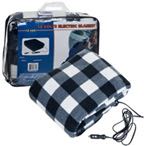 Stay warm with this 12-volt Warming Blanket
 Prevent hose crimping and strain
 Stupid Statements


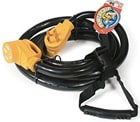 Don’t come up short
 Trivia
 Keep rodents out of your RV!


 An RVtravel.com reader named Daniel wrote with this question: What do folks do about medical care when full time RV living?
 As more RVing snowbirds hit the road, turning the season into “tour time,” there can be an unexpected bit of financial reckoning. Even as gas prices are still pretty reasonable, there’s still a possible snake-in-the-grass waiting for you at the fuel pump: Debit card holds.


 One of the things we appreciate about RVtravel.com readers is that variety of opinions, and that so many of you are ready to let us know how you feel about something. We’ve had our share of feedback on things we’ve written – not always commendation, but thank heavens, more of that than the other – and we’re always happy to hear from you.
 I keep two gallons of RV antifreeze on hand in case needed. The last few weeks I have watched it carefully. At 9° F it is mostly slush and almost not flowing at all. At -20° F it does not flow at all and is nearly as hard as water. I have two campers winterized, I thought, with this. I hope I still have plumbing out there. Anyone else who observed this? Think all will turn out OK? I would like opinions on best brand for future reference. —Dan
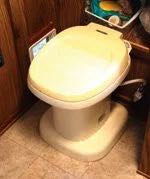 To get the ball rolling, we thought we’d dip into our personal experience. As age has crept up on us, so have the little troubles that come with it — sore joints, weaker muscles. Sad to say, one “room” in our RV has been hit hard — the bathroom. It seems it’s getting a bit harder to get on and off the throne. Too often RV toilets are on the short side, but we found a relatively inexpensive upgrade that really helps is to install a riser to give yourself a bit of a lift. We’ll walk you through your own “game of thrones.”
 Likely the old toilet flange seal will be hanging onto the toilet for dear life. Too bad! Pull and toss away the old seal and clean up the bottom of the toilet. You’ll also remove the old toilet hold-down bolts; they are useless for the new installation. Clean up the bottom of the toilet and install the new flange seal.
 As mentioned, the new riser fits on the floor — and you’ll find new flange bolts which pass completely through the riser, then into the toilet. Instructions in the kit advise which of the two sets of bolts you’ll use. You’ll also find two flange seals. Again, if you’re installing a Sealand toilet, you’ll use your own new Sealand seal; otherwise put one of the new flange seals from the kit on the bottom of your toilet flange. This gasket forms a new seal between the base of the toilet and the top of the riser. You’ll also install a new seal gasket over the flange on the bottom of the riser. Here you’ll use one of the seals from the riser kit.

 FOREST CITY, IOWA, October 13, 2016 – Winnebago Industries today reported its financial results for its fourth quarter and full year fiscal 2016, less than two weeks after announcing it has signed a purchase agreement to acquire towables manufacturer Grand Design.