Dear RV Shrink: We are considering buying a Class C motorhome and doing some traveling. We have no clue on what to expect, what we might need, or how to go about making a buying decision. My wife says we just need to go ahead and take action. I am more cautious. She says I study things to death, but I just don’t want to spend a pile of money and find out two weeks into our trip we bought the wrong darn thing.
Can you give us any advice? It’s turning into an argument every time we go RV shopping. —Studious in Standish
Dear Studious:
There is nothing wrong with figuring out all your options before pulling the trigger. Everyone will have different needs, fears and confusion when trying to decide what will fit their needs in this RV lifestyle. I think one great way to try it out would be to rent a motorhome for a week or more and visit a popular area of great camping. Since I am sitting in Capitol Reef National Park writing this, Utah comes to mind. The state of Utah has done a bang-up job of promoting itself. Capitol Reef (along with all the other National Parks in Utah) visitation is up twofold in the past five years. A huge fleet of rental motorhomes reside just down the road in Vegas. People from all over the world fly into Las Vegas, rent a motorhome and head for Utah.
I suggest this busy area because it gives you the opportunity to experience campground bingo at the same time you are trying to figure out what rig would work best for you. You will learn how hard it is to explore these areas without a smaller tow vehicle (toad), how hard it is to snag a campsite without a reservation, and many other situations that exist, and at this point you have no clue.
I think my biggest caution in using a rental unit would be sanitation. I would ask the rental company what their policy is on sanitizing units on their return. If not convinced it’s proper, I would do my own freshwater tank sanitizing. I find it very common at campground dump stations to see people, with no idea how things work, filling tanks with non-potable water, doing their dishes right at the dump station, not rinsing any equipment they use, and using the same water hose to rinse the sewer hose and fill.
In Yellowstone I pulled up behind a Chinese delegation that seemed to be having a jolly time laughing and trying to figure out the dump technique. I tried to help, but seemed to be confusing them more than helping. All five of them kept signaling to me that they had it under control. I sat for fifteen minutes and watched them do every crazy thing I have ever witnessed in the past and then some. I sure wouldn’t want to be the next rental customer on that rig.
Other than that, I think a rental week could open your eyes to many questions you may not even have at this point, and answer many you do. —Keep Smilin’, Richard E. Mallery a.k.a Dr. R.V. Shrink
(October 9, 2016) — California Highway Patrol officers are seeking witnesses to a motorhome crash in northern Petaluma Sunday that left the RV flipped onto its roof and crushed around three occupants.
Firefighters cut the driver free, who was pinned between the ground and his seat. All three were taken to a hospital for evaluation and were treated for minor injuries and released. From the photo you wonder how any survived.
According to CHP officer Jon Sloat, the driver reported he was cut off by another vehicle and lost control when he swerved out of the way. Sloat has asked anyone with information regarding the crash to call (707) 588‑1400. For the full story and more photos, click here.
By Bob Difley
The Chemical Guys Foam Blaster 6 Foam Gun is a fun and easy tool for washing any vehicle. Using the power of a garden hose, the Foam Blaster 6 Foam Gun creates super suds that help loosen dirt, road grime, and filth for a perfect washing experience.
The innovative Foam Blaster 6 was designed for high-performance washing. Simply add 2 ounces of your favorite shampoo to create car wash foam. The Foam Blaster makes washing any car, truck, motorcycle, boat, and RV fun and easy, allowing the foam to creep into the tightest spots to remove dirt and grime.
The durable construction is built to perform and last for years. Included with the Foam Blaster 6 Foam Gun is the precision spray handle that allows you to quickly rinse your vehicle with the easy-to-use trigger handle.
Dear Gary, I keep my 29-foot Dutchmen Class C parked under my pole barn. It’s plugged in for power but nothing else is hooked up. I’ve just noticed that when I turn on the water pump, it pumps gallons of fresh water out through the park water hose inlet. It’s emptying my fresh water tank. When I turn the pump off, it stops. The pump is only a few years old. I would appreciate any guidance. Thanks! —Jim
Dear Jim,
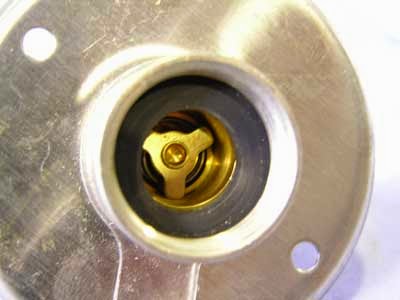
All RVs have at least two backflow preventers (check valves) in the fresh water plumbing system. Some RVs have three and some actually have four backflow preventers. Every RV has one at the city water inlet which allows water to flow from the campground into the RV. The backflow preventer at the city water inlet has obviously failed in the open position. It will have to be replaced, or at least a new one installed right behind the existing one.
Since it failed in the open position, it’s not really necessary to remove it (though it’s advisable if you can). A new backflow preventer can simply be installed just inboard (downstream) of the old one. That will prohibit water pushed by the onboard pump to be forced out the city water inlet. Actually, it’s not a difficult task for the average handyman to accomplish in a few minutes … once you gain access to the rear of the existing check valve.
Learn about RV camping, RV travel, RV news and much more. This newsletter, now in its 16th year of continuous publication, is funded primarily through advertising and voluntary subscription contributions from our readers. Thank you!
Issue 763 • Week of Oct. 8–14, 2016
Editor’s corner With Chuck Woodbury Chuck (at) RVtravel.com
This is a photo of a new diesel motorhome from Thor called an Aria. It has three TVs (or an optional fourth if you can’t get by with three), and a king-size bed that tilts up at the headboard so you can watch TV without wasting your time propping up pillows. It has two bathrooms and a stackable washer-dryer.
“Luxury is evident with high-gloss hand-crafted Amish cabinetry and hand-laid porcelain tile floor throughout the coach,” reads the Thor news release. “Soft leatherette seating and an electric fireplace provide a warm environment to lounge or entertain guests. Solid surface countertops, decorative tile backsplash, and residential appliances in the kitchen have plenty of space to cook and make cleaning up easy.”
So, okay, this is not your average camper van.
Tilting bed. Push a button and it rises up near the headboard.
Through the years, I’ve met people who never spent a night in an RV and never plan to. “I don’t like to camp,” they say. Now, you tell me: Traveling with this Aria — or any similar RV — is that camping? I mean, really?
MOST BUSINESSES operate with the following idea in mind: Bigger is better. In the RV industry that often means each new model year there must be more slideouts, more TVs, more bathrooms — more gadgets to be packed in. So more sales (hopefully).
Tiny, basic kitchen. Not!
When I compare the Aria with the 15-foot travel trailer I camped in when I was a youngster, I realize how far recreational vehicles have come. Every year in the decades that have passed, RV makers have added features.
That Field and Stream trailer of my youth had no bathroom, no holding tanks, no slideouts, no TV, no AC — not even a heater. My idea today of camping is based largely on my experiences with that trailer, and the tent trailer before it. Those primitive RVs were where my family and I slept and ate some of our meals. Mostly, we spent our time outdoors.
My mother in front of the Field and Stream in the late ’50s.
I cannot associate the Aria with the word “camping.” You do not camp in it. You live in it. The basic difference between living in a house and living in the Aria is the Aria moves.
MY THINKING ABOUT ALL OF THIS — based on the “bigger is better” idea — boils down to a question: What newfangled RVs will we travel with ten years from now? Face it, every workday, RV maker big shots are sitting around big, round conference tables dreaming up new ways to further “gadgetize” their next year’s models. Three bathrooms are on the way, I just know it. Dishwashers will be far more common.
The people who build RVs will not stop adding new features. They can’t. It’s in their DNA. And every year that passes, with each new innovation, the word “camping” becomes even less appropriate in describing what you do with these rigs. At least to me.
It’s hard for me to imagine what’s in store for us in the next ten years.
•Good RVs, bad RVs: There’s been a lot of talk lately on this website about the often bad quality of today’s RVs. More than 260 of you have commented, many with horror stories. Last week, I asked you to comment if your experience with your RV was GOOD, not bad. About 150 of you responded. So, the good news is there are plenty of quality RVs being produced today. The bad news is that there are plenty of bad ones, too. The moral of the story: Shop carefully and smartly.
•My 2008 Winnebago View motorhome is still for sale. It was a great RV for me (just too small for my new full-time RVing life). Learn more about it.
•Headed outta Dodge: It’s been six weeks since I moved out of my condo into my new motorhome. Gail and I are still in the Seattle area, wrapping up odds and ends. We will hit the road from Seattle on Oct. 16. Our first two stops, a week each, will be in Eugene and Florence, Oregon. If you know of something we shouldn’t miss, please let me know.
Is this newsletterworth 10 cents to you? Our staff works hard to bring you a valuable newsletter every Saturday. Readers help make it possible with their voluntary subscriptions. Even a pledge of $5 a year is appreciated — that’s less than 10 cents an issue! Many readers pledge more — $10 a year is less than 20 cents an issue! Your contributions make it possible for us to write about important matters, not just fluff to make advertisers and RV industry big shots happy. Enter a voluntary subscription.Use a credit card, PayPal or mail a check.
Good Sam CEO:
“I hate motorhomes.”
Good Sam Club and Camping World CEO and Chairman Marcus Lemonis, on the day of Camping World’s IPO Friday, its first day of trading, told CNBC he “hates motorhomes.” Why? Read more.
Happy Birthday! Happy Anniversary!
Wish your special someone a Happy Birthday or Happy Anniversary and we’ll post your well-wishes and your short comment right in this newsletter. It’s super easy to leave your greeting. Just click here. Remember to send them in prior to the Saturday before the big event.
See this week’s greetings near the bottom of this newsletter.
Reader RVs
What RV do you drive or tow? Send us a photo of your RV (and tow vehicle) with a 150-200 word description of where and how often you travel with it, and what you like or don’t like about it. Include your name(s) and hometown. We’ll post them to RVtravel.com. Send to assistant editor Diane McGovern at Diane(at)RVtravel.com .
CLICK HERE to see the last issue of RV Travel Reader RVs.
Light up your RV with Boogey Lights! RV accent lighting is all the rage! Just look around the RV park! Enter Boogey Lights®! These robust, super-bright, state-of-the-art LED lights with hi-tech controller technology represent the next generation in LED lighting for RVs. The AWNING & UNDER-GLOW LIGHT KITS are specifically designed to withstand harsh operating environments. Don’t waste your money on junk! Get Boogey Lights! You can even control them with your Smart Phone! Learn more or click the video for a demonstration.
Used RV values at auction in September turned some interest. According to industry watcher Black Book, the motorized segment pulled a fast one, with average sale prices jumping nearly 6 percent from that of August, coming in at $42,052. Sales volume was up a whopping 34 percent. Towable RV sales maintained a steady rate, dipping a slight 4 percent in volume from August, selling at an average of $11,688, down a little more than 2 percent.
Winnebago announced Monday that it will acquire Grand Design, a manufacturer of towable RVs. Once the deal goes through, only three companies – Thor Industries, Forest River and Winnebago – will control more than 80 percent of all RV manufacturing. Read more.
Long Beach, Calif., city officials have already created ordinances to limit RV parking in certain areas of town. Now they’re working on a uniform ban on RV parking on streets throughout the city without a permit. No street or alley parking for more than 48 hours. Out-of-town RVs would be required to have a daily parking permit. The city figures it will cost more than $1 million just to put up regulatory signs.
Walmart has announced it will open fewer stores next year than in the past to focus more on online sales — so fewer new locations for RVers who sometimes stay overnight in the stores’ parking lots.
Indiana camping on your mind? Between now and November 2, you can save 20 percent at all state parks and state-parks-managed lake campgrounds, Deam Lake and Starve Hollow state recreation areas, as well as Greene-Sullivan State Forest. The discount applies on Sundays through Wednesdays only. To take advantage of the offer, book at camp.IN.gov or call (866) 622-6746 and use the promo code INFALL16.
Are you an active duty military service member or a dependent? If you’re thinking about buying an RV, the Department of Defense (DoD) may be putting your purchase under the Military Lending Act. A recent DoD directive suggests that RVs may be subject to that act — but the RV industry is awaiting clarification. If it applies, then several things will come into play. Interest rates can be no more than 36 [not a typo] percent on the loan. You won’t be subject to binding arbitration, nor will you have to sign waiver-of-rights clauses.
Are you a Family Motor Coach Association (FMCA) member? In case you missed our recent announcement, mark your calendar — FMCA’s 96th International Convention is slated for July 12–15, 2017. The Indiana State Fairgrounds is the location, and last time that venue hosted the show about 2,000 families turned up. Registration for the shindig will open in late winter.
For more than 100 years, the U.S. Forest Service has acted as a guardian of public lands – often with a view toward controlling access to those lands. Now the agency says it has a new goal: Increase public access to the land. On September 28, agency officials met with outfitters and recreation industry leaders to discuss changing the agency’s age-old “controlling” viewpoint to one of opening the gates to more recreationists, initially make it easier for special interest users like rafters, rock climbers, and commercial guides to get permits. How it will translate for RVers remains to be seen.
Thor Motor Coach is recalling certain model year 2016-2017 Four Winds and Chateau motorhomes manufactured June 16, 2015 to April 29, 2016. The affected RVs are equipped with a spare tire bracket that may loosen and detach during vehicle operation. Learn more.
From “Driving Miss Norma” on Facebook.
We’ve reported on the saga of “Driving Miss Norma,” 91-year-old Norma Jean Bauerschmidt who, on being diagnosed with terminal cancer a year ago and just days after the death of her husband of 67 years, didn’t take it lying down. Instead of opting for treatment, Norma’s son and daughter-in-law loaded up Miss Norma in their motorhome for an extended tour of the United States. The family documented the incredible journey on their “Driving Miss Norma” Facebook page (with almost a half-million “Likes”). We sadly add, Miss Norma passed away September 30 – in her bed and, appropriately, in the family motorhome.
Three Waters Campground, a popular fishing hole and campsite near Muncie, Ind., is closing down after 115 years. Owner Richard Waters blames overzealous state inspectors for dunning him, while Indiana officials said Waters’ choice is his own. The state recently filed suit against the campground over cited violations including substandard waste water disposal, an improperly designed dump station, unsafe electrical, etc. Rather than fight, Waters is closing the gate.
Reduce air drag and boost fuel efficiency — Airtab® your RV! Just peel and stick Airtabs™ to the rear sides and the rear roof of your RV coach or trailer to create swirls of air that reduce aerodynamic drag, save fuel and improve stability. Airtabs™ dramatically reduce trailer ‘fish tailing’ and crosswinds pressure to RVs from passing trucks, while improving fuel efficiency 2% – 5%! Click on the video.
It’s the stuff of an RVer’s nightmares: A sleep-deprived long-haul truck driver, barreling down the freeway, headed straight for their motorhome. Well, here’s the stuff that long-haul truck drivers’ nightmares are made of: The Obama Administration has released guidelines that in the view of the truck driving industry might remove that sleep-deprived driver from the cab and replace him with a robot. Yep, now the feds are interested in autonomous 18-wheelers cruising America’s highways. Is there a droid coming to your driver’s seat?
Three brand-new luxury RVs worth almost $2 million were stolen Tuesday night from Transwest Truck Trailer RV in Frederick, Colo. Anyone with information is asked to call Frederick Police at (720) 382-5700. Source: 9NEWS.com. Click here for larger view of RVs.
A fire at what’s listed as a paint and body shop in Garden Grove, Calif., did some serious damage to three RVs. At least 50 firefighters were called in to stop a fire at Pacific RV Paint. Reports are that the fire started outside in an RV, spread to two others, then on into a building. For a time a nearby street was closed out of concerns about possible hazardous materials at the plant. Estimated damages? $1 million.
A couple of dozen Lockport, Ill., residents are pretty annoyed with their city council. Reports are that 30 residents appeared at a recent council meeting to ask the city council to back off plans to enforce an ordinance that puts size limits on RVs parked on private residential property. “No dice,” was the answer. They basically said, “Move your big rigs out by November 1 or face fines.” All this despite the plea of the public.
The DNA of bears in the Great Smoky Mountains National Park (N.C.) may help get them off the hook — if they aren’t the crook. Last May a tent camper woke to find a black bear biting through his calf. He managed to get free and escape, and rangers had three “suspects” in mind. However, DNA testing of bear saliva left at the “crime scene” proved none of the three was responsible. Rangers say the quick (7-hour) test result returns may save the lives of innocent bruins.
Northwest RV Sales Inc. of Salem, Ore., has shut down after an Oregon Department of Transportation (ODOT) investigation into customer complaints. A news release from ODOT said the company agreed to pay an $8,000 fine and give up its dealer certificate for three years. Without a license, the business is effectively shut down, according to Oregon DMV spokesman David House. —Source: Statesman Journal
Photo: National Park Service
A new national park for Arizona? A movement is afoot to change the designation of Chiricahua National Monument to that of a national park. Legislation has been introduced in Congress to make the change. If it were to pass, the new “park” wouldn’t be any larger than it already is, nor would staff or budget be enlarged. It’d be just a bit more prestigious — and would likely attract more visitors.
Earlier this year, two wolves were shot by park rangers after they found human food in Banff National Park irresistible. Now a Canadian court has fined two men $1,000 each for keeping a messy campsite — which the judge says contributed to the deaths of the wolves. One of the men’s attorneys said it was a case of culture — the man had led a group of about 40 Asians on a camping trip, and says he admonished them to properly dispose of their leftovers. But in their culture, claimed the attorney, food ought not to be wasted, but returned to nature. Hence, food scraps were tossed about in the campsite, attracting “nature” in the form of two hungry wolves.
Excavate an edible fossil, become a junior paleontologist, or search for clues of prehistoric life in a national park on National Fossil Day on October 12. Throughout the country, the National Park Service and partner organizations will celebrate with events and programs that promote public awareness and stewardship of fossils. Learn more.
If you were at “Camp Walmart” in Fountain, Colo., on September 20, you may have witnessed an odd sight. Firemen rushed to the store parking lot in response to a police call about a “suspicious” motorhome. Police said they smelled a strange odor around the rig and asked firemen to look into it. Firemen said they heard a dog inside the rig and refused to go in. Animal control officers fished the dog out of the rig, and officials found nothing suspicious about the rig — with the exception that the plates didn’t belong to the RV. They did, however, match those owned by someone who’d shown a “history of drug use.” With nobody home but the dog, a tow company ended the spectacle by impounding the wayward wagon.
A recent survey of camping habits of British campers in the U.K. revealed that 20 percent bring their grills into their tent to cook when it rains; and 23 percent say they hold nighttime chill at bay by using a barbecue, patio heater or gas stove inside. A whopping 63 percent were unaware that deadly carbon monoxide gas is produced even after a live flame is gone. We hope their American “cousins” are smarter.
Keep up with RV Industry news throughout the week at RVbusiness.com.
No more roof leaks, for life, guaranteed!
Now with locations in TX, FL, MS, AZ and NC!
RV FlexArmor® is a sprayed RV roof that is 187 mils thick, has no more caulking joints and is the proven RV roof alternative for over a decade. Guaranteed not to leak for your RV’s lifetime! “Your company gets an A+.” —Marsha G., customer. Click to see our new video from the FMCA family reunion in Perry, GA. •Click here for more information at our website, or call 1-844-FLEXARMOR. •Click here to visit our Facebook page.
RV weight terminology you should know
When shopping for an RV, everyone has their own ideas of what’s “important,” but the weight of the rig is one thing we should all be concerned about. For rigs manufactured since 1996, the RV industry requires the manufacturer to post an information sheet inside a cabinet in every coach. Here’s a rundown on terms you need to know – and pay attention to. Learn more.
Full-time RV travels: Who really is a full-time RVer?
Want to open a can of worms? Next time you’re sitting around the RV community campfire, ask your friends to define a “full-time RVer.” It’s a subject of great debate. Read more in this first article of a new biweekly series, Full-time RV travels, by Russ and Tiña De Maris.
What is RV boondocking and how to do it DON’T MISS THIS! How would you like to camp in beautiful places in your RV for free, far from the hustle and bustle of RV parks, where you’re squeezed so close to other RVs you can hear their occupants snore at night? If so, then watch this introduction to boondocking by veteran RVer and seminar speaker Dave Helgeson.
Save money this winter — camp on an LTVA
Snowbirding is a happy time for frugal RVers since there are millions of acres of desert open for boondocking at no cost. If you are new to the desert or boondocking, a good way to try out both is to head for one of the Bureau of Land Management’s Long Term Visitor Areas (LTVA). Learn more.
How about some dump station decorum?
For those who spend months camped out on government land outside of Quartzsite, Ariz., you already know most of the drill regarding the sole dump station to serve thousands of RVers at four Long Term Visitor Areas. Most folks act fairly sanely, but at times there are little altercations where somebody who couldn’t stand the wait just had to try and cut in line, or worse. Read more.
Unique RV overnight stops at wineries and farms With membership in Harvest Hosts® you can stay overnight at 500 wineries, farms and attractions across North America. Harvest Hosts offers an exciting alternative to traditional overnight stops where you can meet interesting people and learn about their lifestyle. Learn more at the Harvest Hosts website, or watch an interview with the founders by RVtravel.com editor Chuck Woodbury.
No Shock Zone, Part Three
This is the third episode of a 12-part series about basic electricity for RV users and how to protect yourself and your family from shocks and possible electrocution. In this episode, learn how to test 30- and 50-amp campsite outlets. The information in this 12-part series has saved lives. It’s very important. Take the time to read. If you missed last week’s episode about multimeters and types of electrical connections and outlets, read it here.
Make the most of your countertop storage
As with most RVers, Rich “The Wanderman” is always looking for clever ways to get the most out of the limited storage in his RV. His RV doesn’t have enough kitchen counter space to leave any appliances actually on the counter, but for those who do have some deep counter space, this gadget would be perfect. Read more.
RV tire load capacity Roger Marble of RVtireSafety.com explains how tire load capacity is determined and why it is important to keep adequate pressure in your tires. Watch the short video.
Choose a Class C motorhome or Class B van conversion?
Here’s a question that some new-to-RVing wonder about: “I’ve never had an RV before. I’m intimidated by big vehicles, and I want fuel efficiency but comfort, too. What do you think about a Class B motorhome?” Here are a few things to think about when choosing between a Class C motorhome or a Class B van conversion. Learn more.
Find boondocking sites in British Columbia
Many U.S. boondockers are familiar enough with some of the alternative sources of finding boondocking sites in the Lower 48. But if you’re traveling north of the border into Canada, things can get a little sketchy. If you’re planning on visiting British Columbia, here’s info on a great website to help you find alternatives to costly and over-populated provincial campgrounds. Learn more.
RV Parts and Accessories
Give Dyers a try on your next purchase of RV parts or accessories. Large selection, great service, low prices and fast shipping. Visit our website.
Dump station “engineering” comes up short The old joke about “Did you get your driver’s license at Walmart?” has a new variation as far as Russ and Tiña De Maris are concerned: “Did you buy your engineering license through Craigslist?” As RVers, you’ve probably had a dump station experience like theirs that leads to such a question. Read more.
Is a motorhome over 40 feet too long?
David and Brenda Bott discuss the challenges of traveling with a 45-foot motorhome. Are there roads they cannot travel? How do they know if there are low bridges ahead that would prevent them from passing through? The Botts answer these questions and many more. Good stuff! Watch the six-minute video.
How old is too old (for RV tires)? — Part 2 Last week Roger Marble, RV tire expert extraordinaire, addressed the topic of tire age. Some are still asking why there isn’t a better and clearer age limit on tires in RV use. In Part 2, Roger explains the complexities of what is involved in making the prediction. Learn more.
RV grill connection befuddlement
Chris Dougherty is a certified RV technician. When he served as RVtravel.com’s technical editor, he received a letter from a reader regarding how to hook up his existing grill to his newly purchased RV. He was quite confused and concerned as to the apparent lack of product availability to make this possible. Read Chris’ reassuring response.
‘Best club for motorhome owners!’ The Family Motor Coach Association (FMCA) is THE “best club, hands down, for motorhome owners.” That’s the word from RVtravel.com editor Chuck Woodbury, who has been a member for 25 years! The group has many local and special interest clubs, national rallies, valuable member-only web content, and a wonderful monthly magazine. RV Travel readers who click this link to join save $10 off a new membership.
This week in history
Week of Oct. 8–14 Compiled by Dell Bert
1845 – U.S. Naval Academy opens in Annapolis, Md.
1871 – The Great Fire destroys much of Chicago.
1947 – U.S. Air Force Captain Chuck Yeager breaks sound barrier.
1960 – Nikita Khrushchev throws a tantrum at the UN. (Shoe, anyone?)
1975 – “Saturday Night Live” debuts.
1975 – Bruce Springsteen scores his first pop hit with “Born to Run.”
1997 – John Denver dies in an airplane accident.
2002 – Jimmy Carter wins Nobel Peace Prize.
America’s Largest RV Consignment Dealer Buy or sell your used motorhome, diesel pusher, fifth wheel or travel trailer hassle free at PPL Motor Homes. And check our huge selection of parts! PPL is the largest RV consignment dealer in the USA, selling more than 24,000 consigned RVs since 1972. Visit the PPL website.
RV Club of the Week Here is an RV club we like. We hope you do, too!
GMC Motorhomes International
This is a chapter of the Family Motor Coach Association (FMCA). It’s made up of 21 chapters and more than 1200 owners and enthusiasts of the classic GMC motorhomes produced from 1973 to 1978. Includes Vintage RVing magazine, a parts interchange, conventions and more.
Bumper sticker of the week
Warning: Dates in calendar are closer than they appear!
Funny/clever business slogan
On a shoe store: “So many shoes but only two feet.” —Thanks to Terry W!
Have you seen a funny bumper sticker or business slogan? Send it to Diane (at) RVtravel.com
The New TireTraker™ TT-500 with a Lifetime Warranty The new TireTraker™ TT-500 is the most innovative & user friendly TPMS on the market with an unprecedented “Lifetime Warranty”, the only TPMS company in the industry to do so. The TT-500 features a larger, easier to read display, continuous pressure & temperature monitoring, automatic update, & monitoring up to 22 tires on your motorhome, trailer & tow vehicle from 0-232 psi! Seven day per week sales & technical support & over 12 years of experience. List price (4 tires) $389. Our price only $289. SAVE $100! (Additional Sensors $35 each). Learn more or order. Read testimonials.
Upcoming RV Shows See the Web’s best directory of upcoming RV shows for 2016 and 2017.
Websites of the Week We like these websites. Check ’em out. More next week.
Here’s one site we especially like: Where to find the best view in every state
Space heater uses only 200 watts! It’s hard to believe that an electric space heater could use a mere 200 watts — the same as a couple of light bulbs —a fraction of other space heaters. And this one really works! It’s meant to heat a nearby person, not a room. Put it on your desk or at your feet. It’s perfect for the RVer who’s “always cold.” For about $17, this is a winner. Click the video by RVtravel.com editor Chuck Woodbury. Or order at Amazon.com.
Good reading from RV123.com
• Colorado River Oasis RV Park is the perfect place to relax and enjoy what the iconic waterway has to offer.
• This baked bean recipe has a sweet twist to it. Try it on your next camp-out!
• If you’re planning a trip to Alaska, make sure you check out this video first!
SAVE MONEY! Don’t toss away good batteries! Most RVers rely on battery-powered devices while on the road, whether flashlights, radios or cameras. But sometimes you just can’t tell how much life a battery has remaining so you toss it to “be sure.” This small, inexpensive tester will alert you in an instant to the condition of a battery, saving you money from needlessly tossing ones with plenty of remaining life! Works on AA, AAA, C, D, 9V and button-type batteries. Learn more or order.
Ask the RV Shrink
Seeing through campground reservation “smoke and mirrors”
Dear RV Shrink: We are in Yellowstone National Park and are finding our RV is too big to camp in some of the campgrounds. We tried to make a reservation today at Madison Campground and they tell us we will only fit into a 40-foot-plus site, but there are none available. They combined our total rig length (motorhome and toad) and say we cannot fit in a 30-foot site.
We purposely bought a 30-foot motorhome so we could camp in smaller primitive campgrounds, but obviously we planned wrong. It really makes me mad. This time we have to travel so much farther to see the sights because we do not meet campground size requirements. What do most people find a good length that offers them the best choices of sites? —Mad in Madison
Avoid moisture damage to your RV
DampRid FG50T Hi-Capacity Moisture Absorber, 4-Pound Tub eliminates musty odors in RVs and other spaces, protecting them from moisture damage for up to 60 days in areas up to 1000 square feet, and up to 6 months in a 250-square-foot area. Don’t let your rig get damaged from moisture this winter. Learn more or order.
RV Tech Tips from Mark Polk
Odd-even highways
If you ever get confused about the direction you’re traveling in the U.S., keep in mind that most odd-numbered interstate highways run north to south and even-numbered run east to west.
Mark Polk is the owner of RV Education 101, the premiere source of educational DVDs about buying, maintaining and using an RV. Learn more.
Microwave cover collapses for easy storage When heating your food you don’t want to spend 10 minutes later cleaning the splatters inside the microwave. Here’s the solution — and perfect for RVers: it pops down flat for easy storage. Lid perforations allow steam to escape to keep food moist. Doubles as a strainer, too! Learn more or order at Amazon.com
Latest fuel prices Here are the latest U.S. average prices per gallon of gasoline and diesel fuel: Regular unleaded gasoline: $2.25 (on Oct. 3). Change from week before: Up 2 cents; Change from year before: Down 7 cents. Diesel: $2.39 (on Oct. 3). Change from week before: Up 1 cent; Change from year before: Down 10 cents.
Kill germs when dumping & hooking up You can’t be too careful about picking up nasty germs when hooking up your RV or dumping its tanks. The staff of RV Travel uses a spray bottle of Lysol to kill those nasty dudes on its water hose and water faucets at every campsite and dump station. The spray kills 99.9% of germs on nonporous surfaces & is effective against more than 50 microorganisms. Learn more or order.
RV Travel Reader Pets
Do you travel with a pet? We’d love to introduce your pet(s) to fellow readers. Send a photo or two of Fido or Boots and a 150-200 word description of your furry friend(s), along with your name(s) and hometown to Diane(at)RVtravel.com .
Click here to see the last issue of RV Travel Reader Pets.
Fix it In Foil! Tasty Recipes. Easy cleanup! Easy prep, great taste, good nutrition, quick clean-up! “Fix It In Foil” includes 51 fantastic recipes to make in foil — plus instructions for cooking in an oven, on an outdoor grill, or on a campfire. Fix it in foil and forget about scrubbing pots and pans. And, with plenty of substitution suggestions, enjoy a whole new list of recipe possibilities! Great for RVing! Learn more or order.
The RV Kitchen with Janet Groene
Onion Dip Biscuits Super quick, super tasty.
We’ve probably all tried the old recipe for refrigerator biscuits dipped in onion soup mix. This one is almost as easy, twice as good, and 100% homemade in looks, texture and taste. Serve them hot with butter, herb butter, cream cheese or Cheez Whiz. Just add a mug of soup and supper is served. Get the recipe.
Extend your 12-volt power source Sometimes you need to use a 12-volt device, but the plug is too far away. For less than $8, this is the answer. This extension cord plugs into your cigarette lighter or 12-volt socket to easily extend your reach. Learn more or order.
RV Fire Safety Tip
Electrical safety
Have any wiring in your coach done by a capable electrician, and use common sense in using any electrical aid. Check all 12-volt connections before and after every trip. Most coach fires are caused by a 12-volt short. Courtesy:MacTheFireGuy.com
Editor’s note: Choose from a wide selection of fire extinguishers at Amazon.
Avoid stink!
RV Travel’s favorite
Waste Digester & Odor Eliminator Pure Power Blue has long been the favorite toilet treatment in the RV Travel motorhome. Just add a mere two ounces of the biological enzyme/bacterial formula per 40 gallon black or gray water tank treatment. Accepted at all campgrounds and enhances septic tanks. Highly recommended. Learn more or order.
RV Quick Tips
Meal planning
Prepare more complicated meals when you have full hookups. It’s easy to clean up afterwards because you have plenty of water and no worry about filling up holding tanks. Consider making a double portion and freeze half for a future meal. When boondocking, keep recipes simple, and use paper plates which you can burn later to start your campfire.
Boondocking solar light tip
In order to save our batteries, we use solar lights which you find in lawn and garden centers. We have a couple of pots of petunias outside with a solar light and we bring them in at night and put one in each room. The flowers make our camper smell so nice! A couple of solar lights without the stake can be placed on the table to play cards by or you can put one in the bathroom and one wherever you need a night light. Thanks to Ray Burr at RV Happy Hour.
Freshen your fridge
As a follow-up to our recent Kill lingering RV refrigerator smells article, here are a couple more tips for removing smells from the fridge, such as when you forget to leave your fridge doors open when in lay-up. You may be able to chase that “stale odor” by leaving a small saucer or dish of vanilla on a reefer shelf with the door closed, but don’t forget to dump the vanilla before you travel! Buzzelectric also suggests: “Straight vanilla extract wiped onto the plastic walls of the refrigerator. I’ve been doing this for over 50 years to ice chests.” Thanks, Buzz!
Do you have a Quick Tip? Send it to Diane (at) RVtravel.com and you just might see it here!
Walmart Locator:
Find stores for shopping and overnight stays
This is an invaluable aid for RVers who occasionally spend a night in a Walmart parking lot. State maps identify where the stores are located in the USA. Detailed information includes city or town where each store is located, type of store (Walmart or Supercenter), availability of gas and diesel fuel, distance from Interstate if within 10 miles, and more. Published 2016. Learn more or order.
Ask the RV Doctor The RV Doctor, Gary Bunzer, answers your questions
Maintaining the RV heating system All too often Gary receives frenetic correspondence from coach owners suffering from a malfunctioning furnace, stuck in the midst of their travel, relying perhaps on a small, inefficient space heater, shivering under a heating blanket, wondering what they might do. At that point, his sage but simple advice would be to add another blanket! However, with a little forethought and a few preventive steps (performed now, before Old Man Winter awakens from his respite), you can enjoy those crisp mornings and evenings in comfy warmth, year after year.Learn how in Gary’s article.
JUST PUBLISHED! Essential for big RVs! 2017 Rand McNally Motor Carriers’ Road Atlas If you drive a big RV — extra long or extra tall — then this truck driver’s road atlas will be a huge help in knowing where you can drive without encountering a low bridge or getting stuck hanging over a cliff. This is an essential aid even if you have a GPS! Coverage: United States, Canada, and Mexico. Learn more or order.
Gizmos and Gadgets
Tiny Matador sack converts to day pack A backpack, like similar products, takes up valuable storage space when not in use — yet, when you need one, nothing else will suffice. Matador has come up with a pint-size product that performs like a full-size model. This weatherproof 16-liter backpack is ideal for day trips and excursions, with expandable space. When not in use, the 4.1-ounce backpack packs up to the size of an apple. Learn more.
Easy way to level your RV! The RVtravel.com motorhome packs along two of these and, boy, are they handy! Camco’s RV Yellow Tri-Levelers are designed to raise the RV up to 3-7/8″ on any tire for a more level position. The lightweight levelers are durable and have a resin non-slip surface with a load capacity of 3,500 pounds. Learn more or order for a great price!
Upcoming RV Shows
• Detroit Fall Camper & RV Show, Oct. 5-9, Novi, MI • St. John’s Fall RV Show, Oct. 6-9, Elkton, FL (POSTPONED due to Hurricane Matthew) • Tacoma Fall RV Show, Oct. 6-9, Tacoma, WA • North Carolina RV Dealers Association RV Show, Oct. 7-9, Greensboro, NC • California RV Show, Oct. 7-16, Pomona, CA • Oregon State Salem Fall RV Show, Oct. 13-16, Salem, OR • Fall RV Show & Bargain Expo, Oct. 13-16, Oklahoma City, OK • Toronto Fall RV Show & Sales, Oct. 14-16, Mississauga, ON, Canada • Austin RV Super Sale, Oct. 14-16, Round Rock, TX • Oregon State Eugene Fall RV Show, Oct. 21-23, Eugene, OR
See the list of all upcoming RV shows.
Essential equipment for many RVers! Camco TastePURE Water Filter with Flexible Hose Protector This best-selling product reduces bad taste, odor, chlorine and sediment in drinking water with a 100 micron fiber filter. Its durable in-line, exterior mount filter has a wider body to increase flow. Use it at your campsite to keep sediment out of your RV water tank and to improve the taste and smell of your drinking water for a whole season. Many RVers consider this essential equipment. Learn more or order at a big discount.
RV Short Stop
Heceta Head Lighthouse Florence, Oregon With ghostly things on our minds this Halloween season, here’s an idea about a place to experience your very own haunting. At the Heceta Head Lighthouse in Florence, Oregon, guests can stay at the old lighthouse keeper’s quarters, now a B&B, where they could meet Rue, the wife of 1890s lighthouse keeper Frank DeRoy. As the story goes, Rue’s daughter met a tragic death there. Guests have reported the scent of flowers or rose perfume out of the blue, or seeing an imprint on their bed that seemed to have just happened. Some call the lighthouse one of the most haunted in the U.S.; others just call it spirited. Photo by Melissa Campbell, courtesy Oregon Tourism
Keep insects and bird nests out of your RV furnace Wasps, mud daubers, birds and rodents pose a serious threat to the furnace on your RV. They can enter through the furnace vents. Their nests can interfere with air flow and cause serious damage. Camco 42141 (Model FUR 200) Flying Insect RV Furnace Screen fits Duo-therm and Suburban furnace vents. Camco offers several furnace screens so check that this screen will fit your vent. Learn more or order at Amazon.com.
Joke of the Week
Joe and Ed, both from Duluth, Minnesota, were standing in the shallow end of a swimming pool while wintering at the Fountain of Youth RV park at California’s Salton Sea, discussing how happy they were to be in sunny California rather than being back in frigid Minnesota. As they were talking, Ed noticed something funny about his friend’s ear. “Joe,” he said, “do you know you’ve got a suppository in your left ear?” Startled, Joe replied, “Did you say I have a suppository in my ear???” “That’s right,” said Ed, “you have a suppository in your ear.” Joe immediately pulled it out, then said, “Thanks, buddy. I’m glad you saw this. Now I know where I put my hearing aid.”
Prevent hose crimping and strain . . . and extend RV hose life This 90-Degree Hose Elbow eliminates unnecessary stress and strain on all RV water intake hose fittings. The elbow, with an easy-grip connector, is made of brass and is lead-free. Learn more or order for a great price!
Videos you’ll like
•How to install an adjustable water heater thermostat Gary Bunzer, the RV Doctor, shows you how to get complete control over the temperature of the water delivered to the hot faucets in a motorhome. Many RVers complain that their water is too hot. Watch the video.
•Make sure you know this when buying a tire warranty RV tire safety expert Roger Marble offers advice about one very important thing to know when buying a tire warranty, whether for a car or RV. Your warranty could prove worthless if you don’t pay attention to this. Watch the video.
Visit our YouTube Channel.
More than 500 great videos about RVing!
Random RV Thought Hang the keys to your RV or tow vehicle on the TV ceiling crank when the antenna is up. The next morning before you drive away, you will find the keys there — a reminder to retract the antenna.
Trivia
Natural blond hair is rare in adults, with reports stating that only 2 percent of the world’s population is naturally blond and is most commonly found in persons of European ancestry.
Worth Pondering
“Once you have traveled, the voyage never ends. The mind can never break off from the journey.” —Pat Conroy
Readers’ Birthday and Anniversary Greetings
Happy Birthday! • October 12: To Nancy from Bruce Richardson. Happy Birthday my Love, thank you for being my life these 45+ years. My travel partner to cover the miles we have covered and the miles to yet come. May you have a great great day and enjoy your twin lobsters. I love you Hon.
Happy Anniversary! • October 8: To Linda from Wayne Moss. Happy 50th anniversary, honey … Hope to enjoy many more with you. Love, Wayne
• October 10: To Marie from Ken Lailer. Happy 40th Anniversary to my wife & best friend. Love Always, Ken
RV Travel staff Editor and Publisher: Chuck Woodbury. Assistant editor: Diane McGovern. Contributing editor: Russ De Maris. Contributing writers: Greg Illes, Bob Difley, Richard Miller, Richard Mallery, Janet Groene, Roger Marble and Julianne Crane.
ADVERTISE on RVtravel.com and/or in this newsletter. Contact Chuck Woodbury at Chuck(at)RVtravel.com.
About the RVtravel.com editor Chuck Woodbury has explored America by RV for three decades. In the ’90s he published the quirky travel newspaper Out West, and was an “on the road” writer for the New York Times Syndicate. His book, “The Best from Out West” is available at Amazon.com. Woodbury’s RVing adventures have been profiled on ABC News, CNN, NBC’s Today Show, and in People Magazine, USA Today and in hundreds of newspapers. He is the host of the Better Business Bureau DVD “Buying a Recreational Vehicle,” the definitive guide to purchasing an RV the right way.
Everything in this newsletter is true to the best of our knowledge. But we occasionally get something wrong. We’re just human! So don’t go spending $10,000 on something we said was good simply because we said so, or fixing something according to what we suggested (check with your own technician first). Maybe we made a mistake.Tips and/or comments in this newsletter are those of the authors and may not reflect the views of RVtravel.com or this newsletter.
Our offices are located at 610 5th Ave. S, Suite F, Edmonds, WA 98020.
This website utilizes some advertising services. Sometimes we are paid if you click one of those links and purchase a product or service. Regardless of this potential revenue, unless stated otherwise, we only recommend products or services we believe provide value to our readers. Amazon and the Amazon logo are trademarks of Amazon.com, Inc . RVtravel.com is a participant in the Amazon Services LLC Associates Program, an affiliate advertising program designed to provide a means for sites to earn advertising fees by advertising and linking to Amazon.com.
RVtravel.com includes links to other websites. We cannot control the content and/or privacy policies of those sites. Please be aware when you leave this newsletter or any other section of RVtravel.com to read the privacy statements of any of those websites that collect personally identifiable information. Our own privacy policy applies only to RVtravel.com and its affiliated blogs.
(Friday, Oct. 7, 2016) — Good Sam Club and Camping World CEO and Chairman Marcus Lemonis, on the day of Camping World’s IPO and its first day of trading, told CNBC he “hates motorhomes.”
“We don’t like motorhomes because they don’t turn as fast, they’re not high margin,” he said on Friday when talking about the future of Camping World. “We sell them, but they are not big for us. It’s really about selling warranties, insurance, roadside assistance, service, parts.”
Lemonis told CNBC that about 3.3 million RVers of an estimated 9 million in the United States, “have given us money in the last 24 months.”
With 11.4 million shares, Camping World’s initial public offering Friday raised $251 million. It’s trading on the New York Stock exchange as CWH.
Gary Bunzer, the RV Doctor, shows you how to get complete control over the temperature of the water delivered to the hot faucets in a motorhome. Many RVers complain that the water is too hot. Gary shows how a gas water heater works, then explains Atwood Mobile Products’ service kit that includes an adjustable thermostat. The kit is available as a retrofit to Atwood propane water heaters. So, swap out the original, non-adjustable thermal limit switch for an adjustable thermostat.
Thor Motor Coach is recalling certain model year 2016-2017 Four Winds and Chateau motorhomes manufactured June 16, 2015, to April 29, 2016. The affected RVs are equipped with a spare tire bracket that may loosen and detach during vehicle operation. If the spare tire bracket and spare tire detaches, it could be a road hazard, increasing the risk of a crash or injury.
Thor will notify owners, and dealers will install carriage bolts to properly secure the spare tire bracket, free of charge. The recall is expected to begin October 17, 2016. Owners may contact Thor customer service at 1-877-500-1020. The number for the recall is RC000122.
By Chuck Woodbury I had a dentist appointment today at 8 a.m. That meant getting into Seattle rush hour traffic. I have spent my life avoiding such traffic, and done pretty well. In all my working years, I bet I have been forced to commute in rush hour traffic no more than a few dozen times. When you figure that some people drive an hour going to work and then another hour coming home. . . my math says that’s about 500 hours a year — three weeks — stuck in traffic. That’s nuts!
What got my attention this morning besides the traffic was a drive-up line at a Starbucks I passed. Eleven cars were lined up. Eleven! If you figure two minutes per order, that’s more than 20 minutes some of those people waited — cars idling, fuel burning — all for a cup of coffee!
Can you fathom why anyone would do such a thing — wait that long? I can’t. My policy is that if there are no cars in a drive-up window or maybe one, I will go ahead and drive on up. Otherwise, I park, go inside, and usually get out a whole lot faster than if I’d stayed in my car.
By Gary Bunzer, the RV Doctor If you are wont to travel in your coach during the chilly fall or early spring months, or if you are a serious winter RVer, then you fully understand the importance, convenience and satisfaction of having a fully functioning RV heating system. If not, spend an involuntary cold night in temperatures near freezing or below without heat and you’ll soon wish you did have that understanding! Unlike the cozy warmth of a well-insulated and heated conventional home, the typical RV lacks the depth or robustness of residential-style insulation and the advantage of multiple layers of construction materials separating you from the rage of a cold wintry night.
All too often I receive frenetic correspondence from coach owners suffering from a malfunctioning furnace, stuck in the midst of their travel, relying perhaps on a small, inefficient space heater, shivering under a heating blanket, wondering what they might do. At that point, my sage but simple advice would be to add another blanket! However, with a little forethought and a few preventive steps (performed now, before Old Man Winter awakens from his respite), you can enjoy those crisp mornings and evenings in comfy warmth, year after year.
Over the course of RV history there have been a few different types of heating systems employed, but today’s coaches are equipped typically with at least one, if not a couple of direct-spark forced air furnaces or a hybrid system using hydronic heat for both hot water and comfort heating. Earlier coaches were outfitted with radiant heaters, often better quantified as gravity heaters, or in the case of much smaller RVs, catalytic units. Catalytic is still a viable option for the smaller pickup campers and towables even today.
Other antiquated combo permutations that date back to the 1970s include a combination heater/stove/oven (Duette), and a heater/water heater amalgamation (Thermal Twin); both nightmares to service because of their compactness and individual quirkiness. I’m sure the younger RV technicians today are dumbfounded when one of these old combo units rolls into the service bay!
The first thing to understand is that all recreation vehicle LP-burning appliances, for optimum performance, require some degree of annual maintenance. Just read any user’s guide from any RV appliance manufacturer and it will often state, in so many words, that very sentiment. And because of its design and operational characteristics, regular maintenance of the RV heating system is a must.
Today’s larger rigs can enjoy never-ending hot water and multiple heating zones provided by hydronic heating units. Hydronic heating systems provide a continuous supply of hot water for the fresh plumbing system plus comfort heat for the interior. Employing a diesel-fired burner or a propane burner, combined with 120-volt AC heating elements, these types of “on-demand” systems are much appreciated and handy for those slightly chilly mornings. The diesel or propane burner can be bypassed using heat supplied by an electric heating element, thereby conserving on-board fuel.
About the only regular maintenance required by the owner is to keep an eye on the level of the 50/50 (water/anti-freeze) solution in the reservoir tank. Additionally, diesel units require an annual cleaning of the fuel nozzles and a new fuel filter, while the propane-fired units require an annual cleaning and servicing and delivery source pressure testing like any other propane appliance. Aside from checking the coolant level, most all other maintenance tasks are usually performed by a trained RV service technician.
But because of their sheer numbers, the main focus here will be the forced air furnace — by far the most popular choice among coach manufacturers today. At the root level, a forced air furnace draws in fresh air from outside the vehicle, mixes it with propane and burns it in a sealed combustion chamber (a firebox to all the old-timers). A blower then blows interior air over the heated chamber and into the living portions of the motorhome through a system of ducts or in the case of some smaller Class C motorhomes and travel trailers, directly out of the front of the furnace grill (blow-through design).
Most of the supplier manufacturers use this same design strategy. They may employ slightly different components and possibly a different sequence of operation, but by and large, most follow this same basic premise.
From a comprehensive annual maintenance standpoint, a detailed furnace clean and service procedure involves removal from the coach, partial or complete disassembly, new gaskets and a full bench evaluation; all outside the realm of the typical RVer.
In addition, a three-fold testing process of the main propane pressure regulator and distribution system (including setting the correct delivery line pressure) is also performed by the pros. But from a user’s standpoint, there are tasks the average RV handyperson can perform that will be most advantageous to preserving the integrity of the RV heating system. Four key areas come to the fore:
Four Key Factors:
• Cleanliness
• Voltage
• Ducting
• Return Air
Cleanliness
A clean furnace is a happy furnace. A trite statement? Perhaps, but true. As air moves in, out and around the furnace, dust, lint and other pollutants in the air will naturally accumulate. Too much accumulation and furnace failure is all but guaranteed. Each furnace is typically equipped with two blower wheels or squirrel cages: one to bring in fresh air to mix with the propane, and one to “force” the air over the heated chamber and push it through the coach ducting to the interior living sections. Excess dirt and lint wedges itself inside the blower assembly, essentially weighing it down.
In a normal sequence, the spinning of the main blower wheel closes a device called a sail switch (so named since this small electrical switch is outfitted with a large “sail” or paddle that catches the air moved by the blower wheel). Even though adjusting the wall thermostat actually initiates the heating cycle, it’s the closing of the sail switch that starts the internal electrical sequence of furnace operation.
If the blower wheel is weighted down with excess dust and lint (see photo), it will not spin fast enough to close the sail switch (also called an “air prover” switch, by the way). It “proves” the fan is spinning fast enough, bringing in enough air to support combustion. Too much weight, the slower the spin; the slower the spin, the sail switch does not close. An open sail switch, the furnace fails to ignite.
Here’s where to start: With the thermostat in the off position, the LP container service valve completely off and the furnace at room temperature, vacuum in, around and about the innards of the furnace. It will likely be necessary to remove a front cover or access panel to expose the main furnace assembly. In the photo shown here, it will be necessary to remove the aluminum plenum to gain access to the main furnace unit.
If you have compressed air available, while vacuuming, blow out all internal sections of the furnace. Be sure to wear the appropriate eye protection, as dust and dirt will certainly be blown about. The goal is to keep the insides of the furnace assembly as clean as possible. Wipe all surfaces down with a damp shop rag.
Where the circuit board is easily accessed, take the time to clean the board contacts. At a minimum, use a pencil eraser to brighten the contact strip, or better yet, use an electrical cleaner/preservative to chemically remove oxides from the contacts. [The RV Doctor recommends DeoxIT by CAIG Laboratories, available from Amazon.] At the very least, unplug then plug the connector in a few times. Oftentimes, just a simple “scraping” of the terminal contacts by plugging in and unplugging will restore a heating cycle.
If the wall thermostat is the older mechanical type, it is still possible to clean and preserve the contact points as you would the circuit board above. There are multitudes of these simple, bi-metallic types out there. If yours looks the one in the photo, it will be necessary to remove the clear plastic cover to expose the two contact points.
Cleanliness of the warm air ducting is also crucial. Some heating systems incorporate a central, manifold ducting system either in the floor or the ceiling. Others simply have individual ducts running above the floor, under cabinets, through partition walls to each major section of the coach. Regardless of the type of delivery ducting in your rig, remove each register and vacuum as far into each duct as possible. Take care not to rip or tear the 4-inch round flexible ducting, if so equipped. The duct in this photo, discovered during an annual cleaning procedure, turned out to be the perfect location for mice to nest! Not only a fire hazard, it certainly contributed to erratic furnace operation.
On the exterior of the RV, inspect the intake and exhaust vents carefully. Use a flashlight if necessary. If the coach has been inactive for a period of time, it’s common to find mud daubers or wasp’s nests inside the cozy confines of the vent tubes. Blockages in the intake tube can result in an overly rich fuel mixture, creating operational faults. Blockages in the exhaust tube can result in overheating, short cycling of the furnace and pose a fire hazard. Apply compressed air to the fresh air intake while covering the exhaust tube with a running vacuum cleaner.
Voltage
Probably the number one cause of flawed heating cycles in forced air systems today is low battery voltage. Furnace fan motors can create a relatively large amp draw on a malnourished battery bank. Add the excess weight of filthy blower wheels and current usage ramps even higher.
When dry camping, the minimum voltage requirement for most all 12-volt DC forced air furnaces is 10.5-volts DC, measured at the furnace. Conversely, when plugged into shore power, running off the converter output, excessively higher than normal DC voltages (above 13.5-volts DC), can create their own palette of problems for the delicate components found on some circuit boards. Maintaining a properly charged battery bank is critical for optimum furnace operation. Low voltage will cause the blower wheels to spin at a reduced rotation. Remember that earlier progression? Low voltage — less blower speed. Not enough blower speed and the sail switch will not close, regardless how clean those squirrel cages may be! Maintaining a healthy battery bank assures you’ll have enough current on hand for the heating system.
Ducting
Aside from the cleanliness issue mentioned above, for those coach owners with individual runs of 4-inch flexible ducts, inspect and straighten all sharp bends or turns whenever possible. Shorten any lengths that appear too long. One of my pet peeves about the way some RVs are produced centers on how some installers simply snake excess ducting back and forth under cabinets rather than taking the time to cut them to the proper lengths. Excess duct lengths will eventually create an overheated situation within the furnace housing and prohibit sufficient heat delivery throughout the living sections. Thankfully this is usually not a concern for floor or ceiling ducts.
Also realize that furnace manufacturers mandate a minimum requirement for the number of ducts, based on the BTU rating (size) of that particular furnace. Take the time to look up the requirements of your furnace and ensure the heating system is sufficiently ducted. I’ve seen the simple addition of another duct eliminate a short cycling condition of a seemingly faulty furnace. That said, I find it altogether too common for inexperienced service technicians (or owners) to blame a furnace component (and the furnace manufacturer by default), for a comfort-heating failure caused by something other than the appliance itself. An informal poll once found that the clear majority of “faulty” circuit boards returned to the factory under warranty were actually fault-free — absolutely nothing wrong with them. Trust troubleshooting/repair procedures only to Certified or Master Certified service technicians.
Return Air Perhaps more important than an unobstructed heated air duct — a clear path of return air to the furnace enclosure is nothing short of a mandate. A literal “breathing” appliance, the forced air furnace must also inhale fresh breaths of return air as the warm air is circulated throughout the RV in order to operate optimally. You’re probably aware of at least one interior vent located near the furnace compartment, such as in this photo of one under a dinette seat. This is the pathway of return air back to the furnace compartment.
Some coach owners mistakenly install a filter in this vent space: a definite no-no. Unlike a home heating appliance, there should not be a filter installed anywhere in the path of the return air. Additionally, never stow gear or supplies in the furnace compartment. Aside from a fire hazard, it may inhibit the path of the necessary return air. Just like the required number of ducts, furnace makers calculate just how much volume of return air is necessary for their unit to operate properly. The size of the return air grill is further deduced to ensure the return air passage meets the minimum number of square inches of free-flowing air as specified for that particular model of furnace. In some cases, coach manufacturers may even modify the cabinetry to meet these minimum requirements.
In this photo it appears the furnace compartment door is cut too short. Actually, the decorative grill work restricted the return air flow (reducing the number of square inches through the door), to the extent that this gap below the door was necessary to bring it back within spec.
So as the approaching fall months lure us out to see the beauty, proactive coach owners will be diligent about having clean heating system components. They will also maintain a healthy battery system in order to power the furnace properly. Additionally, they will have inspected their ductwork for obstructions. And you know they will certainly not store cargo in the furnace compartment or otherwise block the path of return air.
Keep the above four Key Factors in mind and in practice, and you too can enjoy many years of warmth from your motorhome heating system. Remember, RVing is more than a hobby, it’s a lifestyle!
In this six-minute video, David and Brenda Bott discuss the challenges of traveling with a 45-foot motorhome. Are there roads they cannot travel? How do they know if there are low bridges ahead that would prevent them from passing through? The Botts answer these questions and many more.
By Bob Difley Most RVers exhibit an almost fanatical lust for products that are compact in size yet perform like their full-size component. And it makes sense if you are living, whether for vacations and weekends or full-time, in a house on wheels that is storage locker-challenged.
A backpack, like many other similar products, takes up valuable storage space when not in use. Yet, when you need one, nothing else will suffice. The creative team at Matador has come up with yet another pint-size product (you may have seen the Pocket Blanket or the Droplet Wet Bag) that performs like a full-size model.
I used the Matador Daylite16 day pack a few days ago at the final regular SF Giants game of the season (yes, they won and obtained the last wild card for the playoffs – Go Giants!). The Matador stuffs into a minuscule sack that fit easily in my jacket pocket (the San Francisco morning fog often keeps it quite cool until the sun breaks through later in the day, so locals know to dress in multiple layers that can be stripped off as the air warms). As the fog burned off I stuffed my shed layers into the Matador — which magically transformed from a minuscule sack to a handy day pack.
The Daylite16 is Matador’s latest innovation in packable adventure travel gear. This weatherproof 16-liter backpack is ideal for day trips and excursions, with expandable space. When not in use, the super lightweight 4.1-ounce backpack packs up to the size of an apple.
Whether you’re seeking the solitude of a morning walk or shopping the local farmers market, the Daylite16 is the perfect compact travel companion. With unmatched packability, the Daylite16 is always on hand and ready for adventure.
Features
· Ultra lightweight, weighs in at an astonishing 4.1 oz.
· Breathable air flow straps
· 100% Waterproof Cordura ® ripstop material
· Two zipper compartments and two side pockets
· Duraflex® hardware and adjustable straps for the perfect fit
We use cookies to ensure that we give you the best experience on our website. By continuing to use our site, you consent to accepting cookies. We NEVER have or will sell reader's data. For more info, please see our privacy policy page.



 We are considering buying a Class C motorhome and doing some traveling. We have no clue on what to expect, what we might need, or how to go about making a buying decision. My wife says we just need to go ahead and take action. I am more cautious. She says I study things to death, but I just don’t want to spend a pile of money and find out two weeks into our trip we bought the wrong darn thing.


 I keep my 29-foot Dutchmen Class C parked under my pole barn. It’s plugged in for power but nothing else is hooked up. I’ve just noticed that when I turn on the water pump, it pumps gallons of fresh water out through the park water hose inlet. It’s emptying my fresh water tank. When I turn the pump off, it stops. The pump is only a few years old. I would appreciate any guidance. Thanks! —Jim
 Since it failed in the open position, it’s not really necessary to remove it (though it’s advisable if you can). A new backflow preventer can simply be installed just inboard (downstream) of the old one. That will prohibit water pushed by the onboard pump to be forced out the city water inlet. Actually, it’s not a difficult task for the average handyman to accomplish in a few minutes … once you gain access to the rear of the existing check valve.


 Good Sam CEO:

 RV accent lighting is all the rage! Just look around the RV park! Enter Boogey Lights®! These robust, super-bright, state-of-the-art LED lights with hi-tech controller technology represent the next generation in LED lighting for RVs. The AWNING & UNDER-GLOW LIGHT KITS are specifically designed to withstand harsh operating environments. Don’t waste your money on junk! Get Boogey Lights! You can even control them with your Smart Phone!
  Used RV values at auction in September turned some interest. According to industry watcher Black Book, the motorized segment pulled a fast one, with average sale prices jumping nearly 6 percent from that of August, coming in at $42,052. Sales volume was up a whopping 34 percent. Towable RV sales maintained a steady rate, dipping a slight 4 percent in volume from August, selling at an average of $11,688, down a little more than 2 percent.
 For more than 100 years, the U.S. Forest Service has acted as a guardian of public lands – often with a view toward controlling access to those lands. Now the agency says it has a new goal: Increase public access to the land. On September 28, agency officials met with outfitters and recreation industry leaders to discuss changing the agency’s age-old “controlling” viewpoint to one of opening the gates to more recreationists, initially make it easier for special interest users like rafters, rock climbers, and commercial guides to get permits. How it will translate for RVers remains to be seen.


 It’s the stuff of an RVer’s nightmares: A sleep-deprived long-haul truck driver, barreling down the freeway, headed straight for their motorhome. Well, here’s the stuff that long-haul truck drivers’ nightmares are made of: The Obama Administration has released guidelines that in the view of the truck driving industry might remove that sleep-deprived driver from the cab and replace him with a robot. Yep, now the feds are interested in autonomous 18-wheelers cruising America’s highways. Is there a droid coming to your driver’s seat?
 Three brand-new luxury RVs worth almost $2 million were stolen Tuesday night from Transwest Truck Trailer RV in Frederick, Colo. Anyone with information is asked to call Frederick Police at (720) 382-5700. Source: 9NEWS.com.
  A couple of dozen Lockport, Ill., residents are pretty annoyed with their city council. Reports are that 30 residents appeared at a recent council meeting to ask the city council to back off plans to enforce an ordinance that puts size limits on RVs parked on private residential property. “No dice,” was the answer. They basically said, “Move your big rigs out by November 1 or face fines.” All this despite the plea of the public.
 Keep up with RV Industry news
 No more roof leaks, for life, guaranteed!
 What is RV boondocking and how to do it
 Unique RV overnight stops at wineries and farms
 No Shock Zone, Part Three



 The Family Motor Coach Association (FMCA) is THE “best club, hands down, for motorhome owners.” That’s the word from RVtravel.com editor Chuck Woodbury, who has been a member for 25 years! The group has many local and special interest clubs, national rallies, valuable member-only web content, and a wonderful monthly magazine. RV Travel readers who click this link to join
  Week of Oct. 8–14
 America’s Largest
 The new TireTraker™ TT-500 is the most innovative & user friendly TPMS on the market with an unprecedented “Lifetime Warranty”, the only TPMS company in the industry to do so. The TT-500 features a larger, easier to read display, continuous pressure & temperature monitoring, automatic update, & monitoring up to 22 tires on your motorhome, trailer & tow vehicle from 0-232 psi! Seven day per week sales & technical support & over 12 years of experience. List price (4 tires) $389. Our price only $289.
  It’s hard to believe that an electric space heater could use a mere 200 watts — the same as a couple of light bulbs —a fraction of other space heaters. And this one really works! It’s meant to heat a nearby person, not a room. Put it on your desk or at your feet. It’s perfect for the RVer who’s “always cold.” For about $17, this is a winner. Click the video by RVtravel.com editor Chuck Woodbury.


 Avoid moisture damage to your RV
 Microwave cover collapses for easy storage
 When heating your food you don’t want to spend 10 minutes later cleaning the splatters inside the microwave. Here’s the solution — and perfect for RVers: it pops down flat for easy storage. Lid perforations allow steam to escape to keep food moist. Doubles as a strainer, too!

 Kill germs when dumping & hooking up
 Fix it In Foil! Tasty Recipes. Easy cleanup!
 Extend your 12-volt power source



 Easy way to level your RV!
 Essential equipment for many RVers!
 Heceta Head Lighthouse
 Keep insects and
 Prevent hose crimping and strain


 (Friday, Oct. 7, 2016) — Good Sam Club and Camping World CEO and Chairman Marcus Lemonis, on the day of Camping World’s IPO and its first day of trading, told CNBC he “hates motorhomes.”

 I had a dentist appointment today at 8 a.m. That meant getting into Seattle rush hour traffic. I have spent my life avoiding such traffic, and done pretty well. In all my working years, I bet I have been forced to commute in rush hour traffic no more than a few dozen times. When you figure that some people drive an hour going to work and then another hour coming home. . . my math says that’s about 500 hours a year — three weeks — stuck in traffic. That’s nuts!
 All too often I receive frenetic correspondence from coach owners suffering from a malfunctioning furnace, stuck in the midst of their travel, relying perhaps on a small, inefficient space heater, shivering under a heating blanket, wondering what they might do. At that point, my sage but simple advice would be to add another blanket! However, with a little forethought and a few preventive steps (performed now, before Old Man Winter awakens from his respite), you can enjoy those crisp mornings and evenings in comfy warmth, year after year.
 Over the course of RV history there have been a few different types of heating systems employed, but today’s coaches are equipped typically with at least one, if not a couple of direct-spark forced air furnaces or a hybrid system using hydronic heat for both hot water and comfort heating. Earlier coaches were outfitted with radiant heaters, often better quantified as gravity heaters, or in the case of much smaller RVs, catalytic units. Catalytic is still a viable option for the smaller pickup campers and towables even today.
 Today’s larger rigs can enjoy never-ending hot water and multiple heating zones provided by hydronic heating units. Hydronic heating systems provide a continuous supply of hot water for the fresh plumbing system plus comfort heat for the interior. Employing a diesel-fired burner or a propane burner, combined with 120-volt AC heating elements, these types of “on-demand” systems are much appreciated and handy for those slightly chilly mornings. The diesel or propane burner can be bypassed using heat supplied by an electric heating element, thereby conserving on-board fuel.
 From a comprehensive annual maintenance standpoint, a detailed furnace clean and service procedure involves removal from the coach, partial or complete disassembly, new gaskets and a full bench evaluation; all outside the realm of the typical RVer.
 If the blower wheel is weighted down with excess dust and lint (see photo), it will not spin fast enough to close the sail switch (also called an “air prover” switch, by the way). It “proves” the fan is spinning fast enough, bringing in enough air to support combustion. Too much weight, the slower the spin; the slower the spin, the sail switch does not close. An open sail switch, the furnace fails to ignite.
 Here’s where to start: With the thermostat in the off position, the LP container service valve completely off and the furnace at room temperature, vacuum in, around and about the innards of the furnace. It will likely be necessary to remove a front cover or access panel to expose the main furnace assembly. In the photo shown here, it will be necessary to remove the aluminum plenum to gain access to the main furnace unit.
 Where the circuit board is easily accessed, take the time to clean the board contacts. At a minimum, use a pencil eraser to brighten the contact strip, or better yet, use an electrical cleaner/preservative to chemically remove oxides from the contacts. [The RV Doctor recommends DeoxIT by CAIG Laboratories, available from
  If the wall thermostat is the older mechanical type, it is still possible to clean and preserve the contact points as you would the circuit board above. There are multitudes of these simple, bi-metallic types out there. If yours looks the one in the photo, it will be necessary to remove the clear plastic cover to expose the two contact points.
 Cleanliness of the warm air ducting is also crucial. Some heating systems incorporate a central, manifold ducting system either in the floor or the ceiling. Others simply have individual ducts running above the floor, under cabinets, through partition walls to each major section of the coach. Regardless of the type of delivery ducting in your rig, remove each register and vacuum as far into each duct as possible. Take care not to rip or tear the 4-inch round flexible ducting, if so equipped. The duct in this photo, discovered during an annual cleaning procedure, turned out to be the perfect location for mice to nest! Not only a fire hazard, it certainly contributed to erratic furnace operation.
 On the exterior of the RV, inspect the intake and exhaust vents carefully. Use a flashlight if necessary. If the coach has been inactive for a period of time, it’s common to find mud daubers or wasp’s nests inside the cozy confines of the vent tubes. Blockages in the intake tube can result in an overly rich fuel mixture, creating operational faults. Blockages in the exhaust tube can result in overheating, short cycling of the furnace and pose a fire hazard. Apply compressed air to the fresh air intake while covering the exhaust tube with a running vacuum cleaner.
 Perhaps more important than an unobstructed heated air duct — a clear path of return air to the furnace enclosure is nothing short of a mandate. A literal “breathing” appliance, the forced air furnace must also inhale fresh breaths of return air as the warm air is circulated throughout the RV in order to operate optimally. You’re probably aware of at least one interior vent located near the furnace compartment, such as in this photo of one under a dinette seat. This is the pathway of return air back to the furnace compartment.
 In this photo it appears the furnace compartment door is cut too short. Actually, the decorative grill work restricted the return air flow (reducing the number of square inches through the door), to the extent that this gap below the door was necessary to bring it back within spec.