Home Blog Page 2209

Water accessories every RV needs

by Russ and Tiña De Maris

If you’ll be camping in a park with “city water,” that is, water from a faucet, there are some good accessories to keep in your RV storage compartment. These can make your visit easier —even safer — for your rig. They’re inexpensive and you’ll bless yourself for having them when you need them.

Even before you hang the hose on the tap, there are a couple of helpful devices you might need. First, there are situations where the “threads” on the water faucet are stripped, or deliberately not there to prevent folks from hooking a hose to an otherwise good spigot. Assuming you have the right to the water, a little device known as a “water thief” can help out here.

The “thief” is a rubber sleeve (above right) that snugs over a spigot, and at the other end is a brass threaded connection which allows your water hose to hook up normally. If you’re filling up your tank, just slip the thief on the faucet, hook up your hose and fill away. If you’ll be putting any real pressure on the hose — say, hooking it directly to your “city water” inlet on the RV — you’ll need to use a hose clamp to snug the rubber sleeve end onto the faucet.

A water pressure regulator (left) can also save you lots of headaches. Typically RVers complain that the pressure they encounter in a campground or RV park is too low, but it only takes one case of over-pressurization to blow a fitting in your rig to really make your blood boil. A simple RV water pressure regulator can prevent over-pressure from doing real damage. Where do you put it? We’ve seen plenty of RVers who hook the things between the water hose and the city water inlet on the rig. But why not protect the water hose too? Hook it on the campground faucet, then to the hose, and all your bases are covered. Yes, there is a slight fall-off of water volume when you use this rig, but the peace of mind is usually worth it. Is it worth the extra money to buy the fancy “adjustable” water pressure regulators? Not from what we’ve heard — some say they simply don’t work as advertised.

Finally, a fitting you probably do want between the hose and the city water inlet is an entry elbow (right). If your water hose kinks or bends where it mates up with your water inlet, you can be sure water flow will be impaired, and a premature death of the water hose is likely. For less than $10 you can buy a metal elbow that allows the water hose to hang vertically, rather than crimped.

* * *

##RVDDT1465

Lemon pledge good for wood and the RV toilet

By Jim Twamley
Many “old school” RVers keep a spray can of Pledge in their cleaning supply closet. After all, your rig can accumulate a lot of dust on the road. But I keep a can for more than just dusting — it also helps with the toilet. Here’s why:

I was at an RV dealership and was talking to a knowledgeable RV tech about my leaking water seal on my RV toilet. I have a Sea/Land type toilet that uses a rubber gasket and a foot operated ball lever.

The plastic ball moves back and forth across a rubber donut shaped disk and is supposed to trap the water in the bowel when closed. The trapped water prevents noxious odors from entering the RV which is a very good thing. He told me that if the seal was not cut or the ball not gouged, then I may be able to clean around the rubber seal and treat it with Lemon Pledge. He says that years ago, before Dometic bought out the Sea/Land toilet company, they used to tell you this in the owners manual.

I turned off the water, opened the ball and pushed the rubber seal down about one quarter inch with my fingers (I recommend using rubber gloves for this procedure). I used the blade of a screwdriver and carefully scraped all the Arizona hard water build-up off the top of the rubber seal being careful not to puncture or tear the seal. Soaking it down with Lemon Pledge was easy, just push down on the seal and spray it. Let it set for five or ten minutes and then turn on the water and test it. Now my toiled retains water and my wood is happy to get the Lemon Pledge leftovers.

Do “gas saving” products really help?

The answer is “probably not.” Be skeptical of the following kinds of advertising claims.

“This gas-saving product improves fuel economy by 20 percent.”
Claims usually tout savings ranging from 12 to 25 percent. However, the Environmental Protection Agency (EPA) has evaluated or tested more than 100 alleged gas-saving devices and has not found any product that significantly improves gas mileage. In fact, some “gas-saving” products may damage a vehicle’s engine or cause substantial increases in exhaust emissions.

“After installing your product on my car, I got an extra four miles per gallon.”
Many ads feature glowing testimonials by satisfied customers. Yet, few consumers have the ability or the equipment to test for precise changes in gas mileage after installing a gas-saving product. Many variables affect fuel consumption, including traffic, road and weather conditions and the car’s condition. For example, one consumer sent a letter to a company praising its “gas-saving” product. At the time the product was installed, however, the consumer also had received a complete engine tune-up — a fact not mentioned in the letter. The entire increase in gas mileage attributed to the “gas-saving” product may well have been the result of the tune-up alone. But from the ad, other consumers could not have known.

“This gas-saving device is approved by the Federal government.”
No government agency endorses gas-saving products for cars. The most that can be claimed in advertising is that the EPA has reached certain conclusions about possible gas savings by testing the product or by evaluating the manufacturer’s own test data. If the seller claims that its product has been evaluated by the EPA, ask for a copy of the EPA report, or check www.epa.gov for information. In some instances, false claims of EPA testing or approval have been made.

How to safely hide valuables in your RV

0

By Peggi McDonald and Chuck Woodbury
There are many places to create ‘out of sight’ hiding places in your RV. It’s difficult to steal something quickly when a burglar doesn’t know where to look. One common ‘hideout’ is a small container buried inside food packages such as coffee, cereal, sugar, rice etc.

Another is to buy a product that looks like a common household item, but is actually a safe. BrickHouse Security, for example, has a simple and affordable solution that’s as discreet as it is clever. Its hairbrush/safe is the last place someone would look for your valuables. It looks like a normal hairbrush. But, instead, the brush opens up to a hollow compartment. It’s a good place for a valuable ring, or maybe a few $50 bills for an emergency.

Other ideas:

Screw bottle lids to the hidden underside of a cupboard, place valuables in bottles and attach to the lids. This method is time-consuming to find when in a hurry.

•Install, hide or camouflage a fire-resistant safe, or use a hollow ‘California style safe’ that resembles cleaning products/spray cans with a false bottom. When stored with other cleaning supplies, finding the ‘safe’ takes too long.

•Store valuable papers in the freezer – it’s the last place to burn.

•Attach a storage tray behind the plate of an electric plug-in socket assembly. Install to resemble a ‘plug-in.’

•Areas behind a false panel, or under a drawer make a great large secret hide-away.

But the bottom line: use caution and common sense to keep your RV secure.

Clean your RV’s interior with Baby Wipes

By Jim Twamley
Baby wipes are so powerful I don’t know why we allow them to be used on babies. Really, these things have potent cleaning power. We used to mop the floor but now we do the job with wipes. They cut through dried up, caked on spills with ease and dry much faster than mop water.

They do a great job shining up a faucet. They are also good for cleaning the shower stall and sinks. Other uses are cleaning out the inside of the microwave, leather furniture, ceiling fan blades, door knobs, dash board, window frames, drawer and cabinet door pulls, stove top, light fixtures and just about anything inside your RV.

They can also be used to lift stains out of fabric and carpet. I use them to remove grime off my hands after working on a motor, generator or under the RV. They are also handy to keep nearby for cleanup after dumping the black tank. They are great for cleaning smashed bugs off the windshield and headlamps. Try cleaning your steering wheel with wipes. You’ll be surprised at how much grime comes off and you’ll enjoy the clean feel and firm grip on your next RV outing.

Like many cleaning products, you may need to test-clean a small spot to make sure there is no discoloration before continuing. Baby Wipes are one of the most versatile and easy to use cleaning products available. It can replace many of the cleaning bottles under your sink and lighten your RV load.

How to keep mice and other rodents out of your RV

0

Mice or other rodents can create more than just a mess in your RV. While some actually carry the fatal disease hantavirus, others can cause trouble by chewing on water lines or electrical wiring. Imagine the damage a rodent could cause if it chewed through a pressurized water line. Or worse, if it gnaws through a live wire that could cause a fire. What to do?

So-called legitimate sources suggest a variety of ways to repel rogue rodents. Says one, “Put Bounce dryer sheets in your cabinets and outside compartments.” Tell that idea to RVers who tried it and later learned that mice love to shred the dryer sheets for nests.

Another piece of useless advice: Install an “ultrasonic pest repeller” and send the critters scurrying before they even get inside. Once again, many college and university researchers respond: “Save your money: ultrasonic repellers don’t work.” The problem? The repelling systems don’t have enough power. The sound meant to run off rodents is not powerful enough to get around furniture, walls, cabinet doors, etc. It’s like driving down the road and being annoyed by a siren: just roll up the window. Rodents just re-route in your RV using objects to block the noise.

The tried-and-true method to keep rodent invaders at bay boils down to blocking their entry. Carefully inspect your RV for spaces where critters can enter. Tiny spaces where water, sewer or gas lines pass through walls and floors may provide a mouse easy access. Stuff any such crack (it doesn’t need to be big for a mouse to get through) with steel wool, then cover with sealant.

#fb738

How to add extra shelf space in your RV

By Russ and Tiña De Maris
It seems like there’s never quite enough “space” for everything in the RV. Sometimes an off-the-wall idea can help. Actually, in this case, it’s an on-the-wall idea:

Need a handy spot for small stuff you need beside the bed at night? Tired of knocking pill bottles, glasses or that paperback book off the nightstand? Pick yourself up a single-layer wooden space rack and mount it on the wall next to the bed. You’ll find they’re just the right size for some of those small items you need close at hand.

Some RVers just can’t get along without a few knick-knacks. Where do you put the durn things? Again, shelves would seem a natural, but how do you keep the stuff up there? Try some non-slip shelf liner cut to fit the shelf — you’ll find it by the roll at Camping World, even Walmart. Some complain the stuff tends to lose its grip. Au contraire! What probably happened is you’ve picked up some unwanted dust in the mat. Simply wash the things with soapy dish water, dry ’em out, and they’ll stick again.

Add extra space to your kitchen counter

By Bob Difley
Extra counter top space is at a premium in most RVs, especially when you’re hosting a potluck for eight or when a sudden rain storm forces your picnic crowd inside. You can add valuable counter space for just such occasions or just because you like the added space when not cooking.

Not only does Camco’s Black Universal Fit RV Stove Top Cover create space, but it will protect and hide the burners when the stove is not in use, and the cover acts as a splash guard between the burners and back wall when folded back. Flip up one side to use a front burner or fold and store it away compactly when you need them all.
Made of 20 gauge steel with powder-coated finish, you can find it at Amazon for about $53 and it ships for free.
You can find Bob Difley’s ebooks on RVing and boondocking at RV Bookstore.

The basics of mobile Internet systems

0

By Rene Agredano
Getting online while RVing has become a necessity for everything from location research to keeping in touch with friends and family. While connecting to the web with your cell phone provider is becoming easier, many places still elude cell tower signals. That’s when having a mobile satellite Internet system comes in handy.

System Types
RVers can get online using one of two different types of mobile satellite hardware. The first is a fixed, rooftop-mounted dish that sets up with the push of a button. Although it’s the most expensive type of system, it’s convenient when you need to get online in a hurry. A stand-alone tripod with a mounted satellite dish is an inexpensive alternative, but the tripod must be manually pointed to an orbiting satellite using a GPS, which can be time-consuming.

Setup and Maintenance Costs
When you buy a rooftop mounted mobile satellite system, you’ll pay a professional installer a few thousand dollars for hardware and installation. Monthly Internet access fees start at around $100 and go up depending on your plan’s bandwidth speed allowance. A stand-alone tripod system costs less than $1,000 in hardware and at least $60 a month in access fees.

Pros and Cons of Mobile Satellite Internet
Mobile satellite Internet systems allow you to get online anywhere on the continent, but they’re not perfect. Connection speeds are slower than DSL, and hardware and software often needs fine-tuning for optimal performance. If you aren’t a mechanically-inclined, computer hardware geek, a rooftop mounted system probably isn’t for you. Tripod systems are less complicated, but can be cumbersome and tricky to connect to the web.

Mobile satellite Internet has its challenges, but it’s your best bet to ensure connectivity. For more information, check out the Datastorm Users Forum.

Rene Agredano and her husband Jim publish an excellent website about full-time RVing, LiveWorkDream.com.

The many uses for WD-40

There are few RVers who don’t consider a can of WD-40 an essential item in their tool arsenal. This “can do” lubricant has a wide range of uses, making it a very handy and useful product. Need to get rid of some road tar and grime from your RV or car? WD-40 can come to the rescue. Is the zipper on your favorite jacket refusing to work without lots of pulling and tugging? Spray on WD-40.

Here are some uses for the product that may come in handy, some of them especially relevant to RVers:

•Lubricates door hinges on vehicles.
•Restores roof racks on vehicles.
•Keeps rust from forming on saw blades and other tools.
•Removes all traces of duct tape.
•Removes black scuff marks from a kitchen floor.
•Removes love bugs from grills and bumpers.
•Lubricates and stops squeaks on electric fans.
•If you spray WD-40 on a distributor cap, it will displace moisture and allow the engine to start.
•Use WD-40 to help get rid of bugs on your RV or car’s paint (if not removed they will eat away the finish).
•Keeps scissors working smoothly.

Rumor has it that WD-40s main ingredient is fish oil, but that’s not true: it’s mostly petroleum-based. Do you know how it got its name? It was in 1953 when scientist Norm Larsen at the San Diego Rocket Chemical Company was attempting to develop a formula to prevent corrosion on missile parts, achieved by displacing water. On his 40th try, he got it right. And so we have WD- (“water displacement”) 40.

How to store your tires

If you have multiple sets of tires, proper tire storage is a must. (Just setting them off in the corner of your garage isn’t enough.) Proper storage ensures that your tires’ appearance and performance are maintained. Before you store your tires, be sure to inspect each one for damage or uneven wear.

Some quick tips
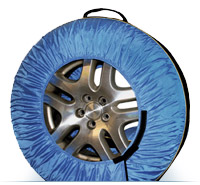
Store your tires in a clean, cool and dark location away from heat or gas. Preferably under a tire cover, which you can purchase at your local tire dealer or auto parts store.

  • If your tires are mounted on rims, stack them underneath a tire cover. (When stacking tires, be sure to stack no more than four tires for safety reasons.)
  • If you tires are not mounted on rims, store them upright and cover. Do not stack on top of each other or hang from ceiling.
  • If your tires have whitewall or raised white lettering, store them with the whitewall or raised white lettering facing each other. Otherwise, black rubber could stain them. (The results are not pretty.)

Article courtesy of Michelin Tires.

Rude behavior on the road

I have been on the road now for 12 days. All together, I have pulled over about 20 times to let the car behind me pass. Of all those times, only one person raised his hand to thank me. The others just went by. Sometimes I wish I could just go back ahead of the people who did not thank me, and then slow down to show them that they should be polite. In most cases I was going the speed limit or faster. I don’t get upset about this rude behavior — not really, really upset, that is. But it bothers me. If someone pulls over to let you by, please raise your hand to thank them or blink your lights if it’s dark. It’s a very good thing to do and takes almost no effort.