

Are you ready for an emergency? As RVers, we have the upper hand on being able to prepare for any emergency, especially if your RV is prepared.
Is there a hurricane coming? Hop in the RV and vacate! Storms and winds brewing? Hunker down and pull the slides in. Tornado? Find shelter!
What survival supplies should you keep on hand at home or in your RV, just in case you need to make a last-minute escape? Read on to find out.
Fuel
It is always a good idea to keep a full tank of fuel for your RV and tow vehicle when there’s bad weather brewing. In an emergency, gas stations may be backed up for miles, out of fuel or closed. If your vehicle is stored, gasoline and diesel fuel stabilizers are available on Amazon. These stabilizers will keep fuel fresh for a year, so they’re good to add to any stored fuel.
Shelter
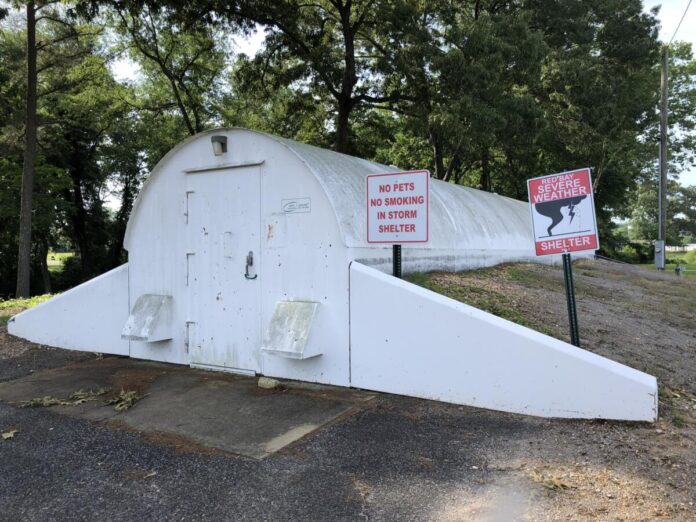
Know where the storm shelters are. Know where they are when you are at home and when you are camped somewhere. In “Tornado Alley” and during bad weather, I always ask the office where the nearest shelters are when checking in.
Water
We usually keep at least half a tank or more of water in the RV when traveling. Too many times city water has not been available or has been turned off. In an emergency, I don’t know if we would be able to get potable water. We also leave water in the tank in storage and drain and sanitize before our next trip. We have a water freshener to add when needed. I keep additional gallons of drinking water, too. It is suggested to have at least a gallon of water per person per day in an emergency.
These lightweight, easy-to-carry, extra water storage containers are what Cheri Sicard uses and loves.
Food
Keep an assortment of non-perishables on hand. High-protein foods like nuts and beans are ideal as well as dried fruits. Rice and beans together become a perfect protein. Canned goods are great but heavy, so be aware of weight. There are many survivalist dried foods available online. I have tried a number of backpacking dried/dehydrated foods that are actually pretty good.
Cash
What if the internet went down? What if you couldn’t use your trusty credit card anywhere? It may be critical to have some cash available.
Medical
Know what your medical insurance covers. Are you covered out of your home state in an emergency? If you’re traveling out of network, will you still get some coverage? Plan how you will get needed medications if your home pharmacy is unavailable. Keep enough medications on hand.
I was in Florida when I broke my wrist and sprained my ankle and I had to pay $1,200 before they would treat me. They didn’t honor my insurance.
If you need assistance in a disaster, the government has a link and resources to help. Click here.
Emergency NOAA radio
Always carry an emergency NOAA weather radio. They can be recharged or used via hand crank. They usually are equipped with a flashlight and AM and FM stations as well as the NOAA channels.
Be aware of weather hazards. Fire, water, and tornados move fast. Anticipate rather than react.
Solar power packs
Small solar power packs are ideal for charging phones and larger ones for charging 12V and 120V items, including essential medical devices such as CPAP machines. Check out this Southwire Power Pack. There are many types of solar rechargeable lights and chargers on the market now.
“Go” bag
Keep an emergency bag filled with all the information you may need: family contacts, medical information, birth certificates, and insurance info. We have a small hard drive with everything on it as well as paper copies. In severe weather, it immediately goes from our small safe to our Go bag.
Here’s an article from Gail Marsh about her “bug out bag”.
Batteries and rechargers
Make sure you have extra batteries for things like flashlights and other gadgets. Have spare phone chargers, as well.
Remain calm
Being prepared will ease the angst of emergency situations. Watching the weather, stocking supplies, knowing local storm shelters, and following emergency procedures can keep you and your loved ones safe.
##RVDT2417

Based on the sign in the first picture, looks like I will be potentially dying outside with my dog since it says, “No pets”.
Hard to find a pet shelter. Check with local vets office..
Agree. Would not go to shelter and leave dog in RV or at home.
Me too~ ugh
Missed communication plan. Cell towers will suffer. Local towers maybe pre-empted for local officials only. Yes, they can turn them off.
Alternative means are FRS, GMRS, CB and the best for last, Amateur Radio (Ham).
In the recent fires in Ruidoso, NM even HAM was mostly down. The popular repeater mountain burned up the repeaters.
I just very recently decided to explore radio’s as a simple way for family communications – handheld GMRS is a bit disappointing in Simplex, but very cool on pre-existing repeaters. Problem is complexity if you are mobile.
Gonna dig into lower freq stuff now, like MURS or even CB and see what I can come up with for when we are out on the road or “around” a remote camping location.
Medical should address “How will you get you, your spouse, your pets and your rig home if something happens that renders you unable to drive? FMCAssist, offered free as part of a FMCA membership, addresses all of that. Heck, they’ll even get your “mortal remains” home if it comes to that. Similar plans cost thousands of dollars outside of FMCA.
Consider taking a first aid, CPR and “Stop the Bleed” training courses. You might survive the event but others might need immediate help.
Thank you, Nanci, for all the suggestions! Have a great day, safe travels, and safe stays! 🙂