

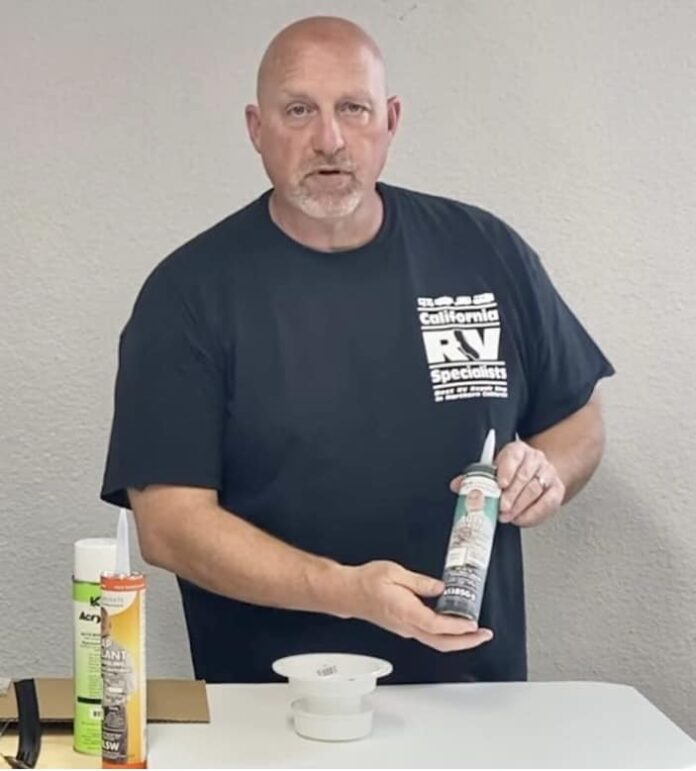
One of the most common questions RV owners ask during roof maintenance is: “Can I apply new sealant over the old sealant?” The answer is: Sometimes yes… but not always.
At California RV Specialists, we routinely inspect RV roofs and see many situations where adding new sealant over old material works fine—and other situations where it actually traps problems underneath or creates larger issues later.
When you can seal over existing sealant
In many cases, applying a compatible new sealant over existing sealant is acceptable if the original sealant is:
- Still firmly bonded
- Not heavily cracked
- Not lifting or separating
- Not contaminated
- Not trapping moisture underneath
This is commonly referred to as a “spot seal” or maintenance reseal.
Before applying additional sealant:
- Clean the area thoroughly.
- Remove dirt, oxidation, oils, and loose material.
- Verify the old sealant is still adhering properly.
If the existing sealant is stable and compatible, adding a fresh layer can help extend protection.
When old sealant should be removed
There are situations where sealing over old material is not recommended.
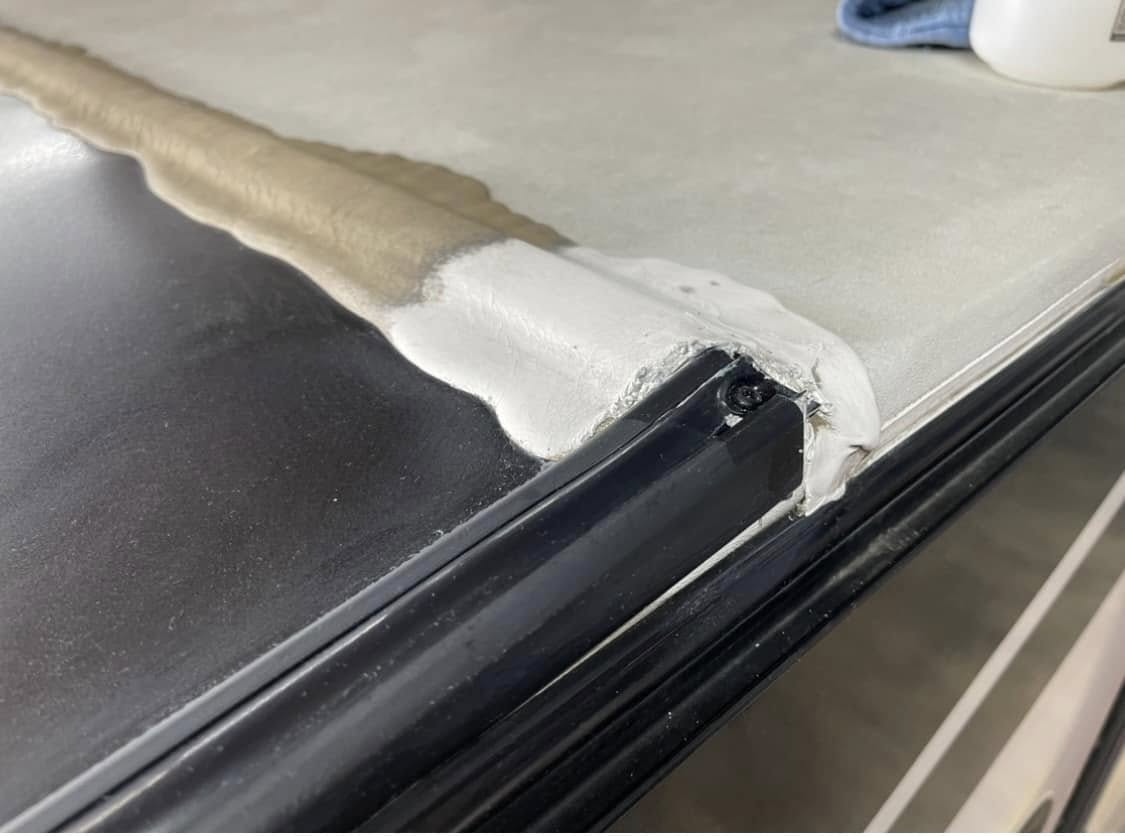
Old sealant should often be removed if it is:
- Cracked badly
- Loose or lifting
- Peeling
- Brittle
- Separating from the roof or fixture
- Trapping water underneath
- Excessively thick from repeated resealing
Simply adding more sealant over failing material usually does not solve the underlying issue. In some cases, it may actually:
- Trap moisture
- Hide leaks
- Increase future cleanup difficulty
- Prevent proper adhesion of new material
Compatibility matters
Not all sealants are compatible with each other or with every roof membrane. Different RV roofs may use:
- TPO
- EPDM
- Fiberglass
- Aluminum
Using the wrong sealant can:
- Damage roofing material
- Cause adhesion failure
- Create chemical reactions
- Lead to premature cracking
Always verify product compatibility before applying a new sealant.
More sealant is not always better
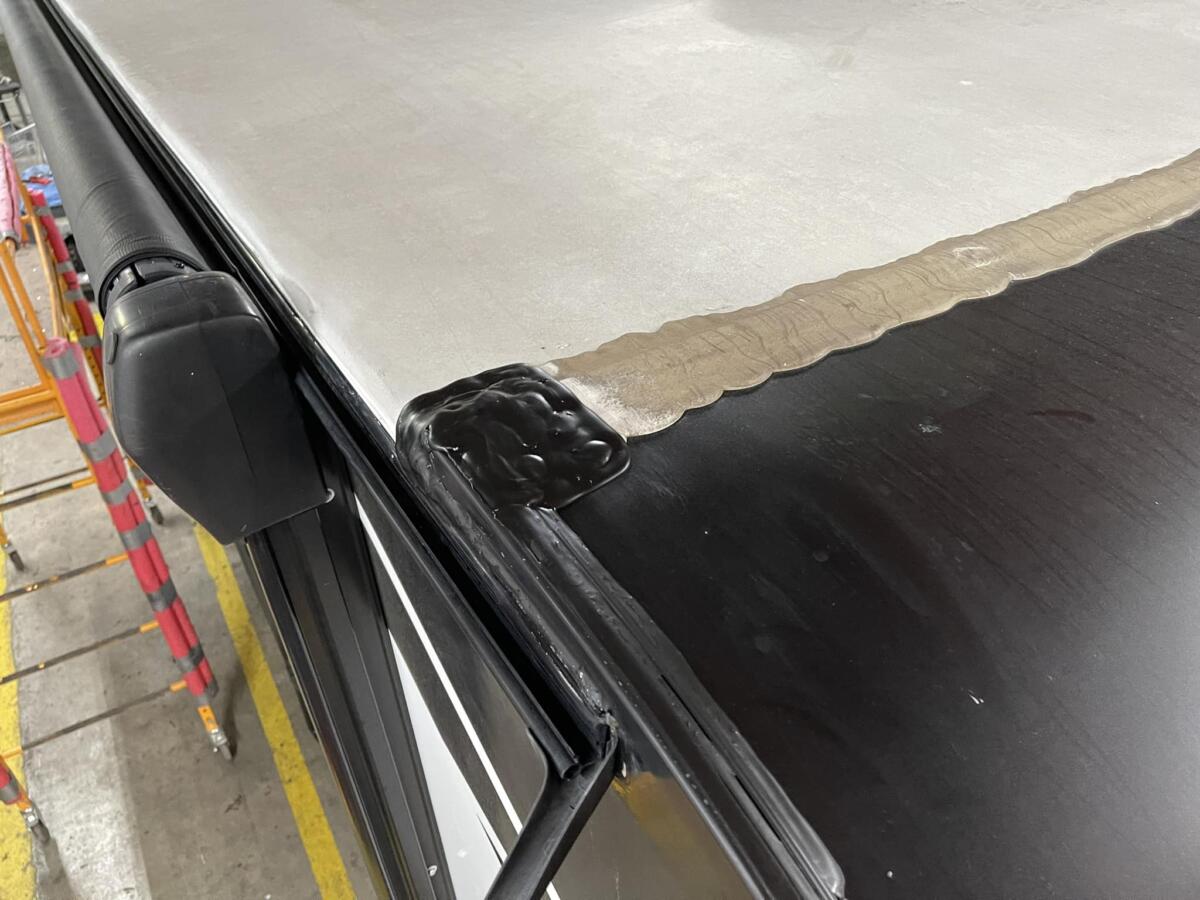
One of the biggest mistakes we see is excessive buildup from repeated resealing over many years.
Layers of sealant may:
- Crack easier
- Hold dirt and moisture
- Make inspections difficult
- Hide roof damage
- Create uneven water flow
Sometimes, less is more when sealant is applied correctly.
Roof inspections are extremely important
Even if the roof looks “fine” from the ground, small sealant failures can allow water intrusion to begin quietly over time.
Routine roof inspections should include:
- Checking all sealant conditions
- Inspecting roof penetrations
- Looking for lifting edges
- Checking around vents, skylights, antennas, ladder mounts, and trim rails
- Looking for soft spots or discoloration
Catching problems early can help prevent expensive water damage repairs later.
Final thoughts
Yes, in some situations, you can seal over old RV roof sealant. But the condition of the existing sealant is what matters most.
If the original sealant is failing, loose, cracked, or separating, proper removal and resealing is usually the better long-term solution.
When in doubt, having the roof professionally inspected can help determine the safest and most effective repair approach.
California RV Specialists
200 S. Cherokee Lane
Lodi, CA 95240
209-263-7040
www.calrvspecialists.com
RELATED
- Dicor Lap Sealant cure times: What to expect when sealing your RV roof
- How to clean an RV roof’s sealants before resealing it
- Essential RV technician tool: How a plastic scraper helps with common RV roof and body repairs
- Even small roof tear can lead to damaging dry rot
RVT1269

Dustin, hopefully you are monitoring this page. First, thanks for a very informative article. Second, I see several different manufactures of sealant, are they all comparable with each other? Even trying to remove all of the old sealant I don’t believe you can get it all off and I’m concerned that the new sealant will not adhere to the old.