

Properly sealing your RV roof is essential to prevent leaks and extend the life of your rig. Dicor Lap Sealant is one of the most trusted products for sealing RV roofs, but understanding its cure times is key to ensuring a durable, watertight seal.
Dicor Lap Sealant cure time breakdown
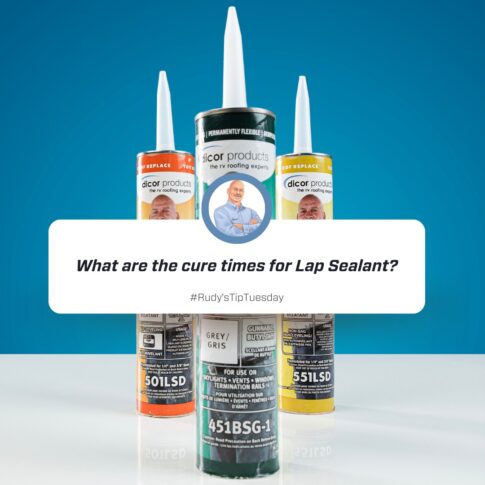
When applied to an RV roof, Dicor Self-Leveling Lap Sealant goes through multiple curing stages:
• Skin-forming time: 5 minutes—The sealant begins to skin over quickly, preventing dust and debris from sticking.
• Initial setup: 4–6 hours—The sealant starts to firm up, but it’s still soft underneath.
• Water-resistant stage: 12–24 hours—Light rain or moisture won’t affect adhesion, but full curing isn’t complete.
• Full cure: 48–72 hours—The sealant reaches its final hardness and becomes fully waterproof.
Factors that affect cure time
Several conditions can impact Dicor’s curing speed:
• Temperature and humidity: Warmer temperatures (above 50°F) help speed up curing, while cooler or humid conditions may slow it down.
• Ventilation: Proper airflow helps the sealant dry faster.
• Direct sunlight: UV exposure can accelerate the curing process but may also cause premature surface drying.
Tips for best results
• Ensure the roof is clean and dry before applying.
• Allow at least 24 hours before exposing to heavy rain or washing your RV.
• Avoid disturbing the sealant during curing to ensure a smooth, long-lasting bond.
By understanding Dicor Lap Sealant’s cure times, you can ensure a leak–free, professional–quality seal on your RV roof.
Products to reseal your RV roof
- Our favorite dripless caulking gun
- Our favorite scraper
- Our favorite scraper with handle
- Our favorite solvent cleaner
- Dicor Non-Sag lap sealant, all colors
- Dicor self-leveling sealant, all colors
- Knee pads, roof-safe, soft surface
- Tool bag, collapsible
More from Dustin
Make sure you check out my website, California RV Specialists, and our YouTube channel for more helpful information, and see our published articles on RVtravel.com and other social media pages.
RELATED
- How to clean an RV roof’s sealants before resealing it
- Essential RV technician tool: How a plastic scraper helps with common RV roof and body repairs
- Even small roof tear can lead to damaging dry rot
- What does ‘TPO’ stand for and why is it so common for RV roofs?
RVDT2741

Thanks Dustin. Always something to learn from you.
Thank you
Thank you for sharing the time line, Dustin! Have a great week and safe travels!
Thank you sir!