

By Dustin Simpson
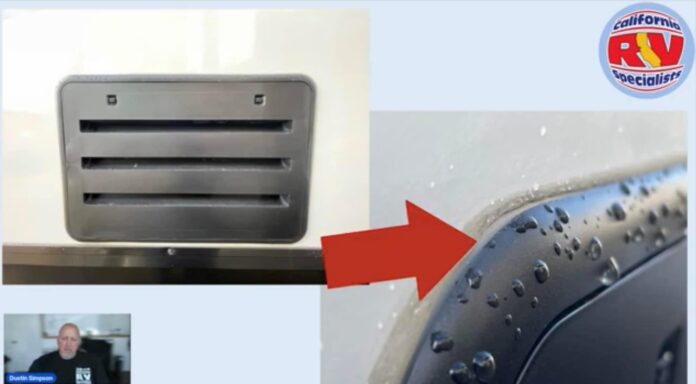
I wanted to share a couple of pictures of this 2019 Grand Design Imagine 3170BH. On this unit, the RV sealants leaked and caused water damage to the side wall. This can happen anywhere on your unit that is not sealed properly.
Exterior RV body resealing benefits
Caulking your RV helps to protect your investment and creates a watertight seal to protect it from outdoor elements.
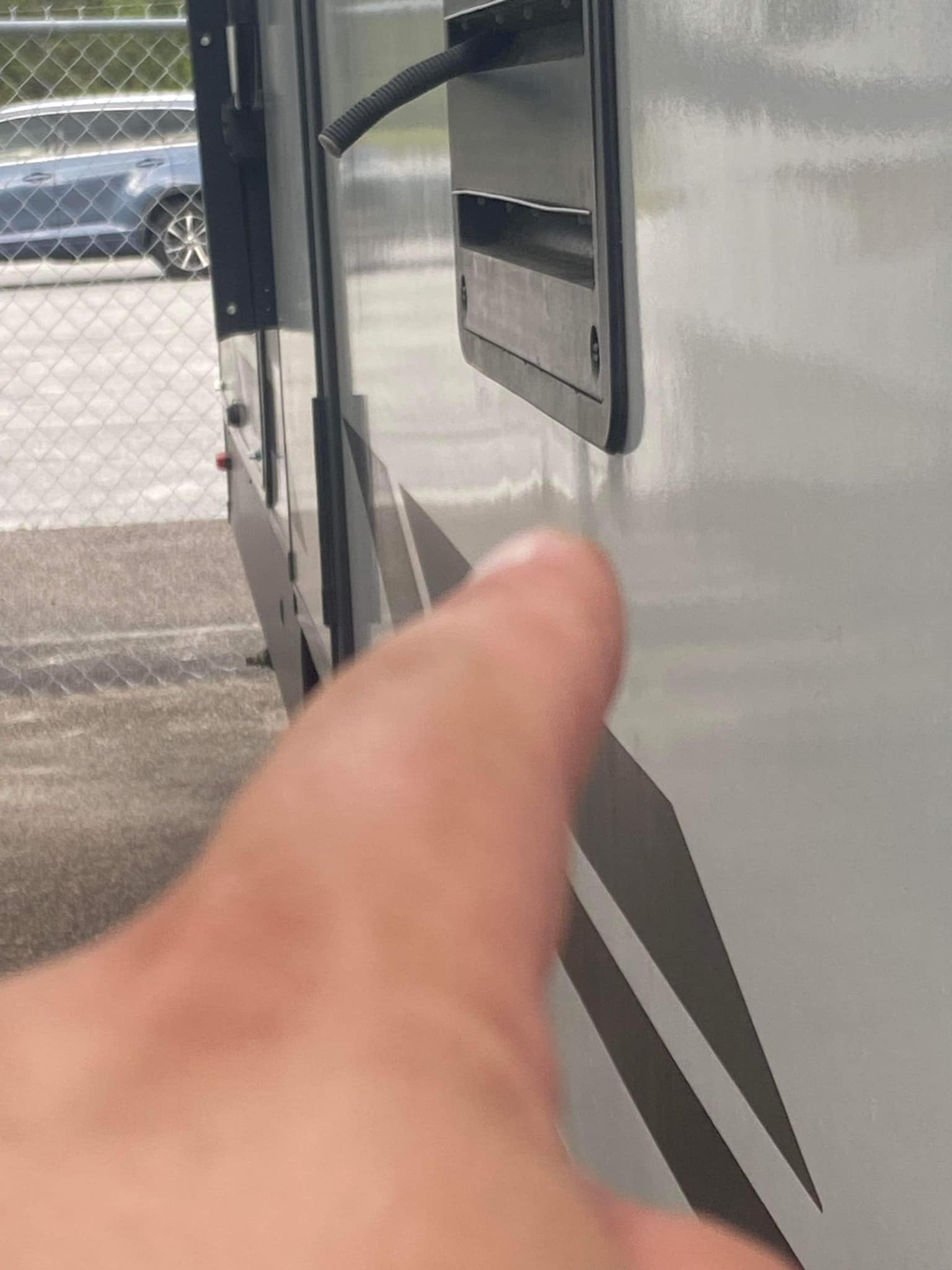
Applying caulking around trim and windows helps to ensure that no outside elements get inside through the window frame or other gaps.
When there is no caulk to prevent blockage, dirt and dust enter the RV more freely. If moisture from condensation, rain or snow, or by washing your unit, gets into the RV, it can damage the structure or cause dangerous mold and mildew.
Water and mildew stains can appear on the carpet and on the walls. However, in most cases, it doesn’t show up right away, causing unnoticed dry rot to occur.
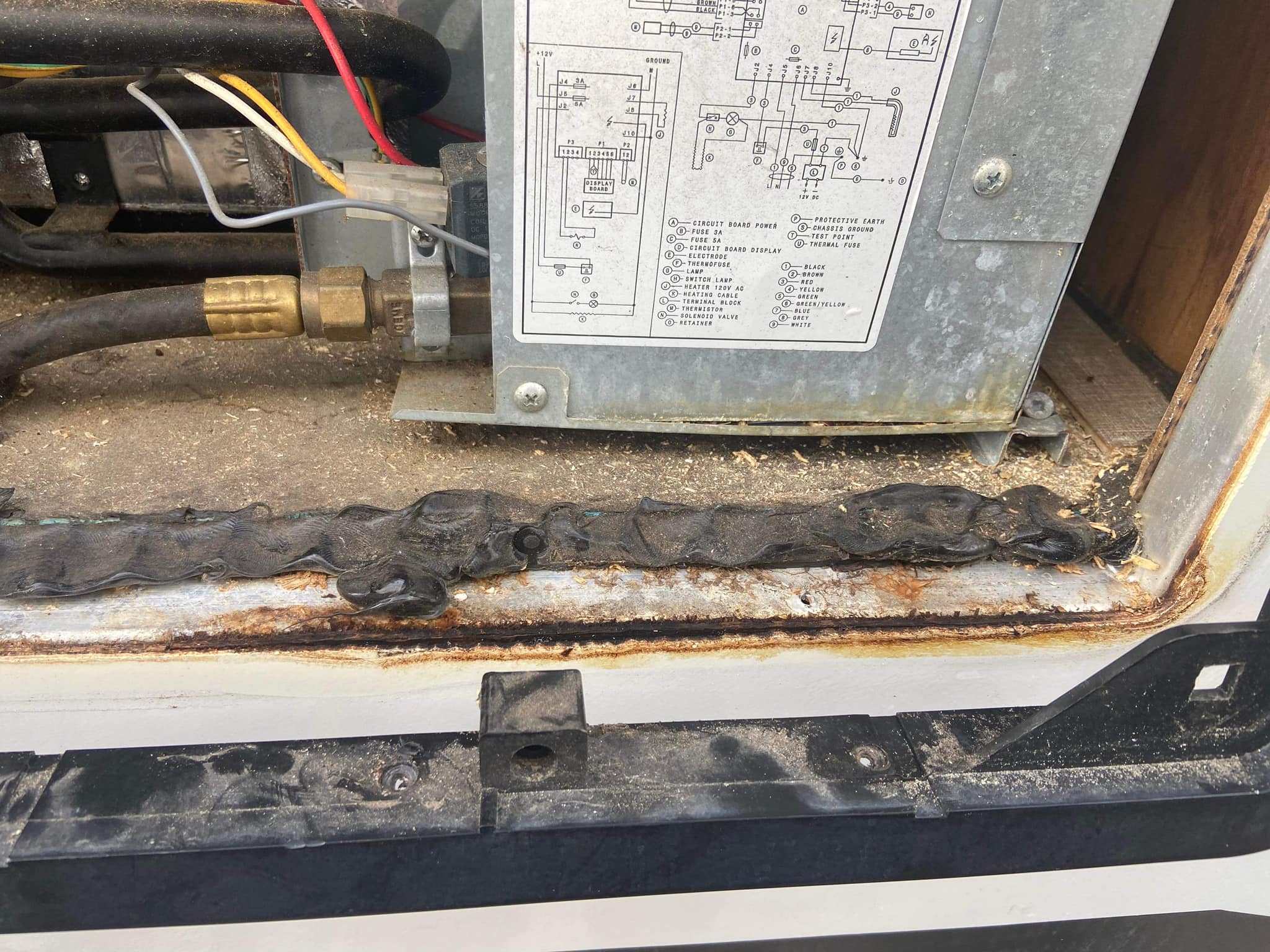
Caulking around certain joints creates a watertight seal that prevents water from outside from seeping into the cracks and crevices of your RV. If water gets in, it can cause a lot of damage that can be extremely costly to repair and can even total your unit.
Applying caulking can also help prevent hot or cold air from moving inside or outside. If you don’t caulk the borders around doors, windows, and walls, cool or hot air will escape. As a result, your RV’s heating and cooling usage will increase to make up for the loss, causing energy costs to go up if you’re living in the unit full-time.
DIY product links:
- Here is a link for Acrysol
- Scraper tool blue CRL stick
- Tapered Tip Stick and Handle
- The best caulking gun
- Dicor self-leveling lap sealant
Thank you,
Dustin Simpson
Make sure you check out Dustin’s website, California RV Specialists, and their YouTube channel for more helpful information, and see our published articles on RVtravel.com and other social media pages.
RELATED
- What sealants do you recommend for an RV, and what areas need to be sealed?
- Checking out the Dicor Butyl Rubber Sealant
- Your RV takes on water damage through more than rain. Protect those sealants!
- Dicor Lap Sealant cure times: What to expect when sealing your RV roof
RVDT2768
I had a local mobile rv guy come over expecting to have him seal my roof before winter. He said he couldn’t because it had to cure for weeks. Can Dustin’s shop do it? Or is there a different kind of sealant to be used ? I’m old and not able to do this myself.
Hi, Terry. Thanks for writing. I’m forwarding your comment/question to Dustin Thurs. morning to see if he can help you, or has any suggestions for you. Have a good night. 😀 –Diane at RVtravel.com
Thanks Diane 🙂
👍You’re welcome, Dustin. Have a great day. 😀 –Diane
Terry,
Dicor lap sealant typically skins over in 5 minutes, is waterproof in 4 hours, and reaches an 80% cure in 48 hours in ideal conditions (50-70°F). A full 100% cure takes about 30 days, and conditions like temperature and humidity will affect these times, with colder or more humid environments increasing cure times.
Same thing for silicone. However, all surfaces do need to dry before sealing with anything roof or body.