

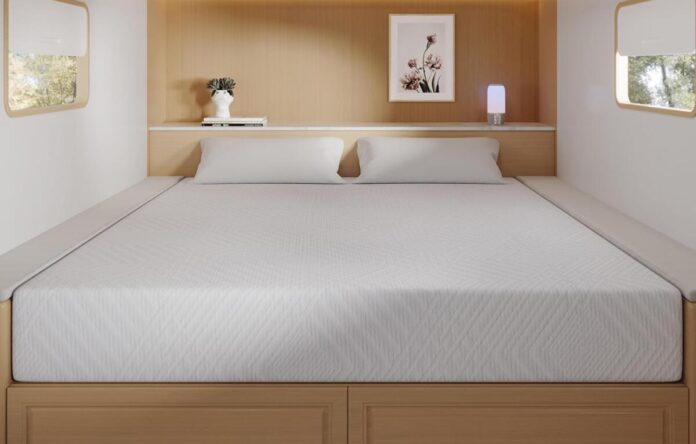
A recent Facebook post from Todd Lydell asked: “When you guys are not using your camper (parked at home between outings or in winter storage), what do you do with your mattresses? I would think leaving them lying in the camper would invite mold and mildew. To clarify…I live in PA, and it gets quite humid here in the summer.”
Understanding moisture buildup in RV mattresses
The Facebook post left me wondering. We’ve never had problems with our RV mattresses. Have we just been fortunate? I needed to know more. Here’s what I discovered from talking to our RV techs and also researching the topic for myself.
Moisture on an RV mattress typically stems from condensation. When warm, humid air meets the cooler surface of your mattress or bed platform, it condenses into water droplets.
Due to the limited airflow in RVs, this trapped moisture can quickly lead to mold and mildew growth. Whether you’re parked for a short stay or in long-term storage, understanding this process is key to preventing damage and health concerns.
“Condensation is the root cause of most mold issues under RV mattresses, and controlling it starts with ensuring adequate airflow,” explains The Camping Nerd.
RV mattress mold warning signs
Before mold becomes a serious problem, there are several signs you should watch for:
• Musty odor: A persistent, damp smell in your RV’s sleeping area.
• Visible spots: Dark or discolored patches on your mattress or bed platform.
• Damp surfaces: A clammy or wet feeling when you touch the bottom of the RV mattress.
• Structural changes: Warping or discoloration of the bed platform.
• Allergy symptoms: Increased sneezing, congestion, or respiratory irritation when you’re sleeping in your RV.
Recognizing these early signs can help you take immediate action before the issue worsens.
Prevention strategies
Enhance the airflow under the mattress. Improving circulation is your first line of defense. Here are some tips that may help:
• Elevate your mattress: Consider using a ventilated bed foundation or a slatted platform that allows air to pass underneath.
• Airing out: Periodically lift or flip your RV mattress to let fresh air circulate.
• Drill ventilation holes: If feasible, adding small holes to your bed platform can make a significant difference in reducing trapped moisture.
Control humidity
Managing indoor humidity is essential. Here are some ways to do it:
• Portable dehumidifiers: A small unit can pull excess moisture from the air, especially during humid summers.
• Moisture absorbers: Products like silica gel packs or moisture absorbers (think DampRid) can be placed near your bed to help keep the environment dry.
• Ventilation techniques: Open windows or roof vents regularly to let fresh air in after activities like cooking or showering.
Invest in a breathable mattress protector
A mattress protector that’s both waterproof and moisture-wicking can act as a barrier against condensation. Look for one that is breathable to ensure that while moisture is repelled, heat isn’t trapped underneath your RV mattress.
Regular RV ventilation
Good overall air flow in your RV is a must:
• Use fans: Whether ceiling-mounted or portable, fans help circulate air throughout the RV.
• Open vents and windows: Even during cooler weather, a little ventilation goes a long way in preventing condensation.
• Temperature control: Running your A/C or furnace appropriately can balance the interior temperature and reduce moisture formation.
Reflective insulation
If temperature differences between the inside and the storage area of your RV are causing condensation, adding a layer of reflective insulation beneath your mattress can help even out the temperature. This method reduces the chance of cold surfaces meeting warm, humid air—a common trigger for moisture.
Routine leak inspections
Sometimes, moisture isn’t just condensation—it can be a sign of a leak. Regularly check around windows, doors, and plumbing for any signs of water intrusion. Addressing leaks early ensures that even the best prevention strategies remain effective.
Both The Camping Nerd and The RV Geeks highlight the importance of a comprehensive approach. Their recommendations emphasize increasing airflow, managing humidity, and using protective measures to safeguard your RV mattress.
What to do if mold has already set in
If you discover mold on your mattress, act quickly:
• Remove and inspect: Take the mattress off the platform and check for damage.
• Clean thoroughly: Use a cleaning solution—such as a mix of water and vinegar or hydrogen peroxide—to scrub the affected areas. Avoid harsh chemicals like bleach that might harm your mattress materials.
• Dry completely: Ensure that both the mattress and the surrounding area are completely dry before reassembly. Using fans or opening windows can help speed up the process.
• Consider replacement: If mold has deeply penetrated the mattress, it might be safer to invest in a new one rather than risk lingering health issues.
Additional long-term tips
• Regular checks: Make it a habit to inspect your RV mattress every few weeks, especially during humid weather or long-term storage.
• Avoid wet items: Keep damp clothing or towels away from your bed area to prevent additional moisture.
Do you have any additional tips or experiences to share? Feel free to leave a comment.
MORE LIKE THIS:
- Around the Campfire: Plenty of discussion about replacing the RV mattress
- RV nightmare: How to prevent mold on a memory foam mattress
- Danger! Check your RV’s mattress for fiberglass! Yes, really!
- How to build your own DIY mattress: What mattress companies don’t want RVers to know
##RVDT2628


I was concerned about this during winter storage. We use Damp Rid, but it can’t pull the moisture from under the mattress.
What I ended up doing was buying some 1/2 inch pvc pipe, cutting it to the width of the mattress and putting pieces of them under the mattress every 12 inches. Easy to remove and store when we use the trailer.
Great idea! Thanks for sharing, Bob.
One of the biggest reasons for having a weather-hood over a roof vent is to leave the roof vent at least partially open when storing the RV – hot or cold. All single family houses have the same thing in some form. The purpose is to equalize humidity below the roof to avoid condensation; which leads to both reduced insulation and mold.
We also have a breathable fabric between the RV bed platform and the mattress. A fabric-style paint drop cloth is inexpensive and can be trimmed and stapled to the wood platform.
Be careful about drilling holes – some mattresses have fiberglass in the fill or foam (as fire prevention) that would be released. Read your label carefully.
One very important prevention strategy was not mentioned–live west of the Great Plains! With an annual humidity of 25% or less, mold and mildew are not problems that we encounter. The same goes for Eastern pests like cockroaches and June bugs–we simply don’t have them. Sure, we may get snow in June, but we don’t get June bugs in June!
It’s a little pricey but the Froli System lifts the mattress about an inch off the platform and has worked well for us.
I ordered and have been using a product called Hypervent. It’s a 1” mesh that goes under the mattress that allows for air circulation. Never an issue after10+ years.
Just keeping a little dehumidifier running has done the job for me. I empty the water out once in a while, so it keeps running. I used to use Damp Rid, but it was a bit messy, and although it worked, the dehumidifier collected more water.
Thank you, Gail, for the discussion! We, too, have never had a problem with mold. We do always have the RV powered through the power cord and the temperature set to keep the RV from becoming colder than 45°F or warmer than 80° F. I will check the platform on which the mattress sits to see how much airflow there is. Have a great day and safe travels!