

With the federal government shut down, RVers face uncertainty, wondering, “Are national parks open?” We can tell you the top 5 national parks are mostly open but campgrounds situations could change daily. Roads and scenic drives remain accessible, yet services like dump stations, visitor centers, and campground staffing vary from park to park. For those rolling in with motorhomes or trailers, the best advice is to plan ahead, bring full water and propane tanks, and keep backup camping options ready.
RV travel in national parks with 2025 shutdown
Information is very sketchy, but here’s what we’ve found as of Wednesday morning, October 1. We’re providing what information we could find for the top 5 parks, but take everything with a grain of salt. We recommend if planning a trip to ANY national park during the shutdown to check each park’s website “alert” page. Nevertheless, it appeared from our visits that not all park alert pages have been updated.
Grand Canyon – Major media provides conflicting information
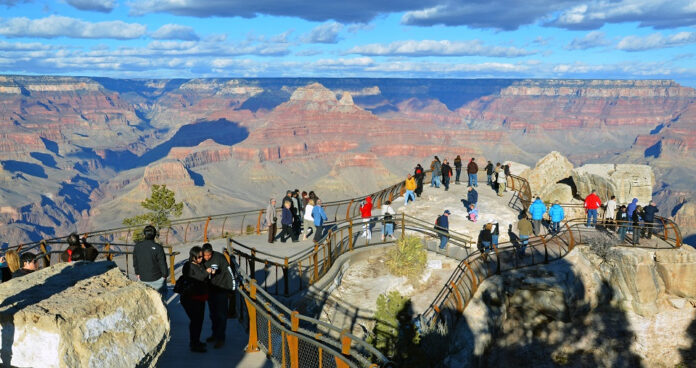
At Grand Canyon National Park, the South Rim continues to welcome visitors, and Desert View Campground remains open with reservations required. RVers can still enjoy the scenic drive along the rim and stop at overlooks.
Portions of the Grand Canyon’s North Rim were scheduled to reopen on October 1, following the devastating Dragon Bravo Fire earlier this year. However, the federal government shutdown that began today has introduced uncertainty regarding the full implementation of these reopening plans.
Still more uncertainty, some news outlets, including Axios, report conflicting information about whether the shutdown affects overall park access, leaving visitors unsure about which campgrounds and facilities are actually available. Fire restrictions remain strict, with campfires allowed only in designated areas.
Yellowstone – Accessible, but visitor centers shuttered
Yellowstone National Park has kept its gates open, and concession-run lodges, campgrounds, and restaurants still serve visitors. That’s good news for RV travelers who want hookups or a place to park overnight. However, many federally staffed services such as visitor centers are closed, and some restrooms may be locked. Road construction projects also continue to cause delays. RVers should expect limited help on-site, and should check road reports before entering.
Great Smoky Mountains – Information is sparse
In Great Smoky Mountains National Park, access is also mixed. Many roads and trails remain open, but past storm damage has closed several campgrounds, including Abrams Creek, Balsam Mountain, Cataloochee, Cosby, and Look Rock. A landslide has also closed the Gatlinburg Bypass until further notice. RVers planning to stay inside the park need backup plans, though nearby private campgrounds may fill the gap.
Zion – State steps in to keep things rolling
Zion National Park remains open, partly because Utah has stepped in to help cover operating costs. RVers can still drive the scenic corridor and use campgrounds, but services are pared down. Some roads are seasonally closed, and the permitting system for popular hikes could be affected. Travelers should not count on ranger programs or fully staffed visitor centers.
While the state has pledged financial support, visitors expect reduced services. According to a 2024 contingency plan from the U.S. Department of the Interior, during past shutdowns, services such as trash collection and non-essential maintenance were halted, and only a limited number of law enforcement staff remained on duty. With that in mind visitors should be prepared for fewer amenities and potential delays.
Rocky Mountain – Campgrounds could close
Finally, Rocky Mountain National Park is accessible, with roads and trails open unless snow or wildlife restrictions block them. RVers should watch for seasonal road closures at higher elevations and check trail conditions before heading out. Campground operations are limited, and some areas may shut down early without federal staff to manage them.
Bottom line
The bottom line: For RVers, the nation’s top parks are still worth the trip, but they require extra preparation. What we know is that most roads and scenic overlooks remain open. What we don’t know is how long campground staffing and dump station access will hold if the shutdown continues. Arriving with full water and propane tanks, a stocked pantry, and alternate campground reservations is the safest way to keep the adventure rolling.
We’ll do our best to keep up with changes and let you know what we find. For those on the road and who have firsthand experiences, please drop us a line: Russ [at] rvtravel.com
RELATED
- What RVers need to know about national parks and possible shutdown
- How a government shutdown could affect your RV trip to national parks
- Visitors may not see the strain, but national parks are operating with thinner teams
- National parks face devastating cuts, with majority in jeopardy
- Interior Secretary orders national parks to stay open amid staffing cuts
- National park visitors face reduced access and services across the country
RVT1229b

I was just on the web and Utah said they are keeping all parks open.
Not a new thing for Utah. They have stepped up during other shutdowns and funded/propped up the work force in the National parks located in Utah, using of State funds in the past. It seems to me that is how it should be done so as not to let something like this hurt your local businesses. Looking out for their own citizens in their own communities.
Thank you for the news, sketchy though it is, Russ and Tina! My own understanding is that some agencies may have unused money to fund continued operations for a few days. But, generally if park acces or facilities have a door or gate that can be locked, then it will be unavailable for the duration of the shut-down. Probably the best course is staying at any nearby state or private campgrounds, leave the RV behind, and check out the national park facilities in the towing/towed vehicle. Have a great day and safe travels!