

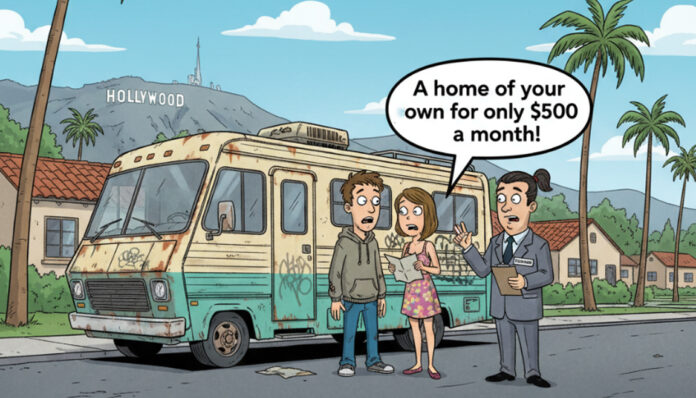
The Los Angeles “vanlording” ban is moving forward as the City Council targets the illegal practice of renting RVs on public streets. Introduced by Councilmember Traci Park in 2023, the measure aims to close a legal loophole that allowed people to lease recreational vehicles to unhoused residents, addressing the city’s growing RV encampment problem.
On September 17, the Council voted 13–0 to adopt the Public Works Committee’s recommendation, explicitly prohibiting residential RV rentals on city streets.
Park said, “This is going to be a really important tool in helping us address that ongoing crisis. It closes a gap in our city’s laws that’s going to have a huge impact on quality of life here. It will prohibit people from leasing those vehicles using our city streets for residential purposes.”
LA vanlording ban has sharp financial teeth
The ordinance sets fines that increase with repeated violations: $500 for a first offense, $750 for a second within a year, and $1,000 for each additional violation, with each day counting as a separate offense. Violations could also be prosecuted as misdemeanors under the city’s municipal code.
The Public Works Committee, which advanced the ordinance on August 27, asked the Los Angeles Police Department to report on enforcement plans. These will include coordination with outreach teams, the Los Angeles Homeless Services Authority, and Council offices, while also protecting people who live in RVs.
The vanlord problem
Venice has been a flashpoint for RV encampments. In 2019, the Los Angeles Times profiled Gary Gallerie, called the “van lord of Venice.” He bought vans and rented them to people who could not afford apartments.
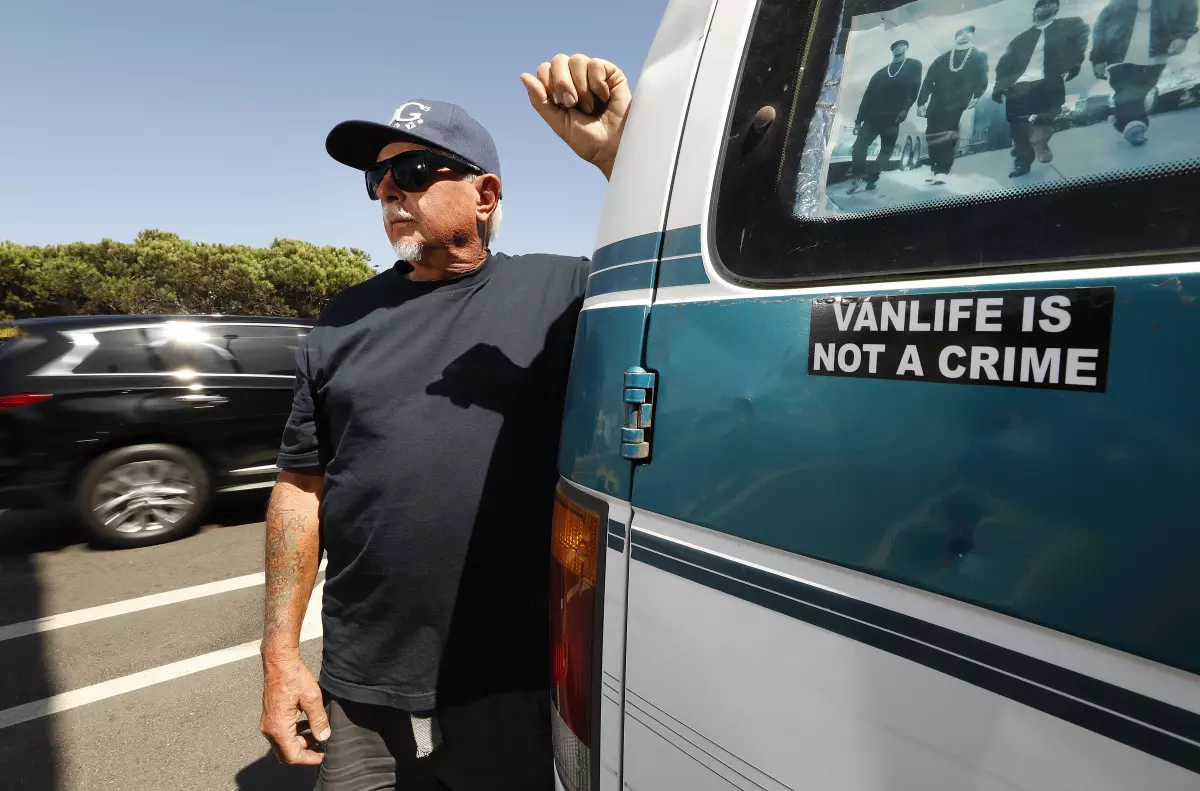
Gallerie said he had 13 vans, renting them for $150 to $300 a month. Supporters said he provided a housing option when no other shelter was available. Critics said the vans lacked toilets and running water and were unsafe. Residents complained about unsanitary conditions, while some tenants called the vans their only lifeline.
City officials estimate roughly 4,000 RVs across Los Angeles are used as makeshift housing, representing about 22% of the city’s unsheltered homeless population—a 40% increase since 2018. Many RVs are in poor condition, leaving residents without access to basic hygiene or safety.
Supporters emphasize that the LA vanlording ban targets people profiting from RV rentals, not those living in the vehicles. The ordinance does not ban living in a privately owned RV or penalize residents. Instead, it focuses on the commercial practice of renting RVs on public streets.
Next steps
The September 17 Council vote was the first formal approval. The ordinance still requires review by the City Attorney, the mayor’s signature, and official publication before taking effect.
If enacted, Los Angeles would join the county, which last year asked staff to explore policies against vanlording. State officials have also allowed cities to use Caltrans lots to store inoperable RVs removed from encampments.
Sources: Santa Monica Daily Press and Los Angeles Times
RELATED
- Los Angeles parking lot brings relief for homeless RVers
- Los Angeles tries again to control RV street parking
- Homeless swarm RV manufacturer’s lot, move into RVs, destroy many
- Reader turned away from Walmarts across the country. ‘The homelessness is staggering’
- A haunting encounter and a personal journey to confronting homelessness
- Compassion or concern for the homeless in ‘our’ campground
- A City of Sedona plan for homeless parking has locals up in arms
RVT1229b


This is a tough one. If a van that’s affordable but on the edge of junk keeps a person from sleeping in dirt, is it criminal to offer it instead of leaving cardboard the only option? To the flip side, curbs are for parking, not for dwellings so I understand the counterpoint. It’s not the best solution or the prettiest but it’s better than the alternatives absent a more palatable response to rising housing costs. Like many others, I don’t know what the “right” answer is.
Even if he was putting these on his own property, which I doubt, I’m sure there are existing laws preventing any type of inhabited structure with no water, electric or sewer hookups.
Yes, laws against such structures, often referred to as cardboard boxes and tarps are prohibited alongside curbs and yet you can find miles of curbs and sidewalks in L.A. lined with with these structures. I’m not defending the Vanlords, I’m just saying it might be an improvement for some, unfortunately.